


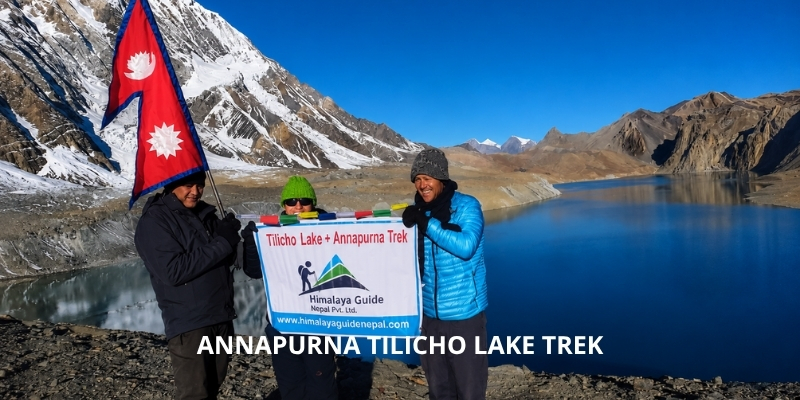
The Annapurna Tilicho Lake Trek is a long, high-altitude journey that combines the classic Annapurna Circuit with a special side trip to Tilicho Lake. The trek starts in the lower foothills around Bulbule and follows the Marsyangdi River past waterfalls and villages like Tal as it climbs into the Manang region. One of the biggest highlights is Tilicho Lake, located at 4,919 M, known as one of the highest alpine lakes in the world. The trail slowly rises to help trekkers adjust to the altitude, passing from green forests and river valleys into the dry, windy landscapes of the high Himalayas near Tilicho Peak.
The trek then crosses the famous Thorong La Pass at 5,416 M, where trekkers enjoy wide views of the Annapurna and Dhaulagiri mountain ranges. After the pass, the trail enters the Mustang region and visits the sacred pilgrimage site of Muktinath Temple. From there, the route continues down through the deep Kali Gandaki valley to the natural hot springs at Tatopani. The final part of the trek passes through traditional Gurung and Magar villages such as Shikha and Ghorepani and ends with a sunrise view from Poon Hill. This journey offers a complete experience of Nepal’s mountains, culture, and diverse landscapes.


