The Gen Z movement, Nepal stabilized, and life returned to normal. All safe for your Travel in Nepal 2025.
Tilicho Lake Trek
Country
Nepal
Difficulty
Strenuous
Best Season
Mar – May & Sep – Nov
Accommodation
Lodges
Region
Annapurna Trekking
Start / End Point
Kathmandu / Kathmandu
Max. Altitude
5,416 m (Thorong La Pass)
Group Size
1 - 10
Meals Included
B+L+D
Acclimatization
Manang (3,540 m)
Permits
Annapurna Conservation Area Permit (ACAP) only
Duration
16 Days
Activity
Nepal Trekking
Distance
Tilicho Lake Trek Overview
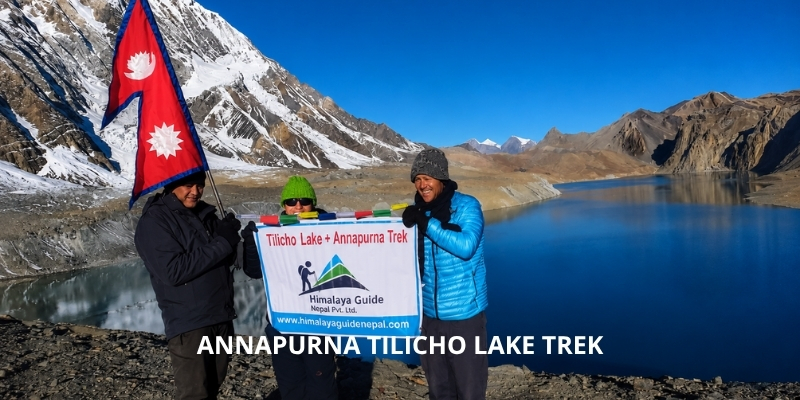
Tilicho Lake Trek is a beautiful side route in the Annapurna region of Nepal. It takes you to one of the highest lakes in the world, Tilicho, which sits at 4,919 meters. The lake is surrounded by towering peaks such as Nilgiri Himal, Tilicho Peak, and Himalchuli. It’s a quieter alternative to the main Annapurna Circuit, but it offers a similar atmosphere. Ideal for those seeking a different experience in the Annapurna region.
The trek begins from Besisahar, starting with lush hills and riverside trails. It’ll gradually change into alpine terrain: high meadows and rugged paths as you travel past Chame. After that come iconic stops like Manang, perched beneath soaring cliffs. Then, you will hike to see the sparkling waters of Tilicho Lake, surrounded by snowy peaks and silence. And it doesn’t end at that; you get to visit more famous places, Muktinath, a sacred site for both Hindus and Buddhists, and Ghorepani, known for its sweeping views from Poon Hill.
At Himalaya Guide Nepal, we don’t just lead treks. We offer you flexibility. You can shape the journey based on your pace and goals for the trek. We’ve guided both seasoned hikers and first-time trekkers to Tilicho, so we know what it takes to get there safely and smoothly. Grant us a chance to help you explore the unique regions of Annapurna with this Tilicho Lake Trek.
Highlights of Tilicho Lake Trek
- Reach Tilicho Lake, one of the world’s highest alpine lakes, sitting at 4,919 meters.
- Cross the dramatic Thorong La Pass (5,416 m), one of the highest trekking passes in Nepal.
- Witness stunning views of the Annapurna II, Tilicho Peak, Gangapurna, and the surrounding Himalayan peaks.
- Trek through peaceful and less-crowded villages like Khangsar, Manang, Upper Pisang, and Ngawal.
- Explore a scenic side trail of the Annapurna Circuit that feels more remote and adventurous.
- Walk through a variety of terrain, from dense forests and river valleys to barren cliffs and snow-covered slopes.
- Indulge in the unique culture of high-altitude communities, with influences from Tibetan and Gurung traditions.
- Enjoy a relaxing evening at the natural hot springs at Tatopani after days of a challenging trek.
Top Side Trips on the Tilicho Lake Trek
There are still many locations around the Manang region you can explore, extending our standard Tilicho Lake Trek itinerary. On the acclimatization day in Manang, most trekkers opt for a local hike, specifically the Tilicho Lake Day Hike, which begins two days later from Tilicho Base Camp. Besides this hike, some of the top side trips in this trek are:
- Ice Lake (Kicho Tal): If you hike up a steep half-day trail above Manang, you’ll reach this crystal-clear alpine lake. Here, you are surrounded by sweeping views of Annapurna II, IV, and Tilicho Peak. It’s also a perfect hike for acclimatization.
- Milarepa Cave: From Braga village, a short detour takes you to a cliffside meditation site linked to the 11th-century Tibetan sage Milarepa. Rock paintings and fluttering prayer flags mark the spot.
- ‘100-Rupee Monks’ Viewpoint: Just above Manang, there’s a ridge where a pair of elderly monks offer tea and blessings to passing trekkers in exchange for a donation. But it’s not mandatory; it’s more like a form of support. It also serves up a stunning sunrise view over Gangapurna.
- Gangapurna Lake & Glacier Lookout: Another easy stroll from Manang takes you to this turquoise meltwater lake. It sits right beneath Gangapurna’s icy wall. So, you can observe its clear reflections along with Annapurna III, Tilicho Peak, and Pisang Peak.
- Manang Village Exploration: Manang village itself is vast. You can wander its narrow lanes, visit the ancient Braga Gompa, and sample fresh apple tart in one of Manang’s famed bakeries. Engage with the locals for a more heartfelt trek.
Outline Itinerary of 16 Days Tilicho Lake Trek
| Route | End Elevation | Elevation Gain/Loss | Duration | Distance |
|---|---|---|---|---|
| Day 01 Arrival in Kathmandu and transfer to the hotel | 1,350 m | +100 m | 30 min drive | ~5 km |
| Day 02 Drive to Besisahar (minibus) and to Jagat (jeep) | 1,300 m | –50 m | 5–6 hr drive + 2–3 hr jeep | ~190 km |
| Day 03 Jagat – Tal – Dharapani | 1,860 m | +560 m | 5 hrs walk | ~15 km |
| Day 04 Dharapani – Timang – Koto – Chame | 2,670 m | +810 m | 6 hrs walk | ~16 km |
| Day 05 Chame – Dukur Pokhari – Upper Pisang | 3,300 m | +630 m | 5 hrs walk | ~14 km |
| Day 06 Upper Pisang – Ghyaru – Ngawal – Manang | 3,540 m | +240 m | 5 hrs walk | ~17–18 km |
| Day 07 Acclimatization Day in Manang | 3,540 m | +0 m | Optional walk | - |
| Day 08 Manang – Khangsar – Tilicho Base Camp | 4,200 m | +660 m | 4–5 hr walk | ~11–13 km |
| Day 09 Trek to Tilicho Lake (5,200m) and return to Base Camp | 4,200 m | +1,000 m / -1,000 m | 5–6 hr walk | ~10 km |
| Day 10 Tilicho Base Camp – Khangsar – Yak Kharka/Ledar | 4,050 m | +200 m / -150 m | 5–6 hr walk | ~12–13 km |
| Day 11 Trek to Thorong High Camp | 4,925 m | +875 m | 4–5 hr walk | ~8–9 km |
| Day 12 Cross Thorong La Pass (5,416m) – descend to Muktinath | 3,700 m | +491 m / -1,716 m | 7–8 hr walk | ~15–16 km |
| Day 13 Drive to Muktinath – Tatopani, then relax in the hot springs | 1,190 m | -2,510 m | 5–6 hr drive + short walk | ~70 km |
| Day 14 Tatopani – Ghorepani | 2,850 m | +1,660 m | 5–6 hr walk | ~15 km |
| Day 15 Ghorepani – walk (3–4 hr), then 2 hr drive to Pokhara | 820 m | -2,030 m | 3–4 hr walk + 2 hr drive | ~10–12 km walk + ~45 km drive |
| Day 16 Pokhara – Kathmandu by deluxe tourist bus | 1,400 m | +580 m | 6–7 hr drive | ~200 km |
Detailed Itinerary for 16 Days Tilicho Lake Trek
Arrival in Kathmandu and transfer to the hotel (1,350 m)
Trek Distance
~5 km
Drive Distance
~5 km
Drive Duration
0.5 hr
Meals
On your own
Accommodation
Hotel in Kathmandu
Upon arrival at Tribhuvan International Airport, you’ll be warmly welcomed and transferred to your hotel. This first day allows you to rest and refresh after your flight. If time permits, you can explore areas like Thamel to get a feel for local life. Use this time to finalize your trekking gear and enjoy some authentic Nepali food as you prepare for the journey ahead in the mountains.
Drive to Besisahar by minibus and to Jagat by public Jeep (1,300 m)
Drive Distance
~190 km
Drive Duration
7–9 hr
Meals
B+L+D
Accommodation
Lodge in Jagat
Today, you’ll begin your journey toward the Annapurna region with a relaxing minibus ride from Kathmandu to Besisahar. The road you drive on winds through numerous hills, rivers, and small suburban villages. The ride offers plenty of photo opportunities. You may take photos of terraced fields and hilltop settlements as they pass by or just enjoy the ride.
Once in Besisahar, you’ll transfer to a jeep for a rougher but shorter drive to Jagat, the official starting point of the trek. It is a quiet village nestled along the Marsyangdi River. You can smell that fresh mountain air as soon as you arrive. You can settle in, enjoy a simple meal, and rest well to start trekking with freshness tomorrow.
Trek from Jagat to Tal, then to Dharapani (1,860 m)
Trek Distance
~15 km
Trek Duration
5 hrs
Meals
B+L+D
Accommodation
Lodge in Dharapani
Your trekking journey starts today as you leave Jagat. You cross a suspension bridge and follow an easy uphill path bordered by grasses, bushes, waterfalls, and terraced fields. After about two hours, you’ll arrive in Tal, a beautiful village on a wide river plain. It was once a glacial lakebed and has sandy banks and a long suspension bridge. Moving ahead, the route becomes rockier. You need to climb through forested hills and occasional stone staircases.
Along the way, you’ll pass smaller settlements before reaching Dharapani. It is a bigger village where both Manaslu and Annapurna trekkers often meet. You’ll stay the night here, with cozy teahouses and a friendly atmosphere. Feel free to explore a bit, talk to locals, and enjoy the fresh mountain air.
Trek from Dharapani to Timang, Koto, and then Chame (2,670 m)
Trek Distance
16 km
Trek Duration
6 hrs
Meals
B+L+D
Accommodation
Lodge in Chame
After a hearty breakfast, today’s trek starts with a steady climb through pine and fir forests. Down below, you can see the Marsyangdi River flowing. In about an hour, you’ll reach Bagarchhap, a small village with Tibetan cultural influence. Then the Tilicho Lake Trek route leads you to Timang. It is perched on a ridge offering stunning early views of Manaslu and Lamjung Himal.
As you continue, the path becomes gentler, winding through a peaceful forest until you reach Koto. After a brief break and permit check, the trail continues to Chame. In Chame, the district headquarters of Manang, you’ll find small shops, bakeries, and limited Wi-Fi access. Enjoy a filling meal and catch the evening glow over Annapurna II from the riverside promenade.
Trek from Chame to Dukur Pokhari and Upper Pisang (3,300 m)
Trek Distance
14 km
Trek Duration
5 hrs
Meals
B+L+D
Accommodation
Lodge in Upper Pisang
Leaving Chame, you walk through forests and past mani walls and prayer flags fluttering in the wind. As you walk alongside the Marsyangdi River, you’ll enjoy increasingly clear views of Lamjung Himal and Annapurna II. You will take a short break in Dukur Pokhari before the climb to Upper Pisang. The uphill path is steady and not too demanding, and the surrounding scenery is wide and open.
Upper Pisang, situated on a ridge, offers breathtaking mountain views and a more serene atmosphere than Lower Pisang. This village has traditional stone houses, a small monastery, and stunning sunsets over the Annapurna range. You’ll start to notice the architecture and culture becoming more Tibetan in influence. The air is cooler, and the altitude is more noticeable. Be sure to stay cautious of altitude sickness symptoms.
Trek from Upper Pisang to Ghyaru, Ngawal, and finally to Manang (3,540 m)
Trek Distance
18 km
Trek Duration
5 hrs
Meals
B+L+D
Accommodation
Lodge in Manang
On day 6 of the Tilicho Lake trek itinerary, the route takes the high trail, which is a more demanding but far more scenic route. The day begins with a steep climb, but once you reach Ghyaru, the views open wide. From here, you can see Annapurna II, Annapurna III, Annapurna IV, Gangapurna, and Tilicho Peak in full display. The path then winds through open, dry terrain above the valley, with fewer crowds and a quiet, peaceful atmosphere in Ngawal.
Then, you need to descend to rejoin the lower trekking route before reaching Manang. The village lies in a wide, open valley and serves as a resting point for the ABC route. With bakeries, gear shops, internet, and even an altitude clinic, Manang blends comfort with high-mountain energy. You’ll meet fellow trekkers from around the world, each heading toward different trails. It’s like a junction for the Annapurna Circuit, Nar Phu Valley, Tilicho Lake, and Muktinath trip.
Acclimatization Day in Manang
Trek Duration
Optional Trek
Meals
B+L+D
Accommodation
Lodge in Manang
This day is for rest and acclimatization. It is important for your body to adapt to the rising altitude, but that doesn’t mean you’ll be idle. You can go on light hikes to Gangapurna Lake or nearby ridges. This helps your body adjust and keeps your legs moving without strain. Plus, the views from these spots are spectacular. You get close-up views of glaciers and peaks dominating the endless skyline.
After the hike, have lunch and rest. In the evening, stroll around the village to see authentic Himalayan life and culture. You can visit the ancient Braga Monastery or listen to an altitude safety talk by the Himalayan Rescue Association. The tougher, more remote section of the trek begins as you leave this place. So, go to bed early to get enough sleep. The next few days, you’ll head into higher, colder, and more rugged terrain.
Trek from Manang via Khangsar to Tilicho Base Camp (4,200 m)
Trek Distance
11 km
Trek Duration
5 hrs
Meals
B+L+D
Accommodation
Lodge in Tilicho Base Camp
Today, it’s time to leave the main Annapurna Circuit trail and officially begin the Tilicho Lake side trip. You walk towards Khangsar, which is a quiet village with stone houses and traditional charm. The landscape becomes more rugged and dry. You only see a few trees, so it is more open rocky terrain. Along the way, you’ll spot yak herds grazing and may even see blue sheep on the cliffs. The views of Gangapurna, Tilicho Peak, and the surrounding snow-dusted ridges get sharper as you climb higher.
After passing Khangsar, you cross a landslide-prone section, finally reaching Tilicho Base Camp. Lodging here is basic, and you will use a shared bathroom. But warm meals and strong tea make it a cozy stop at this altitude. The air is thin, so rest well, hydrate, and take it slow. The view is beautiful, with empty slopes and snowy tops. Hence, you experience true wilderness at this base camp.
Trek to Tilicho Lake (5,200 m) and return to Tilicho Base Camp (4,200 m)
Trek Distance
10 km (round trip)
Trek Duration
6 hrs
Meals
B+L+D
Accommodation
Lodge in Tilicho Base Camp
Today is the highlight of the entire trek. It is a challenging hike to Tilicho Lake, but equally rewarding. You will start early to avoid afternoon winds and walk steadily up. The way to Tilicho Lake is narrow, carved into rocky slopes, but steep. It climbs quickly, so a slow and steady pace is key. As you near the top, snowy peaks surround you, and the first view of Tilicho and its turquoise waters feels almost surreal.
Tilicho Lake sits quietly at 5,200 meters, framed by Tilicho Peak, Nilgiri Himal, and the surrounding high ridges. Though there are no lodges here, a small tea shop may be open for basic snacks. Take your time to enjoy the scenery, take photos, and rest a bit. Then, return to base camp the same way. It’s a long day at a high altitude, so you’ll feel tired but accomplished. Few treks offer this kind of raw beauty and silence.
Trek from Tilicho Base Camp/Khangsar to Yak Kharka or Ledar (4,050 m)
Trek Distance
13 km
Trek Duration
6 hrs
Meals
B+L+D
Accommodation
Lodge in Yak Kharka or Ledar
After yesterday’s high-altitude hike, you get a more gradual descent back toward the main Annapurna route today. You’ll retrace your steps to Khangsar and then follow a slightly different path that climbs gently toward Yak Kharka or Ledar, depending on where you choose to stop for the night. The route is quiet and passes through high pastures. You can witness incredible views of Chulu West and the surrounding peaks in this section. This day also sets you up for the Thorong La Pass.
You’ll stay in a small lodge surrounded by alpine terrain. So, look out for yaks grazing nearby and the sound of distant wind echoing through the valley. The altitude here is still over 4,000 meters, so it’s normal to feel tired or slow. Use the evening to eat well, stay warm, and prepare for steeper climbs tomorrow.
Trek from Yak Kharka/Ledar to Thorong High Camp (4,925 m)
Trek Distance
8 km
Trek Duration
5 hrs
Meals
B+L+D
Accommodation
Lodge in Thorong High Camp
Day 11 of the Tilicho Lake Trek takes you to Thorong High Camp from Yak Kharka/Ledar. The trekking route steadily climbs through alpine terrain as you make your way toward Thorong High Camp. It is the final stop before the big, challenging Thorong La Pass. The land gets more barren with only rock, scrub, and snow-capped peaks surrounding you. You’ll ascend from around Ledar at 4,200 meters to 4,925 meters, gaining over 700 meters in altitude. Watch your pace here, as the altitude gain is significant, and the air is thinner with every step.
You’ll stop for lunch at Thorong Phedi, a small settlement just below High Camp. From there, it’s a short but steep final push-up to the camp. Thorong High Camp sits just under 5,000 meters and can be cold and windy, but it’s also incredibly scenic. Most trekkers spend a quiet evening here, mentally and physically preparing for the long climb over the pass the next day. Eat well, hydrate, and sleep early; tomorrow is the biggest day of the trek.
Trek via Thorong La Pass to Muktinath(3,700 m)
Trek Distance
15 km
Trek Duration
8 hrs
Meals
B+L+D
Accommodation
Lodge in Muktinath
This is the toughest and most rewarding day of the entire journey. It takes 7-8 hours, so you’ll begin your hike before sunrise. You need to climb slowly and steadily toward Thorong La Pass, the highest point of the trek. The early start helps you avoid harsh winds later in the day. The trail is steep and snowy (depending on the season). However, it is still well-marked with prayer flags and signs. Take breaks as needed, and don’t rush because the altitude here is no joke.
After reaching the top, you’ll be greeted with stunning 360° views of the Annapurna and Dhaulagiri ranges, along with a row of colorful prayer flags marking the pass. Then, the trek from Thorong La is a long descent to Muktinath, a sacred pilgrimage site for both Hindus and Buddhists. You can see the drastic change in landscape: from icy slopes to drier, Mustang-like terrain. Muktinath is warmer and has a higher oxygen level. So relax and spend the evening resting after exploring the temple complex.
Public bus from Muktinath to Tatopani, then a short walk to the hot springs (1,190 m)
Trek Duration
Short Walk
Drive Distance
70 km
Drive Duration
6 hrs
Meals
B+L+D
Accommodation
Lodge in Tatopani
You finally get a break from trekking today. You’ll travel by public jeep or bus from Muktinath to Tatopani. The ride is long and bumpy in most sections. It’ll pass through the Kali Gandaki, famous for being the world’s deepest gorge. Fun fact: The water appears grey or charcoal-like due to the sediments and glacial silt it carries down from the Himalayas. There are small hill settlements, cliffs, and waterfalls on the way. This change in landscape is a reminder of how far you’ve come, both in distance and elevation.
Once you get to Tatopani, take a short walk to its famous natural hot springs. What’s a more perfect way to relax than to treat your body after days of trekking through cold and rocky terrain? The warm, mineral-rich waters of these pools soothe your muscles. Hence, many trekkers say this stop feels like a reset, both physically and mentally. Moreover, the village is set between hills. So, it’s a nice contrast from the barren alpine area you left behind.
Trek from Tatopani to Ghorepani (2,850 m)
Trek Distance
15 km
Trek Duration
6 hrs
Meals
B+L+D
Accommodation
Lodge in Ghorepani
After a restful day, you need to get back to trekking. From Tatopani to Ghorepani, you climb uphill through rhododendron forests, terraced fields, and quiet mountain villages like Sikha and Chitre. The air gets cooler as you gain elevation, and depending on the season, you might see blooming flowers or dense green hillsides.
Finally, stay overnight at Ghorepani. It is a popular stop on the Poon Hill route, pretty famous for giving panoramic views of the Annapurna and Dhaulagiri ranges. The village itself is charming, with cozy lodges and local shops. It has that relaxed trekking atmosphere.
Trek from Ghorepani to Ulleri and drive to Pokhara (820 m)
Trek Distance
10–12 km walk
Trek Duration
3–4 hrs
Drive Distance
~45 km
Drive Duration
2 hours
Meals
B+L+D
Accommodation
Hotel In Pokhara
This is your final trekking day. It begins with a descent through beautiful forests of oak and rhododendron. The route winds down stone-paved paths, passing scattered villages and terraced farmland. It’s a peaceful walk, filled with bird songs and mountain air, offering one last chance to soak in the natural beauty of the lower hills.
As you descend, the temperature rises and the greenery thickens. You’ll eventually reach the road-access point, typically near Ulleri, where your jeep will be waiting. From there, it’s a scenic 2-hour drive to Pokhara. As the bumpy trails give way to paved roads, the feeling of completion begins to set in.
Once in Pokhara, you’ll check into your hotel and finally relax after the long mountain journey. A hot shower, soft bed, and lakeside dinner await you. Celebrate with your team, reflect on the experience, and enjoy the comforts of city life once again.
Deluxe tourist bus from Pokhara to Kathmandu (1,350 m)
Drive Distance
200 km
Drive Duration
7 hrs
Meals
B+L+D
Accommodation
Hotel In Kathmandu
The final day of your journey is a drive back to Kathmandu in a deluxe tourist bus. The 6–7 hour ride follows the winding Prithvi Highway alongside rivers, hills, and farmland. You can rest, scroll through photos, and reflect on the epic journey you just completed.
The city’s energy hits differently as you near. After all the high passes, frozen lakes, and remote villages, the noise and color feel more alive than ever. You’ve completed one of Nepal’s most rewarding treks with memories, stories, and maybe a few blisters to show for it.
Inclusion/Exclusion in Tilicho Lake Trek
What's Included
- International airport pick-up and drop-off service
- 2 nights’ accommodation: 1 night in Kathmandu and 1 night in Pokhara with breakfast plan.
- Public bus from Kathmandu to Besisahar
- Sharing a jeep from Besi Sahar to Jagat
- Muktinath to Tatopani by public bus
- Ulleri to Pokhara by sharing a jeep.
- Deluxe tourist bus ticket from Pokhara to Kathmandu
- Drop off at the hotel in Kathmandu by car
- Three meals a day (Breakfast, Lunch, and Dinner along the trek)
- Lodge accommodation on the trek is 90% attached rooms
- License holder guide (including his salary, equipment, insurance, transportation, lodging, and food)
- Equipment: Down Jacket, Sleeping bag
- All legal documents (ACAP permit and TIMS card)
- Tilicho Lake trekking map.
- Trekking duffel bag if you need
- First aid and a medical kit with an oximeter
- Some fresh and dry fruits
- A token of love from the company
- Farewell lunch or dinner
- All government taxes
What's Excluded
- Extra night accommodation and food in Kathmandu and Pokhara
- Travel insurance in case of an emergency along the trek
- Hot and Cold drinks such as Tea/coffee, Coke, Mineral Water, Beer, etc
- Porter service is available per our guests’ request.
- Personal expenses (laundry, bar bill, telephone, extra helper, battery charge, shower, and boiled water)
- Tips are expected
Route Map
A detailed trek map is a must-have for anyone joining the Tilicho Lake Trek. This route isn’t just long but packed with altitude gains, remote villages, and dramatic terrain changes. A trek map will help you visualize the journey from the capital, Kathmandu, to the high-altitude Tilicho Lake. It features a light blue solid line for trekking trails, red dotted lines for drive/flight routes, icons for tea house stops, and peaks such as Tilicho and the Annapurna ranges, accompanied by a legend that explains all waypoints, routes, and highlights of the journey.
From Kathmandu, a minibus drive will take you to Besisahar and then change to a public jeep to Jagat. From there, you’ll trek through Dharapani, Chame, and Upper Pisang, eventually reaching Manang for acclimatization. Then, heading deeper, trek through Khangsar to Tilicho Base Camp. The next day, hike up to the blissful Tilicho Lake. After taking it all in, you’ll descend back to Tilicho Base Camp for the night.
Kathmandu ➝ Besisahar ➝ Jagat ➝ Dharapani ➝ Chame ➝ Upper Pisang ➝ Manang ➝ Tilicho Base Camp ➝ Tilicho Lake
The return route changes into a thrilling arc over the Thorong La Pass, the highest point on the circuit. From Tilicho Base Camp, you pass Yak Kharka and reach Thorong High Camp. Crossing the pass leads you down to Muktinath (3,700m), and then by bus to Tatopani for a rewarding hot spring dip. After that, trek through lush forests to Ghorepani, then descend to Nayapul and drive to Pokhara. Finally, wrap it all up by taking the bus back to Kathmandu.
Tilicho Base Camp ➝ Yak Kharka ➝ Thorong High Camp ➝ Thorong La Pass ➝ Muktinath ➝ Tatopani ➝ Ghorepani ➝ Pokhara ➝ Kathmandu
Departure
16 Days
Trip Days
4 Sep, 2026
Start Friday
19 Sep, 2026
End Saturday
20
Group Size
USD 980
Price
Booking Open
Status
Prefer a more personal journey? Our private packages offer flexible dates, custom itineraries, and dedicated support—perfect for those seeking a tailored travel experience.
Fixed Departure
| Departure date | Price | Enquire |
|---|---|---|
| 3 Mar, 2026 – 17 Mar, 2026 | USD 850 | Enquire Now |
| 12 Mar, 2026 – 26 Mar, 2026 | USD 850 | Enquire Now |
| 21 Mar, 2026 – 4 Apr, 2026 | USD 850 | Enquire Now |
| 5 Apr, 2026 – 19 Apr, 2026 | USD 850 | Enquire Now |
| 18 Apr, 2026 – 2 May, 2026 | USD 850 | Enquire Now |
| 1 May, 2026 – 15 May, 2026 | USD 850 | Enquire Now |
Permits for Trekking to Tilicho Lake in 2025
To trek to Tilicho Lake, you’ll need an ACAP (Annapurna Conservation Area Permit).
- Cost: NPR 3,000 (~USD 23) for foreigners
- Where to get it: Nepal Tourism Board offices in Kathmandu or Pokhara
- Purpose: Fund for conservation efforts and local development in the Annapurna region
Since solo trekking without a guide is now restricted, you’ll most likely be going with a guide or through a trekking agency. They usually handle all the permit arrangements for you. To make it easier to obtain permits, the Nepal government has made ACAP available for online application through Nepal’s official e-permit systems.
Here’s what you need for the permit:
- Scanned copy or clear photo of your passport
- Passport-sized photo
- Trek itinerary details
Note: To apply online, their digital form is sufficient.
Once processed, you’ll receive either a QR-coded PDF or physical copies, depending on how the company applies. Digital permits are accepted at most checkpoints, but it’s a good idea to have a printed version as a backup. If you receive physical permits, keep them safe and easily accessible throughout the trek, as you’ll need to show them multiple times along the route.
Tilicho Lake Trek Cost
Whether you opt for a local guide or book a comprehensive package, on average, expect to spend between USD 850 and USD 1,200 per person for a 16-day trek. This includes costs for transportation, accommodation, meals, permits, and the services of a licensed guide. The cost of the Tilicho Lake Trek can vary depending on your travel style and preferences. If you are on a budget, you can even join a group; the cost may drop slightly.
Here’s a quick breakdown:
| Category | Estimated Cost (NPR / USD ) |
|---|---|
| Permits | NPR 5,000 / ~USD 41 (ACAP: NPR 3,000 + TIMS: NPR 2,000) |
| Guide | ~USD 25–30 per day |
| Porter | ~USD 20–30 per day |
| Food & Lodging | ~USD 25–35 per day |
| Transport | NPR 3,500–6,000 / ~USD 30–50 |
| Miscellaneous | NPR 250–700 per use / ~USD 2–7 (showers, Wi-Fi, snacks) |
Likewise, if you want luxury options (such as staying in upgraded lodges or hiring both a guide and a porter), it will cost more. But don’t worry. Even on a tight budget, you can comfortably complete this trek without sacrificing quality.
Note: Carry sufficient cash for the trek, as ATMs will not be available after Besisahar.
Tilicho Lake Trek Equipment and Gear Checklist
All-Season Essentials
- 2 L hydration bladder, 1 L spare bottle
- Personal first-aid kit (incl. altitude meds)
- Water-purification tablets / UV pen
- Headlamp with spare batteries
- 10,000 mAh Power bank with cable
- Lightweight trekking poles
- Quick-dry towel & basic toiletries
- Copy of passport, ACAP permit (paper & digital)
- SPF 50+ Sunscreen, lip balm, insect repellent
- Lightweight camp shoes/sandals
- Reusable dry bags & waterproof pack cover
- Multi-tool or small knife
- A trekking map or an offline GPS app
Season-Specific Add-Ons
Spring & Autumn (Mar – May / Sep – Nov)
- Lightweight moisture-wicking base layers
- Mid-weight fleece or soft-shell jacket
- Packable down jacket (–5 °C comfort)
- Waterproof shell jacket & pants
- Convertible trekking pants/shorts
- 3-season sleeping bag (–10 °C comfort)
- Beanie & light gloves
- Optional micro-spikes for early/late-season ice
Winter (Dec – Feb)
- Heavy down jacket (–15 °C or lower)
- Thermal base layers & fleece-lined trekking pants
- 4-season sleeping bag (–20 °C comfort)
- Waterproof gaiters
- Insulated, waterproof gloves + liners
- Balaclava/neck buff
- Crampons or robust micro-spikes
- Hand & toe warmers
Monsoon (Jun – Aug)
- Full-zip rain jacket & pants (20,000 mm+ rating)
- Quick-dry T-shirts & trousers
- Wide-brim trekking umbrella (optional)
- Leech-proof socks or salt packs
- Extra waterproof stuff sacks for electronics & clothes
Nature & Culture on the Tilicho Trail
Wildlife: Animals & Birds
The Tilicho Lake trek trail is a serene setting where wildlife takes center stage. You may spot blue sheep gracefully navigating rocky slopes and Himalayan tahr jumping across ridges. Shy and secretive musk deer also often leave their delicate footprints. Similarly, birds like the Himalayan monal and the lammergeier also live here. And if you’re lucky, you might spot signs of the elusive snow leopard, ghost of these high mountains.
Alpine Flora & Forest Zones
As you climb, the forests shift like scenes in a play. You will first see lush subtropical rhododendron and oak groves bursting with color. After some days, you walk through the sparser juniper scrub and dwarf birch of higher altitudes. Near the peaks, the landscape then softens into windswept highlands often blanketed with resilient lichens.
Culture in Mountain Villages
The Gurung villages live in the lower regions. Their traditions are rooted in centuries of mountain life, with agriculture and tourism. Higher up, the culture blends Tibetan and Nepali threads in Manangi and Thakali villages. Here, monasteries stand as spiritual anchors and mani walls whisper prayers into the wind.
If you trek in peak seasons, you may have the opportunity to experience traditional festivals like Dashain and Tihar in Gurung villages. Tibetan-influenced Manangi and Thakali areas celebrate Losar in February or March.
Farming & Livelihoods in the Highlands
The harsh highland climate shapes local farming. Locals grow barley, buckwheat, and potatoes, which thrive here. The growing season is brief but intense. You can see orchards of hardy apple trees dotting the slopes. Don’t miss the chance to visit cozy bakeries famous for fresh apple strudel. It’s a sweet taste of local hospitality amidst rugged beauty. Yak herding remains vital. They supply milk, meat, wool, and even carry heavy loads. These crops and animals sustain communities that have adapted gracefully to the mountain’s challenging rhythms.
Check out our Booking Terms
Also, check here the list of Do’s & Don’ts for Altitude Sickness
Why take the Tilicho Lake Trek in Nepal?
The trip to Tilicho Lake is ideal for trekkers who want to step off the main Annapurna Circuit route. Something that feels more raw, scenic, peaceful, and high-altitude trekking. And this trek fulfills that. Unlike the crowded routes of the Annapurna Base Camp or the Everest region, you get solitude and challenging terrain. More importantly, you get rewarded with the view of one of the grandest high lakes in the world at 4,919 meters.
However, it’s not just about the destination. The route itself is incredibly beautiful. You can see sharp views of peaks like Annapurna II, Gangapurna, and Tilicho Peak almost from every section. On the cultural side, you get to walk through quiet villages like Khangsar and Ngawal. Near Manang and Braga, you also come across Buddhist monasteries, prayer wheels, and mani walls, adding a peaceful, spiritual vibe to the journey. The overnight stays in cozy mountain lodges offer warm meals, local interaction, and superb views.
Additionally, this trek is quite flexible. It is connected with the Annapurna Circuit, making it a perfect add-on for experienced trekkers. You get high-altitude adventure, cultural experience, and a raw Himalayan trip without needing to plan an entirely separate route. So, try this Tilicho Lake Trek for a chance to chase altitude, witness the stunning ice lake, or forge a deeper connection with the mountains.
Is Winter Trek To Tilicho Lake Possible?
Well, technically, you can trek to Tilicho Lake in winter. However, realistically, it is not possible because it gets very tough for most people. Trekking to Tilicho Lake in winter (December to February) is only for experienced trekkers with proper gear and preparation. The region receives heavy snowfall, especially around Tilicho Base Camp and Thorong La Pass. This often leads to route blockages and dangerous situations.
In addition, lodges may also be closed during deep winter due to the cold and limited trekkers. In other words, food and shelter options are scarce. Plus, sub-zero temperatures and strong winds make even short hiking days exhausting. So, we don’t really recommend trekking to Tilicho Lake in the winter months. Spring (March-May) and autumn (September–November) are far safer and more comfortable options for a trek to Tilicho Lake.
However, if you still want to try it, trek with a local guide who is familiar with the winter routes. Other than that, follow the winter equipment and gear checklist below:
Annapurna Circuit With Tilicho Lake Trek
Many trekkers combine the Annapurna Circuit Trek with the Tilicho Lake trek to experience the best of both worlds: iconic mountain passes and offbeat alpine beauty. The detour to Tilicho branches off from Manang, taking you through remote villages like Khangsar and up to Tilicho Base Camp before leading you to the breathtaking Tilicho Lake at 4,919 m. After visiting the lake, the trail rejoins the classic Annapurna Circuit route and continues over Thorong La Pass (5,416 m), one of the world’s highest trekking passes.
This version of the circuit adds about 3–4 extra days to the regular itinerary. Still, the rewards are worth it: fewer crowds, dramatic landscapes, and the chance to see a high-altitude glacial lake that most trekkers miss. It’ll be a bit more demanding than the standard circuit, but if you’re already committing to Annapurna, adding Tilicho makes the journey even more iconic.
Challenges of the 16 Days Tilicho Lake Trek
Wondering if the Tilicho Lake Trek is right for you? Let us head right to its challenges. This trek is a serious challenge, and you trek above 4,000 meters for several days. The highest point is Thorong La Pass at 5,416 m, which is one of the most daring passes in the world. So, its biggest hurdle is altitude sickness. We have built-in acclimatization stops into the itinerary, but you’ll still need to look after your body yourself and adjust the pace accordingly.
Another challenge is its rough terrain, especially on the way to Tilicho Base Camp and the lake itself. During early spring or late autumn, the route can get steep, icy, and narrow in places. The weather can change fast, too. Sunny mornings often give way to cloudy afternoons, and snowfall is possible even during peak seasons. On top of that, the trek is in a remote location, far away from services and immediate help.
Hence, this trek is better suited for those with a moderate to high level of fitness and previous trekking experience. But if you’re prepared mentally and physically, the rewards outweigh every single struggle.
Comparison of Tilicho Lake Trek With Annapurna Base Camp and Annapurna Circuit
All three treks, Tilicho Lake, Annapurna Base Camp (ABC), and the Annapurna Circuit, offer wildly different experiences, even though they’re in the same region. The Annapurna Base Camp Trek is shorter, taking 7-12 days. It has a more direct route towards the heart of the Annapurna Sanctuary. It’s ideal if you want closer views of Annapurna I, Machhapuchhre (also known as Fishtail), and glaciers. Teahouses are the main accommodations en route.
The Annapurna Circuit Trek, on the other hand, is a longer journey, taking 15 to 21 days, depending on the route. It circles the Annapurna Massif and crosses the Thorong La Pass (5,416 m). You get more diversity in scenery, from subtropical forests and alpine meadows to high mountain deserts. To add, it takes you through a wide variety of ethnic villages and cultural zones.
Now, the Tilicho Lake Trek is more like a standalone or a detour trek from the Annapurna Circuit. What makes it unique is its offbeat, rugged route to one of the world’s highest lakes (4,919 m), fewer crowds, and raw natural landscapes. It’s more challenging than ABC and a bit more remote than the core circuit. It’s perfect if you want a sense of solitude on a high-altitude trek in the Annapurna region.
| Feature | Annapurna Base Camp Trek | Annapurna Circuit Trek | Tilicho Trek |
| Region | Annapurna region | Annapurna region | Annapurna region |
| Max Altitude | 4,130 m | 5,416 meters (Thorong La Pass) | 5,416 meters (Thorong La Pass) |
| Duration | 7-12 days | 15-21 days | 12-16 days |
| Total Distance | 110-120 KM | 230 KM | 105-110 KM |
| Difficulty | Moderate | Moderate | Strenuous |
| Altitude Sickness Risk | Low to moderate | High | High |
| Crowd Level | High (popular and busy route) | Moderate to high | Low to moderate |
| Accessibilty | Drive from Pokhara to Nayapul or Ghandruk, or Kimche | Long drive from Kathmandu to Besisahar or Chame or Jagat, or Dharapani | Long drive from Kathmandu to Besisahar or Chame or Jagat, or Dharapani |
| Best Views | Mount Annapurna I, Annapurna South, Machhapuchhre, and Hiunchuli | Mount Annapurna I, Dhaulagiri, Nilgiri, Manaslu, and the deep Kali Gandaki gorge | Mount Annapurna II, Gangapurna, Nilgiri, and Tilicho Lake |
FAQs for Tilicho Lake Trek
What can I expect in terms of food and accommodation during the trek?
How is the weather at Tilicho Base Camp on the trek?
How should I prepare for the Thorong La Pass crossing?
How remote is the Tilicho Lake Trek?
Is 1 day of acclimatization in Manang enough?
Why do trekkers experience faster altitude gain on the Tilicho Lake Trek compared to other routes?
What emergency services can I get during the Tilicho Lake Trek?
Can the Tilicho Lake Trek be customized for trekkers with limited time?
Is the Tilicho Lake Trek the most beautiful trek in Nepal?
Which trek is more difficult: Tilicho Lake or Annapurna Base Camp?
Travellers Reviews