The Gen Z movement, Nepal stabilized, and life returned to normal. All safe for your Travel in Nepal 2025.

Trip Facts

Country

Nepal

Difficulty

Strenuous

Best Season

Mar - May / Sept - Nov

Accommodation

Local Lodge / Teahouses

Region

Everest Trekking

Start / End Point

Kathmandu / Kathmandu

Max. Altitude

5,555 m (Kala Patthar)

Group Size

1 - 10

Meals Included

B+L+D

Acclimatization

Namche Bazaar & Gokyo

Permits

Sagarmatha National Park Permit, Khumbu Pasang Lhamu Rural Municipality Permit (no TIMS card required)

Duration

16 Days

Activity

Nepal Trekking

Distance

Approx. 130–140 km (round trip)

Overview Of Chola Pass Trek

Chola Pass Trek is for trekkers who want more than just Everest Base Camp Trek. It combines the classic EBC route with the quieter Gokyo Valley and throws in a high mountain pass crossing for good measure. You’ll follow the Dudh Koshi River, walk through Sherpa villages like Namche, climb up to the turquoise Gokyo Lakes, and take on the Chola Pass at over 5,300 meters. Then, you loop back into the main route toward Everest Base Camp and Kala Patthar.

So, this trek isn’t just about one destination. It’s a full circuit. You get the best of both routes: the peaceful side trails of Gokyo and the dramatic finish at Base Camp. Gokyo Ri offers insane views with fewer people on the way, and the Chola Pass keeps things interesting with real high-altitude challenges. Besides this pass section, most of the route follows a well-established trekking route. The itinerary also allows enough time to acclimatize properly, making the trek safer and more comfortable.

If you’re looking for a trek that avoids the usual EBC loop and gives you more variety, this one is it. The landscape changes from river valleys to alpine lakes to glaciers, making the walk wild and exciting throughout the trek. It is not the easiest, but it’s solid for anyone ready to go beyond a basic trekking experience in the Everest region.

Chola Pass Trek Highlights

  • Fly into Lukla Airport, one of the most exciting mountain runways in the world.
  • Travel through Sagarmatha National Park, home to rare snow leopards and ancient Sherpa culture.
  • Hike to Everest Base Camp (5,364m), the legendary site where Everest expeditions begin.
  • Climb Gokyo Ri (5,357m) to get stunning panoramas of Everest and the Gokyo Lakes.
  • Cross the icy Chola Pass (5,420m), one of the highest and most adventurous parts of the trek.
  • Walk through Sherpa villages like Namche Bazaar, Dole, and Machhermo, which showcase Sherpa culture and genuine hospitality.
  • Watch the reflections of Mount Cho Oyu, floating clouds, and surroundings on the serene Gokyo Lakes.
  • Catch the sunrise glow on Mount Everest from Kala Patthar.
  • Visit the peaceful village of Pheriche to see its mountain clinic and wide valley setting.

Top Viewpoints on the Chola Pass Trek

The Chola Pass Trek isn’t just about pushing your physical limits. It’s about standing atop iconic ridges looking out at some of the best views of the mountains in the Everest region. Every one of these viewpoints offers a new perspective of the Himalayas, from glaciers to sunrise magic. Here’s a list of top viewpoints you absolutely shouldn’t miss:

  • Syangboche (3,850m): This grassy spot lies just above Namche Bazaar and gives you an epic, panoramic view of Mount Everest, Ama Dablam, and the entire Dudh Koshi Valley. You’ll get that first real sense of how massive and beautiful the mountains really are.
  • Gokyo Ri (5,357m): This one’s for the early risers and the nature lovers. Gokyo Ri offers one of the best sunrise spots in all of Nepal. From up here, you’ll get views of Everest, Cho Oyu, Makalu, and the sparkling Gokyo Lakes down below. If you love watching sunrises or capturing them, this is the place to be.
  • Chola La Pass (5,420m): This mountain pass is raw and dramatic. Prayer flags whip in the wind, towering rock faces, and a glacier stretch out beneath your feet. At the top, you see incredible views of Cholatse, Lobuche, and the entire Gokyo Valley. It’s pure adventure.
  • Kala Patthar (5,555m): Also known as the Black Rock, it is the highest point of the trek, and probably the most iconic too. The view from here is unreal. You’re practically face-to-face with Everest by Pumori at your side and the Khumbu Glacier winding through the valley below. Standing here is a proud moment: a moment that’s a dream of every traveler.

Each viewpoint is a breath of stillness in the chaos of the journey, where the Himalayas don’t just impress, they humble you. Take time to admire as much as you like because you earned these moments, overcoming the steep climbs, thin air, and freezing mornings.

Outline Itinerary For 16 Days Chola Pass Trek

Route End Elevation Elevation Gain/Loss Duration Distance
Day 01 Arrival in Kathmandu 1,350m - - -
Day 02 Kathmandu to Lukla flight and trek to Phakding 2,860 m +1,510 m (flight), -100 m (trek) 35 min flight + 3–4 hrs trek 8 km
Day 03 Phakding to Namche Bazaar 3,440 m +580 m 5–6 hrs 10–11 km
Day 04 Acclimatization Day in Namche Bazaar 3,440 m +400 m (hike to Everest View Hotel) 2–3 hrs hike 3–4 km (round trip)
Day 05 Namche Bazaar to Dole 4,110 m +670 m 5–6 hrs 11 km
Day 06 Dole to Machhermo 4,470 m +360 m 4–5 hrs 6 km
Day 07 Machhermo to Gokyo 4,790 m +320 m 3–4 hrs 5 km
Day 08 Hike to Gokyo Ri and return to Gokyo 5,357 m +567 m / -567 m 4–5 hrs 4 km (round trip)
Day 09 Gokyo to Drangnag 4,700 m -90 m 2–3 hrs 4 km
Day 10 Dragnag to Dzonglha via Chola Pass 5,428 m / 4,830 m +728 m / -598 m 6–7 hrs 10 km
Day 11 Dzonglha to Lobuche 4,910 m +80 m 2–3 hrs 4.5 km
Day 12 Lobuche to Gorakshep to EBC, return to Gorakshep 5,364 m +454 m 6–7 hrs 12 km
Day 13 Gorakshep to Kala Patthar to Pheriche 5,555 m / 4,240 m +191 m / -1,315 m 5–6 hrs 13 km
Day 14 Pheriche to Namche Bazaar 3,440 m -800 m 4–5 hrs 13 km
Day 15 Namche to Lukla 2,800 m -640 m 5–6 hrs 18 km
Day 16 Lukla to Kathmandu 1,350 m -1,450 m (flight) 35 min flight -
Download PDF download

Detailed Itinerary For 16 Days Chola Pass Trek

Day 01 :

Arrival in Kathmandu

Drive Distance

5–7 km

Drive Duration

0.5 hr

Highest Altitude

1350m

Accommodation

Hotel in Kathmandu

Welcome to Nepal, the land of the Himalayas! A representative from Himalaya Guide Nepal will pick you up from Tribhuvan International Airport and drop you at the hotel that you have booked. Rest for a few hours, then we will meet to brief you on our program. We’ll go over the trek itinerary, safety tips, altitude advice, and gear checklist, and answer any last-minute questions you may have. You also meet the trekking guide and fellow trekkers if you opted for a group.

Day 02 :

Kathmandu to Lukla flight and trek to Phakding

Trek Distance

8 km

Trek Duration

3-4 hrs

Flight Hours

35min

Place

Phakding

Meals

B+L+D

Accommodation

Khumbu Traveler's Guest House

We fly to Lukla (2,800m) in the morning. The landing airport here is dramatic, with a short runway surrounded by steep hills and mountains. Once in Lukla, we will take a short break, after which we will sort out our luggage to make it easier for the porters and helpers to carry. Then, the trek starts officially. We leave the busy airstrip behind and enter the peaceful trails of the Khumbu region.

We need to reach Phakding today. The path is rather gentle and passes through scattered Sherpa villages. You will see prayer wheels, fluttering mani flags, and pines. This part of the trek, known as the Khumbu flat, is a good warm-up for what lies ahead. After three to four hours of walking, we reach Phakding. The quiet village lies by the Dudh Koshi River. We settle in for our first night in the mountains at a cozy lodge.

Day 03 :

Phakding to Namche Bazaar

Trek Distance

10–11 km

Trek Duration

5–6 hrs

Place

Namche

Meals

B+L+D

Accommodation

Hotel 8848

After breakfast, we follow the uphill path along the Dudh Koshi River. We’ll cross several suspension bridges decorated with prayer flags. Then, we pass through Monjo, the entry point to Sagarmatha National Park. Permits will be checked here. From there, the route descends gradually to a long bridge over the Bhote Koshi River. This way will lead us to Jorsalle village, where we will stop for lunch and take a short rest.

After Jorsalle, we cross the river once again and begin a steep climb through pine forests and rocky paths. If the weather’s clear, you might catch your first glimpse of Mount Everest along the way. It is a bit demanding ascent, but as soon as we reach Namche Bazaar, you’ll feel it worthwhile. Namche is a bustling trading hub of the Khumbu region and a major stop for trekkers.

Day 04 :

Acclimatization Day in Namche Bazaar 

Trek Distance

3–4 km (round trip)

Trek Duration

2–3 hrs

Meals

B+L+D

Accommodation

Lodge

Namche Bazaar (3,440m) is like the unofficial capital of the Khumbu region. It is a key acclimatization stop for trekkers and climbers heading to Mount Everest Base Camp and even Gokyo Chola Pass. Acclimatization doesn’t mean we will be spending a full day resting, but rather it is meant to take a short hike nearby to better prepare our bodies for high altitude. Thus, we will take a popular side hike to Everest View Hotel, about 400 meters above Namche. From there, you’ll get stunning panoramic views of Everest, Ama Dablam, Thamserku, Kongde, and other peaks. Also, don’t miss the Sherpa Museum if you’re into history, Sherpa culture, and mountaineering in the region.

If you don’t feel like walking, explore the shops here. It has almost all facilities available only in cities, such as ATMs, trekking gear shops, internet cafés, restaurants, and bakeries. There is also a lively local market that takes place on Fridays and Saturdays. These days, you can experience Sherpa culture firsthand and find unique souvenirs. After exploring, you’ll spend the night here.

Day 05 :

Namche Bazaar to Dole

Trek Distance

11 km

Trek Duration

5-6 hrs

Place

Dole

Meals

B+L+D

Accommodation

Dole Resort

After a rest day in Namche Bazaar, we follow a gentle route with minor ups and downs. Along the way, you catch views of Mount Everest, Nuptse, Lhotse, Ama Dablam, Thamserku, and Kongde. You’ll also see the famous Tengboche Monastery at a distant hilltop. From the Sanasa village, we climb up the left side toward Mongla Danda.

After a while, we’ll again descend to Phortse Thanga, where we stop for lunch. We also take a short break since we still have to trek for a few more hours. We slowly ascend to the small settlement of Dole. We will spend the night here in a cozy teahouse surrounded by peaceful mountain scenery.

Day 06 :

Dole to Machhermo

Trek Distance

6 km

Trek Duration

4-5 hrs

Highest Altitude

4470m

Place

Machhermo

Meals

B+L+D

Accommodation

Hotel Machhermo Inn

We start right after breakfast, climbing toward a scenic ridge that overlooks Dole Village. The path goes up to Lhabarma (4,330m) and then to Luzza (4,360m). These spots are at an altitude, so they offer stunning views of the surrounding mountains and valleys. You’ll feel a genuine sense of the high Himalayan environment from here. After some time, we reach Machhermo. It is a peaceful village situated on sandy ridges overlooking the river. We have lunch here.

Fun fact: Machhermo is famous for being near the site of one of the first reported Yeti sightings in 1974, adding a touch of local mystery to the trek. It has several comfortable lodges with stunning mountain views. In the afternoon, you can visit the Himalayan Rescue Association (HRA) center, which provides valuable medical support for trekkers in the region.

Day 07 :

Machhermo to Gokyo

Trek Distance

5 km

Trek Duration

3-4 hrs

Place

Gokyo

Meals

B+L+D

Accommodation

Cho Yo Lodge / Namaste Lodge

Leaving Machhermo, we pass a chorten, a spiritual landmark. From here, you can see panoramic views of towering peaks, including Kangtega (6,685m), Thamserku (6,608m), and the northern face of Cho-Oyu (8,201m). Take in the views. Then, we gently descend to the glacial stream originating from the Ngozumpa Glacier. It is the longest glacier in the Himalayas and also supplies the nearby Gokyo Lakes. After crossing it, we steadily climb up the edge of the terminal moraine of the same glacier.

As we reach the moraine, the path flattens out and follows the valley alongside a second lake called Longponga (4,690m). Enjoy the serene lake views before continuing for about an hour in the Gokyo region. The village is situated on the edge of the third lake, Dudh Pokhari. It translates to Milky Lake. And, like the name, the lake has a slightly milky blue color. The village offers breathtaking vistas of the majestic Cho Oyu massif, creating a truly spectacular setting. We’ll spend the night at a comfortable lodge here.

Day 08 :

Hike to Gokyo-Ri and return to Gokyo

Trek Distance

4 km (round trip)

Trek Duration

4–5 hrs

Highest Altitude

5445m

Place

Gokyo

Meals

B+L+D

Accommodation

Cho Yo Lodge / Namaste Lodge

On this day, we trek to Gokyo Ri (5,483m) early in the morning. It’s a tougher climb, almost a 90-degree angle in some parts. However, it’s totally worth the effort, as the top offers one of the best sunrise views in the Himalayas. Peaks like Mt. Everest, Lhotse, Cho Oyu, Nuptse, Pumori, Ama Dablam, Thamserku, Kangtega, Kusum Kangkaru, Kongde, Tawache, and even Cholatse stretch out in every direction. And below, you’ll see the massive Ngozumpa Glacier and the Cho Oyu Base Camp on the north side.

After soaking in the views and capturing them in photos or videos, we descend back to the village for a late breakfast or early lunch. The rest of the day is all about rest. You can go around and explore Gokyo village. Take it slow and save energy for the Chola Pass crossing coming up in the following days.

Day 09 :

Gokyo to Drangnag

Trek Distance

4 km

Trek Duration

2-3 hrs

Place

Thangnak

Meals

B+L+D

Accommodation

Hotel Khumbila

We’ll have breakfast and trek downhill for about an hour. We will reach the rocky stretch of the Ngozumpa Glacier, so please stay cautious and cross it carefully. It’s a bit tricky underfoot, but also incredibly scenic. After the glacier crossing, we reach Dragnag (also spelled Thagnak). It is a small settlement tucked just beneath the high ridges.

Here, we have a delicious lunch. For the remainder of the day, we rest and recharge. You can sit back and enjoy views of the glacier from the lodge. More importantly, you also need to prepare yourself mentally and physically for tomorrow’s Chola Pass crossing. It is the most challenging part of the entire trek.

Day 10 :

Dragnag to Dzonglha via Chola Pass

Trek Distance

10 km

Trek Duration

6-7 hrs

Place

Dzonglha

Meals

B+L+D

Accommodation

Green Valley Lodge / Maison Sherpa Hotel

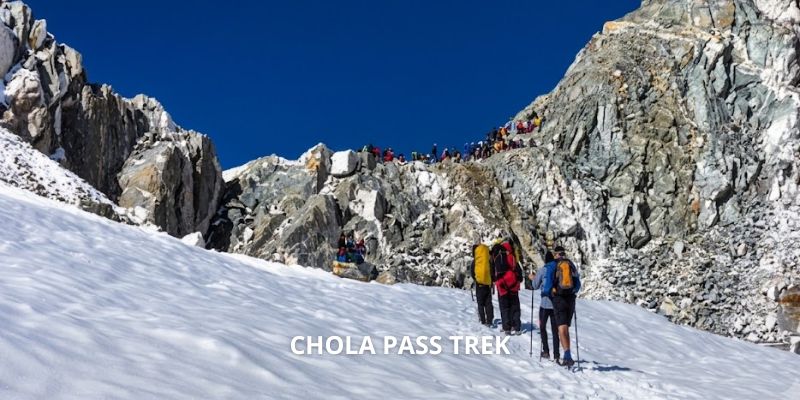
This is one of the longest and toughest days of the trek, Chola Pass Day. It’s important to carry enough water and pack a lunch, as there are no teahouses or food stops along the way. We start early in the morning while the pass route is still frozen and safer to cross. Besides its altitude of 5,368 meters, you have to climb a steep rocky slope. Then comes a glacier crossing and a long descent on the other side.

The climb to the pass is demanding, with icy and uneven ground, especially near the top. The summit of Chola Pass is lined with prayer flags. Catch your breath and witness the fruit of the climb. You can see Cholatse, Lobuche peaks, parts of the Gokyo Valley, and distant views of Ama Dablam and Makalu on clear days. Then, after a while, we carefully descend over rocks and icy patches toward Dzonglha (4,830m). It’s a quiet place with a few teahouses, perfect for rest after the tiring climb.

Day 11 :

Dzonglha to Lobuche

Trek Duration

2-3 hours

Highest Altitude

4910m

Place

Lobuche

Meals

B+L+D

Accommodation

Oxygen Altitude resturant and Home

This day’s walk is a bit shorter, giving us more time to relax and take in the scenery. We descend from Dzonglha, cross a small bridge, and follow a gentle, grassy trail. With Lobuche Peak in clear view, the path continues climbing up along a ridge until it connects with the main route coming from Pheriche and Dingboche. From here, we’ll meet more trekkers.

On the way to Lobuche, we’re treated to striking views of Ama Dablam (6,812m), Kangtega (6,685m), Thamserku (6,608m), and Taboche (6,367m), all rising sharply above the valley. Then, the route curves through a wide, rocky riverbed before we reach Lobuche. We settle at a lodge in this village for the night.

Day 12 :

Lobuche to Gorakshep to Everest Base Camp, then return to Gorakshep

Trek Distance

12 km

Trek Duration

6–7 hours

Place

Gorakshep

Meals

B+L+D

Accommodation

Buddha Lodge

This day takes us from Lobuche to Gorakshep and onward to Everest Base Camp. We start by walking slowly uphill along a winding, rocky trail for about 3–4 hours. We pass through the stark and dramatic landscape of the Khumbu Glacier moraine. Upon reaching Gorakshep (5,140m), we check in at the lodge, have lunch, and rest briefly before continuing our adventure.

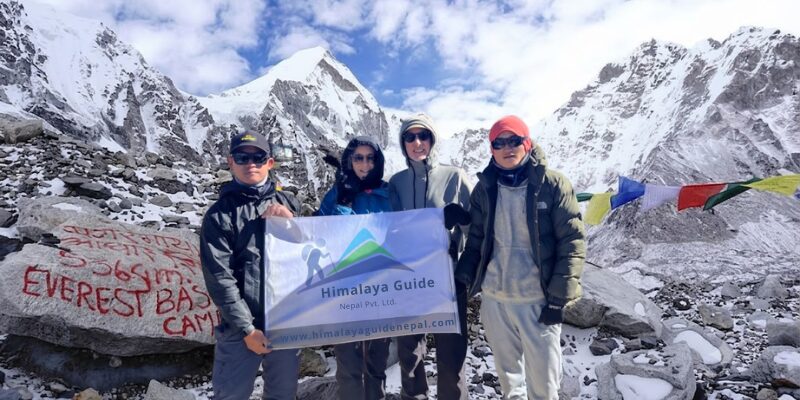
After some rest, we trek for another 2–3 hours across rocky terrain and glacial paths to reach the glorious Everest Base Camp (5,364m). You’ll walk beside the Khumbu Glacier, along its towering seracs (ice carapaces) and deep crevasses. During the spring season (March-May), this EBC area is lively with colorful expedition tents and climbers preparing for their summit push. Spend some time here at the foot of Mt. Everest, admiring the natural beauty and taking photos. We’ll return the same way to Gorakshep for the night at the lodge.

Day 13 :

Gorakshep to Pheriche

Trek Distance

13 km

Trek Duration

5-6 hrs

Highest Altitude

4240m

Place

Pheriche

Meals

B+L+D

Accommodation

Everest Trekkers Home

We wake up early, before sunrise, for the steep hike up to Kala Patthar (5,555m), the highest point of the trek. It’s another tough climb after the Chola Pass. The air is thin, the wind is sharp, and every step takes effort, but reaching the top is absolutely worth it. From here, you get a close-up view of Mt. Everest, along with Pumori, Nuptse, Ama Dablam, and the Khumbu Glacier stretching out below. You can also spot Everest Base Camp far down in the valley.

Take a short rest and steady your breath first. Then, enjoy this moment of a lifetime. Afterwards, we hike back down to Gorakshep for breakfast and begin the long descent to Pheriche. It is another charming village with wide-open mountain views. This day is tough and pushes you to your limits. However, it leaves you with memories that last forever.

Day 14 :

Pheriche to Namche Bazaar

Trek Distance

13 km

Trek Duration

4-5 hrs

Highest Altitude

3440m

Place

Namche

Meals

B+L+D

Accommodation

Hotel 8848 / Hotel Kamal

Today, we trek down through the yak grazing area of Somare and pass the traditional Sherpa village of Pangboche. This route also follows the Dudh Koshi River, winding through a beautiful rhododendron forest as we make our way to Tengboche, home to the famous monastery. From Tengboche, we descend to Phungi Tanga, cross a wooden bridge, then climb up to Tosansa and Kyang Juma. After that, the trail flattens out, with gentle ups and downs along the Nepali flat before reaching Namche Bazaar. We spend the night at a lodge here.

Day 15 :

Namche to Lukla

Trek Distance

18 km

Trek Duration

5-6 hrs

Place

Lukla

Meals

B+L+D

Accommodation

Comfort Inn

Day 15 is mostly downhill as we once again follow the Dudh Koshi River. We cross suspension bridges and pass through beautiful Buddhist cultural sites, such as prayer chortens and fluttering prayer flags. Along the way, we walk through the Sherpa villages of Jorsalle, Monju, and Phakding before exiting Sagarmatha National Park at its gate. Tonight is your last night in the EBC region at Lukla. Relax and celebrate the completion on this final night before heading back to Kathmandu the next day.

Day 16 :

Lukla to Kathmandu

Trek Duration

35 Min

Flight Hours

35 minutes

Highest Altitude

1350m

Meals

B

Accommodation

Hotel in Kathmandu (if included)

In the morning, you’ll fly back to Kathmandu, leaving behind the towering peaks and fresh mountain air. Once in the city, take some time to relax at your hotel. If you want to, explore local shops, pick up souvenirs and gifts for family and friends. It is the last day in Nepal, so you may have a hearty Dal Bhat one last time. Spend the night in comfort, reminiscing about the trekking days. We hope you had a very fulfilling journey with us. Have a safe flight. Namaste.

Inclusion/Exclusion in Chola Pass Trek

Cost Includes

  • International airport pick-up and drop-off service
  • Two nights’ accommodation in Kathmandu on a B&B plan
  • Kathmandu to Manthali, then fly to Lukla.
  • Lukla to Manthali, then drive to Kathmandu.
  • Both ways, Airport Tax.
  • Lodge accommodation on the way
  • Three meals a day (Breakfast, Lunch, and Dinner along the trek).
  • An experienced guide (including his salary, equipment, insurance, lodging, and food)
  • Equipment: Down Jacket, Sleeping Bag.
  • Legal documents (National Park permit, Khumbu government fees, and TIMS card).
  • Some dry and seasonal fruits. for trekking.
  • Chola Pass trekking map.
  • Trekking duffle bag if needed.
  • First aid medical box.
  • A token of love from the company.
  • A farewell dinner or lunch is a suitable time.

Cost Excludes

  • Extra night accommodation in Kathmandu.
  • Travel insurance.
  • Hard and soft table drinks such as Coke, Mineral Water, Beer, etc.
  • Personal expenses (laundry, bar bill, telephone, extra helper, battery charge for the shower, and boiled water).
  • Those that are not included in the “Included” lists.
  • Tips are expected.

Chola Pass Trek Map

A trekking map is an essential tool for the Chola Pass Trek, especially when navigating high-altitude routes and glacier crossings. It helps you understand elevation changes, spot landmarks like villages, rivers, and monasteries, and track your progress each day. For a trail that includes Gokyo Lakes, the icy Chola Pass, and Everest Base Camp, a detailed map ensures you’re not just following the path, but truly understanding the journey.

Your adventure starts in Kathmandu with a flight to Lukla. From there, the trail leads you through Phakding, Namche Bazaar, and into the scenic Gokyo Valley via Dole and Machhermo. After summiting Gokyo Ri, you’ll cross Chola Pass to reach Dzonglha and Lobuche. Then, you’ll continue to Gorakshep, visit Everest Base Camp, and hike up Kala Patthar.

Kathmandu ➝ Lukla ➝ Phakding ➝ Namche Bazaar ➝ Acclimatization in Namche ➝ Dole ➝ Machhermo ➝ Gokyo ➝ Gokyo Ri ➝ Dragnag ➝ Chola Pass ➝ Dzonglha ➝ Lobuche ➝ Gorakshep ➝ Everest Base Camp ➝ Gorakshep ➝ Kala Patthar

Then the return route descends through Pheriche and Namche, ending your trek back in Lukla and returning to Kathmandu.

Kala Patthar➝ Pheriche ➝ Namche Bazaar ➝ Lukla ➝ Kathmandu

Chola Pass Trek Map Image Link

Download PDF download

Departure

16 Days

Trip Days

5 May, 2026

Start Tuesday

19 May, 2026

End Tuesday

0

Pax Booked

20

Group Size

USD 1,076

Price

Booking Open

Status

Private Trip

Prefer a more personal journey? Our private packages offer flexible dates, custom itineraries, and dedicated support—perfect for those seeking a tailored travel experience.

Chola Pass Trek Trip Information

shield

Safety Tips For the 16 Days Chola Pass Trek

  1. Acclimatize properly: Take your rest days seriously, especially in Namche Bazaar and other stops. Don’t take Altitude sickness lightly, and rush the climb.
  2. Stay hydrated: Drink plenty of water daily to help your body adjust and prevent dehydration at high altitude.
  3. Pack smart: Bring layered clothing, a high-quality sleeping bag, trekking poles, and waterproof gear to prepare for sudden weather changes.
  4. Know weather updates: Mountain weather is unpredictable. Start early each day and avoid risky sections if the weather turns bad.
  5. Recognize the signs of altitude sickness: The symptoms of altitude sickness are headaches, dizziness, nausea, or shortness of breath. Inform your guide immediately if you or anyone on the team gets these symptoms.
  6. Carry a First Aid Kit: Include medication for altitude sickness, painkillers, blister treatment, and any personal meds.
  7. Travel insurance: Get insurance covering high-altitude trekking and emergency evacuation.
  8. Respect your limits: Don’t push too hard. Listen to your body and communicate with your guide.
  9. Keep your documents safe: Keep trekking permits and ID handy, and carry copies in case of loss.

Altitude Chart

Altitude in:
Download PDF download

Why Take the Chola Pass Trek?

The Chola Pass route makes the Everest Base Camp trek more adventurous, suited for trekkers with good fitness and some experience in high-altitude environments. It has the perfect blend of a familiar classic journey, just with wild and less-traveled paths. You pass Namche and the Dudh Koshi like everyone else, but then suddenly you disappear off to the stunning Gokyo Lakes route that is calm, crystal-clear, and way less crowded.

You will encounter a diverse range of landscapes en route to Gokyo Valley. First, there are the green river valleys, and then the enormous glaciers. Then, high alpine lakes such as Gokyo and Longponga make their way. This mix of landscapes makes the trek feel new and exciting, unlike the usual, more straightforward EBC route. Additionally, it takes you through less-visited spots, such as Machhermo and Dragnag. These villages have a slower pace, and the locals are more traditional. These places are less affected by tourism, so you get a quieter and more authentic glimpse into Sherpa life.

Of course, the best highlight is Chola Pass itself, a high mountain pass that exceeds 5,300 meters. You need to make that strenuous climb. But it is worth it all because nothing beats standing above the clouds, watching the peaks of Everest and its giant neighbors in all their glory. And not just that, but you also feel a sense of accomplishment.

So, you aren’t just rushing to Everest Base Camp in this trek. You explore scenery and challenge yourself every day. Hence, it is the most special Everest trek in Nepal.

Chola Pass Trek Cost

On average, the price for the Chola Pass Trek is $1076 per person. This trek package covers costs for permits, guide and porter services, accommodations, meals, domestic flights, and other logistics for the full 16-day trek. Group discounts are also available. It can get as low as $1040 and as high as $1514, depending on the group size.

Group Size Price per Person (USD)
1 pax $1514
2 pax $1251
3 pax $1164
4 pax $1120
5 pax $1094
6 pax $1076
7 pax $1064
8 pax $1054
9 pax $1045
10 pax $1040

How Difficult is 16 Days Chola Pass Trek?

The Chola Pass Trek is definitely challenging, mainly because of the high altitude and long days of trekking. You’ll be walking for several hours each day, often on steep, rocky, and sometimes icy trails. That said, the trail is well-marked and frequently traveled. The crossing of Chola Pass itself is the toughest part. It consists of challenging glacier sections and a steep climb to over 5,300 meters.

You need to have a decent level of fitness. Plus, the altitude is no joke, either. So, even if you’re an experienced trekker, the altitude will test your stamina and breathing. We have built in proper acclimatization days into the itinerary, but still be prepared for physical and mental fatigue. The terrain isn’t always smooth, so use good hiking boots and trekking poles. These will make a significant difference on the trek. For accommodations, there are quite a number of lodges along the way to provide you with comfortable resting spots.

The difficulty only adds to the sense of achievement. This makes the trek to Chola Pass with EBC an even more rewarding cultural experience.

Teahouse along the Chola Pass Trek Route

Curious about accommodations? The Chola Pass Trek offers a good network of teahouses and lodges that provide shelter and meals throughout the journey. Starting from busier towns like Lukla and Namche Bazaar, you’ll find budget-friendly to more comfortable options, with facilities such as Wi-Fi, charging points, and hot showers. These places are well-equipped to serve trekkers and offer a chance to rest properly after long days on the trail.

As you move into more remote villages, such as Phakding, Monju, and Jorsalle, the teahouses become simpler yet still comfortable. They provide basic rooms with beds and blankets, hearty meals like dal bhat, and hot drinks to warm you up. In higher-altitude stops such as Dole, Machhermo, and Gokyo, amenities are more limited. Electricity may be available only for a few hours each day. You need to use shared bathrooms, and prices for food and supplies will rise because it takes a lot of effort and money to transport goods to these areas.

Beyond the Chola Pass itself, lodges near Dzonglha and those that follow are relatively basic. These focus mainly on warmth and rest. The only forms of heat are from wood-burning stoves, and hot showers are rare or nonexistent. Also, come prepared with snacks and fill your water bottles before walking, as teahouses are few and far apart. However, despite their simplicity, staying in these teahouses offers a unique opportunity to experience Sherpa hospitality and actually live like the Sherpas.

Comparison Between Chola Pass and Everest Three Passes Trek

Both the Chola Pass Trek and the Everest Three Passes Trek are challenging EBC treks. They both offer spectacular mountain scenery and provide an opportunity to experience Sherpa culture. The Chola Pass Trek focuses on crossing the iconic Chola Pass and visiting highlights like Gokyo and Everest Base Camp. The Everest Three Passes Trek is slightly longer and more demanding, as it combines three high passes: Chola, Renjo La, and Kongma La.

Feature Chola Pass Trek Everest Three Passes Trek
Duration About 16 days About 18 days
Difficulty Strenuous Very strenuous to extreme
Maximum Altitude 5,420 m (Chola Pass) 5,535 m (Kongma La)
Key Passes Chola Pass Chola La, Renjo La, Kongma La
Main Highlights Gokyo Lake, Everest Base Camp, Chola Pass Everest Base Camp, Gokyo Lakes, Three High Passes
Cultural Experience Sherpa villages, Namche Bazaar Sherpa villages, Namche Bazaar, Tengboche
Accommodation Teahouses and lodges Teahouses and lodges
Best Season Spring, Autumn Spring, Autumn
Required Fitness Level Good fitness and some high-altitude experience Excellent fitness and high-altitude experience

FAQs Of Chola Pass Trek

Ready to Start
Your Adventure?

Join thousands of happy travelers who
Choose Himalayan Guide Nepal Pvt.Ltd..

Plan Your Trip