
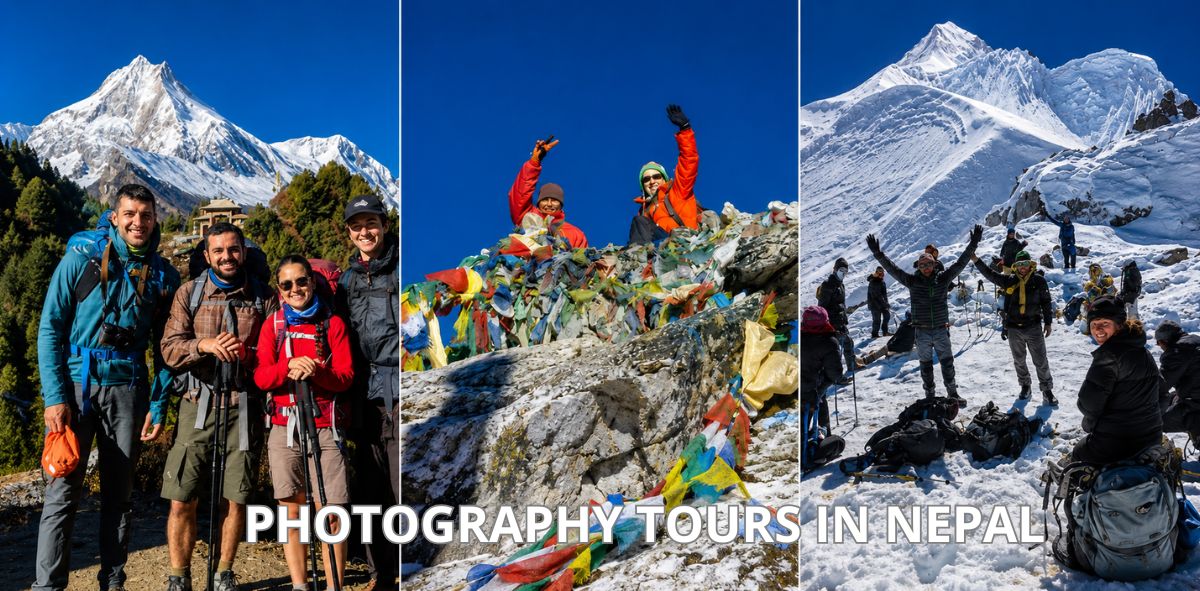


Photography tours in Nepal are built around light, not distance. Sunrise, sunset, landscape, night sky, the walking is how you get to the shot. This kind of tour is planned around light and weather, not just how much distance you cover each day. Three region currently offer dedicated photography tours in Nepal through us, and each one suit different kind of photographer and different level of physical commitment.
This guide compare all three Nepal photography tour options, how guided photography tours Nepal itinerary actually differ from regular trek, best season for mountain photography, whether beginner can join, drone rule, guide type, and what gear actually survive a Himalayan photography holiday
| Tour | Duration | Difficulty | Best For | Starting Price |
|---|---|---|---|---|
| Everest Photo Tour | 18 Days | Strenuous | Iconic peaks, experienced trekkers | $1,595 |
| Annapurna Photo Tour | 15 Days | Moderate | Beginners, golden hour and astrophotography | $1,135 |
| Manaslu Photo Tour | 13 Days | Strenuous | Solitude, hardcore mountain photographers | $1,270 |
3 Photography Tour In Nepal For 2026
Everest Region’s Everest Photo Tour
This one basically follow full Everest Three Passes route, combining Everest Base Camp with Gokyo Lakes and two high pass, Chola Pass at 5,368 metres and Renjo La at 5,360 metres. Namche Bazaar and Dingboche handle the acclimatization, and along the way you’ll reach Kalapatthar for classic Everest panorama before continuing to Gokyo Ri, four of world’s eight highest peak visible from single ridgeline there.
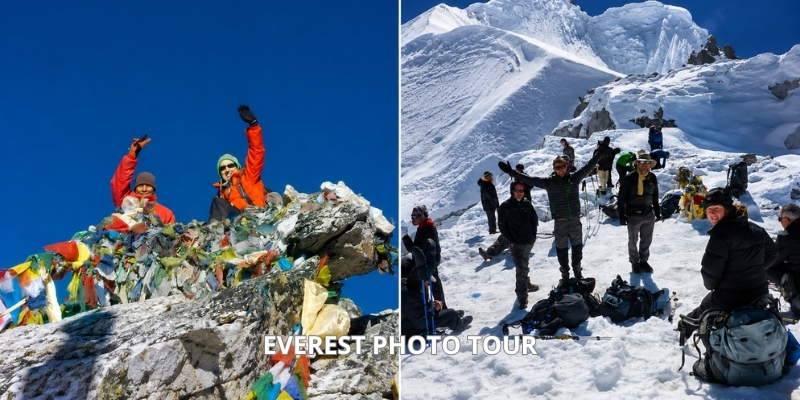
Eighteen days, permit cover Sagarmatha National Park and Khumbu Rural Municipality fee, price from $1,595. Honestly, Everest Photo Tour is the one I send experienced trekkers to, not first-timer, since it’s longest and most demanding of the three by a wide margin.
Annapurna Region’s Annapurna Photo Tour
Timing is really the whole idea behind this route. Sunrise get scheduled right at Poon Hill, sunset light aimed toward Annapurna Sanctuary, blue-hour stop at Chhomrong, and a clear-night astrophotography session built in from Annapurna Base Camp at 4,130 metres. Fifteen days total, Ghorepani handling acclimatization.
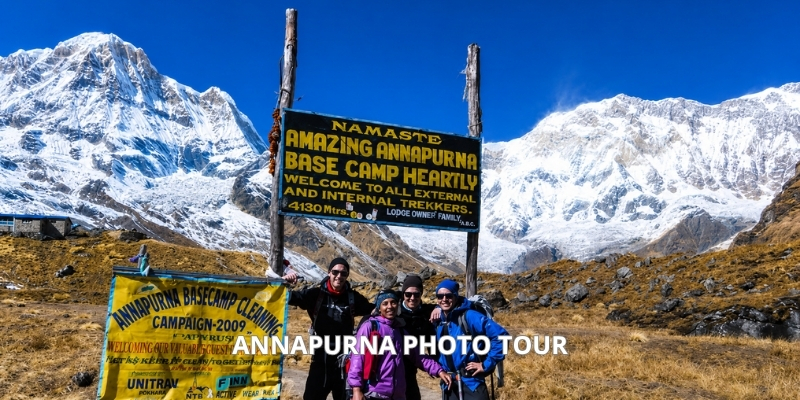
I’d point a beginner towards Annapurna Photo Tour before either of the other two. Group size run 1 to 25, permit cover ACAP and TIMS card, price start $1,135, most accessible of the three both physically and money-wise.
Manaslu Region’s Manaslu Photo Tour
Solitude, that’s the reason photographer pick this one over the other two. No crowd stepping into your frame at viewpoint, no queue at pass, and route that offer roughly as many peak as Everest region without the foot traffic. Thirteen days circling Mount Manaslu, reaching Larkya La Pass at 5,106 metres.
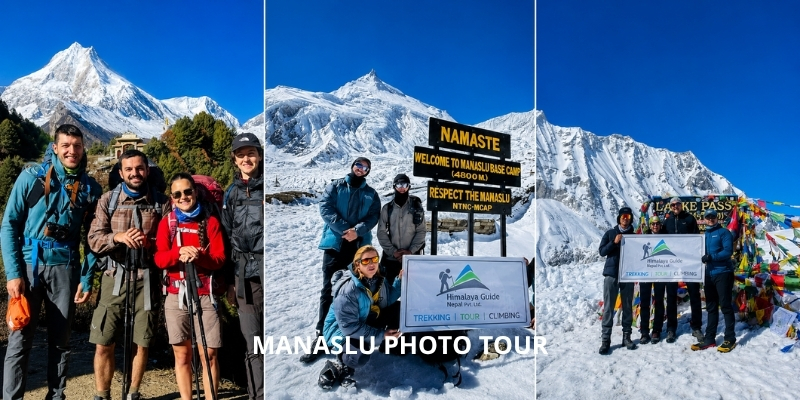
The acclimatization day at Samagaon include hike to Manaslu Base Camp at 4,800 metres for a shot of North Face reflected in Birendra Lake, best captured before 8am, since once wind pick up the water turn to ripple and reflection break apart. Our own page describe Manaslu Photo Tour as suited to “hardcore mountain photographer,” honest label since it’s more remote and physically demanding than the other two. Mani wall near Lho stretch over 200 metres, Ribung Gompa monastery sit with Manaslu’s double peak right behind it, and Syala Gaun is rated best single viewpoint on whole circuit. Permit cover MCAP, Manaslu Restricted Area Special Permit, ACAP, and local fee, price starting $1,270.
Which Photography Tour In Nepal Should You Choose?
Start with two question: how much time you actually have, and how much you want solitude over convenience. Two week or less, prefer easier pace, that point toward Annapurna. Three week and Everest itself on your wish list, that point toward Everest Photo Tour. Crowded viewpoint bother you more than distance or altitude, Manaslu worth the extra remoteness.
Fitness matter as much as interest for anyone planning high-altitude photography on these route. Annapurna rated moderate, genuinely welcome first-timer. Everest and Manaslu both rated strenuous, and no amount of photography enthusiasm change what altitude and daily distance demand from your body on those two.
Photography Tours Vs. Regular Treks In Nepal
Trail is often identical. Schedule is what change. Regular trek move to cover distance, photo stop happening whenever group happen to pause. We build the day around light instead on these tours, early start before sunrise, planned stop at known vantage point, sometime whole day structured around one shot, like Birendra Lake reflection on Manaslu route, or Milky Way session built into overnight at Chhomrong on Annapurna route.
That built-in flexibility around light and weather is the real distinction. Camera in your bag don’t make a trek into photography tours. Schedule built to wait for right moment does.
Best Season For Mountain Photography In Nepal
Autumn and spring photograph differently, not really one beating other. Autumn, September to November, follow the monsoon, washed-clean air giving sharpest long-distance peak visibility of whole year, golden harvest field alongside, and if timing work out, Nepal’s two biggest festival, Dashain and Tihar. Spring, March to May, brings blooming rhododendron forest and noticeably more biodiversity, though afternoon haze show up more often than autumn, so morning is more reliable window for Himalayan sunrise shot.
Sharp, clear peak favor autumn. Color and greenery favor spring.
Are Photography Tours Just For Photographers?
No, not at all. Modern smartphone handle landscape and village scene well enough, though interchangeable-lens camera add real flexibility for wildlife, night photography, and pulling in distant mountain detail phone lens just can’t reach. That’s exactly why we rate Annapurna moderate, to welcome both beginner and medium-level trekker, camera enthusiast or not.
Everest and Manaslu ask more of anyone regardless of gear, both carrying strenuous rating. Fitness and altitude tolerance is real filter on those two, not what’s hanging around your neck.
Drone Rules And Photography Permits In Nepal
Nepal’s Civil Aviation Authority and Department of Tourism both require permission before you fly drone, enforced stricter inside restricted area like Manaslu. Fly without correct permit, and you risk heavy fine or equipment confiscation right on the spot, so get this arranged before departure, not sorted out on trail.
No separate “photography permit” exist beyond standard trekking permit for each region, ACAP for Annapurna, Sagarmatha National Park plus Khumbu Rural Municipality fee for Everest, MCAP with Manaslu Restricted Area Special Permit and ACAP together for Manaslu. Tripod, extra lens, ND filter, polarizing filter, none of that need separate paperwork.
Do You Need A Photography Guide Or A Trekking Guide?
Depend on the tour, honestly. Our Manaslu package draw the line pretty clear, specialized photography guide who understand lighting, versus standard licensed guide used on regular Manaslu Circuit Trek. Annapurna Photo Tour include license-holder photography guide by default, built right into its slower, light-focused schedule.
Standard trekking guide cover pacing, safety, and route knowledge, essential on any of these three. Photography guide add something else on top, knowing when light actually work at each stop, patience to wait out a cloud instead of moving group along on fixed clock. Ask us specifically for photography-specialized guide when you book if getting particular shot matter as much as reaching the destination.
Lenses, Batteries & Cold: Packing For A Himalayan Photo Trek
Cold do more damage to a shoot than altitude or dust ever will. Battery drain fast below freezing. Our standard advice on the Manaslu route is direct about it, keep spare inside your down jacket or sleeping bag overnight, not in camera bag, since cold battery can read empty when it’s really not.
Wide-angle in 16-35mm range cover sweeping landscape and monastery shot. Standard zoom around 24-70mm handle general trekking and portrait work. Telephoto in 70-200mm or 100-400mm range pull in distant peak. That three-lens spread is the practical minimum we recommend for this kind of trip. Camera rain cover earn its weight during monsoon-adjacent shoulder-season trip, and polarizing filter cut glare off snow and glacial lake better than any post-processing trick ever could.
Weight matter more here than on standard trek. Hired porter’s standard limit run 12.5 to 15kg, full kit with multiple body, three lens, and tripod can hit 7 to 8kg on its own easily. Don’t assume your porter can carry camera gear on top of normal pack, a dedicated second porter for equipment is common enough that we plan for it as standard add-on. Dust protection matter too, especially on Manaslu’s drive-in section, sealed dry bag keeping grit out of your sensor on rough road.
Tell us how many days you have and what you actually want to photograph, sunrise ridgeline for landscape photography, monastery interior, or high-altitude night sky with zero light pollution for Milky Way and other RAW photography work, and we’ll match you to the route built for that shot. Whether you’re after full Nepal photo tour package or shorter Himalayan photography tour woven into longer trip, proper photography expedition Nepal itinerary really come down to matching season, region, and pace to what you actually want to bring home.


