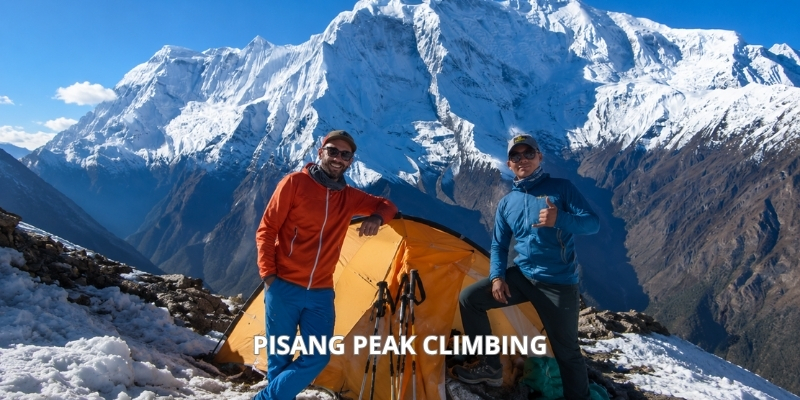
Pisang Peak Climbing is one of the best peaks in the Himalayas for beginners. It is located between the Annapurna and Manaslu ranges. So, this peak is iconic in Manang. So, locally the peak is also called Jong Ri.
Rising behind the village of Pisang, because this pyramidal peak is a good warm-up before climbing other higher peaks. This trek combines the warm hospitality and culture of the Manang region. So, taking a step further in the Annapurna region, the climb to the Pisang Peak (6,091 m) is a feat to remember.
Pisang Peak climbing commences in the lively village of Bhulbhule. Walking beside the Marsyangdi River and passing multiple streams. Because we will enter the heart of Manang. The view of Annapurna, Tilicho Peak, and Gangapurna welcomes climbers to Pisang. The fresh breeze and mesmerizing sunrise boost your energy to reach the High Camp. Nearing the summit, the final push is demanding and it blesses the climbers with the best views.
The journey continues even after the Pisang Climb. Replenishing with the nurture of Nature. So, we will continue towards the streets and corners of Manang. From the settlements and monasteries to the top of Pisang Peak, join this adventure with Himalaya Guide Nepal.
Highlights Of Pisang Peak Climbing
- Best Climbing experience in the Himalayas reaching up to 6,091 m (19,984 ft) in all
- Fantastic views of Mt. Manaslu (8,163m), Mt. Annapurna I (8,091 m), Mt. Annapurna II (7,555m), Annapurna IV (7,525m), and other high peaks.
- Best trekking trail in the Annapurna Conservation area to reach the Base camp
- An adventure above the alpine region with moderately difficult segments.
- Gompas, monastery, Chhortens, Mani walls, and various destinations packed with bits of Tibetan Buddhism
- Gurung, Magar, Thakali, Manage, and Loba are ethnic locals with their rich culture and art.
- Amongst one of the most scenic trekking peaks in Nepal
- Mountain wildlife and vegetation-exploring opportunity
Climbing Seasons:
- The optimal periods for Pisang Peak expeditions are during spring (March to May) and autumn (September to November).
- These seasons provide stable weather conditions and clear skies, enhancing the climbing experience. Notably, snow is typically present at high camp from late November through March, which may affect climbing conditions.
Permits and Regulations:
- Climbers are required to obtain several permits, including the Pisang Peak Climbing Permit, the Annapurna Conservation Area Permit (ACAP), and a Trekkers’ Information Management System (TIMS) card.
- Permit fees can vary based on the season; for instance, the Pisang Peak climbing permit costs USD 250 per person during the spring season.
Route Information:
The standard approach to Pisang Peak begins from Besisahar, following the Annapurna Circuit trail to Pisang village. From there, climbers ascend through alpine terrains to reach the base camp at approximately 4,380 meters and then proceed to high camp at around 5,400 meters before making the summit push.
Accommodation and Logistics:
- During the trek, accommodation is typically in teahouses or lodges along the route. At higher elevations, especially near the base and high camps, camping is the norm.
- It’s advisable to arrange logistics through a reputable trekking agency to ensure safety and proper acclimatization.
Physical Preparation:
- While Pisang Peak is considered one of the easier trekking peaks, it still demands good physical fitness and basic mountaineering skills.
- Pre-expedition training focusing on cardiovascular endurance, strength, and familiarity with climbing equipment is recommended.