The Gen Z movement, Nepal stabilized, and life returned to normal. All safe for your Travel in Nepal 2025.

Trip Facts

Country

Nepal

Difficulty

Strenuous

Best Season

Sep-Nov to March & April

Accommodation

Tea House Trek

Start / End Point

-

Max. Altitude

Chola Pass 5368m & Renjo La Pass 5360m

Group Size

1

Meals Included

Breakfast, Lunch & Dinner

Duration

16 Days

Activity

Photo Travel in Nepal

Everest Photo Tour Overview

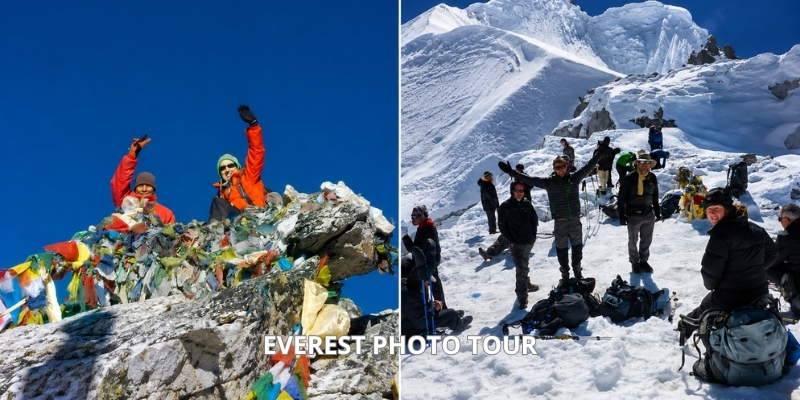
The Everest Photo Tour is the ideal excursion for photographers who want to document the splendor of the Everest region with their cameras. The journey begins at Lukla Airport in the high mountains, which is located at a height of 2840 meters. The tour then continues on to Namche Bazaar, the Sherpa capital. The journey from Lukla to Namche Bazaar is beautiful, offering stunning views of the surrounding mountain ranges and the distinctive Sherpa culture. In order to increase the adventure and thrill of the hike, there are a few hard ascents and descents.

The tour continues from Namche Bazaar to Mount Everest’s base camp and Khumbu glacier. Because of the steep ascents and rocky terrain, this section of the journey is regarded as the most difficult. The journey offers some of the most breathtaking vistas of the mountains in the area, so the extra work is well worth it. As the voyage goes on, you can get a close-up view of the Everest range’s majesty and photograph it.

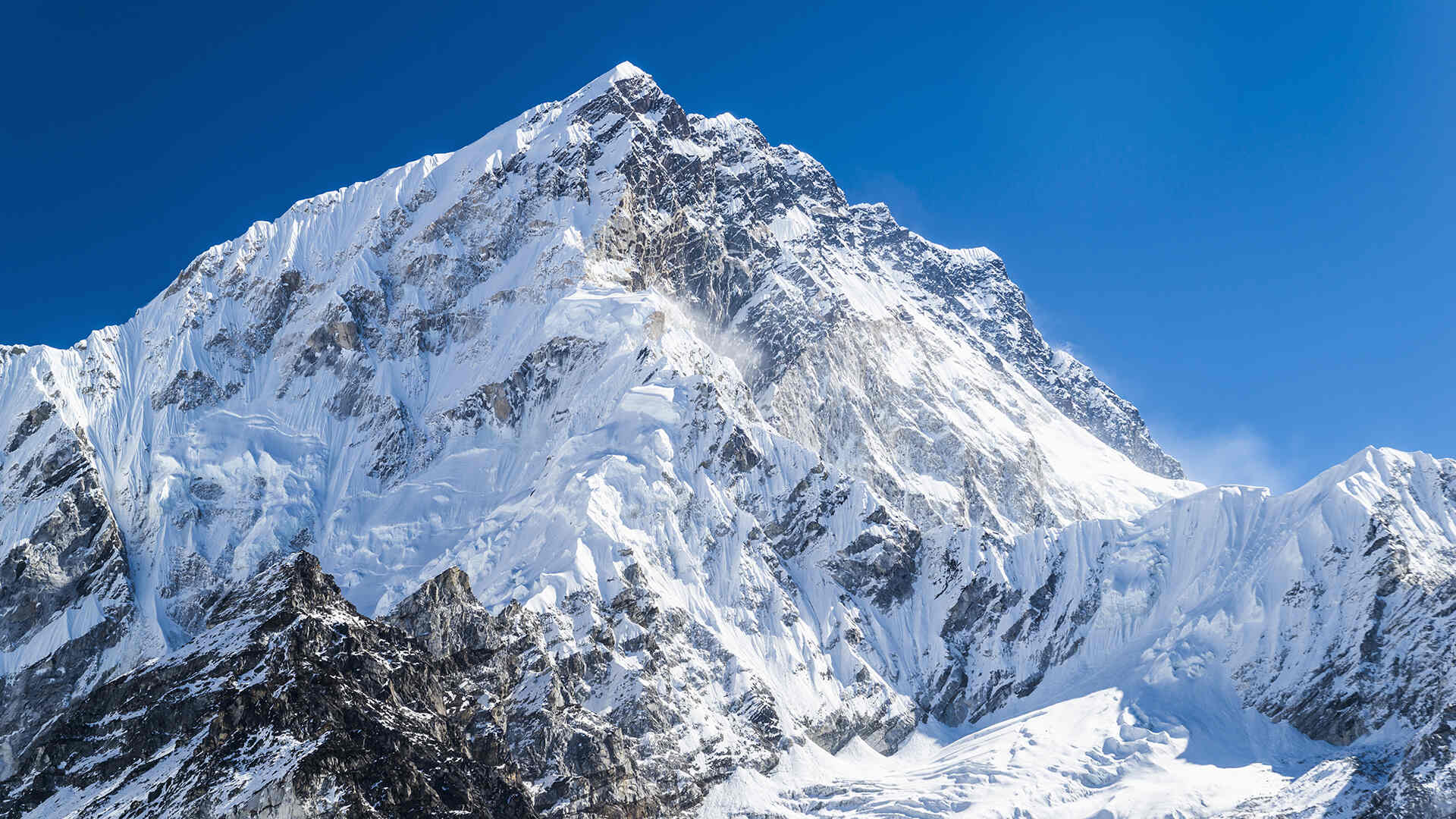
Several of the tallest mountains in the world, including Mount Everest, Mount Makalu, Cho Yu, Amadablam, Pumori, Lhotse, Nuptse, and many more, may be seen from the Everest picture trek path. You can pause your trip through the area to stop your camera and take pictures of these magnificent peaks. The Khumbu Glacier, one of the largest glaciers in the world, is also stunning to view.

More About Everest Photo Tour

The Everest Photo Tour treks past base camp and the Khumbu glacier before crossing the Chola pass at a height of 5368 meters to get to Gokyo lake and Gokyo Ri, which is located at a height of 5360 meters. You may capture some of the most stunning vistas in the area from this stretch of the route, which is exceptionally gorgeous. The views from Gokyo Ri are absolutely magnificent, and the Gokyo Lake is a glacial lake encircled by snow-capped peaks.

You will next be directed by the Everest Photo Guide to the Gokyo valley, the Sherpa town of Khumjung, and finally back to Namche Bazaar and Lukla. The hike back is comparatively simpler because it is mostly downhill. You can think back on the amazing adventures and memories that you have documented on your camera when the tour comes to an end. Your final day of travel will be spent in Lukla, and the following morning, you will depart for Kathmandu in accordance with your flight schedule.

In conclusion, anyone interested in photography and adventure should do the Everest Photo Tour. It is a chance to photograph some of the region’s most breathtaking vistas, which include some of the highest peaks, glaciers, and lakes in the entire world. Although the trek is difficult, the benefits are great since you get to see and photograph the region’s unrivaled splendor. You will never forget your experience on the Everest Photo Tour.

Everest Photo Tour Outline Itinerary

Route End Elevation Elevation Gain/Loss Duration Distance
Day 00: Arrival in Kathmandu/drive to the hotel. 1350M (4429ft)
Day 01 Kathmandu – Lukla to Phakding 2610M (8562 Ft)
Day 02 Phakding – Monju to Namche Bazaar 3440M (11286ft)
Day 03 Rest Day in Namche Bazar/ Visit Everest View Hotel 3962m (12998ft)
Day 04 Namche Bazar – Phungi Tangka to Tengboche 3860M (12,664ft).
Day 05 Tengboche – Panboche to Dingboche 4410M (14468ft)
Day 06 Rest Day in Dingboche/ Hike to Nagarjun Hill 5050M (16568ft)
Day 07 Dingboche – Thukla to Lobuche 4910M (16108ft)
Day 08 Lobuche to Gorakshep and Visit Everest Base Camp. 5164M (16942ft) 3-4 hours walk
Day 09 Walk to Kalapathar View Point then walk to Dzongla 5555M (18225ft)
Day 10 Dzongla – Chola Pass to Drangnag 4700M (15419ft)
Day 11 Dragnag to Gokyo Lake 4790M (15715ft)
Day 12 Gokyo - Renjo la pass to Lumde 5360M
Day 13 Lumde - Marlung to Thame 3800M (12467ft)
Day 14 Thame - Namche bazaar to Monjo 2835M (9301ft)
Day 15 Monjo - Phakding to Lukla 2840M (9317ft)
Day 16 Lukla to Kathmandu by flight
Download PDF download

Itinerary

Day 00: :

Arrival in Kathmandu/drive to the hotel.

Highest Altitude

1350M (4429ft)

Upon arrival in Kathmandu, you will be met at the airport and transferred to your hotel. You can rest and relax for the remainder of the day, or explore the vibrant city of Kathmandu.

Day 01 :

Kathmandu – Lukla to Phakding

Flight Hours

35 min

Highest Altitude

2610M (8562 Ft)

Meals

Breakfast+Lunch+Dinner

Accommodation

Lodge

After breakfast, you will be driven to the airport for a short 35-minute flight to Lukla, a small town in the Khumbu region.
From here, you will start your trek and hike for about 3-4 hours to reach Phakding, a small village on the way to Everest Base Camp.

Day 02 :

Phakding – Monju to Namche Bazaar

Highest Altitude

3440M (11286ft)

Meals

Breakfast+Lunch+Dinner

Accommodation

Lodge

Today, you will walk for 5-6 hours from Phakding to Namche Bazaar. You will cross the Dudh Koshi River and pass through beautiful pine forests, suspension bridges, and small villages.

You will also have the opportunity to visit the Sagarmatha National Park and the village of Monju en route to Namche Bazaar.

Day 03 :

Rest Day in Namche Bazar/ Visit Everest View Hotel

Highest Altitude

3962m (12998ft)

Meals

Breakfast+Lunch+Dinner

Accommodation

Lodge

Accordingly, after trekking for a couple of days, you will have a well-deserved rest day in Namche Bazaar, which will help you to acclimatize to the high altitude.
During this day, you have two options: either take a leisurely stroll around the town and explore the local market, or embark on a moderate hike up to the Everest View Hotel, which provides breathtaking views of Mt. Everest and the surrounding peaks.

Day 04 :

Namche Bazar – Phungi Tangka to Tengboche

Highest Altitude

3860M (12,664ft).

Meals

Breakfast+Lunch+Dinner

Accommodation

Lodge

From Namche Bazaar, you will trek to Tengboche, a beautiful village that is home to the Tengboche Monastery, the largest monastery in the Khumbu region.
On the way, you will pass through Phungi Tangka and enjoy breathtaking views of Ama Dablam and other surrounding peaks.

Day 05 :

Tengboche – Panboche to Dingboche

Highest Altitude

4410M (14468ft)

Meals

Breakfast+Lunch+Dinner

Accommodation

Lodge

You will hike for about 4-5 hours to reach Dingboche, a small village located at an altitude of 4410m.
On the way, you will pass through the village of Panboche and enjoy stunning views of the Himalayan range.

Day 06 :

Rest Day in Dingboche/ Hike to Nagarjun Hill

Highest Altitude

5050M (16568ft)

Meals

Breakfast+Lunch+Dinner

Accommodation

Lodge

Today, you will have a rest day in Dingboche to acclimatize to the altitude. You can take a leisurely hike to Nagarjun Hill for panoramic views of the surrounding peaks, or explore the town and interact with the locals.

Day 07 :

Dingboche – Thukla to Lobuche

Highest Altitude

4910M (16108ft)

Meals

Breakfast+Lunch+Dinner

Accommodation

Lodge

You will hike for about 4-5 hours to reach Lobuche, a small village situated at an altitude of 4910m.
On the way, you will pass through Thukla, where you can visit the memorial dedicated to climbers who have lost their lives on Mt. Everest.

Day 08 :

Lobuche to Gorakshep and Visit Everest Base Camp.

Trek Duration

3-4 hours walk

Highest Altitude

5164M (16942ft)

Meals

Breakfast+Lunch+Dinner

Accommodation

Lodge

Today, you will hike for 3-4 hours to reach Gorak Shep, a small village situated at an altitude of 5164m.
From here, you will visit the Everest Base Camp and witness the stunning beauty of the Khumbu glacier.

Day 09 :

Walk to Kalapathar View Point then walk to Dzongla

Highest Altitude

5555M (18225ft)

Meals

Breakfast+Lunch+Dinner

Accommodation

Lodge

Today, you will hike to Kalapathar View Point, which offers stunning views of Mt. Everest and the surrounding peaks.
You will then continue to Dzongla, a small village situated at an altitude of 4830m.

Day 10 :

Dzongla – Chola Pass to Drangnag

Highest Altitude

4700M (15419ft)

Meals

Breakfast+Lunch+Dinner

Accommodation

Lodge

Today, we start our trek to Drangnag (4700 meters). We cross the Chola Pass (5368 meters) and descend towards Drangnag.
The trail is steep and can be a bit challenging, but the views of the surrounding mountains make it worth the effort.
We reach Drangnag in the evening and check in at our teahouse for dinner and an overnight stay.

Day 11 :

Dragnag to Gokyo Lake

Highest Altitude

4790M (15715ft)

Meals

Breakfast+Lunch+Dinner

Accommodation

Lodge

Today, we will embark on our trek to Gokyo Lake (4790 meters). Firstly, the trail follows the Ngozumpa Glacier, and we cross several glacial streams. Moreover, the views of the surrounding peaks, including Cho Oyu and Everest, are stunning.

Upon arrival in the afternoon, we check in at our teahouse and enjoy a delicious lunch. After that, we hike around the lake and take in the beautiful scenery.

Finally, we will spend the night at the teahouse, relaxing and taking in the views of the surrounding area.

Day 12 :

Gokyo - Renjo la pass to Lumde

Highest Altitude

5360M

Meals

Breakfast+Lunch+Dinner

Accommodation

Lodge

Today, we will start early in the morning and trek to the Renjo La Pass (5360 meters). The trail is steep and can be challenging, but the views of the surrounding peaks, including Everest and Makalu, are breathtaking.

We reach the top of the pass and take some time to enjoy the view before descending to Lumde (4380 meters). The descent is steep and can be a bit challenging, but the views of the surrounding peaks make it worth the effort.

We reach Lumde in the evening and check in at our teahouse for dinner and an overnight stay.

Day 13 :

Lumde - Marlung to Thame

Highest Altitude

3800M (12467ft)

Meals

Breakfast+Lunch+Dinner

Accommodation

Lodge

We will begin our descent towards Thame, a charming village in the Khumbu region. We will trek through beautiful rhododendron forests and past small streams before reaching Marlung.

From here, we will continue trekking to Thame, where we will spend the night

Day 14 :

Thame - Namche bazaar to Monjo

Highest Altitude

2835M (9301ft)

Meals

Breakfast+Lunch+Dinner

Accommodation

Lodge

Today, we will begin our trek back to Namche Bazaar and continue on to Monjo. Along the way, we will pass by some breathtaking waterfalls and quaint villages, allowing us to soak in the stunning views of the Himalayas.

Finally, as the day comes to an end, we will reach Monjo, a peaceful village nestled amidst the majestic natural beauty of the region, where we will spend the night.

Day 15 :

Monjo - Phakding to Lukla

Highest Altitude

2840M (9317ft)

Meals

Breakfast+Lunch+Dinner

Accommodation

Lodge

We will begin our final trek back to Lukla today. We will trek through beautiful forests and past small villages before reaching Phakding.

From here, we will continue on to Lukla, where we will spend our final night in the Himalayas.

Day 16 :

Lukla to Kathmandu by flight

Flight Hours

45mins

Today, we will take a short flight back to Kathmandu, where our journey will come to an end.
We will transfer you to your hotel in Kathmandu and bid you farewell.

Inclusion/Exclusion in Everest Photo Tour

Cost Includes

  • Flight Ktm to Lukla to Ktm.
  • Both ways airport taxes.
  • Food; Breakfast, Lunch, and Dinner with tea/coffee
  • Lodge along the trek simple.
  • An experience Guide; Included (Salary, Food, Lodge, Insurance, Equipment, Transportation etc.)
  • Strong Porter; Included (Salary, Food, Lodge, Insurance, Equipment, Transportation etc.)
  • Legal Document; Everest Trekking Permit and TIMs.
  • Equipment: Down Jacket, Sleeping Bag.
  • Dry fruits.
  • Farewell dinner/ typical Nepali set.

Cost Excludes

  • Travel insurance.
  • Personal expense; phone call, internet and buy something.
  • Cold drink; coke, mineral water, beer etc.
  • Extra porter if hired on the trek.
  • Tips for guide and porter.

Departure

No departure dates available.

Private Trip

Prefer a more personal journey? Our private packages offer flexible dates, custom itineraries, and dedicated support—perfect for those seeking a tailored travel experience.

Everest Photo Tour Trip Information

id_card

Everest Three Passes Trek Permits (Every Officer's Obsession)

Like in any other Everest Region Treks, you will need two major permits to take the Everest Three Passes Trek. They are:

  • Sagarmatha National Park Permit
  • Khumbu Rural Municipality Permit

These permits allow you to trek the three passes legally. Here is their cost, with the places where you can obtain them.

Permit Name Cost for Foreigners Cost for SAARC Nationals Where to Obtain Notes
Sagarmatha National Park Entry Permit NPR 3,000 (~ USD 22) NPR 1,500 (USD 11) Park entrance gate in Monjo or in Kathmandu Required as the trek passes through the national park.
Khumbu Pasang Lhamu Rural Municipality Permit
  • USD 20 per person/week (for the first 4 weeks)
  • USD 25 per person/week (beyond 4 weeks)
Sagarmatha National Park Counter A local permit fee that contributes to the preservation and maintenance of local infrastructure in the Khumbu region. This is in addition to the Sagarmatha permit and TIMS (Trekkers’ Information Management System).

Permits can be arranged through a Himalaya Guide Nepal in Kathmandu, which is often the easiest option, or we can obtain them individually from the Nepal Tourism Board and at various checkpoints along the route.

checked_bag

Packing List for Everest Three Pass Trek

The Everest Three Passes Trek is an exciting and challenging trek that requires proper planning, especially on what to pack. The trek offers different landscapes and altitudes, ranging from lush valleys to difficult high passes. You require a detailed packing list to ensure your comfort, safety, and success. This is a list of the necessary clothes, gear, and personal items to help you deal with the physical challenges and unpredictable weather you will encounter on this great trek in the Khumbu district.

  • Good trekking boots
  • Warm, waterproof clothes
  • Sleeping bag
  • Daypack
  • Trekking poles
  • First aid kit
  • Water bottle
  • Sunglasses
  • Headlamp

Procedure for Emergency Evacuation in the Everest Three Passes Trek

In the event of a serious medical issue or accident, the immediate priority is to assess the situation and provide first aid to the affected individual. Simultaneously, someone from the trekking group should attempt to establish communication using available means such as satellite phones, radios (if provided), or by sending a runner to the nearest settlement with communication capabilities. Key information to relay includes the exact location (with GPS coordinates, if possible), the nature and severity of the emergency, the number of injured or ill individuals, and any specific assistance required (e.g., helicopter evacuation, porter support). It’s vital to remain calm and provide clear, concise information to facilitate an adequate response.

Once communication is established and help is on the way, the trekking team should prepare the evacuation site. For helicopter rescues, this means finding a safe, flat area for landing that is clear of obstacles, such as loose rocks, tents, and trekking gear. Mark the area clearly with bright clothing or other visible signals. For ground evacuations, prepare the injured person for transport. Make sure they are as comfortable and stable as possible. This may involve using a makeshift stretcher or assisting them to walk if they are able to do so. Monitor their condition and offer support and reassurance during this waiting period.

When the rescue team arrives by air or ground, follow their instructions carefully. Give them all the important details about the incident and the person’s condition. Help them transfer the person for evacuation if needed. Once the emergency is over, the rest of the trekking group should check on everyone’s safety. Then, decide what to do next—this could mean continuing the trek, descending to a lower altitude, or seeking additional help if necessary.

Major Viewpoints and Passes Above 5,000m

The Everest Three Passes Trek is also known as the Three High Passes Trek in Nepal’s Himalayas. More than just a pass, it’s a high-altitude loop across some of the region’s most awe-inspiring points. One of the stunning locations above 5,000Ā meters, where trekkers explore before tackling the first high pass, isĀ the Nangkar Tshang viewpoint (5,100 meters). Similarly, the ascent to Kongma La Pass (5,540m) is the first great challenge of the journey.Ā 

After Kongma La, the trail merges with the classic EBC route from where trekkers can reach the well-renowned Everest Base Camp (5,360m). For the unobstructed view of Mount Everest, you’ll hike to another 5,000m above a vantage point, Kalapatthar (5,545m). Afterward, the ascent to Cho La Pass (5,420m) is perhaps the most technical yet rewarding section of the journey. Crossing the Chola Pass, trekkers get to Gokyo Valley, from where they’ll trek to Gokyo Ri (5,375m) and Gokyo Fifth Lake (5,000m). The final challenge and trek above 5,000m on the trek is navigating Renjo La Pass (5,360m), which takes you to the ridgeline with an exceptional view of Mount Everest and the Gokyo Valley.

Reasons to Take the Everest Three Pass Trek

The Everest Three Pass Trek is an intensive journey of Everest’s legendary landscapes and villages. Contrary to the treks up to Everest Base Camp in solitude, this trek connects the main valleys of Khumbu, Gokyo, and Imja Tse. This is a risky walk across diverse landscapes, vegetation, and cultural nuances, but one that pays off with rhododendron tree forest treks, ice river crossings, and Sherpa traditional village treks, and submersion in the harshness and human existence of the region. Here are some of the reasons to take the Everest Three Pass Trek.

Stunning Mountain Views

The Three Pass Trek offers quite possibly the most spectacular and broadest mountain scenery in the entire Everest region. You will get an amazing panorama of iconic summits like Everest, Lhotse, Makalu, Cho Oyu, and Ama Dablam from the vantage points of high passes and other viewpoints along the trek, to name just a few. The sights change day by day, presenting a dynamic and not-to-be-missed visual treat that will leave you with memories that you can savor for a lifetime.

Gokyo Lakes

One of the highlights of this trek is getting to see the pristine Gokyo Lakes. This chain of glacial emerald-colored lakes, situated high up in the Gokyo Valley, is a serene contrast to the harsh high-altitude environment. Walking alongside these shining bodies of water, where snow-capped peaks’ reflection dances across their surface, is an experience one will never forget. The climb to Gokyo Ri (5,357m/17,575ft) gives an amazing view of the Gokyo Lakes and surrounding mountains, four of the world’s eight highest peaks.

Conquering three passes

A major attraction of this trek is the crossing of three mighty high-altitude passes: Kongma La (5,535m/18,159ft), Cho La (5,368m/17,612ft), and Renjo La (5,360m/17,585ft). These passes are a big physical challenge, demanding endurance and acclimatization. But the reward for your toil is beyond compare. Each pass offers breathtaking panoramic views, unfolding a new dimension of the Himalayan giants and the rugged landscape that surrounds them. The sense of accomplishment that comes from reaching the summit of each pass, knowing that you’ve pushed your limits amidst such splendor, is rather profound.

Cultural Immersion

The Everest area is known for its breathtaking views and the hardy, culturally rich Sherpa people. The Three Pass Trek provides you with a chance to see their culture, visit old monasteries, and meet the local people. While on the trek, you will have a chance to see pretty Sherpa villages with prayer flags and Mani stones, and you will be able to experience their hospitality. This cultural encounter enriches your trek and allows for a better understanding of a life that is closely tied to the mountains.

Rewarding Experience

Everest Three Pass Trek is an arduous journey that requires good health and mental stability. You shall endure high heights, an extended day of trek, and challenging pass climbing. But landscapes compensate for that level of discomfort. You’ll experience panoramic sight views, take pride in your accomplishments, interact with culturally diverse communities, and enjoy watching these beautiful vistas. This hike isn’t so much about getting to the end, but about the journey and how it changes you.

Major Checkpoints of the Everest Three Passes Trek

Namche Bazaar

Namche Bazaar is a vibrant Sherpa village situated in a horseshoe-shaped valley. It is typically the first stop for trekkers to reach the high Himalayas. The village is essential for acclimatizing, and your body will be able to adapt to the increased altitude. You can go shopping in busy markets, buy your supplies, mingle with local traders, and view the unique Sherpa culture. You can also obtain excellent views of Kongde Ri and Thamserku from here.

Thame

Branching off the EBC trail, the trek to Thame offers a more peaceful and less crowded adventure. With an ancient monastery, Thame Gompa, perched high on a hillside, this venerable Sherpa village is located. Traveling to Thame gives a glimpse into the daily lives of the villagers and offers stunning views of the surrounding snow-capped peaks, including Teng Kangpoche and Kwangde Lho. It’s a place where the Khumbu’s spiritual hub appears particularly potent.

Lobuche

Lobuche is located near the Khumbu Glacier and is an important landmark while traveling to higher pass points and Everest Base Camp. The landscape is hilly and rocky, with spectacular views of Nuptse, Lobuche East, and Pumori. Thinner air here, so acclimatization is a must before dealing with the challenges ahead.

Chhukung

In the valley of Imja Khola, Chukhung is a tiny hamlet surrounded by huge peaks like Lhotse, Island Peak (Imja Tse), and Ama Dablam. It’s a popular base for climbers of Island Peak and offers great views of the eastern Himalayan giants from the panorama. The valley itself is stunning with glacial rivers and meadows, providing an abrupt contrast to the rockier higher up.

Lukla

No matter whether it is your starting point or destination for trekking, the Tenzing-Hillary Airport in Lukla is a highlight in itself. Sitting somewhat precipitously atop a hill, the very short and sloping runway brings an edge to your entry and exit. Outside of the airport, Lukla is a busy town that acts as the entrance to the Everest area, bustling with trekkers, porters, and local Sherpas, the starting point or the successful end of your amazing journey across the Himalayas.

Altitude Sickness on Everest Three Passes Trek and How to deal with it?

Altitude sickness is a serious risk on the Everest Three Passes Trek. This is due to the rapid ascent to high altitudes, as all three passes (Kongma La, Cho La, and Renjo La) are located above 5,300 meters (17,400 feet). At higher altitudes, there is less oxygen because the atmospheric pressure drops. This change can make it hard for your body to adjust, leading to Acute Mountain Sickness (AMS). Early symptoms include headache, nausea, dizziness, fatigue, loss of appetite, and trouble sleeping. It’s important to notice these signs and tell your trekking guide. Ignoring mild symptoms can lead to more serious and potentially dangerous conditions, such as High Altitude Pulmonary Edema (HAPE) or High Altitude Cerebral Edema (HACE).

To prevent altitude sickness on this trek, it’s essential to follow a gradual climbing procedure. This allows your body to acclimate. Most itineraries include rest days at places like Namche Bazaar and Dingboche to help with this process. Drink plenty of water to stay hydrated, avoid excessive alcohol and caffeine consumption, and maintain a balanced diet. Following the “climb high, sleep low” strategy, where you climb to a higher altitude during the day and sleep at a lower elevation, is also essential. Some trekkers choose to take medications like Acetazolamide (Diamox) to help prevent altitude sickness after discussing it with their doctor. It’s best to trek with an experienced guide who can monitor your health and make informed decisions about the trek’s pace and safety.

Places you will spend the night near 5,000m in the Everest Three Passes Trek, where the risk of altitude sickness is high, but also provides chances for adaptation to changed temperatures:Ā 

LocationĀ  ElevationĀ 
ChhukumĀ  4,730m
LobucheĀ  4,910m
GorakshepĀ  5,140m
Dzongla 4,830m
DragnakĀ  4,700m
GokyoĀ  4,790m
LumdeĀ  4,368m

Remedy for Altitude Sickness

  • Ascend to higher altitudes gradually, allowing your body time to acclimatize to the reduced oxygen levels.
  • Stay well-hydrated by drinking plenty of water to help your body function efficiently at higher elevations.
  • Avoid alcohol and caffeine, as these can lead to dehydration and worsen altitude sickness symptoms.
  • Eat a balanced diet with sufficient carbohydrates for energy, which can help your body cope with the altitude.
  • Get adequate rest and avoid strenuous activity, especially upon arrival at a higher altitude.
  • Consider over-the-counter pain relievers like ibuprofen or acetaminophen for headaches.
  • Some individuals find relief from nausea using ginger or anti-nausea medications.
  • In some cases, a doctor may prescribe acetazolamide to help with acclimatization.
  • If symptoms worsen, descending to a lower altitude is the most effective remedy.
  • In severe cases, supplemental oxygen or medical treatment may be necessary.

Can you trek the Everest Three Pass Trek in Winter?

Yes, trekking the Everest Three Pass Trek in winter (December to February) is possible, but it presents significant challenges and requires careful planning and preparation. The primary obstacles are the extreme cold, with temperatures dropping well below freezing, especially at higher altitudes and during the nights. Heavy snowfall is also common, which can lead to icy and slippery trails, making navigation difficult and increasing the risk of falls. Some high passes might even become blocked due to excessive snow.

However, trekking in winter also offers some unique advantages. The trails are generally less crowded, providing a more peaceful and solitary experience. The snow-covered landscapes are undeniably beautiful, and the mountain views can be incredibly clear on crisp winter days. If you decide to undertake this trek in winter, you must be well-equipped with high-quality, warm layered clothing, including insulated boots, gloves, and hats. It’s also highly recommended to have prior high-altitude trekking experience and consider hiring an experienced guide who is familiar with winter conditions in the region. Be prepared for potential itinerary changes due to weather and trail conditions.

Season-wise Temperature Table for Everest Three Pass Trek

Season Months Altitude (Lower Regions: 2,800 m – 3,500 m) Altitude (Higher Regions & Passes: 4,500 m – 5,500 m+) Nighttime Temperatures (Higher Camps) General Weather Conditions
Spring March – May Daytime: 10 °C – 18 °C (50 °F – 64 °F) Daytime: -5 °C – 10 °C (23 °F – 50 °F) -10 °C to -15 °C (14 °F to 5 °F) Mild, clear skies, blooming flora, occasional pre-monsoon
showers in late May
Summer/Monsoon June – August Daytime: 15 °C – 25 °C (59 °F – 77 °F) Daytime: 5 °C – 15 °C (41 °F – 59 °F) Around 0 °C to 5 °C (32 °F to 41 °F) Warm, heavy rainfall, muddy trails, reduced visibility,
higher humidity
Autumn September – November Daytime: 10°C – 20°C (50°F – 68°F) Daytime: -5°C – 10°C (23°F – 50°F) -2°C to -15°C (28°F to 5°F) Stable, clear skies, pleasant temperatures, excellent visibility
Winter December – February Daytime: 5°C – 10°C (41°F – 50°F) Daytime: -10°C – -5°C (14°F – 23°F) -15°C to -25°C (-5°F to -13°F) Cold, snowfall, icy trails, shorter days

Everest Three Pass Trek Cost

The cost of the Everest Three Passes per person is $1634, whereas if you trek with six people, the price decreases to $1154 per person. The cost of trekking to Everest Base Camp (EBC) in 2025 varies depending on factors such as trek duration and service level. A standard 12 to 15-day trek typically ranges from $1,000 to $3,000 USD per person. Budget options range from $1,000 to $1,500, while mid-range packages typically cost between $1,400 and $2,500. Luxury packages can exceed $3,000 to $5,000, offering upgraded accommodations and additional services.

Trekking agencies often offer packages that include accommodation in teahouses, meals, necessary permits for Sagarmatha National Park and Khumbu Pasang Lhamu, round-trip flights between Kathmandu and Lukla, and the assistance of guides and porters. Booking a package can be more convenient and sometimes cheaper, especially with group discounts. For instance, a trek costing $1,175 for one person may drop to about $1,080 each for a group of 9 to 12. Agencies may also offer seasonal discounts or early booking incentives. Costs can vary based on choices like upgraded accommodations or helicopter transfers.

Comparing the Everest Three Pass Trek with the Everest Base Camp Trek and the Gokyo Ri Trek

Feature Everest Base Camp Trek Gokyo Ri Trek Everest Three Pass Trek
Duration 12-14 days 10-12 days 18-21 days
Highest Point Kala Patthar (approx. 5,550m / 18,209 ft) Gokyo Ri (5,357m / 17,575 ft) Renjo La (5,360m / 17,585 ft), Cho La (5,420m / 17,782 ft), Kongma La (5,535m / 18,159 ft)
Key Highlights Everest Base Camp, Khumbu Glacier, panoramic views from Kala Patthar, Sherpa culture Stunning turquoise Gokyo Lakes, Ngozumpa Glacier (longest in Nepal), panoramic views from Gokyo Ri Includes all EBC and Gokyo highlights, plus challenging high passes with unique perspectives
Difficulty Moderate to challenging Moderate to challenging Challenging to strenuous
Crowd Levels Popular, can be crowded Less crowded than EBC Significantly less crowded
Scenery Iconic mountain views, glaciers Pristine lakes, glaciers, and mountain vistas Diverse landscapes including valleys, glaciers, high-altitude passes, and iconic peaks
Passes None None Renjo La, Cho La, Kongma La
Teahouses Well-established teahouse network Well-established teahouse network Teahouses available, but some sections can be more remote
Inclusivity Focus on reaching EBC Focus on the Gokyo Lakes region Encompasses both EBC and Gokyo Ri routes, offering a more complete Everest region experience
Cost (1 pax) $1,297 per person $1,345 per person $1,634 per person

For the most challenging and immersive Everest region experience for trekkers, the Everest Three Pass Trek stands out by combining the legendary Everest Base Camp and the stunning Gokyo Lakes with the added thrill of crossing three high-altitude passes.

  • This longer trek offers distinctive panorama views from a variety of perspectives, including Kala Patthar, Gokyo Ri, and the passes themselves, as well as a more varied cultural experience and less-used path than the single EBC or Gokyo Ri treks.
  • Though difficult, the Three Pass Trek rewards adventurers with an increased discovery of the region’s dramatic landscape and strong sense of achievement

Ready to Start
Your Adventure?

Join thousands of happy travelers who
Choose Himalayan Guide Nepal Pvt.Ltd..

Plan Your Trip