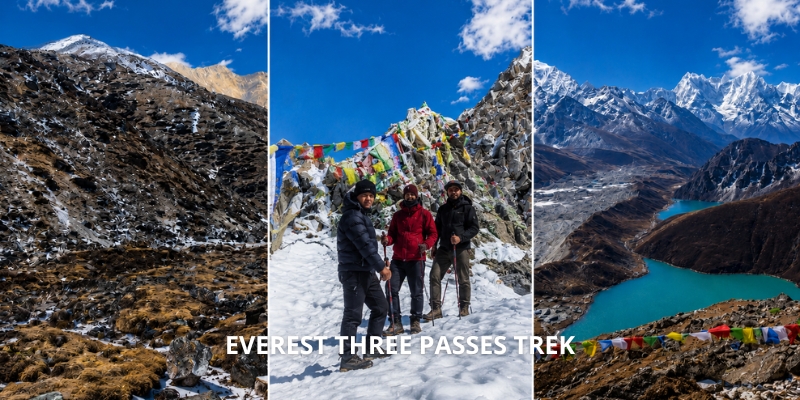
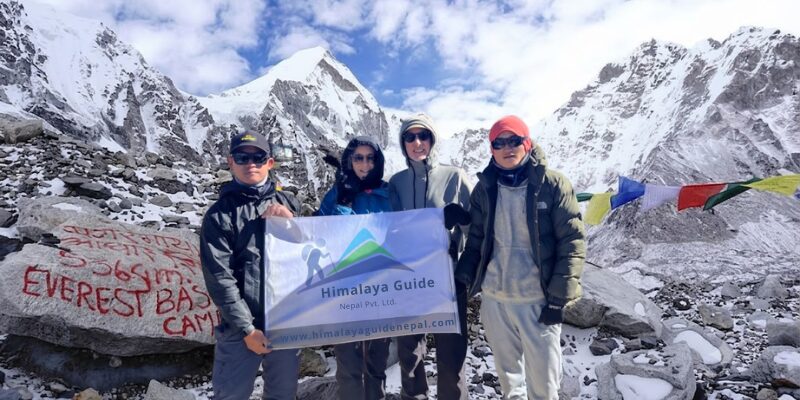
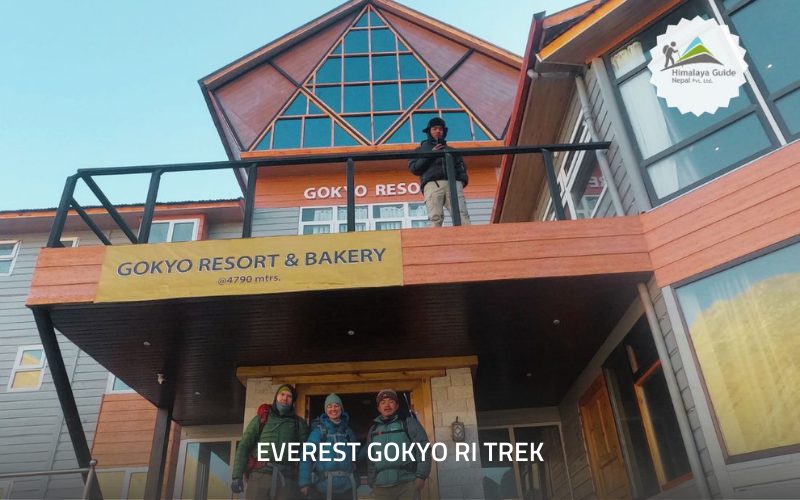
The Everest Three Passes trek is an incredible expedition in the Himalayas that combines the famous Everest Base Camp Trek with remote areas of the Khumbu region. The trek goes over three high passes: Kongma La Pass (5,535m / 18,159ft), Cho La Pass (5,420m / 17,782ft), and Renjo La Pass (5,360m / 17,585ft). The trek travels to popular tourist destinations, including Everest Base Camp, Kala Patthar, Gokyo Ri, and the breathtaking Gokyo Lakes.
Additionally, you explore some of the untouched places in the Nangpa La Valley, the friendly Sherpa village of Marlung, and the serene monastery village of Thame. If you want an adventure and challenging trek in the Everest region, the Everest Three Passes trek is ideal. If you still love the Gokyo Lakes, Kala Patthar, and Everest Base Camp but want an easier trek, consider our 18-day Everest Base Camp Trek via Gokyo Lakes.
What Makes Everest Three Passes Trek The Special Trek!!
Witness Breathtaking Mountain Views: Panoramic vistas of the Himalayas, including Mount Everest, Lhotse, Makalu, Nuptse, Ama Dablam, and other iconic peaks.
Cross Three Challenging High Passes: Renjo La, Cho La, and Kongma La at over 5,000 meters altitude.
Explore Sherpa Villages & Culture: Traditional mountain villages like Namche Bazaar, Dingboche, Lobuche, and Gokyo.
Visit Gokyo Lakes & Gokyo Ri: Sacred high-altitude lakes set against snow-capped peaks, with sweeping vistas of Everest, Lhotse, Makalu, and Cho Oyu from Gokyo Ri (5,357 meters).
Stand at Everest Base Camp (EBC) & Kala Patthar summit: The base of the world’s highest mountain and Mount Everest viewpoint, offering a beautiful sunrise view up close.
Optional Hike or Side Trips to Key Landmarks: Hotel Everest View/Khumjung, Nangkartshang Peak, Chhukung Ri, Gokyo Ri/Fifth Lake, and Kala Patthar.
Trekking in the Solukhumbu Region: UNESCO World Heritage Site in the Khumbu region showcasing diverse Himalayan flora, fauna, and pristine landscapes.
Everest Three Pass Trek Itinerary At One-Shot
Route
End Elevation
Elevation Gain/Loss
Duration
Distance
Day 01
Arrival in Kathmandu
1,300 m
-
-
-
Day 02
Fly To Lukla, Trek To Phakding
2,640 m
+1340 M
3 - 4 Hours Trek
7 - 8KM
Day 03
Trek To Namche Bazaar Via Monjo
3,440 m
+800M
6-7 Hours Trek
10 - 11KM
Day 04
Acclimatization Day - Optional Hike
3,440 m
-
Varies
Varies
Day 05
Trek to Tengboche via Phungi Thanga
3,860 m
+420M
5 - 6 Hours Trek
10KM
Day 06
Trek To Dingboche Via Pangboche
4,410 m
+550M
5-6 Hours Trek
10-12KM
Day 07
Acclimatization day - optional Chhukung Valley visit
4,410 m
-
Varies
Varies
Day 08
Trek to Lobuche via Kongma La Pass (5,535 meters)
4,910 m
+500M
7-8 Hours Trek
8-10KM
Day 09
Trek to Gorakshep and visit Everest Base Camp
Full Itinerary to 18 Days Everest Three Passes Trek
Day 01 :
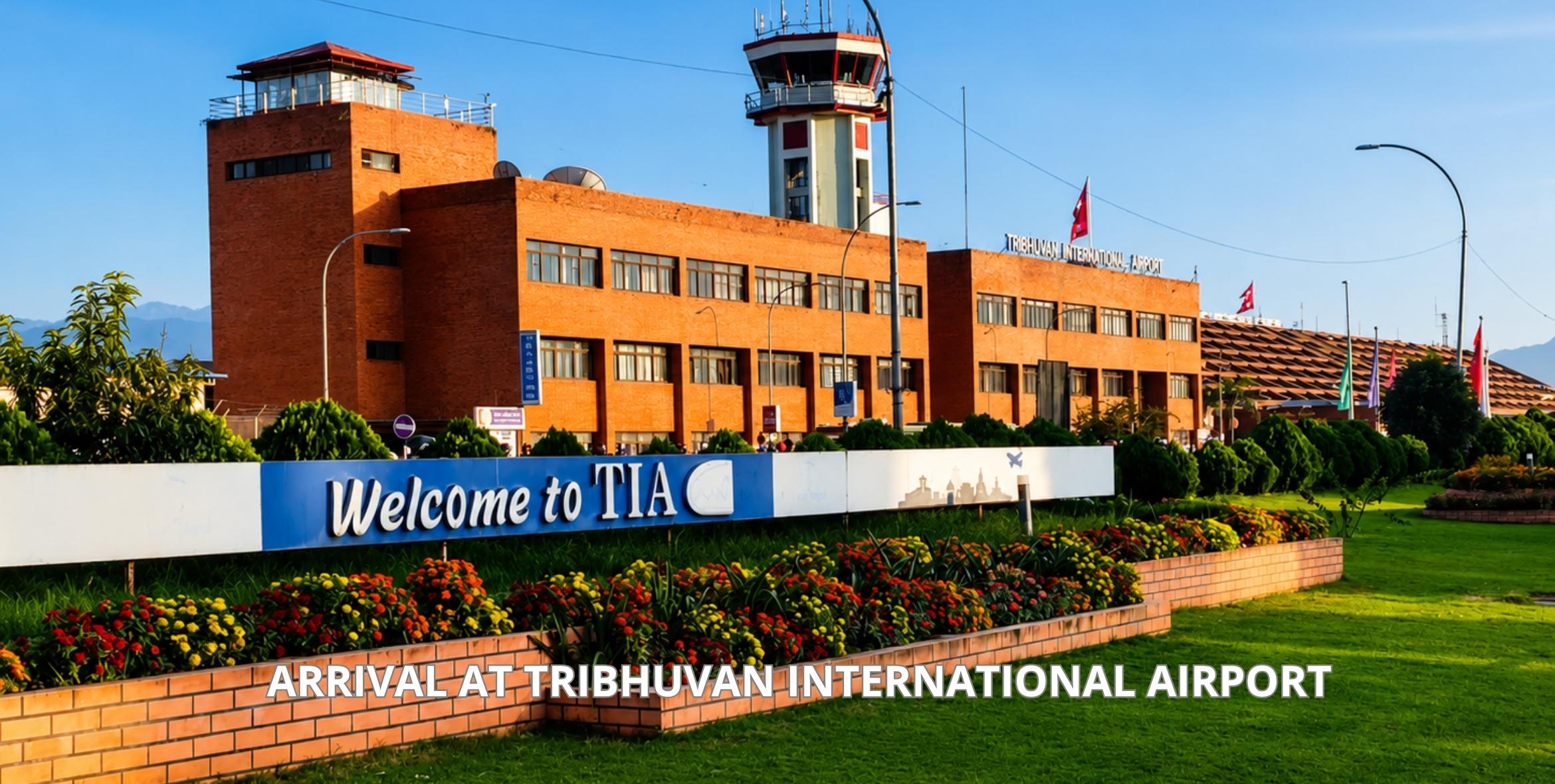
Arrival at Tribhuvan International Airport, Kathmandu (1,300 meters) and transfer to the hotel
Upon arrival at Tribhuvan International Airport, our office crew will warmly welcome you and escort you to your hotel in Kathmandu. During the ride, you get a glimpse of Nepal’s vibrant capital city, where ancient temples stand alongside modern buildings, creating a unique cultural atmosphere.
After settling into your hotel, you’ll receive a comprehensive briefing about the Everest Three Passes Trek. The guide will provide information on the route, safety protocols, and what to expect during your journey. After that, the rest of the day is yours to explore popular sites in Kathmandu, such as Durbar Square and Swayambhunath Stupa. You may also skip these and stick to rest and preparation for the adventure ahead.
Day 02 :
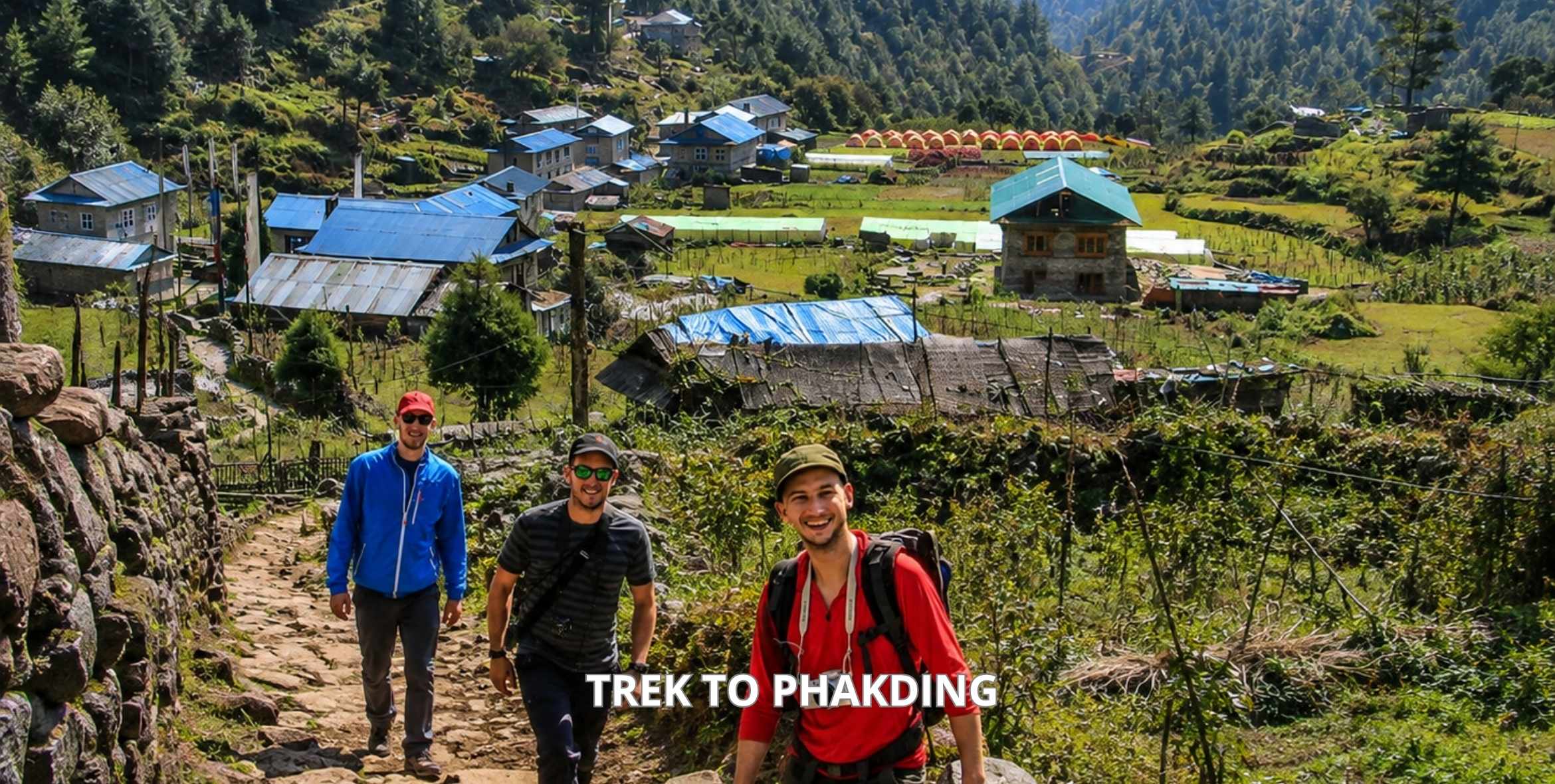
Fly from Kathmandu (1,300 meters) to Lukla, then trek to Phakding (2,640 meters)
Trek Distance
7.5KM
Trek Duration
3-4 Hours
Highest Altitude
2,640 m
Place
Phadking
Meals
B+L+D
Accommodation
Khumbu Travelers Guest House
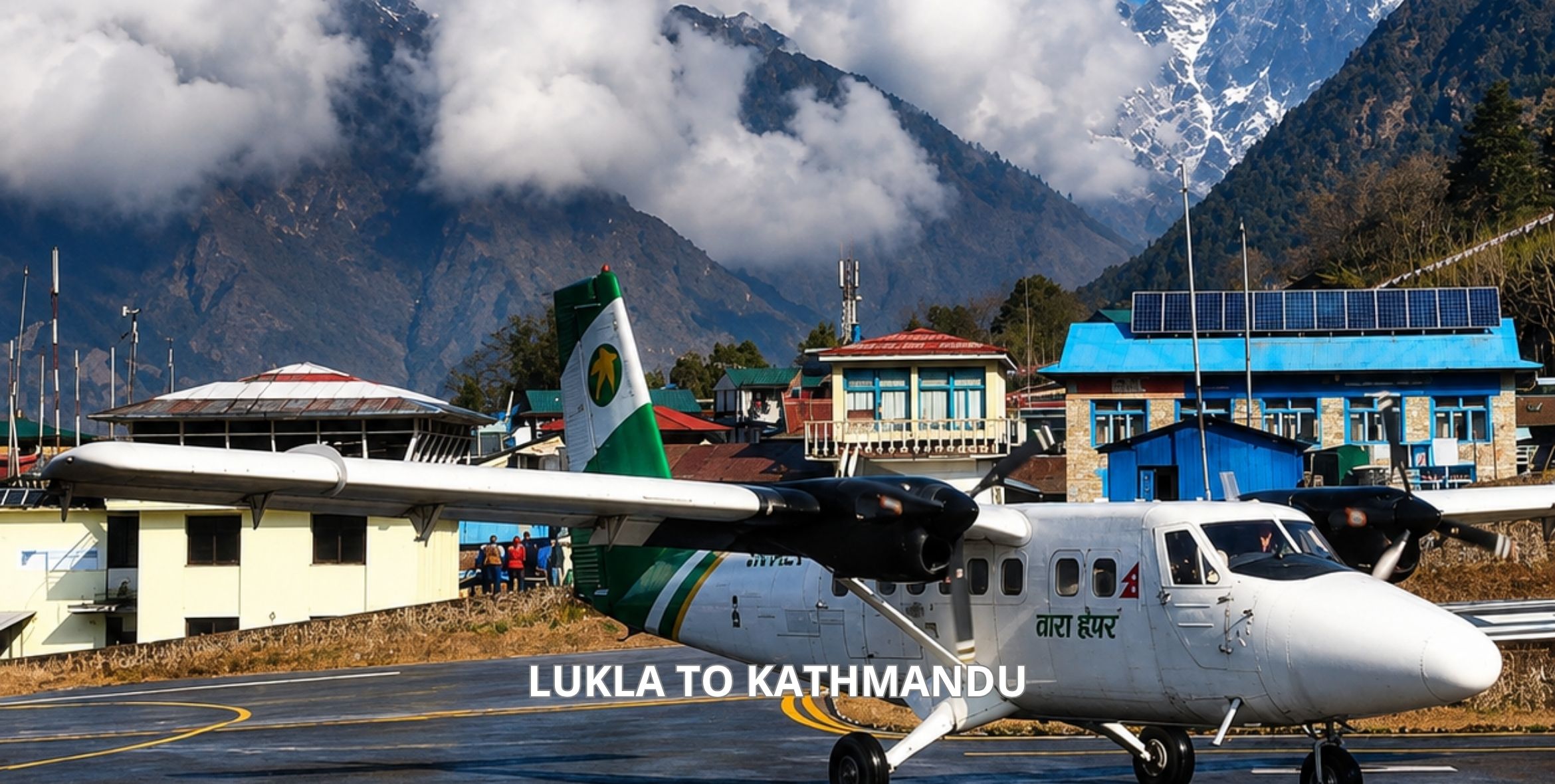
Your adventure begins with an early morning scenic flight from Kathmandu to Lukla (2,840 meters). You will land at one of the world’s most thrilling airstrips, Tenzing-Hillary Airport, after approximately 30-40 minutes. This flight marks the official start of your trekking journey into the Khumbu region.
After landing and meeting your porters, you’ll begin a gentle descent into the Dudh Koshi River valley toward Phakding. You pass through small Sherpa villages and cross suspension bridges. You also see prayer wheels and mani stones, offering your first glimpse of the culture and traditional mountain life. With a gentle start like this, you gradually acclimatize to the altitude.
Day 03 :
Trek from Phakding (2,640 meters) to Namche Bazaar (3,440 meters) via Monjo
Trek Distance
10-12KM
Trek Duration
5-6 Hours
Highest Altitude
3,440 m
Place
Namche
Meals
B+L+D
Accommodation
Hotel 8848/Hotel Kamal
The journey from Phakding to Namche Bazaar is one of the most memorable sections of the trek. You will follow the Dudh Koshi River northward and cross several dramatic suspension bridges, including the famous Hillary Twin Suspension Bridge, decorated with colorful prayer flags. Near Monjo, you’ll enter Sagarmatha National Park, a UNESCO World Heritage Site, where your permits will be checked.
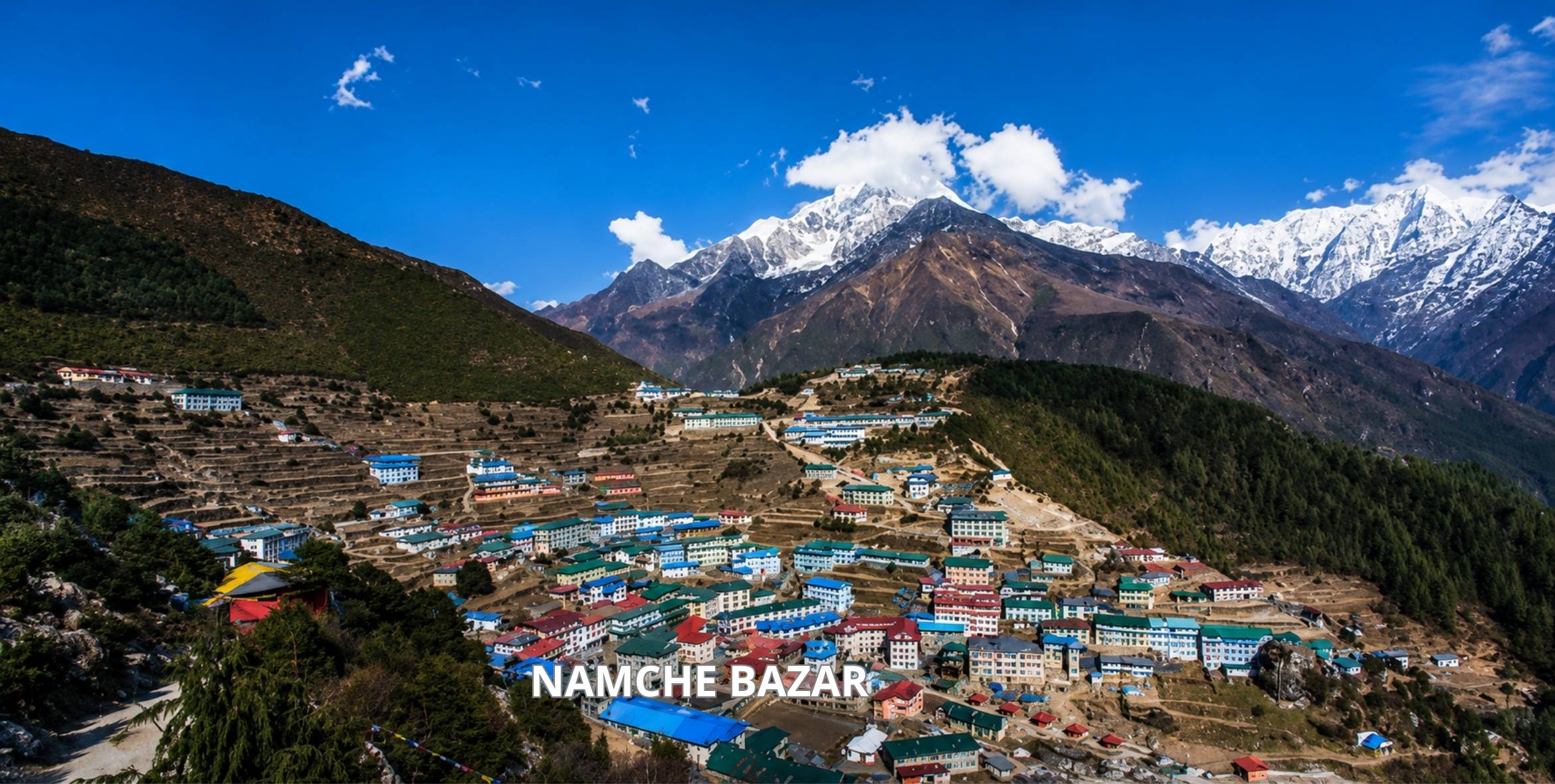
From the park entrance, the trail begins a steep uphill climb through pine and rhododendron forests. As you ascend higher, you will get your first breathtaking glimpse of Mount Everest peeking through the Lhotse-Nuptse ridge. The final push to Namche Bazaar is challenging. You will have to climb continuously along a strenuous section with many stone steps. Then you get to the bustling Sherpa capital, Namche, nestled in a dramatic horseshoe-shaped valley. It is often called the gateway to the high Himalayas.
Day 04 :
Acclimatization day in Namche Bazaar (3,440 meters) - optional hike
Highest Altitude
3,440 m
Place
Namche
Meals
B+L+D
Accommodation
Hotel 8848 / Hotel Kamal
Today is an important day, reserved for proper acclimatization in Namche before continuing the Everest 3 High Passes Trek further. Namche Bazaar is an excellent place to spend a rest day while your body adjusts to the thinner air. It is a vibrant trading hub with numerous eateries, bakeries, gear shops, and cafes that offer Wi-Fi.
However, we strongly recommend taking a short acclimatization hike to higher elevations. The hikes follow the principle of “climb high, sleep low”, helping you adjust to the high altitude. You can visit the Hotel Everest View (3,880 meters), the Sherpa Museum, Khumjung Monastery, Syangboche Airport, or the Sagarmatha National Park headquarters. These all offer spectacular mountain views and cultural insights into Sherpa heritage.
Day 05 :
Trek from Namche Bazaar (3,440 meters) to Tengboche (3,860 meters) via Phungi Thanga
Trek Distance
11-12KM
Trek Duration
5-6 Hours
Highest Altitude
3,860 m
Place
Tengboche/Milingo
Meals
B+L+D
Accommodation
Tshi Delek / Hotel Good Luck
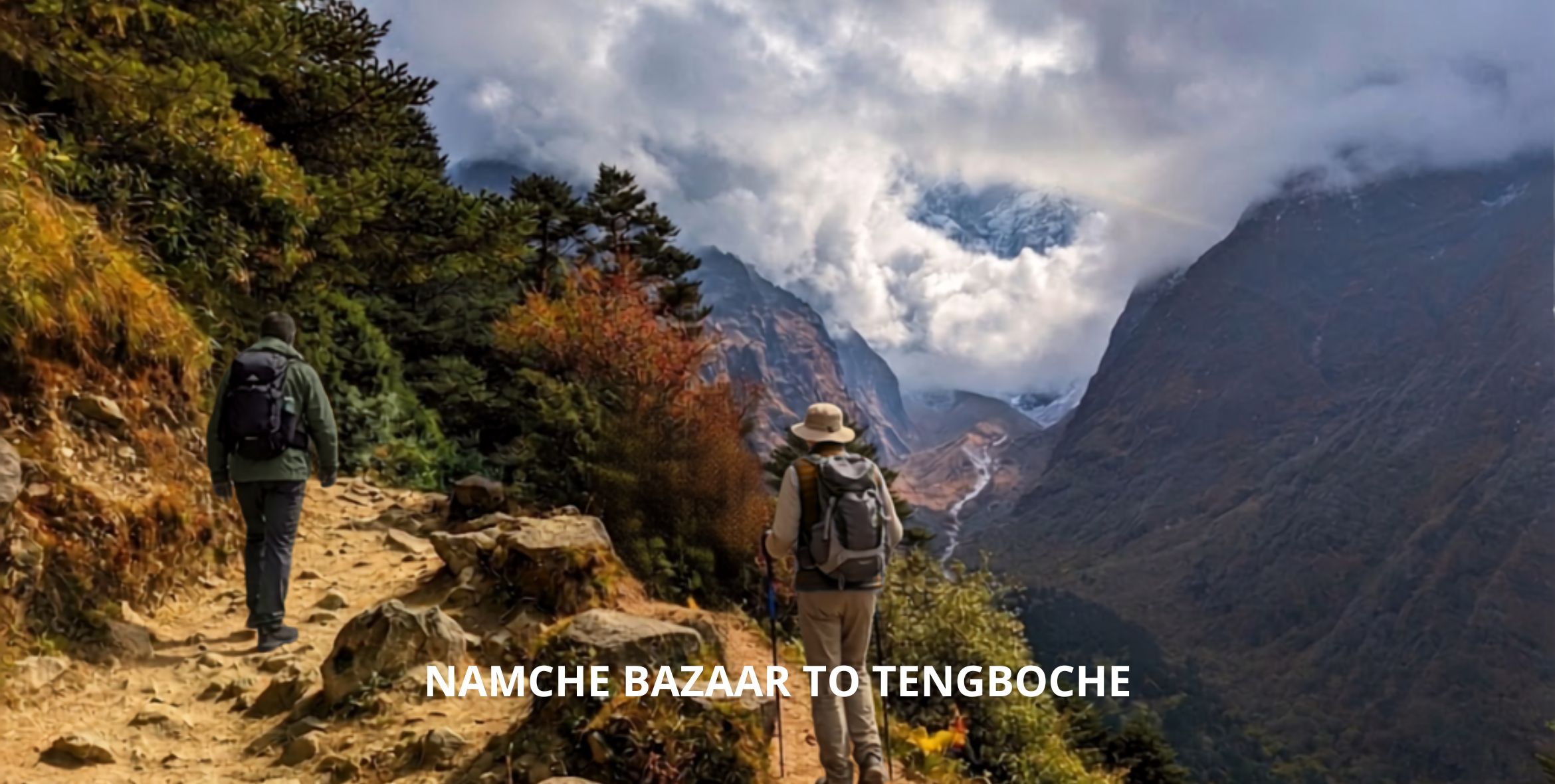
Leaving Namche Bazaar, you will follow a route along the mountainside. Thus, you can get spectacular panoramic views of Everest, Lhotse, Nuptse, Ama Dablam, Thamserku, and Kongde Ri, right from the start of the trek. The path gradually descends to Phungi Thanga, from where you cross the Dudh Koshi River on a suspension bridge next.
From the river crossing, you will enter dense rhododendron and juniper forests and make a steep ascent through with prayer flags and mani stones. The climb eventually leads to Tengboche (3,860 meters), home to the region’s largest and most famous monastery. The Tengboche Monastery offers stunning close-up views of Ama Dablam and distant views of Everest. You can feel the spiritually uplifting atmosphere, perfect for evening prayers and reflection during this Namche Bazaar to Tengboche route.
Day 06 :
Trek from Tengboche (3,860 meters) to Dingboche (4,410 meters) via Pangboche
Trek Distance
10-12KM
Trek Duration
5-6 Hours
Highest Altitude
4,410 m
Place
Dingboche
Meals
B+L+D
Accommodation
Hotel Good luck
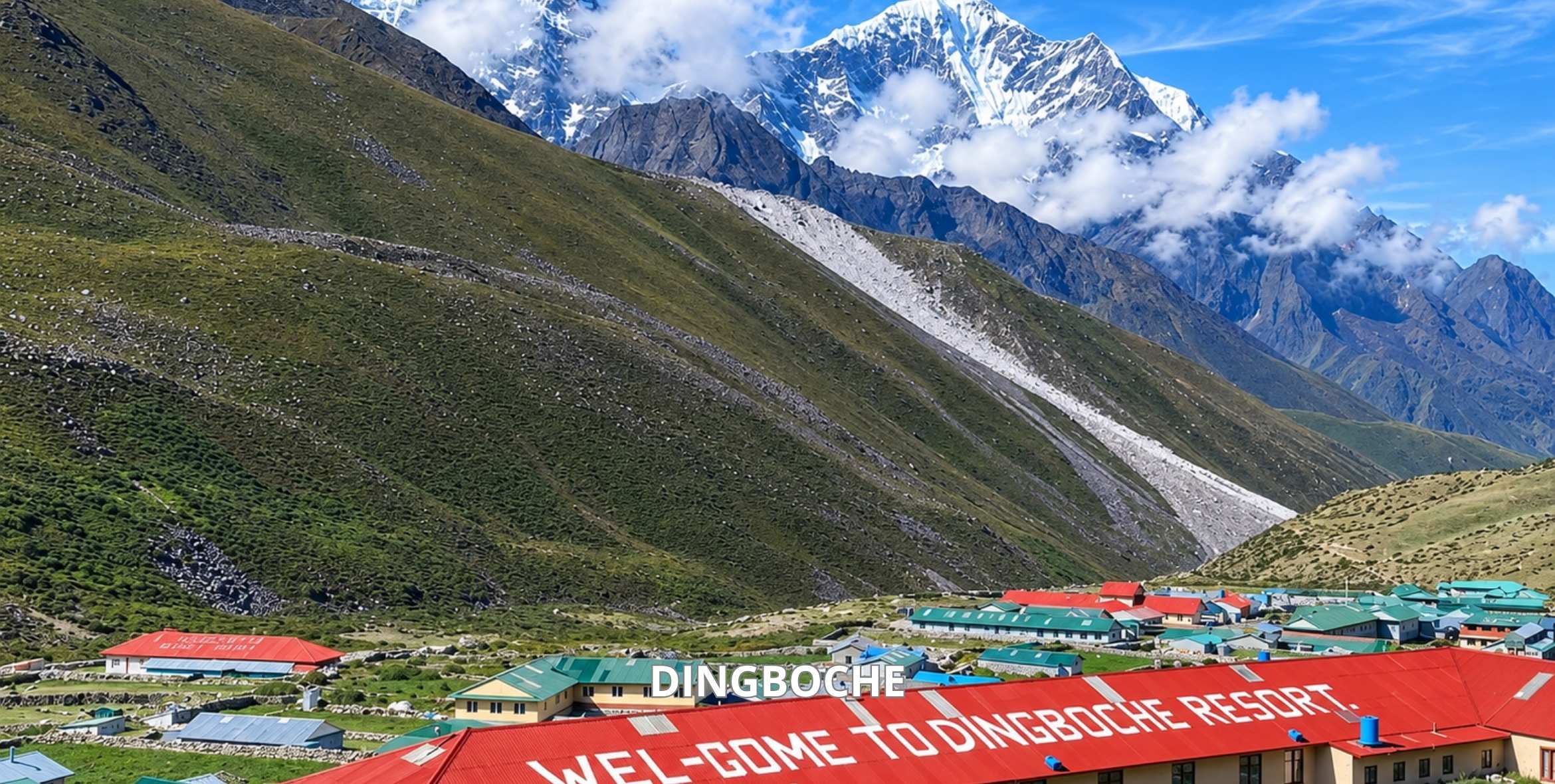
On this Tengboche to Dingboche hike day, the trail descends through beautiful rhododendron forests to the Imja Khola River. After crossing the same river on a suspension bridge, you’ll begin a gradual ascent to Pangboche (3,985 meters), the highest permanent settlement in the valley. It is also home to the oldest monastery in the Khumbu region. You will stop for a delicious lunch and some rest here.
After Pangboche, the landscape transforms dramatically as the treeline disappears. You enter more dry, high-altitude terrain of the Everest region. The path continues uphill across open mountainsides where the Imja Khola and Khumbu Khola rivers converge. This eventually leads to Dingboche, a stone-walled village. Upon reaching here, you can see some of the spectacular views of Lhotse, Island Peak, and Ama Dablam. Additionally, it serves as another important acclimatization point.
Day 07 :
Acclimatization day in Dingboche (4,410 meters) - optional visit to Chhukung Valley or Nangkartsang Peak
Highest Altitude
4,410 m
Place
Dingboche(Acclimatization)
Meals
B+L+D
Accommodation
Hotel Good luck
Day seven is reserved for another crucial acclimatization day at Dingboche. This is important to allow your body to acclimate to the increasing altitude, as you are already over 4,000 meters above sea level. You will acclimate through short hikes to higher elevations, which significantly improves your chances of success on the challenging passes ahead.
Popular acclimatization options include hiking to Nangkartsang Peak (5,083 meters) for panoramic views of Makalu, Lhotse, and Ama Dablam, or trekking toward Chhukung Valley (4,730 meters). Both routes offer stunning Himalayan vistas while helping your body produce more red blood cells to cope with reduced oxygen levels. Return to Dingboche for overnight rest.
Day 08 :
Trek from Dingboche (4,410 meters) to Lobuche (4,910 meters) via Kongma La Pass (5,535 meters)
Trek Distance
11KM
Trek Duration
7-8 Hours
Highest Altitude
5,535 m
Place
Lobuche Via Khongma La Pass
Meals
B+L+D
Accommodation
Oxygen Altitude restaurant and Home
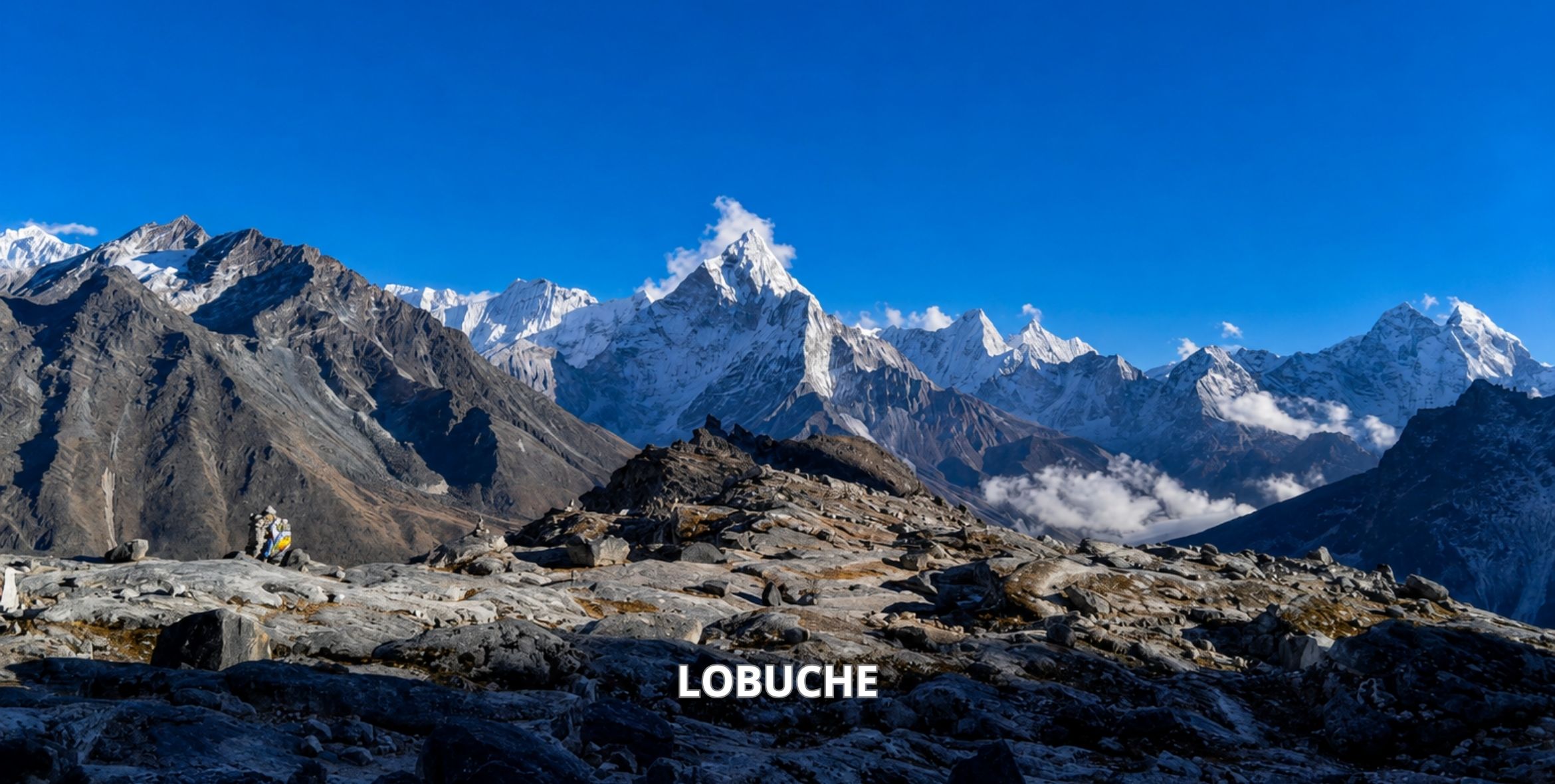
Today presents one of the trek’s most challenging and rewarding days. You will climb Kongma La Pass (5,535 meters), the highest of the three passes. The day begins with a steep climb from Dingboche across rocky terrain and moraines. You will climb relentlessly until you witness cairns and prayer flags that mark the summit of the Kongma La pass.
On top of the summit, you’re rewarded with 360-degree views of Everest, Lhotse, Nuptse, Makalu, and Ama Dablam. After spending some time here, you will descend on the western side. Here, the route involves navigating rocky moraines along the Khumbu Glacier until you reach Lobuche. It is a small temporary settlement where you gather before attempting to reach Everest Base Camp.
Day 09 :
Trek from Lobuche (4,910 meters) to Gorakshep (5,140 meters) and visit Everest Base Camp (5,364 meters)
Trek Distance
12-13KM (round trip to EBC)
Trek Duration
6-7 Hours
Highest Altitude
5,364 m
Place
Gorakshep
Meals
B+L+D
Accommodation
Buddha Lodge
The morning trek from Lobuche to Gorakshep is relatively short, and the altitude gain is also steady. The trail follows the lateral moraine of the Khumbu Glacier through a stark, rocky landscape with limited vegetation. After reaching Gorakshep (5,140 meters), the last settlement before Everest Base Camp, you’ll check into your teahouse. Here, you will first have lunch and a brief rest before continuing the trek to Everest Base Camp (5,364 meters).
The route to EBC features rocky moraine along the mighty Khumbu Glacier. After some hours, you reach the base of the world’s highest mountain, surrounded by ice seracs and the Khumbu Icefall. Standing here is an unforgettable achievement. The summit of Everest isn’t visible from base camp itself, but the surrounding giants and the sense of accomplishment make this moment truly special. You’ll then retrace your steps back to Gorakshep for the night. Some people go directly route from Gorakshep to Kalapatthar in 1 day, but that may be too difficult due to less acclimatization and not recommended, especially for beginners.
Day 10 :
Hike to Kala Patthar (5,550 meters), then trek to Dzonglha (4,830 meters)
Trek Distance
12-14KM
Trek Duration
7-8 Hours
Highest Altitude
5,550 m
Place
Dzonglha
Meals
B+L+D
Accommodation
Green Valley Lodge/ Maison Sherpa Hotel
Today begins before dawn with a challenging climb to Kala Patthar (5,550 meters), which is also the trek’s highest point. You start with a steep ascent in the pre-dawn darkness. Once you reach the top, you get rewarded with arguably the best panoramic views of Mount Everest, bathed in golden sunrise light, along with Nuptse, Changtse, and the sprawling Khumbu Glacier below. The 360-degree mountain vista from this viewpoint is simply breathtaking and worth every labored breath.
Then, you’ll descend back to Gorakshep for breakfast. After that, you pack your bags and start trekking to Dzonglha (4,830 meters). This section takes you through rocky moraines. You gradually descend through the Khumbu Valley, where you get different perspectives of the peaks you’ve come to know. Dzonglha is a small settlement that serves as the base for crossing Cho La Pass. Arriving at the teahouse after a long day offers a sense of accomplishment and much-needed rest.
Day 11 :
Trek from Dzonglha (4,830 meters) to Dragnag (4,700 meters) via Cho La Pass (5,420 meters)
Trek Distance
10-12KM
Trek Duration
7-8 Hours
Highest Altitude
5,420 m
Place
Thangnak
Meals
B+L+D
Accommodation
Hotel Khumbila
The second of the three high passes awaits today as you tackle Cho La Pass (5,420 meters). This pass is often considered the most technically challenging due to potential ice and snow conditions. You begin early with a steep ascent across rocky terrain that may require microspikes or crampons, depending on the season. You will have to climb over large rocks and walk through a narrow, rocky path.
When you finally reach the prayer flag-adorned summit, you’ll be rewarded with stunning views of Ama Dablam and the surrounding peaks. You again descend to the western side. The descent is equally demanding. You have to cross potentially icy slopes and rocky moraines before gradually easing into the valley leading to Dragnag (4,700 meters). This small settlement near the Ngozumpa Glacier serves as a gateway to the Gokyo Valley and provides well-deserved rest after a strenuous crossing.
Day 12 :
Trek from Dragnag (4,700 meters) to Gokyo (4,790 meters)
Trek Distance
6-7KM
Trek Duration
3-4 Hours
Highest Altitude
4,790 m
Place
Gokyo
Meals
B+L+D
Accommodation
Hotel Namaste
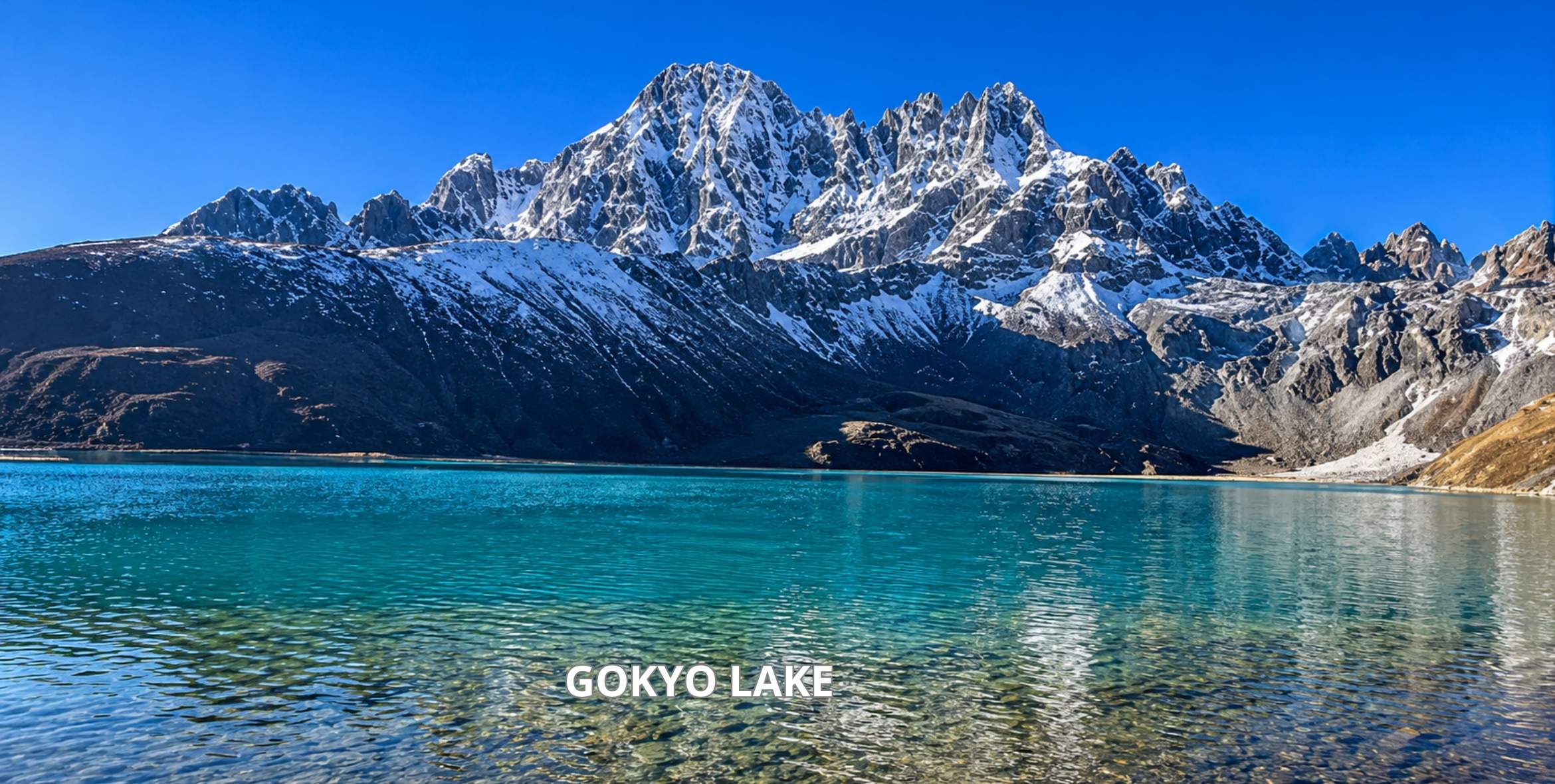
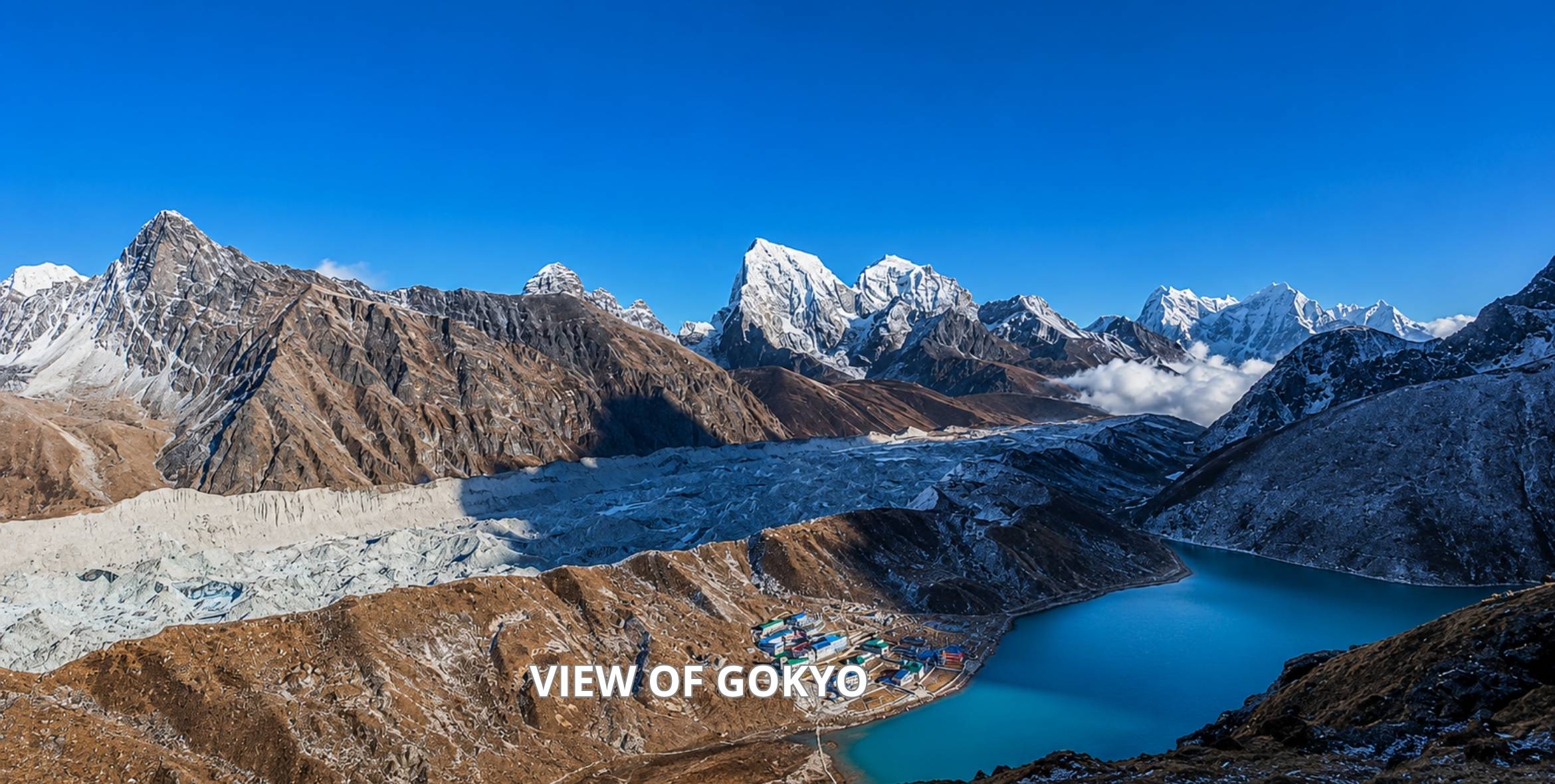
Today’s trek is shorter and easier, giving you a nice break before the upcoming climb. The trail moves along the lateral moraine of the Ngozumpa Glacier, the longest glacier in the Himalayas. You’ll see interesting ice formations, deep cracks, and shifting shades of gray and white. As you continue, you’ll pass the lower Gokyo Lakes, their bright turquoise water standing out sharply against the rocky landscape.
When you reach Gokyo village (4,790 meters), the third Gokyo Lake comes into full view, calm, blue, and one of the highest freshwater lakes in the world. The village sits in an amazing spot, facing Cho Oyu (8,201 meters), the sixth-highest mountain on the planet. Since the walk today is shorter, you’ll have extra time to rest, explore the lakes, and get ready for tomorrow’s early morning hike up Gokyo Ri.
Day 13 :
Visit Gokyo Ri (5,357 meters) and overnight in Gokyo (4,790 meters)
Trek Distance
5-6KM (round trip)
Trek Duration
4-5 Hours
Place
Gokyo
Meals
B+L+D
Accommodation
Hotel Namaste
On this day, you’ll need an early start for the climb to Gokyo Ri (5,357 meters). This is one of the Everest Three Pass trek’s most impressive viewpoints. The ascent is steep and takes about 2-3 Hours, heading straight up the ridge behind Gokyo village. The altitude makes it tough, but the trail is clear and marked with cairns, so navigation isn’t an issue.
At the top, you’ll get a jaw-dropping view of four of the world’s six highest peaks, Everest, Lhotse, Makalu, and Cho Oyu, along with endless surrounding mountains. Below, the turquoise Gokyo Lakes and the vast gray stretch of the Ngozumpa Glacier create a scene you won’t forget. Once you’ve taken in the views and snapped your photos, head back down to Gokyo village for a well-earned rest.
Day 14 :
Trek from Gokyo (4,790 meters) to Lumde (4,380 meters) via Renjo La Pass (5,360 meters)
Trek Distance
10-12KM
Trek Duration
6-8 Hours
Highest Altitude
5,360 m
Place
Lumde
Meals
B+L+D
Accommodation
3 Passes Lodge
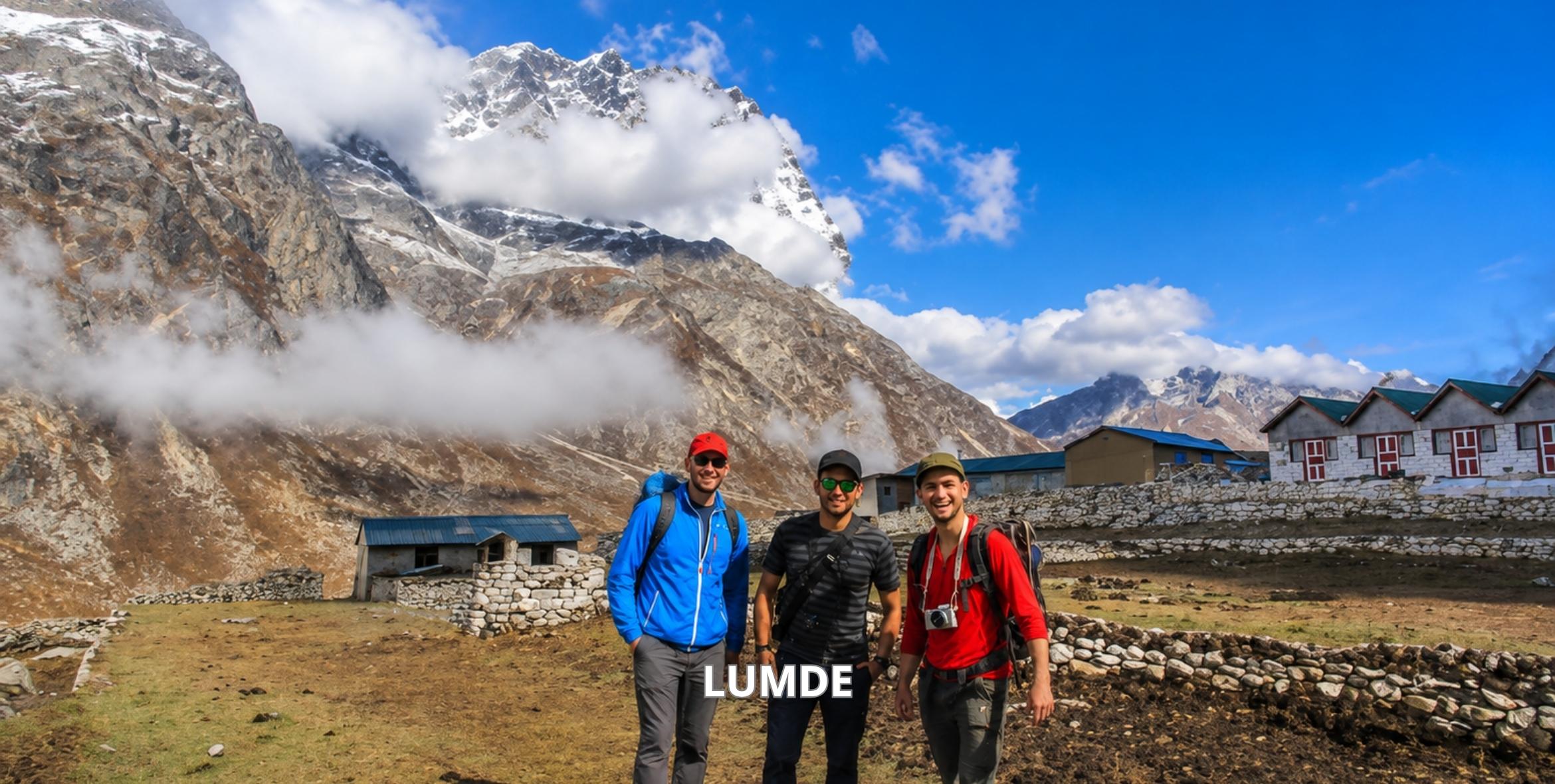
After climbing up the Gokyo Ri, you’ll now start descending and take on the third and final high pass, Renjo La (5,360 meters). With this, you officially complete the Three Passes circuit. From Gokyo, you follow the west trail and climb steadily through rocky terrain. As you climb up, you get wider and wider views of the Gokyo Lakes opening up behind you. The slope gets tougher as you get closer to the pass, so slow, steady pacing is key.
From the top of Renjo La, you’ll get one of the best views of the entire trek: the full Gokyo valley with its glowing turquoise lakes, the huge Everest range with Everest, Lhotse, and Makalu, and Cho Oyu rising tall on the western side. The descent is steep at first but becomes easier as you drop into the Bhote Koshi valley. You’ll end the day in the quiet village of Lumde (4,380 meters), your final night in the high mountains.
Day 15 :
Trek from Lumde (4,380 meters) to Thame (3,800 meters) via Marlung
Trek Distance
10-12KM
Trek Duration
5-6 Hours
Highest Altitude
4,380 m
Place
Thame
Meals
B+L+D
Accommodation
Possible lodge/hotel
From Lumde, you’ll follow the quieter trail into the less-traveled western side of the Khumbu. As you descend, you’ll pass Marlung, a traditional Sherpa village where daily life still follows old rhythms and customs. The views along the way open up toward Thamserku, Kangtega, and other peaks, while the landscape slowly becomes greener as the altitude drops.
The trail eventually brings you to Thame (3,800 meters), a village with deep cultural importance in the Sherpa community. Thame is known for producing many legendary Sherpa climbers, including members of Tenzing Norgay’s family. The village is also home to the Thame Monastery, set on a hillside, and is one of the key sites for the Mani Rimdu festival. In this quieter, less touristy setting, you’ll get a real sense of Sherpa hospitality and tradition.
Day 16 :
Trek from Thame (3,800 meters) to Monjo (2,835 meters) via Namche Bazaar
Trek Distance
12-14KM
Trek Duration
5-6 Hours
Highest Altitude
3,800 m
Place
Manjo
Meals
B+L+D
Accommodation
Hotel Kailash
Today brings a big drop in elevation as you start making your way back toward Lukla. You’ll trek down from Thame and join the main Everest Base Camp route that reconnects with Namche Bazaar. The descent takes about 2-3 hours, moving through familiar sections that feel different when seen from above. Once in Namche, you can grab lunch, rest, or pick up any last-minute items.
From Namche, the trail drops steeply through pine forests on the busy path toward Monjo (2,835 meters). The downhill will test your knees, but the thicker air at lower altitudes makes breathing much easier. Arriving in Monjo, just before the Sagarmatha National Park exit, marks your final overnight stop before the last stretch to Lukla tomorrow.
Day 17 :
Trek from Monjo (2,835 meters) to Lukla (2,840 meters) via Phakding
Trek Distance
8-9KM
Trek Duration
4-5 Hours
Highest Altitude
2,840 m
Place
Manjo
Meals
B+L+D
Accommodation
Hotel Kailash
This day will be your last trekking day. It follows the same path you took at the start, but it will hit differently now that you’ve completed the Three Passes Trek. The trail drops down to the Hillary Suspension Bridge for one final crossing, then continues through Phakding, the place where this whole journey kicked off nearly three weeks ago. The gentle path along the Dudh Koshi River makes for an easy walk and gives you time to think about everything you’ve accomplished.
The final uphill push to Lukla (2,840 meters) feels meaningful after so many days above 4,000 meters. Reaching Lukla marks the true end of the trek, and it’s where you’ll celebrate with your guide and porters, thanking them for getting you through the mountains. Tonight in Lukla, you’ll finally get to enjoy hot showers, soft beds, and the comfort you’ve been craving before tomorrow’s flight back to Kathmandu.
Day 18 :
Fly from Lukla (2,840 meters) to Kathmandu (1,300 meters)
Highest Altitude
2,840 m
Place
Lukla
Meals
B
Accommodation
Hotel Comfort Inn
Your journey officially ends today as you say goodbye to the Khumbu and board your early morning flight back to Kathmandu. You get one last chance to admire the Himalayan peaks, valleys, and glaciers you’ve trekked through. And if the weather cooperates, you may even get a final glimpse of Everest. After you land at Tribhuvan International Airport, you’ll be back into the bustle of city life after weeks in the mountains.
As you settle into your hotel, the comforts of hot showers, soft beds, and good food make the transition easier. The Three Passes circuit will stay with you long after the trek is over. It will leave you memories of challenging climbs, stunning views, and quiet mountain mornings. Today will mark the final chapter of an adventure that tested, rewarded, and transformed you in equal measure.
Inclusion/Exclusion in Everest Three Passes Trek – 18 Days
Everest Three Passes Trek Cost Includes
Pick-up and drop-off services.
Flight Kathmandu to Lukla to Kathmandu.
Both ways, airport taxes.
Three meals a day: Breakfast, Lunch, and Dinner during the trek.
Lodging along the trek is simple.
An experienced guide; Included (Salary, Food, Lodge, Insurance, Airfare, Equipment, Transportation, etc.)
Legal Document: National Park and Local Government Fees.
Equipment: Down Jacket, Sleeping Bag.
Dry and seasonal fresh fruits
Trekking duffle bag, if needed.
First aid medical box.
All government taxes.
A token of love from a company.
A farewell lunch or dinner is a suitable time.
Everest Three Passes Trek Cost Excludes
Travel Insurance
Personal expenses: phone calls, internet, and buying something.
Hot and Cold drinks: Coke, mineral water, beer, etc.
Download the complete Trek itinerary, inclusions, map & prices in one PDF.
Departure Dates for You
18 Days
Trip Days
26 Oct, 2026
Start Monday
12 Nov, 2026
End Thursday
10
Group Size
USD 1,734
Price
Booking Open
Status
Private Trip Booking
Prefer a more personal journey? Our private packages offer flexible dates, custom itineraries, and dedicated support—perfect for those seeking a tailored travel experience.
Three passes are permanently covered with snow and ice in Nepal’s trekking region. The Everest Three Passes Trek is also known as the Three High Passes Trek in Nepal’s Himalayas. Moreover, these hiking routes pass across the Kongma La Pass (5,535 meters). Additionally, Chola Pass (5,420 meters) and Renjola Pass (5,360 meters) are located near Mount Everest.
In addition to these passes, you may go to Gokyo Lake, Gokyo Ri (5,357 meters), Kala Patthar (5,550 meters), and Everest Base Camp (5,364 meters). The Cho La Pass Trek, Gokyo Ri Trek, Everest Circuit Trek, and Everest Base Camp Trek. The Everest Three-Pass Trek includes them all, so if you want to do them all at once, this is the shortest and greatest Route. If you are a female trekker planning the EBC trek, Everest Three Pass Trek, or any Everest region trek, rest assured about the safety on the trail. The trail is completely safe and filled with locals available to help without any doubt. With 20 years of expertise in the Nepalese trekking business, we tailor our service to your schedule, party size, and interests.
Reasons to Take the Everest Three Pass Trek
The Everest Three Pass Trek is an intensive journey of Everest’s legendary landscapes and villages. Contrary to the treks up to Everest Base Camp in solitude, this trek connects the main valleys of Khumbu, Gokyo, and Imja Tse. This is a risky walk across diverse landscapes, vegetation, and cultural nuances, but one that pays off with rhododendron tree forest treks, ice river crossings, and Sherpa traditional village treks, and submersion in the harshness and human existence of the region. Here are some of the reasons to take the Everest Three Pass Trek.
Stunning Views of Four 8,000m Peaks
The Three Pass Trek offers quite possibly the most spectacular and broadest mountain scenery in the entire Everest region. You will get an amazing panorama of iconic 8,000m+ summits like Everest, Lhotse, Makalu, Cho Oyu, and Ama Dablam from the vantage points of high passes and other viewpoints along the trek, to name just a few. The sights change day by day, presenting a dynamic and not-to-be-missed visual treat that will leave you with memories that you can savor for a lifetime.
The Sacred Gokyo Lakes
One of the highlights of this trek is getting to see the pristine Gokyo Lakes. This chain of glacial emerald-colored lakes, situated high up in the Gokyo Valley, is a serene contrast to the harsh high-altitude environment. Walking alongside these shining bodies of water, where snow-capped peaks’ reflection dances across their surface, is an experience one will never forget. The climb to Gokyo Ri (5,357m / 17,575ft) gives an amazing view of the Gokyo Lakes and surrounding mountains, four of the world’s fourteen 8,000-meter peaks.
Three Passes Challenge
A major attraction of this trek is the crossing of three mighty high-altitude passes: Kongma La (5,535m / 18,159ft), Cho La (5,420m / 17,782ft), and Renjo La (5,360m / 17,585ft). These passes are a big physical challenge, demanding endurance and acclimatization. But the reward for your toil is beyond compare. Each pass offers breathtaking panoramic views, unfolding a new dimension of the Himalayan giants and the rugged landscape that surrounds them. The sense of accomplishment that comes from reaching the summit of each pass, knowing that you’ve pushed your limits amidst such splendor, is rather profound.
A Glimpse into Sherpa Life and Faith
The Everest area is known for its breathtaking views and the hardy, culturally rich Sherpa people. The Three Pass Trek provides you with a chance to see their culture, visit old monasteries, and meet the local people. While on the trek, you will have a chance to see pretty Sherpa villages with prayer flags and Mani stones, and you will be able to experience their hospitality. This cultural encounter enriches your trek and allows for a better understanding of a life that is closely tied to the mountains.
The Ultimate Mountain Experience
The Everest Three Pass Trek is a challenging journey that demands good health and mental strength. You’ll face high altitudes, long trekking days, and tough pass climbs. But the landscapes more than make up for the effort. You’ll be rewarded with panoramic views, a sense of achievement, encounters with diverse local communities, and unforgettable natural beauty. Each step, each climb, and each view shapes the experience and transforms you along the way, leaving lasting memories and a deeper connection to the mountains.
Major Stops on the Everest Three Passes Trek
The Everest Three Passes Trek passes through remarkable villages, scenic spots, and key landmarks that make the journey unforgettable. Along the route, you’ll encounter vibrant Sherpa towns, quiet hamlets, and high-altitude settlements, each offering unique culture, experiences, and breathtaking views. These highlights provide essential stops for acclimatization, rest, and the chance to fully appreciate the beauty and heritage of the Khumbu region.
Lukla
No matter whether it is your starting point or destination for trekking, the Tenzing-Hillary Airport in Lukla is a highlight in itself. Sitting somewhat precipitously atop a hill, the very short and sloping runway brings an edge to your entry and exit. Outside of the airport, Lukla is a busy town that acts as the entrance to the Everest area, bustling with you, porters, and local Sherpas, the starting point or the successful end of your amazing journey across the Himalayas.
Namche Bazaar
Namche Bazaar is a vibrant Sherpa village situated in a horseshoe-shaped valley. It is typically the first stop for you to reach the high Himalayas. The village is essential for acclimatizing, and your body will be able to adapt to the increased altitude. You can go shopping in busy markets, buy your supplies, mingle with local traders, and view the unique Sherpa culture. You can also obtain excellent views of Kongde Ri and Thamserku from here.
Thame
Branching off the EBC trail, the trek to Thame offers a more peaceful and less crowded adventure. With an ancient monastery, Thame Gompa, perched high on a hillside, this venerable Sherpa village is located. Traveling to Thame gives a glimpse into the daily lives of the villagers and offers stunning views of the surrounding snow-capped peaks, including Teng Kangpoche and Kwangde Lho. It’s a place where the Khumbu’s spiritual hub appears particularly potent.
Dingboche
Lying at 4,410 meters, Dingboche is known as the “Summer Valley.” It is the last permanent settlement on the trek and an important place to acclimatize. Trekkers usually spend two nights here to adjust to the thinner air. You can hike nearby ridges and enjoy wide views of Ama Dablam, Island Peak, and the surrounding mountains.
Chhukung
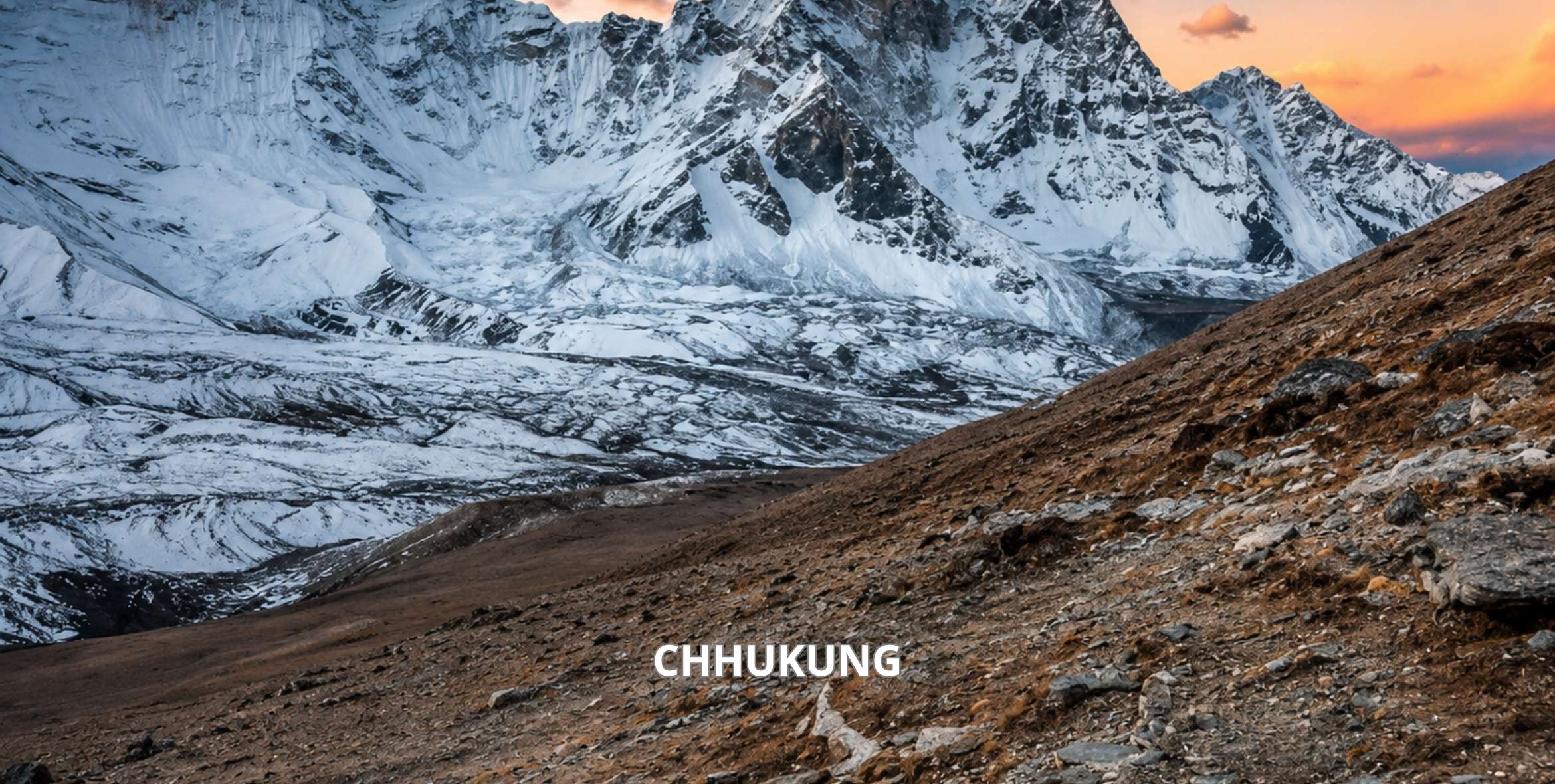
In the valley of Imja Khola, Chukhung is a tiny hamlet surrounded by huge peaks like Lhotse, Island Peak (Imja Tse), and Ama Dablam. It’s a popular base for climbers of Island Peak and offers great views of the eastern Himalayan giants from the panorama. The valley itself is stunning with glacial rivers and meadows, providing an abrupt contrast to the rockier higher up.
Lobuche
Lobuche is located near the Khumbu Glacier and is an important landmark while traveling to higher pass points and Everest Base Camp. The landscape is hilly and rocky, with spectacular views of Nuptse, Lobuche East, and Pumori. Thinner air here, so acclimatization is a must before dealing with the challenges ahead.
Gorak Shep
Gorak Shep sits at 5,164 meters on a frozen lakebed and is the highest inhabited stop on the trek. It is the final base for Everest Base Camp. The village has a few teahouses and is mainly used to rest before an early morning hike up Kala Patthar. From there, you get amazing sunrise views of Mount Everest, Lhotse, and Nuptse.
Gokyo
Gokyo is a peaceful village by the third turquoise Gokyo Lake at 4,790 meters. It is the base for climbing Gokyo Ri. The village is small, quiet, and welcoming. From Gokyo Ri, you can see a stunning panorama of the Himalayas, including four of the world’s 8,000-meter peaks, the Ngozumpa Glacier, and the shimmering Gokyo Lakes.
Altitude Sickness on Everest Three Passes Trek and How to deal with it?
Altitude sickness is a serious risk on the Everest Three Passes Trek. This is due to the rapid and continuous ascent to high altitudes, as all three passes (Kongma La, Cho La, and Renjo La) are located above 5,300 meters (17,400 feet). At this altitude, there is less oxygen because the atmospheric pressure drops. This change can make it hard for your body to adjust, leading to Acute Mountain Sickness (AMS). Early symptoms include headache, nausea, dizziness, fatigue, loss of appetite, and trouble sleeping. It’s important to notice these signs and tell your trekking guide. Ignoring mild symptoms can lead to more serious and potentially dangerous conditions, such as High Altitude Pulmonary Edema (HAPE) or High Altitude Cerebral Edema (HACE).
Tips to Prevent and Manage Altitude Sickness
To prevent altitude sickness on this trek, it’s essential to follow a gradual climbing procedure or simply put, acclimatization during The Everest Three Passes Trek is not an option but the key to complete this technical trek without any health issue.
Ascend gradually and allow time to acclimatize at stops like Namche Bazaar and Dingboche.
Follow the “climb high, sleep low” principle whenever possible.
Drink plenty of water to stay hydrated and avoid alcohol or excessive caffeine.
Maintain a balanced diet with sufficient carbohydrates for energy.
Get enough rest and avoid strenuous activity, especially on arrival at higher altitudes.
Over-the-counter pain relievers can help with headaches; ginger or anti-nausea meds may ease nausea.
Some you use acetazolamide (Diamox) under a doctor’s supervision to help acclimatize.
If symptoms worsen, descend to a lower altitude immediately.
In severe cases, supplemental oxygen or professional medical care may be necessary.
Can you trek the Everest Three Pass Trek in Winter?
Yes, trekking the Everest Three Pass Trek in winter (December to February) is possible, but it presents significant challenges and requires careful planning and preparation. The primary obstacles are the extreme cold, with temperatures dropping well below freezing, especially at higher altitudes and during the nights. Heavy snowfall is also common, which can lead to icy and slippery trails, making navigation difficult and increasing the risk of falls. Some high passes might even become blocked due to excessive snow.
However, trekking in winter also offers some unique advantages. The trails are generally less crowded, providing a more peaceful and solitary experience. The snow-covered landscapes are undeniably beautiful, and the mountain views can be incredibly clear on crisp winter days. If you decide to undertake this trek in winter, you must be well-equipped with high-quality, warm layered clothing, including insulated boots, gloves, and hats. It’s also highly recommended to have prior high-altitude trekking experience and consider hiring an experienced guide who is familiar with winter conditions in the region. Be prepared for potential itinerary changes due to weather and trail conditions.
Season-wise Temperature Table for The Everest Three Pass Trek
Season
Months
Altitude (Lower Regions: 2,800m – 3,500m)
Altitude (Higher Regions & Passes: 4,500m – 5,500m+)
Nighttime Temperatures (Higher Camps)
General Weather Conditions
Spring
March – May
Daytime: 10°C – 18°C (50°F – 64°F)
Daytime: -5°C – 10°C (23°F – 50°F)
-10°C to -15°C (14°F to 5°F)
Mild, clear skies, blooming flora, occasional pre-monsoon showers in late May
Summer/Monsoon
June – August
Daytime: 15°C – 25°C (59°F – 77°F)
Daytime: 5°C – 15°C (41°F – 59°F)
Around 0°C to 5°C (32°F to 41°F)
Warm, heavy rainfall, muddy trails, reduced visibility, higher humidity
Autumn
September – November
Daytime: 10°C – 20°C (50°F – 68°F)
Daytime: -5°C – 10°C (23°F – 50°F)
-2°C to -15°C (28°F to 5°F)
Stable, clear skies, pleasant temperatures, excellent visibility
Winter
December – February
Daytime: 5°C – 10°C (41°F – 50°F)
Daytime: -10°C – -5°C (14°F – 23°F)
-15°C to -25°C (-5°F to -13°F)
Cold, snowfall, icy trails, shorter days
Everest Three Pass Trek Elevation Profile
The Everest Three Pass Trek is a challenging high-altitude adventure that involves significant elevation changes as you navigate through the Khumbu region and cross three high passes: Renjo La (5,360 meters), Cho La (5,420 meters), and Kongma La (5,535 meters). Starting from Lukla (2,840 meters), the trek ascends and descends through valleys. Thus, you gain substantial altitude each day, often between 600 meters to 800 meters, before dropping down to lower sleeping points.
Acclimatization days in places like Namche Bazaar (3,440 meters) and Dingboche (4,410 meters) give your body time to adjust to the thinner air and changing elevations. These rest days prepare you for the climb to high viewpoints such as Kala Patthar (5,550 meters) and Gokyo Ri (5,357 meters). After these climbs, you begin the final descent back to Lukla. Please refer to the Everest Three Passes trek distance for more details.
Everest Three Passes Trek Permits
Like in any other Everest Region Treks, you will need two major permits to take the Everest Three Passes Trek. They are:
Sagarmatha National Park Permit
Khumbu Rural Municipality Permit
These permits allow you to trek the three passes legally. Here is their cost, with the places where you can obtain them.
Permit Name
Cost for Foreigners
Cost for SAARC Nationals
Where to Obtain
Notes
Khumbu Pasang Lhamu Rural Municipality Permit
NPR 3,000 (~USD 22)
NPR 2,000 (~USD 15)
Lukla or Monjo
Not available in Kathmandu. This local permit replaces the TIMS card for the Everest region.
Sagarmatha National Park Entry Permit
NPR 3,000 (~USD 22)
NPR 1,500 (~USD 11 )
Monjo Gate or Kathmandu
Required for the entire national park area. Fees include 13% VAT. Free for children under 10.
Permits can be arranged through a Himalaya Guide Nepal in Kathmandu, which is often the easiest option, or we can obtain them individually from the Nepal Tourism Board and at various checkpoints along the route.
Everest Three Passes Trek Cost
The cost of the Everest Three Passes Trek ranges between USD 1734 and USD 1220 per person. The cost of the trek depends on the trek duration, group size, accommodation, transportation, and services included in the package.
The Everest Three Passes Trek is a challenging 18-day Himalayan adventure that crosses Kongma La (5,535 m), Cho La (5,420 m), and Renjo La (5,360 m). Its cost is generally higher than the standard Everest Base Camp Trek because of its longer duration, remote trail sections, additional accommodation nights, and the need for proper acclimatization.
Everest Base Camp Trek for different group sizes:
No. of Persons
Price per Person
1 – 1
USD 1,734
2 – 4
USD 1,497
5 – 7
USD 1,272
8 – 10
USD 1,235
11+
USD 1,220
How to Prepare for the Everest Three Passes Trek
Before you step onto the trail, you need to get your body, mind, and gear ready. This section will guide you on how to train, what equipment to pack, and how to build the stamina and strength needed to tackle high passes and long trekking days.
Physical Fitness & Training
Start training 8-12 weeks before your trek. Focus on cardio exercises like running, cycling, or brisk walking 4-5 times per week, and strength training for your legs and core 2-3 times per week. Include practice hikes with a 10-15 kg backpack, doing 6-8 hour days with 800-1,000 m elevation gain to build endurance.
Essential Gear
Clothing: Base layers, insulated down jacket, waterproof shell, trekking pants, warm gloves, and hat
Equipment: Trekking poles, headlamp, sunglasses (UV), sleeping bag liner, water bottles
Personal Items: Sunscreen SPF 50+, water purification tablets, personal medications, first aid kit
Kathmandu-Lukla Flight
The flight takes 30-40 minutes on a small aircraft, usually departing between 6:00 and 8:00 AM, with a 15 kg luggage limit. Mountain weather often causes delays, so plan 2-3 extra days in Kathmandu after your trek. During peak season (March-May, October-November), flights may operate from Ramechhap, requiring a 4-5 hour pre-dawn drive from Kathmandu. Alternatives include a helicopter charter (USD 500-700 per person) or starting the trek overland from Jiri, which adds 5-7 days.
Safety & Emergency Protocols
Always cross passes early in the morning when the snow is firm, as crampons may be needed. Follow your guide’s instructions carefully on steep sections, rockfall areas, and suspension bridges to stay safe. The guides carry a satellite phone and a first-aid kit for emergencies. Helicopter evacuation is available from major points for USD 5,000-10,000. For that, you should obtain travel insurance that covers trekking up to 6,000 m and helicopter evacuation. Everest Three Passes Trek difficulty guide will help you plan you journey better and enjoy to the fullest.
Procedure for Emergency Evacuation in the Everest Three Passes Trek
n the event of a serious medical issue or accident, the immediate priority is to assess the situation and provide first aid to the affected individual. Simultaneously, someone from the trekking group should attempt to establish communication using available means such as satellite phones, radios (if provided), or by sending a runner to the nearest settlement with communication capabilities. Key information to relay includes the exact location (with GPS coordinates, if possible), the nature and severity of the emergency, the number of injured or ill individuals, and any specific assistance required (e.g., helicopter evacuation, porter support). It’s vital to remain calm and provide clear, concise information to facilitate an adequate response.
Once communication is established and help is on the way, the trekking team should prepare the evacuation site. For helicopter rescues, this means finding a safe, flat area for landing that is clear of obstacles, such as loose rocks, tents, and trekking gear. Mark the area clearly with bright clothing or other visible signals. For ground evacuations, prepare the injured person for transport. Make sure they are as comfortable and stable as possible. This may involve using a makeshift stretcher or assisting them to walk if they are able to do so. Monitor their condition and offer support and reassurance during this waiting period.
When the rescue team arrives by air or ground, follow their instructions carefully. Give them all the important details about the incident and the person’s condition. Help them transfer the person for evacuation if needed. Once the emergency is over, the rest of the trekking group should check on everyone’s safety. Then, decide what to do next. This could mean continuing the trek, descending to a lower altitude, or seeking additional help if necessary.
Comparing the Everest Three Pass Trek with the Everest Base Camp Trek and the Gokyo Ri Trek
Feature
Everest Base Camp Trek (EBC)
Gokyo Ri Trek
Everest Three Pass Trek
Duration
12-14 days
10-12 days
18-21 days
Highest Point
Kala Patthar (approx. 5,550m / 18,209 ft)
Gokyo Ri (5,357m / 17,575 ft)
Renjo La (5,360m / 17,585 ft), Cho La (5,420m / 17,782 ft), Kongma La (5,535m / 18,159 ft)
Key Highlights
Everest Base Camp, Khumbu Glacier, panoramic views from Kala Patthar, Sherpa culture
Stunning turquoise Gokyo Lakes, Ngozumpa Glacier (longest in Nepal), panoramic views from Gokyo Ri
Includes all EBC and Gokyo highlights, plus challenging high passes with unique perspectives
Difficulty
Moderate to challenging
Moderate to challenging
Challenging to strenuous
Crowd Levels
Popular, can be crowded
Less crowded than EBC
Significantly less crowded
Scenery
Iconic mountain views, glaciers
Pristine lakes, glaciers, and mountain vistas
Diverse landscapes including valleys, glaciers, high-altitude passes, and iconic peaks
Passes
None
None
Renjo La, Cho La, Kongma La
Teahouses
Well-established teahouse network
Well-established teahouse network
Teahouses available, but some sections can be more remote
Inclusivity
Focus on reaching EBC
Focus on the Gokyo Lakes region
Encompasses both EBC and Gokyo Ri routes, offering a more complete Everest region experience
Cost (1 pax)
USD 1,297 per person
USD 1,345 per person
USD 1,634 per person
For the most challenging and immersive Everest region experience for you, the Everest Three Pass Trek stands out by combining the legendary Everest Base Camp and the stunning Gokyo Lakes with the added thrill of crossing three high-altitude passes.
This longer trek offers distinctive panorama views from a variety of perspectives, including Kala Patthar, Gokyo Ri, and the passes themselves, as well as a more varied cultural experience and less-used path than the single EBC or Gokyo Ri treks.
Though difficult, the Three Pass Trek rewards adventurers with an increased discovery of the region’s dramatic landscape and a strong sense of achievement
Region Guide
Everest Region Guide & Checklist
You'll find everything you need to know before trekking in the everest region. Permits, Gear list, Packing Tips, all.
What is the accommodation like in the Everest Three Pass Trek?
Accommodation along the Three High Passes Trek primarily consists of basic teahouses or guesthouses. These offer simple rooms with twin beds, mattresses, and blankets. Facilities are generally shared, including toilets and, in some cases, basic showers (hot water may be available for an additional charge). While not luxurious, teahouses provide shelter, food, and a communal space for you to rest and interact.
Do you need a guide for the Everest Three Passes trek?
As of 2026, you must have a licensed guide for the Everest Three Passes Trek. The Nepal Tourism Board requires all foreign trekkers to hire a government-registered guide. This is especially important for the Three Passes, where you’ll cross glaciers and climb 5,000m+ peaks, and need expert guidance to handle altitude, snow conditions, and sudden weather changes.
Which season is the worst to trek the Everest High Pass Trek?
The worst season to trek the Everest High Pass Trek is during the monsoon season, which typically runs from June to August. During this time, the Everest region experiences heavy rainfall, leading to muddy and slippery trails, reduced visibility due to clouds and fog, and an increased risk of landslides and avalanches.
What kind of food is available during the Everest Three Pass trek?
During the Everest Three Pass trek, most meals are provided in teahouses along the route, with the staple dish being Dal Bhat (a combination of rice, lentil soup, and vegetables), often accompanied by refills. You’ll also find various noodle and rice dishes, as well as soups like Sherpa stew and Thukpa, and momos (dumplings). Breakfast options typically include eggs, porridge, and Tibetan bread, while some teahouses in lower altitudes may offer Western dishes like pizza and pasta.
Is Wi-Fi available during the Everest High Passes trek?
While Wi-Fi availability has increased along the Everest High Passes trek, it is not guaranteed throughout the entire route. You can generally find Wi-Fi in the teahouses and lodges in the lower altitude villages like Lukla and Namche Bazaar, often for a fee. However, as you ascend to higher altitudes and more remote areas, the availability and reliability of Wi-Fi tend to decrease significantly, becoming sporadic or even non-existent in some places.
What are the cultural considerations in the Everest region during the Three Pass Trek?
The Three Pass Trek in the Everest region necessitates a deep respect for the local Sherpa culture and their Buddhist traditions. Modest attire, especially when visiting monasteries, and removing shoes before entering sacred sites are essential. Walking clockwise around prayer wheels and mani walls, and refraining from pointing feet at people or religious objects, are crucial customs.
How physically fit do I need to be for the Everest Three Pass trek?
The Everest Three Pass trek is one of the most challenging in the region, requiring excellent physical fitness. You’ll need strong cardiovascular endurance and leg muscles to trek for 6-8 hours a day over steep, rocky terrain at high altitudes, often above 5,000 meters. Prior high-altitude trekking experience is recommended, along with a dedicated training regimen that includes cardiovascular exercises, strength training, and hiking with a weighted backpack for several months before your trek.
Not for beginners, great matc with my expectation thanks to himalaya guide
I finished it and i am glad i did but i watched two people in another group turn back after Kongma La and it was obvious from Namche that they were out of their depth. Three passes all above 5300m, ice on Cho La that needed microspikes, and there is no easy exit from the middle of this loop, you either go over the next pass or you go back the way you came. The company were fine, the acclimatization days are placed properly and the guide was strong. But the page says strenuous and it means it. Do EBC first, then come back for this.
Not for beginners, great matc with my expectation thanks to himalaya guide
I finished it and i am glad i did but i watched two people in another group turn back after Kongma La and it was obvious from Namche that they were out of their depth. Three passes all above 5300m, ice on Cho La that needed microspikes, and there is no easy exit from the middle of this loop, you either go over the next pass or you go back the way you came. The company were fine, the acclimatization days are placed properly and the guide was strong. But the page says strenuous and it means it. Do EBC first, then come back for this.
Tobias Lang
Stuttgart, Germany2024
I emailed and Chandra arranged porter, please sort that out early if you are planning on trek as well
Worth flagging clearly. The guide is included, the porter is not, its in the exclusions. On an eighteen day trek where you cross three passes above 5300m, carrying your own full pack is a serious decision. I emailed and Chandra arranged one, told me the daily rate up front, no fuss, and i was extremely glad of it by Kongma La. Everything else was as described, gear provided, permits done, flights arranged both ways.
I emailed and Chandra arranged porter, please sort that out early if you are planning on trek as well
Worth flagging clearly. The guide is included, the porter is not, its in the exclusions. On an eighteen day trek where you cross three passes above 5300m, carrying your own full pack is a serious decision. I emailed and Chandra arranged one, told me the daily rate up front, no fuss, and i was extremely glad of it by Kongma La. Everything else was as described, gear provided, permits done, flights arranged both ways.
Marek Dvorak
Ostrava, Czechia2025
Kongma la is the one nobody warns you about
Everyone talks about Cho La. For me Kongma La on day 8 was the hardest day of my life. It is 5535m, the highest of the three, and you go straight at it from Dingboche with a long relentless climb over rock and moraine. Then you come off the other side and have to cross the Khumbu Glacier to reach Lobuche, which is boulder hopping when you have nothing left.
Eight hours. Our guide had gone through it the night before, said this is the big one, do not think about the pass, think about the next hour. That was the right advice. Cho La three days later felt manageable by comparison.
Kongma la is the one nobody warns you about
Everyone talks about Cho La. For me Kongma La on day 8 was the hardest day of my life. It is 5535m, the highest of the three, and you go straight at it from Dingboche with a long relentless climb over rock and moraine. Then you come off the other side and have to cross the Khumbu Glacier to reach Lobuche, which is boulder hopping when you have nothing left.
Eight hours. Our guide had gone through it the night before, said this is the big one, do not think about the pass, think about the next hour. That was the right advice. Cho La three days later felt manageable by comparison.
Cesar Bautista
everest three pass trek was memorable
It is the third time I deal with Himalaya Guide Nepal to organize a trek in Nepal, it should be enough to show the trust and confidence I have with Chandra and his team. This time we went to Two Passes trek in Everest region, we started to walk in Surke down Lukla, after two days unfortunately the weather became bad, raining and snowing above 4000 m. Then we had to rearrange the itinerary as there was too much snow in the passes. Finally, thanks to the experience of our guide Bashu and the advice of Pemba (Khunjung View Lodge owner) we were able to cross both passes Cho La and Renjo La. The region is breathless of beauty but on the other hand sometimes it is a little bit crowded. The logistic of lodges and fly back from Lukla to KTM was perfect.
everest three pass trek was memorable
It is the third time I deal with Himalaya Guide Nepal to organize a trek in Nepal, it should be enough to show the trust and confidence I have with Chandra and his team. This time we went to Two Passes trek in Everest region, we started to walk in Surke down Lukla, after two days unfortunately the weather became bad, raining and snowing above 4000 m. Then we had to rearrange the itinerary as there was too much snow in the passes. Finally, thanks to the experience of our guide Bashu and the advice of Pemba (Khunjung View Lodge owner) we were able to cross both passes Cho La and Renjo La. The region is breathless of beauty but on the other hand sometimes it is a little bit crowded. The logistic of lodges and fly back from Lukla to KTM was perfect.
Frank Coulton
everest trek with amazing team
I genuinely can’t speak more highly of our guide and porters. Dinesh (guide) and prabin and binod (porters) were excellent. They catered for everything we needed, they were respectful, supportive and great fun. We played cards together into the late hours and they didn’t shout at us when we were late to breakfast (sorry!) If I were to book again or to recommend to a friend someone in Nepal then I would 100% be recommending Himalayan guide and asking for these three lads Thanks a million!
everest trek with amazing team
I genuinely can’t speak more highly of our guide and porters. Dinesh (guide) and prabin and binod (porters) were excellent. They catered for everything we needed, they were respectful, supportive and great fun. We played cards together into the late hours and they didn’t shout at us when we were late to breakfast (sorry!) If I were to book again or to recommend to a friend someone in Nepal then I would 100% be recommending Himalayan guide and asking for these three lads Thanks a million!
Ella Russell
Thank you dinesh, hom and prabin
We had the best experience with our amazing guide, Dinesh, and our 2 porters, Hom and Prabin. They all have a special place in my heart forever. Dinesh went above and beyond every single day for our group, making us feel very safe and in good hands. I highly recommend going with Himalaya Guide Nepal, I had the best experience of my entire life! 18 days I will never forget! We love you guys so much ❤️
Thank you dinesh, hom and prabin
We had the best experience with our amazing guide, Dinesh, and our 2 porters, Hom and Prabin. They all have a special place in my heart forever. Dinesh went above and beyond every single day for our group, making us feel very safe and in good hands. I highly recommend going with Himalaya Guide Nepal, I had the best experience of my entire life! 18 days I will never forget! We love you guys so much ❤️
Dr. yogita Chaudhuri
India
Dr. yogita Chaudhuri
Everest Three Passes Trek - 2024
We did the Annapurna Two Passes trek with Himalaya Guide Nepal. After that, we found they are a very professional trekking company based in Kathmandu Nepal.
We did the Everest Three pass trek in 2024, There were two of us but my trekking partner was feeling not well so I completed this trek with guides Pratap and Porter. I enjoyed this adventure trek in the Everest region.
Highly recommended for your trek in Himalayas Nepal.
Dr. yogita Chaudhuri
Everest Three Passes Trek - 2024
We did the Annapurna Two Passes trek with Himalaya Guide Nepal. After that, we found they are a very professional trekking company based in Kathmandu Nepal.
We did the Everest Three pass trek in 2024, There were two of us but my trekking partner was feeling not well so I completed this trek with guides Pratap and Porter. I enjoyed this adventure trek in the Everest region.
Highly recommended for your trek in Himalayas Nepal.
Benoit Gagnon Carpentier
Canada
Benoit Gagnon Carpentier
In November 2023 I did 18 days of Everest 3 Passes Trek with Himalaya Guide Nepal. It was a great time and we summited Khongma La Pass, Everest Base Camp, Kalapathar 5555m, Chola Pass, Gokyo Ri, and Renjola Pass.
It is nice adventure trek in Everest region. And it is circuit trip for adventure seeker.
Benoit Gagnon Carpentier
In November 2023 I did 18 days of Everest 3 Passes Trek with Himalaya Guide Nepal. It was a great time and we summited Khongma La Pass, Everest Base Camp, Kalapathar 5555m, Chola Pass, Gokyo Ri, and Renjola Pass.
It is nice adventure trek in Everest region. And it is circuit trip for adventure seeker.
Emilie Hebert
Canada
Emilie Hebert
Excellence Everest Three Passes Trek in 2023 autumn. We had 18 days and Three passes in Everest. We had the best experiences with Himalaya Guide Nepal and our Guide.
We are looking to go to Nepal for our next trip and we will contact Himalaya Guide Nepal for trips in Nepal.
Emilie Hebert
Excellence Everest Three Passes Trek in 2023 autumn. We had 18 days and Three passes in Everest. We had the best experiences with Himalaya Guide Nepal and our Guide.
We are looking to go to Nepal for our next trip and we will contact Himalaya Guide Nepal for trips in Nepal.
The Everest Base Camp trek is one of the most popular treks in Nepal. The trek is more frequently visited than other popular treks, such as the Annapurna Base Camp Trek or the Langtang Valley Trek, which are also well-known among trekkers worldwide. The trek is on the bucket list for many trekkers to reach the base of the world’s highest peak, Mount Everest. Everest Base Camp trek begins with a Kathmandu to Lukla flight & provides a challenging Himalayan & Sherpa village experience costing you $955. The paths twist and turn through beautiful Sherpa villages, high rhododendron forests, and alongside the Dudh Koshi River, offering glimpses of the local culture and the strong presence of the local people.
As the altitude gradually increases from Lukla, you will pass through Namche, Tengboche, and Dingboche. During this trek, trekkers need to acclimatize to the conditions of the Khumbu region. During these treks, trekkers will enjoy stunning views of mountains such as Everest, Ama Dablam, Nuptse, Lhotse, and Cho Oyu. The final section of your walk takes you to Gorak Shep, the last place before you reach Everest Base Camp, at an altitude of 5,364 meters. From Gorak Shep, you will walk to the highest point of the trek, at 5,644 metres, Kala Patthar. This is a rewarding trek, one that provides an immense sense of accomplishment and offers wonderful views of Mount Everest and the Khumbu Icefall up close, which will stay with you forever.
Everest Base Camp Trek Cost
The Everest Base Camp Trek cost ranges from USD 1,055 to USD 1,510 per person for a standard package. The cost of the trek to EBC varies based on various factors like group size, trek duration, accommodation, transportation, services included, and customization of the trip. Also, the standard trek package covers most of the expenses required for the trek, including meals and accommodation, permits, guide service, domestic flight ticket, overland transportation, and necessary government taxes.
Everest Base Camp Trek Cost Breakdown:
Category
Description
Estimated Cost (USD)
Factors Influencing Cost
Permits
Fees are required to trek in the Everest region.
$50 – $60
Sagarmatha National Park Entry Permit: Approx. $30 (can vary slightly).
Khumbu Pasang Lhamu Rural Municipality Permit: Approx. $20 (can be obtained en route).
Previously, a TIMS card was required, but for the Everest region, the local permit often suffices.
Transportation
Costs to reach the trek starting point (usually Lukla) and return to Kathmandu.
$360 – $460
Flights to/from Lukla: Round-trip airfare is the most common option. Prices can vary based on the season and booking time. One-way flights are around $180 – $230.
Alternative Land Transportation: Options like jeeps or buses to Jiri or Salleri are cheaper but add several days to the trek.
Accommodation
Cost of staying in tea houses/lodges along the trekking route and hotels in Kathmandu.
$150 – $500+
Kathmandu Hotel: Prices range from budget-friendly ($10-$30/night) to mid-range ($30-$80/night) and luxury options ($100+/night). Most trek packages include 2 nights.
Tea Houses/Lodges on Trek: $5-$10 per night at lower altitudes, increasing to $15-$30+ at higher altitudes for basic rooms. Luxury lodges are available in some areas at significantly higher costs ($100+ per night).
Food & Drinks
Expenses for meals (breakfast, lunch, dinner) and beverages during the trek.
$250 – $500+
Meals on Trek: $20-$45 per day, depending on altitude and food choices. Prices increase at higher altitudes due to transportation costs.
Drinks: Bottled water ($1-$5 per liter), tea/coffee ($1-$5 per cup), and other beverages add to the cost. Water purification tablets or filters are a cost-effective alternative.
Guides
Fees for hiring a licensed trekking guide.
$500 – $1000+
Guide: $30-$50+ per day. Experienced, English-speaking guides cost more. Hiring a guide is now mandatory for most trekking routes in Nepal, including the Everest Base Camp (EBC) route, effective since April 2023.
Rental: Gear like sleeping bags, down jackets, and trekking poles can be rented in Kathmandu for $1-$2 per item per day.
Purchase: Buying high-quality gear is a significant upfront investment.
Visa
Nepal entry visa fees.
$30 – $125
15-day visa: $30 • 30-day visa: $50
90-day visa: $125 Visas are usually obtained upon arrival at Tribhuwan International Airport in Kathmandu.
Travel Insurance
Mandatory insurance that covers medical emergencies, high-altitude sickness, and emergency evacuation (including helicopter rescue).
$100 – $300+
Cost depends on the duration of the trek and the coverage provided by the insurance policy. Ensure it specifically covers trekking at altitudes up to 6,000 meters.
Miscellaneous
Personal expenses such as hot showers, Wi-Fi, charging electronic devices, snacks, souvenirs, and tips for guides and porters.
$100 – $300+
Hot Showers: $2-$5 per shower (availability varies by altitude).
Wi-Fi/Charging: $1-$5 per hour.
Tips: It is Customary to tip guides and porters (around 10-15% of their daily wage per day is a general guideline).
Snacks & Drinks: Energy bars, chocolates, etc., can be expensive at higher altitudes.
The Everest Gokyo Ri trek also known as Everest Gokyo Lake Trek, offers a chance to take a less-traveled path and enjoy a view of Mt. Everest from Gokyo Ri (5,360 m) rather than from Kalapathar. Rather than the crowded and commercial lodges of the EBC Trail, you can travel the quieter trail. Instead of exploring the same classical route that everyone takes, you can explore the other aspects of the Everest region without compromising the Himalayan trekking experience. Ascending the Gokyo Ri, you will witness four of the eight highest mountains in Nepal.
What sets the Everest Gokyo Lake Trek apart is not just its scenery but also serenity. You will cross the Ngozumpa Glacier, the longest glacier of Nepal. In this trek, you will explore the Gokyo Lake system. You will at least visit 5 of the Gokyo Lakes. While it can be physically demanding, the rewards are also greater. It is perfectly suitable for you if you want to connect with nature, without facing the difficulties of the Everest Three Passes Trek, and also want to avoid the noise of the EBC trail. Besides, in this trek, you will cross Renjo La Pass (5,360 m), one of the three high passes. So, it is the perfect trek for those seeking both adventure and self-contemplation.
Have you ever dreamed of seeing Mount Everest, the tallest mountain in the world, but don’t have much time? The Everest View Trek is the perfect short trek for anyone who wants to enjoy the beauty of the Everest region in fewer days. This trek takes you through the stunning landscapes of the Everest Region. It offers panoramic views of Everest, Ama Dablam, Lhotse, and the surrounding mountains. Despite its beginner-friendly and short nature, it doesn’t compromise on offering a trekking experience.
The Everest View Trek is inside Sagarmatha National Park, a UNESCO World Heritage Site. You will walk through the temperate vegetation zones, filled with rhododendron and pine forests. While trekking along the banks of Dudh-Koshi River, you will enjoy the views, culture, and the thrill of trekking at the same time. On this trek, you will explore villages like Namche, Khumjung, and Tengboche. From visiting Sherpa museums to praying at the monastery, you can do multiple other things in this trek. Let us explore more about the Everest View Trek.
This site uses cookies to optimize your user experience. By using this site, you are consenting to our use of these cookies. Check out our Privacy Policy.
Chat with our travel expert
Please fill out the form below to initiate a chat on WhatsApp and resolve your queries quickly.