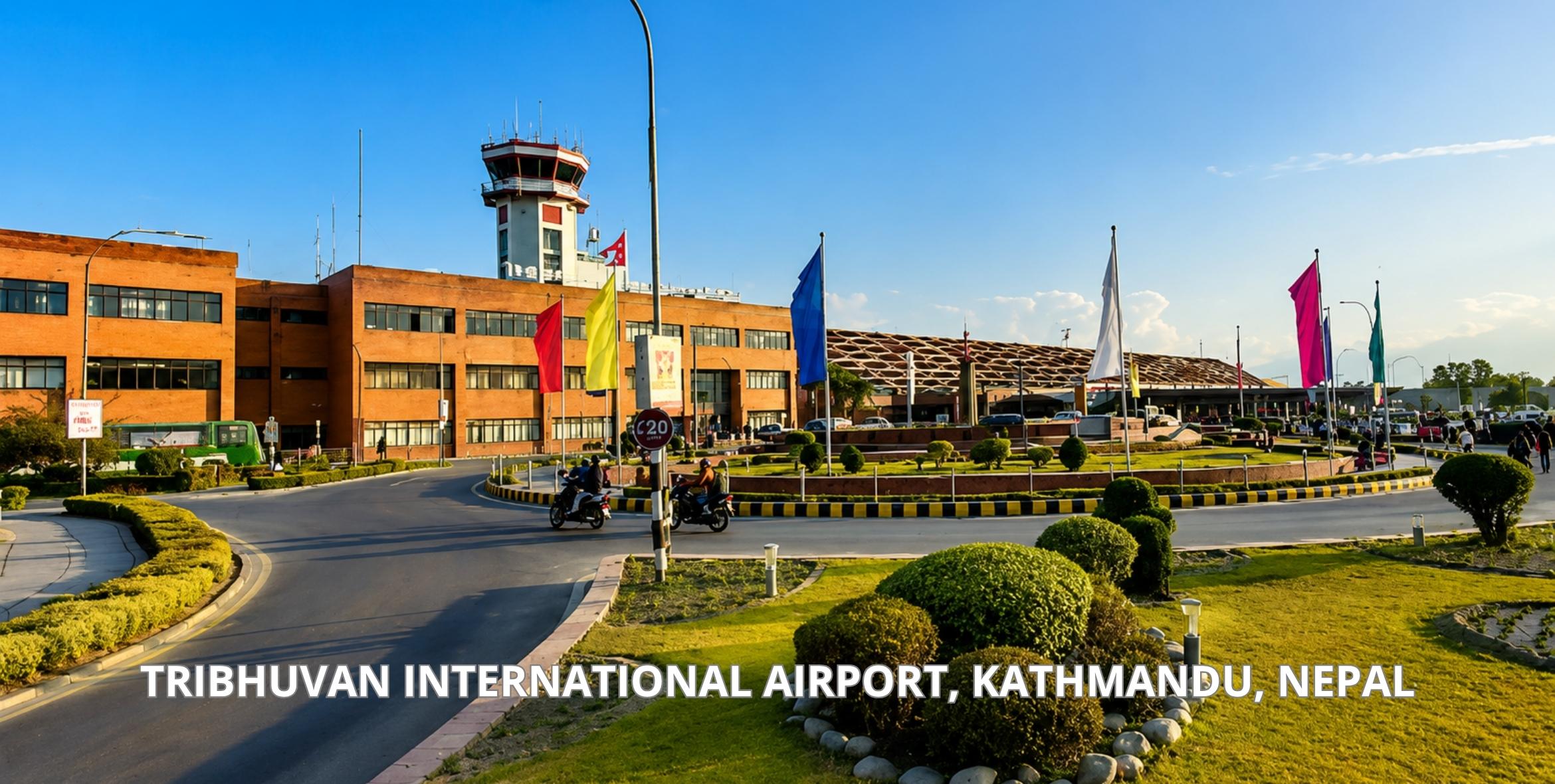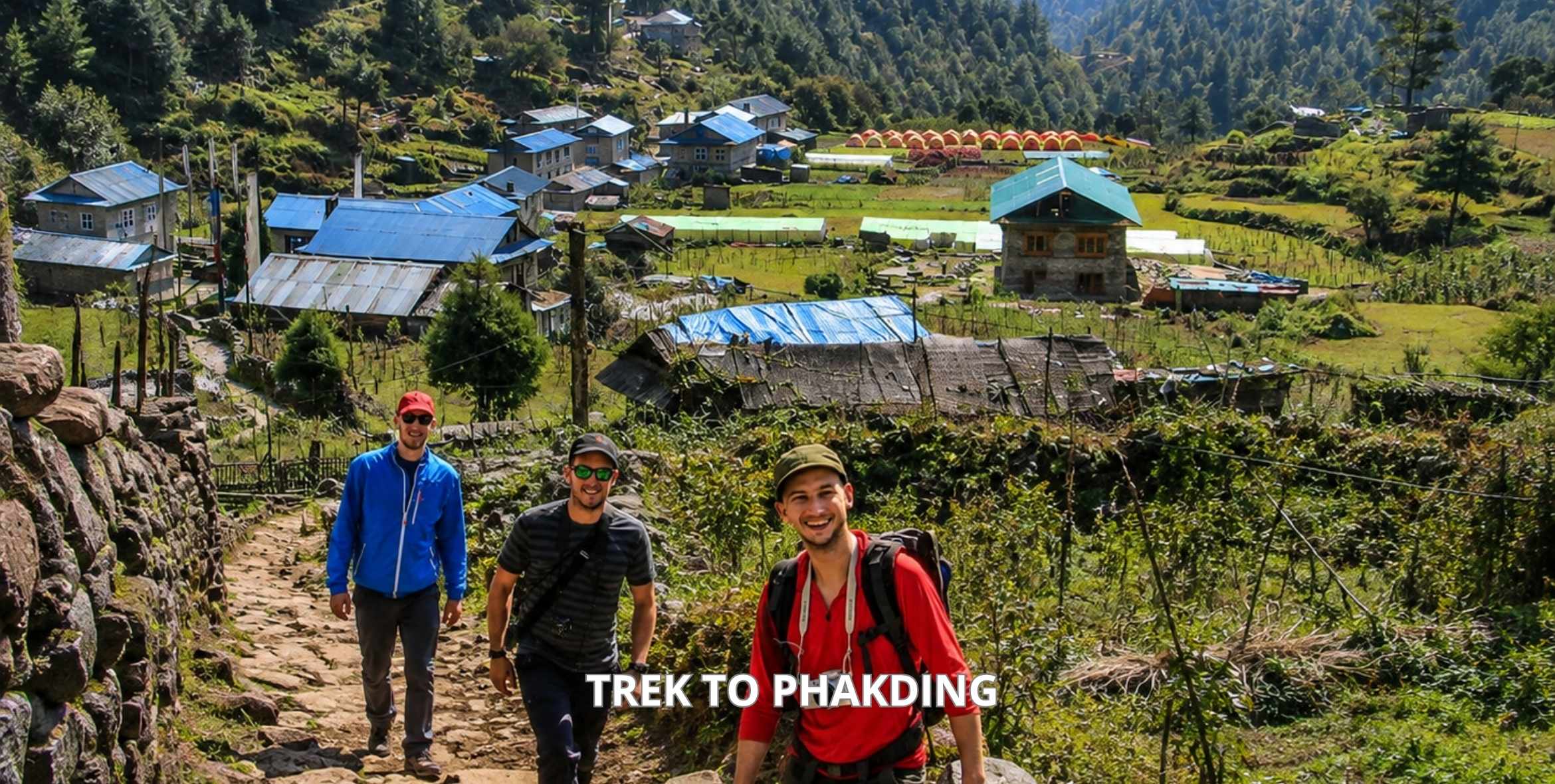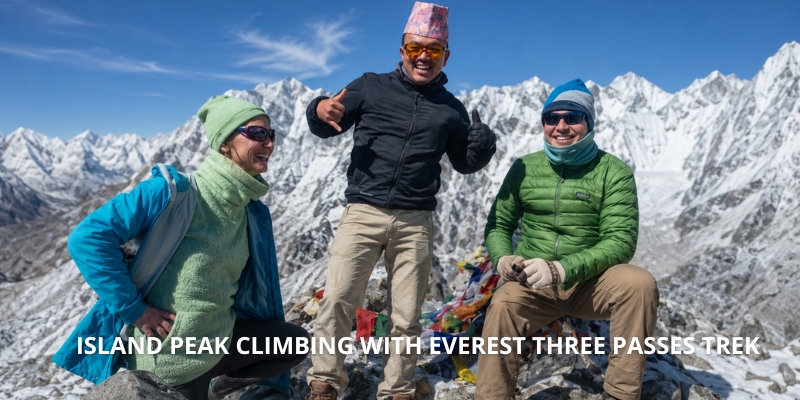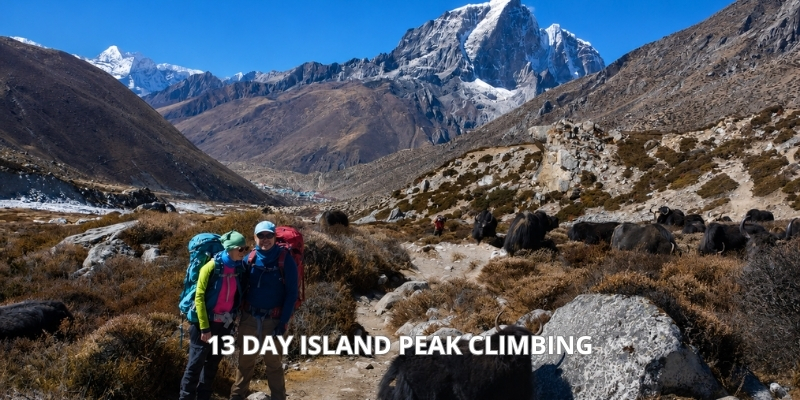
One of the best peak climbing journeys in the Everest Region is the Island Peak Climbing in 12 days you can finish the trek. This peak is in the Khumbu region of Nepal. This region is very famous for its trekking and climbing peaks. During this trek, you can experience different types of cultures and traditions of the region.
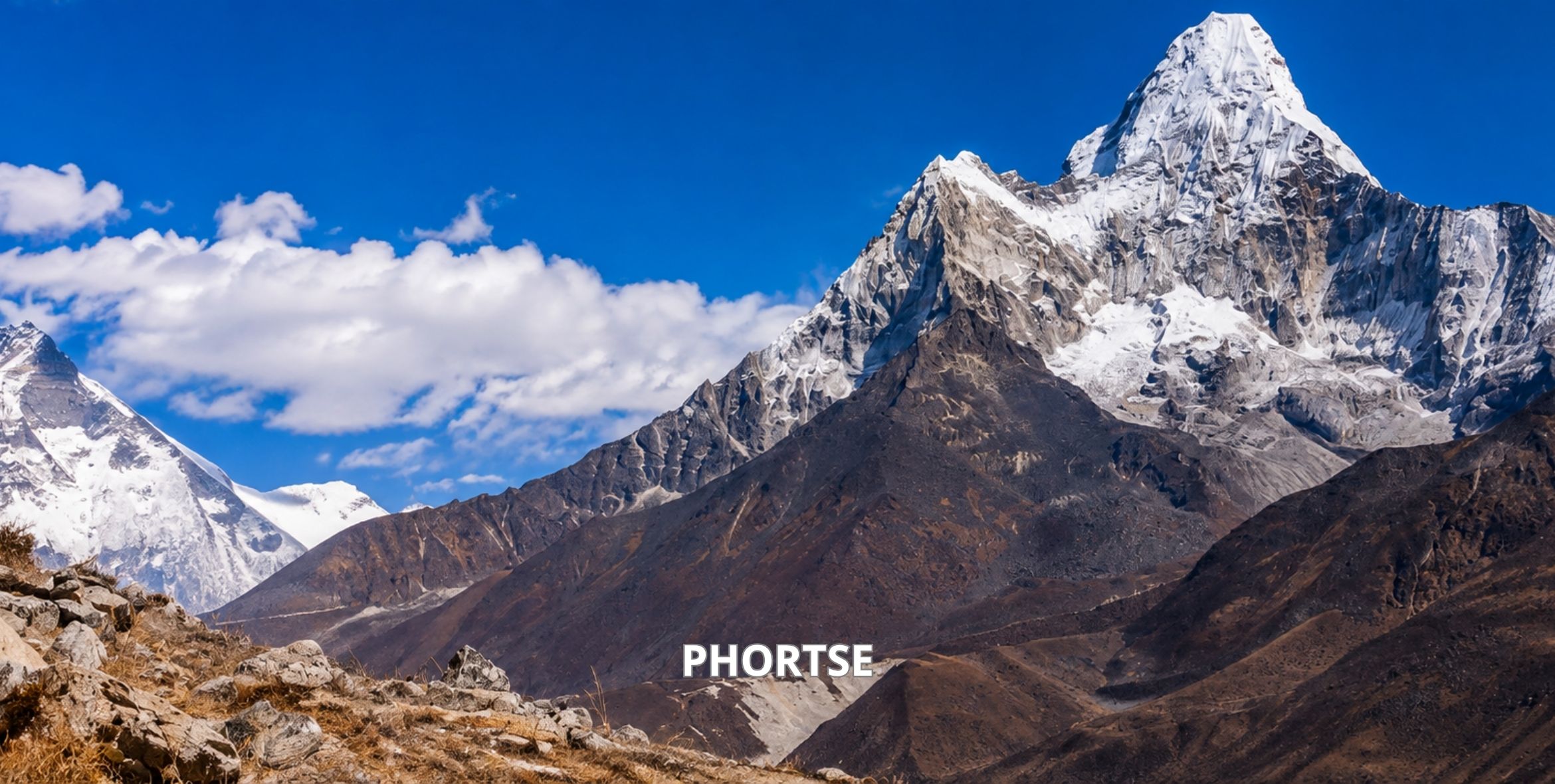
Nepal boasts eight of the world’s fourteen tallest peaks, making for an abundance of breathtaking alpine vistas. Along the way to Island Peak base camp, you will encounter hospitable Sherpas, stroll through charming towns, and take in a variety of customs and cultures. Other treasures found in the Sagarmatha National Park are its flora and animals.
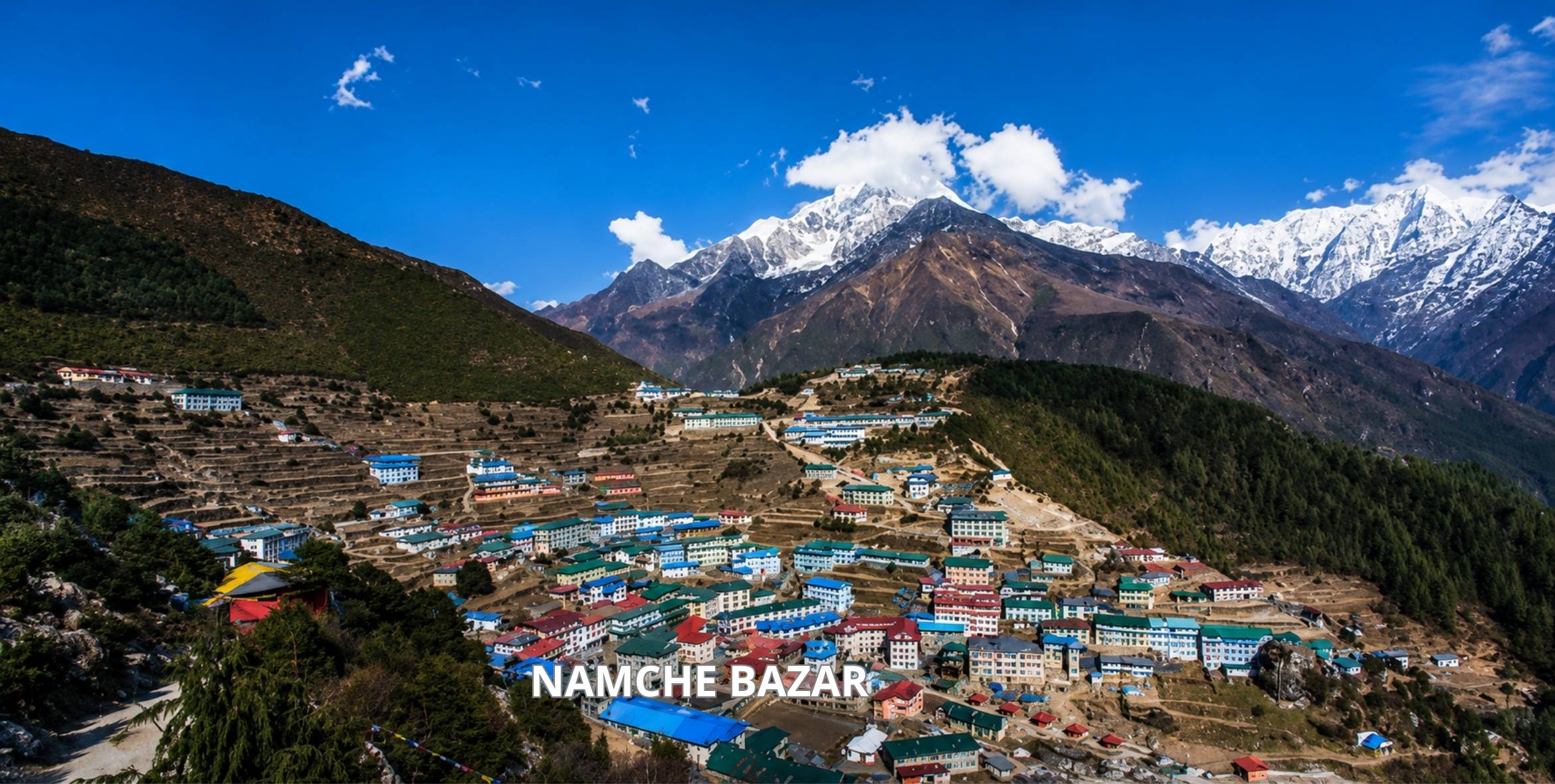
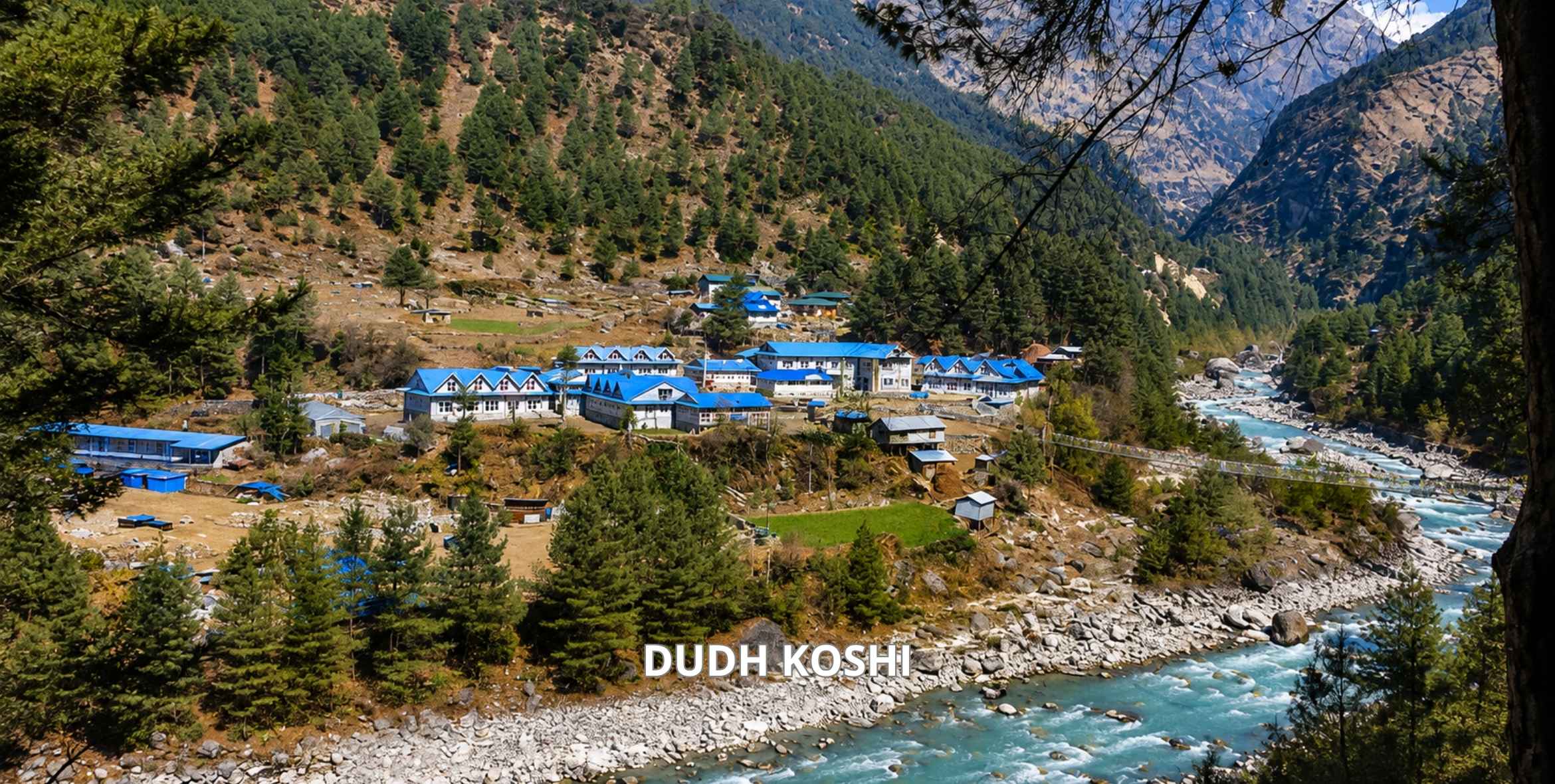
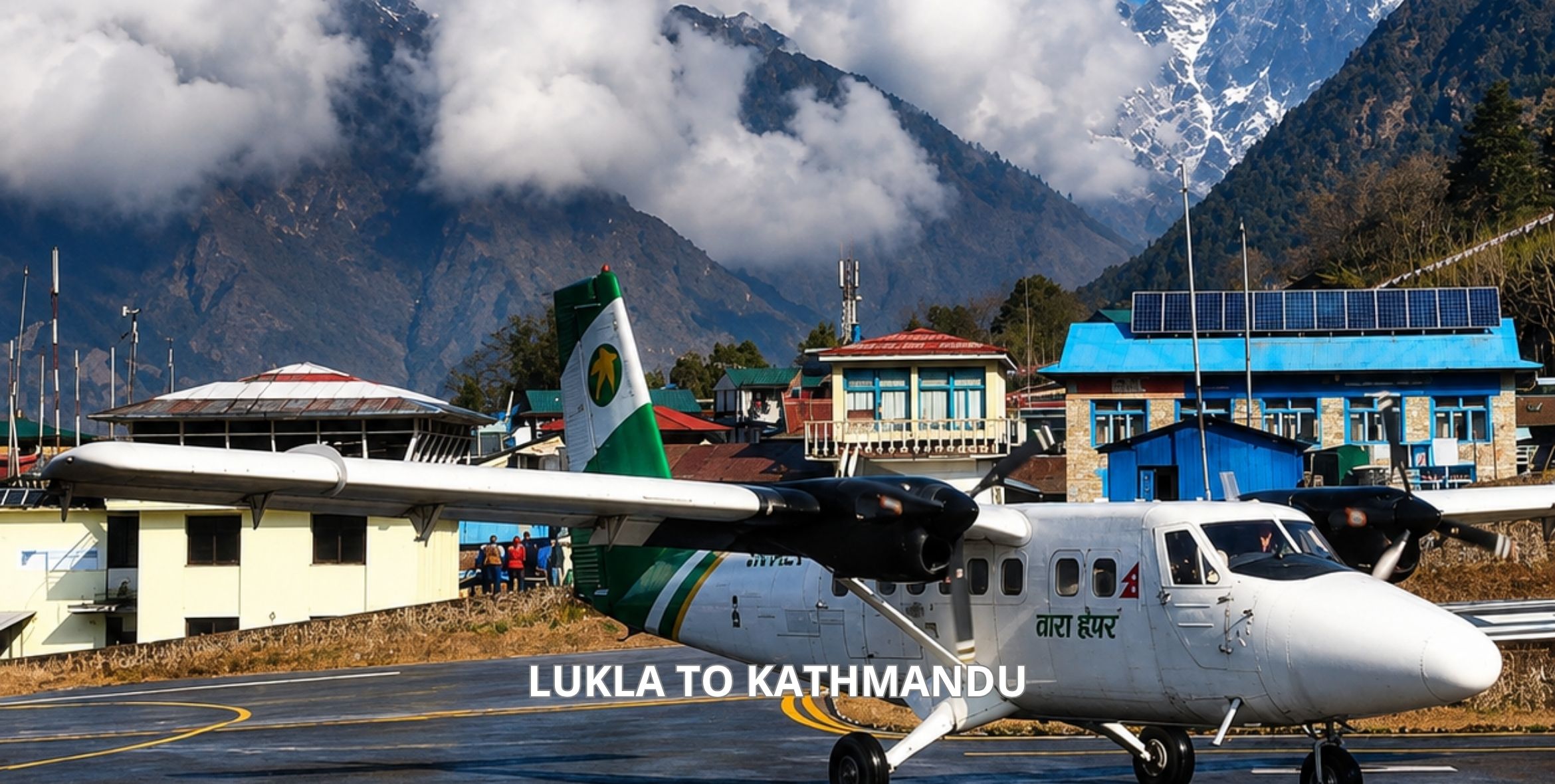
The first leg of your Island Peak adventure is an early coach journey to Ramechhap, where you will board an “exciting” flight to Lukla (2,840m). The route then continues north along the Dudh Kosi to Namche Bazaar, the capital of the Sherpa people (3,440m).
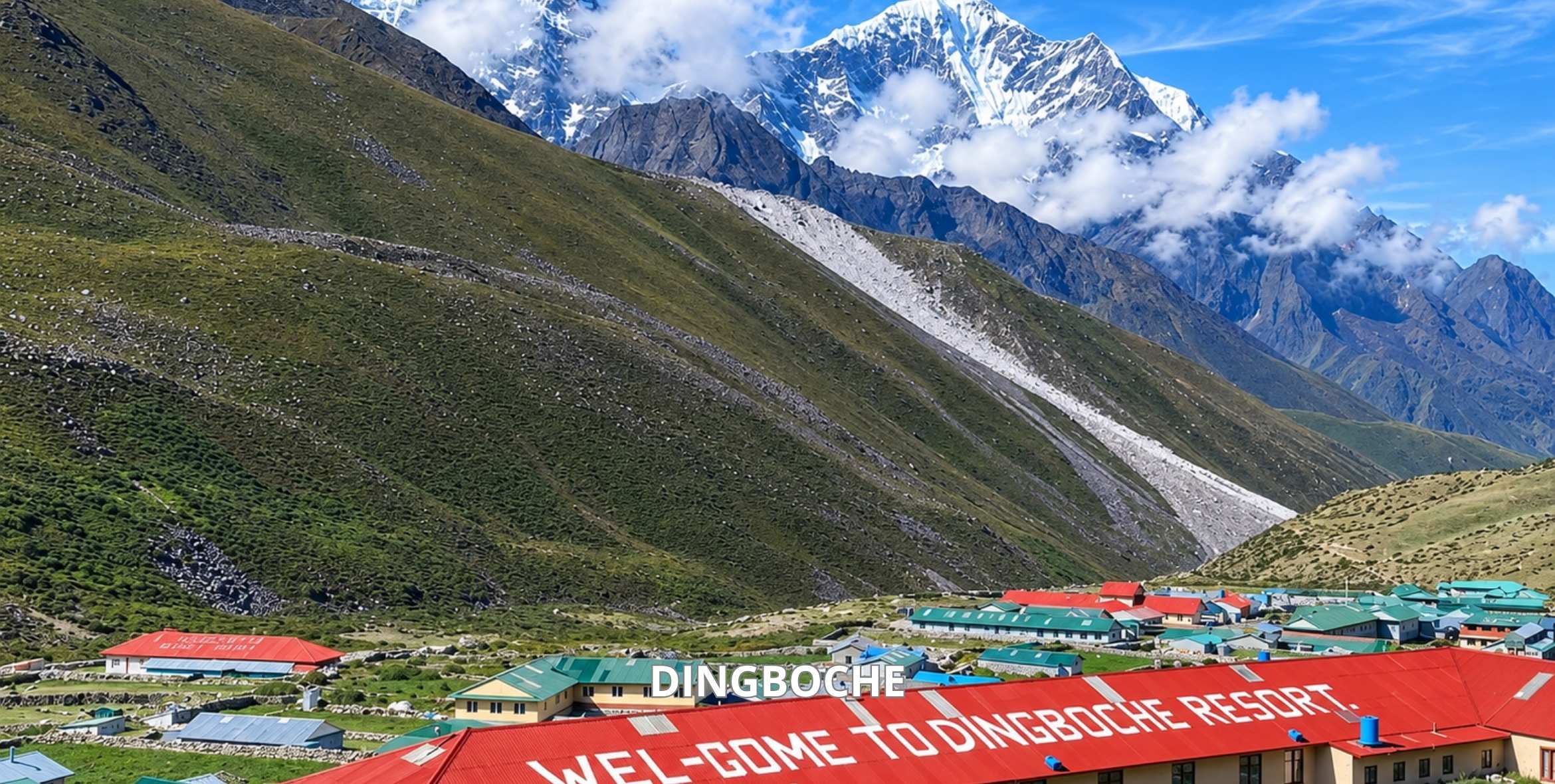
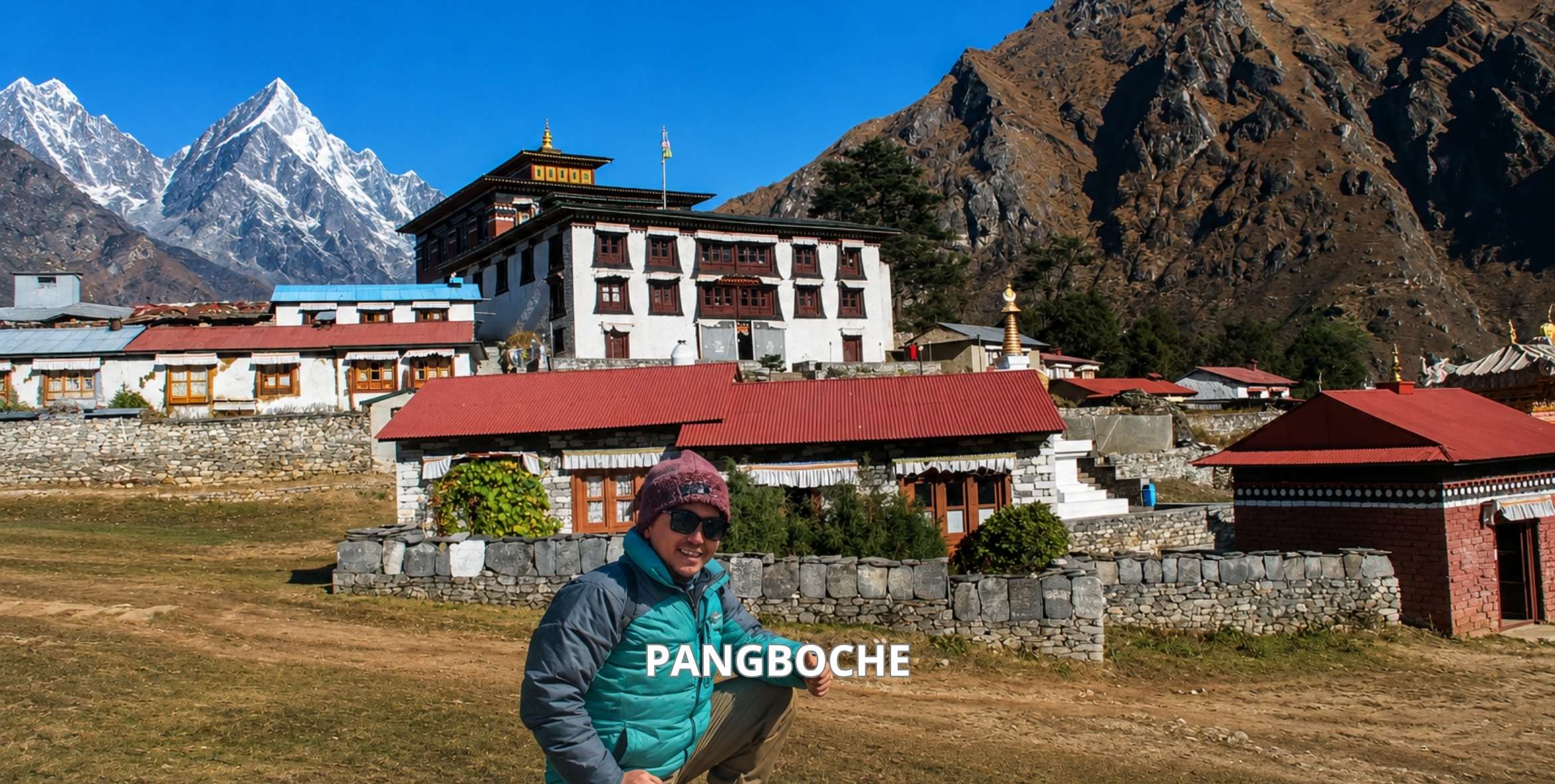
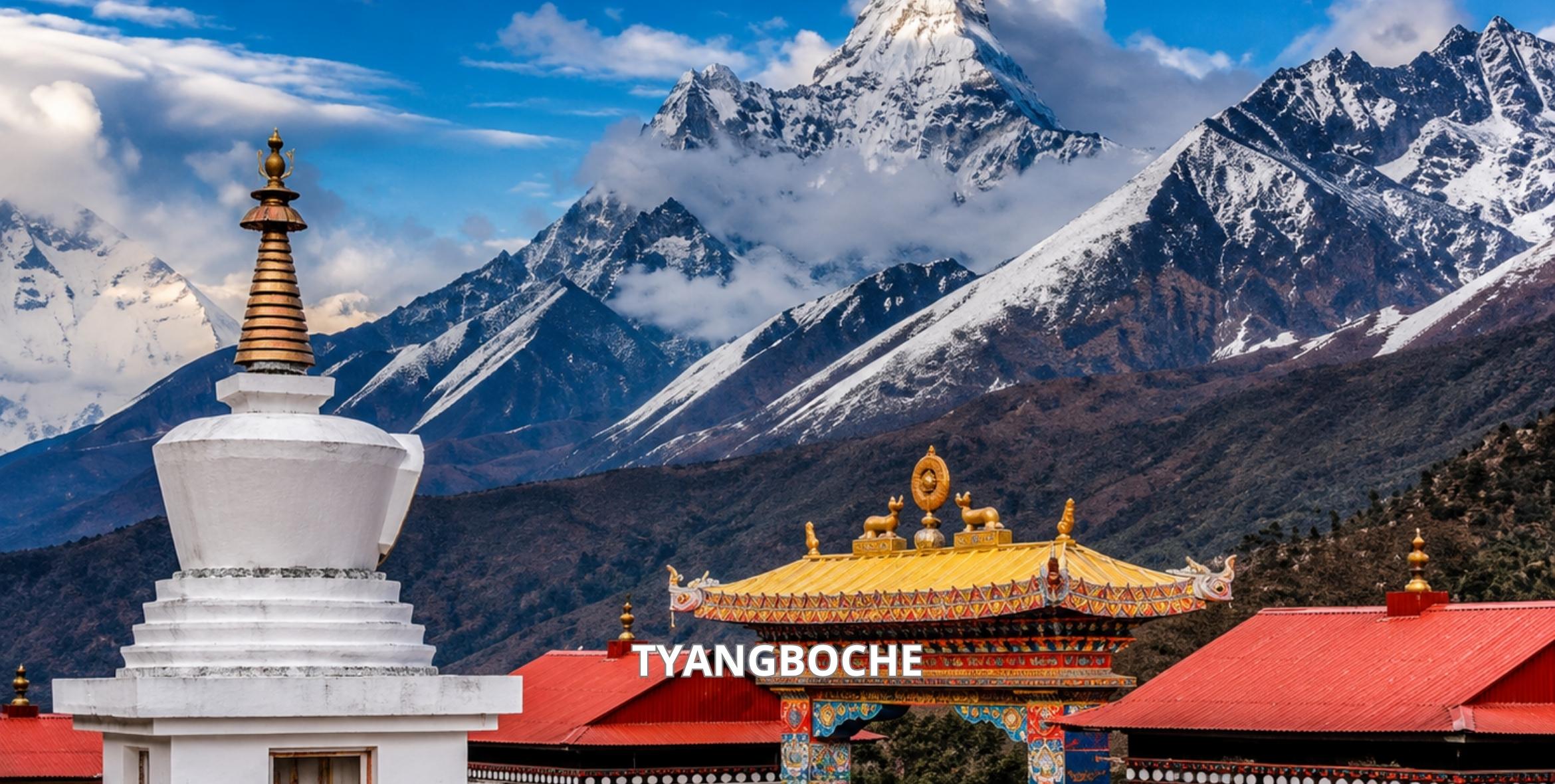
Many suspension bridges—some more interesting than others—will be crossed throughout the route. We’ll stay in Namche for two nights to help with altitude acclimatization. Your next acclimatization stop, Dingboche, is a day’s drive from Namche. You will stop at the biggest and most magnificent Buddhist monastery in the area, Tengboche Monastery, along the route.
The route from Dingboche to Everest Base Camp during the EBC trek passes via memorials for climbers lost on Everest and nearby peaks before circling over Pheriche to Dughla and then ascending to Lobuche (4,910m). After a quick day, you reach Gorakshep (5,140m), from whence you can ascend Kala Patthar (5,550m), the Everest viewpoint, and visit Everest Base Camp (5,364m). You can visit Himalaya Guide Nepal Pvt. Ltd. to gain more knowledge about the formidable peak and its ascent techniques.
Weather at Island Peak Climbing
Island Peak is located in the Nepali Himalayan Solu-Khumbu region, which is renowned for its unpredictable weather. The conditions for an Island Peak ascent are subject to change according to the season. The pre-monsoon season, which runs from March to May, has mild temperatures but can still be unpredictable due to high winds and snowfall. September through November, the post-monsoon season, brings lower temperatures and a greater chance of snowfall.
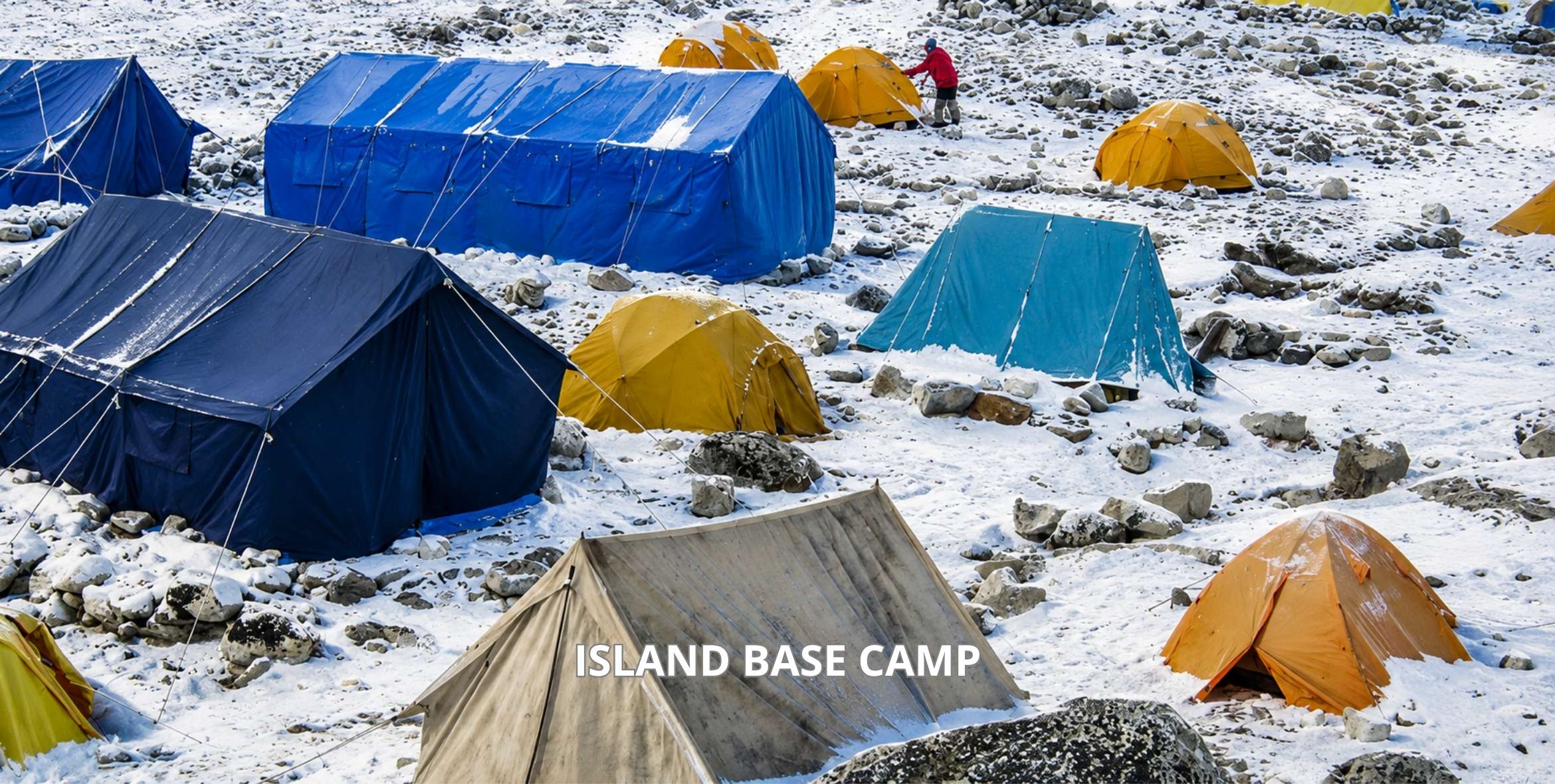
Island Peak Base Camp often experiences daytime highs of around freezing to ten degrees Celsius and nighttime lows of below freezing. The temperature will be substantially lower on the mountain, and the wind chill will make it feel even colder. It’s critical to be appropriately attired, equipped, and ready for any changes in the weather. Island Peak Climbing’s best-time guide will definitely come in handy while you are planning your dates for this trek.