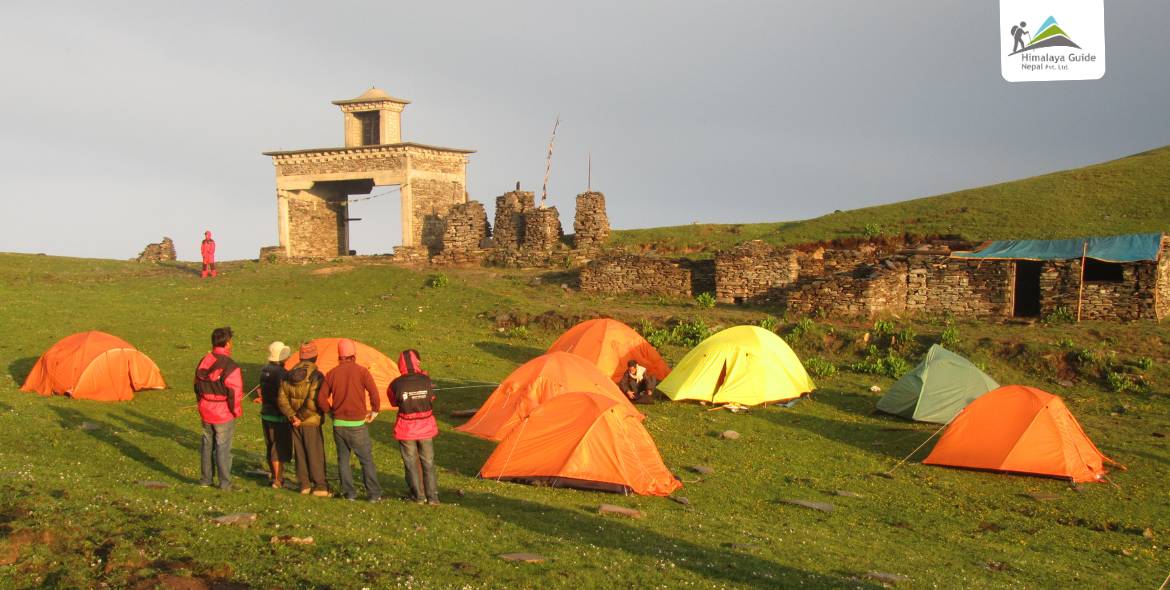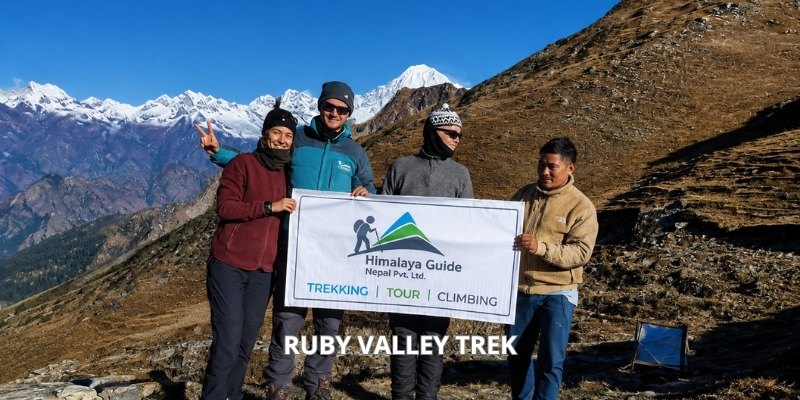
The Gen Z movement, Nepal stabilized, and life returned to normal. All safe for your Travel in Nepal 2025.

Newly Trekking Route- Rich Culture, Nature and Mountains

Country

Nepal

Difficulty

Easy

Trek Duration

7

Best Season

Sept-Nov/Mar-Apr

Accommodation

Lodge/Homestay

Region

Ruby Valley Ganesh Himal Trekking

Start / End Point

Kathmandu/Kathmandu

Max. Altitude

3,842 m (Pangsang La Pass)

Group Size

1 - 10

Meals Included

B+L+D

Acclimatization

Chalish

Permits

Langtang National Park Permit and TIMS Card

Recommended For

Beginners

Duration

9 Days

Activity

Nepal Trekking

Nature Of Trek

Trekking

Transportation

Public Bus/Public Jeep

Distance

70-85KM

Ruby Valley Trek Overview

Ruby Valley Trek is a unique trek in Nepal for travelers, mainly because it is a less touristy region. It lies in the north-central countryside region of Nepal, the Ruby Valley, surrounded by the more famous Langtang National Park in the east and the Manaslu Conservation Area in the west. It is also called the Ganesh Himal region, as you trek along the foothills of the spiritual Ganesh Himal range, including the majestic Ganesh I (7,422 m), Ganesh II (7,118 m), and Ganesh IV (7,104 m).

There are several routes for the Ruby Valley Trek, but the most scenic and popular trail is the one that leads through the villages of Somdang and Tipling. You’ll first take a drive to Syabrubesi, the gateway to the Langtang Region. Then, you’ll walk through dense pine forests, and you’ll have chances to spot species of plants and wildlife of the Langtang National Park. The highest point of the trek is the Pangsang La Pass (3,842 m), which offers views of Ganesh Himal along with Langtang and Manaslu ranges. You might also see distant views of the Annapurna range on clear days.

You’ll stay among the Tamang and Gurung communities in their homestays, where you can also enjoy local dishes and learn about their authentic local culture and lifestyle. You can witness and join a cultural Fishing program, hike to the natural hot springs, and many other local activities with local inhabitants. It only takes 9 days, so if you have time, you can continue to the Manaslu Trek or the Langtang Valley Trek after crossing Pangsang La Pass.

Major Experiences Of Ruby Valley Trek

  • Off-the-beaten-path trekking experience in a rarely visited valley.
  • Stunning views of the Ganesh Himal, Langtang, Manaslu, and Annapurna ranges.
  • Cross the Pangsang La Pass (3,842 m) for scenic views of the surroundings and mountains.
  • Experience diverse cultures of Gurung, Tamang, Dalit, and Ghale communities.
  • Enjoy warm local hospitality and evening cultural programs.
  • Relax in the biggest natural hot spring in Nepal at Tatopani.
  • Taste organic, locally sourced food and produce in Chalish and Tipling Villages.
  • Swim or fish in the pristine Ankhu River with fresh running water.
  • Explore rhododendron forests, alpine meadows, and spot rare Himalayan wildlife in Langtang National Park.
  • Walk through peaceful, crowd-free trails with authentic homestay experiences

Get An Authentic Homestays Experience With Real Rural Nepalese Hospitality

Staying in the villages of Ruby Valley is as memorable as the trekking itself. Instead of commercial lodges, you’ll sleep in family-run homes (Homestays) of Gurung, Tamang, Ghale, and Kami communities, where the welcome is warm and genuine. Rooms are simple but cozy, with wooden beams and local fabrics. You live their authentic way of life: eat what locals eat, sleep how they sleep. Meals are mostly Dal Bhat, roti (flatbreads), porridges, noodles, and soups prepared from what the family grows, maize, millet, seasonal vegetables, or freshly harvested greens. So, every dish feels both fresh and rooted in the land.

The homestay experience also offers a rare look into rural Nepali life. You’ll see stone-paved courtyards, terraced fields being worked with hand tools, and children running barefoot to nearby schools. In villages like Chalish and Tipling, locals invite you in the evenings to enjoy and join in their cultural performances, such as the Shaman dance, Horse dance, or Dohori singing, which bring energy and color after quiet days on the trail. They share their stories of origin and traditions shared by firelight.

The local people do not stage these traditions for tourists. They are living parts of the Ruby Valley community. They believe that hospitality is not just about food and lodging, but also about treating guests like part of the family, even if it’s for a short time. These homestays allow a deeper and more unique cultural immersion in the Ruby Valley trek: a journey not only across landscapes, but also into people’s lives.

Outline Itinerary for 9 Days Ruby Valley Trek

Route End Elevation Elevation Gain/Loss Duration Distance
Day 01 Arrival in Tribhuvan International Airport Kathmandu 1,350 m - 30m 6.2KM
Day 02 Drive from Kathmandu to Syabrubesi 1,530 m ↑ 230 m 7-8 Hours 122KM
Day 03 Trek from Syabrubesi via Chawatar to Gatlang 2,337 m ↑ 807 m 6 Hours 14KM
Day 04 Trek from Gatlang via Parvati Kunda and Yurikharka to Somdang 3,271 m ↑ 934 m 6 Hours 12KM
Day 05 Trek from Somdang via Pangsang La Pass (3,842 m) to Tipling 2,078 m ↑ 571 m / ↓ 1,764 m 7 Hours 14KM
Day 06 Trek from Tipling via Sakpar to Chalish Village 1,600 m ↓ 478 m 5 Hours 8KM
Day 07 Day hike to Tatopani Hot Spring and return to Chalish Village 1,600 m ↑ 400 m / ↓ 400 m 5 Hours 6KM
Day 08 Fishing program at the Ankhu River and return to Chalish Village 1,600 m ↓ 200 m / ↑ 200 m 4 Hours 5KM
Day 09 Trek from Chalish via Borang to Dhading Besi and drive to Kathmandu 1,300 m ↓ 250 m 3 Hours trek + 5 Hours drive 120KM
Download PDF download

9 Days Ruby Valley Trek Itinerary

Day 01 :

Arrival in Kathmandu, Nepal

Drive Distance

5KM

Drive Duration

30 min

Highest Altitude

1,300 m

Meals

N/A

Accommodation

Kathmandu Garden Home, Thamel

  • Starting Point: Tribhuvan International Airport
  • Ending Point: Kathmandu

Heartily welcome to the Himalayas, Nepal! A representative will pick you up from Tribhuvan International Airport and drop you off at your hotel, which you have booked. After resting for some hours, we will meet and discuss the details of our program.

Then, you can take an optional evening walk around Thamel, a touristy hub of Kathmandu Valley. Here you’ll get your first impressions of Nepal: colorful prayer flags fluttering above narrow alleys and rooftops of the houses, and the lively mix of honking horns, temple bells, and street music. You can see these in every corner. After exploration, have a cup of steaming masala tea (Nepali chiya), Momo, or Dal Bhat as your first taste of the country’s warmth, a relaxed start to your Ruby Valley trek journey.

Day 02 :

Drive from Kathmandu to Syabrubesi

Drive Distance

122KM

Drive Duration

7-8 Hours

Highest Altitude

1,530 m

Meals

Breakfast, Lunch, Dinner

Accommodation

Hotel Trekkers/ Hotel Old Namaste

  • Starting Point: Kathmandu
  • Ending Point: Syabrubesi

Today, you’ll start the Ruby Valley Homestay Trek with a drive from Kathmandu to Syabrubesi. The journey goes along a northern highway through Trishuli Bazaar and the high-altitude viewpoint at Dunche Bazaar. You’ll pass the local villages, lush crop fields, and dramatic mountain landscapes with views of Ganesh Himal Range, Manaslu, and the Langtang range on the way to Syabrubesi.

Besides mountain views, you’ll also notice roadside stalls that sell roasted corn, momos, and other local snacks. This ride in a public bus is long, but it will often play Nepali music, and people are friendly too, so you won’t get bored. Then, end the day in this beautiful Tamang village, Syabrubesi, near the Bhote Koshi River, the trailhead for this Ruby Valley trek route.

Day 03 :

Trek from Syabrubesi via Chawatar to Gatlang

Trek Distance

6 Hours

Trek Duration

14KM

Highest Altitude

2,337 m

Meals

Breakfast, Lunch, Dinner

Accommodation

Lodge In Gatlang

  • Starting Point: Syabrubesi
  • Ending Point: Gatlang

On day 3, your Ruby Valley trek begins officially as you leave Syabrubesi and head towards Gatlang. The trail goes west on a steep, challenging climb up to Bahun Dada Pass through forests and open ridges that offer occasional glimpses of distant Langtang Lirung and Ganesh Himal ranges and the valley below. You might even spot birds, wildflowers, and small wildlife along with streams and natural springs on this challenging path.

Then, you’ll take a more gradual hike via Chawatar to the Gatlang, a beautiful small village on the Tamang Heritage Trail. You’ll walk along the beautiful terraced fields and reach the village in the late afternoon. In this village, you can experience the authentic rural hospitality of the Tamang people and see the traditional stone-paved community hallIf you feel like walking more, you can explore the nearby ridges, which will provide you with sweeping views of the valley. Settle in Gatlang for the night after enjoying this highlight of the Ruby Valley trek trail.

Day 04 :

Trek from Gatlang via Parvati Kunda and Yuri Kharka to Somdang

Trek Distance

6 Hours

Trek Duration

12KM

Highest Altitude

3,271 m

Meals

Breakfast, Lunch, Dinner

Accommodation

Lodge In Somdang

  • Starting Point: Gatlang
  • Ending Point: Somdang

From Gatlang, you’ll trek to your next overnight destination, Somdang. The route is uphill, and within 15 to 25 minutes, you’ll see the sacred Parvati Kunda (2,580 m), named after Goddess Parvati. In the full moon of Janai Purnima (which typically occurs in August), this spot gets crowded. From here, you’ll cross through the pine and rhododendron forests to a high-altitude pasture, Yuri Kharka at 3,710 m. You’ll stop here to have lunch. From there, you’ll continue to Khurphu Bhanjyang and then descend to the Mailung Khola, which borders the Rasuwa and Dhading Districts.

Then, you’ll walk to the north of the river and hike through a green valley to the 200 m Chukarma waterfall. As you continue, you’ll pass by the Paiputang Metal Mine, a fascinating historical site with a 1.4KM tunnel bored into the mountain to extract zinc, copper, tin, crystal, and other valuable minerals. Then, after a final climb, you’ll arrive at Somdang. This village on a hillside offers you a beautiful sunset over the Manaslu range and the Mailung Khola Valley, one of the most photogenic spots on this Ruby Valley trek itinerary. You may even see the distant outlines of the Annapurna and Ganesh Himal ranges if the day is clear.

Day 05 :

Trek from Somdang via Pangsang La Pass to Tipling

Trek Distance

14KM

Trek Duration

7 Hours

Highest Altitude

3,842 m

Meals

Breakfast, Lunch, Dinner

Accommodation

Tipling Homestay

  • Starting Point: Somdang
  • Ending Point: Tipling

Today will be the hardest day of the trek. You’ll start climbing up a steep path through rocky and forested terrain towards the Pangsang La Pass. The ascent will be tough, but you’ll be rewarded with 360° panoramas of Manaslu, Ganesh Himal, Langtang, Annapurna, and sweeping valleys. You’ll see alpine flowers, yaks grazing on the meadows, and hear the call of Himalayan monals. Prayer flags flutter in the cool mountain air. Adding to the altitude gain, there’s a long and knee-testing descent that’ll require trekking poles. The Ruby Valley trek difficulty increases in the monsoon due to slippery paths.

After that, you’ll trek down past Marmailung and reach Tipling village by evening. You’ll pass by many mani walls draped with prayer flags that make for perfect photos. You can explore its Buddhist gompas with prayer wheels and even a small Catholic church. During festivals or simple cultural programs, you may witness traditional dances like the Shaman, Horse, Mane, or Lama dances. You’ll have an overnight stay in a homestay.

Day 06 :

Trek from Tipling via Sakpar to Chalish Village

Trek Distance

8KM

Trek Duration

5 Hours

Highest Altitude

1,600 m

Meals

Breakfast, Lunch, Dinner

Accommodation

Gurung Homestay

  • Starting Point: Tipling
  • Ending Point: Chalish Village

Leaving Tipling, you’ll make your way into Chalish, one of the most welcoming villages of the Ruby Valley. At first, you’ll start with a descent to Kami Gaun, a small settlement tucked into the hillside. From here, you cross the Adha Khola on a new box bridge. Then, the path again climbs gently to Sakpar Danda. After that, you’ll enter the stretches of “Nepali flat” farmland with terraced fields of maize and barley spread across the valley. In clear Ruby Valley weather, you can catch distant glimpses of Ganesh Himal.

Then you’ll reach Sertung, inhabited mainly by Tamang. It carries the old legend of being the “place of gold,” believed to have been founded by two brothers guided here by a dream. Then, you’ll arrive at Chalish Village in the late afternoon. This village is inhabited primarily by Gurung, Ghale, and Kami communities, living a simple but lively life in rustic homes. There’s a Sri Tinkanya Devi Mandir above the village, surrounded by colorful periwinkle flowers. You may join the locals to pray and make wishes here.

Day 07 :

Day hike to Tatopani Hot Spring and return to Chalish Village

Trek Distance

6KM

Trek Duration

5 Hours

Highest Altitude

1,600 m

Meals

Breakfast, Lunch, Dinner

Accommodation

Gurung Homestay

  • Starting Point: Chalish Village
  • Ending Point: Chalish Village

Day 07 is the rest and recovery day on the Ruby Valley trek. Its main purpose is to give your body a break while still enjoying a short hike to the famous Tatopani Hot Spring for a relaxing dip. You’ll follow the Ankhu Khola and cross the old suspension bridge at Khar. From there, it climbs steadily to Tikkas Danda. You can pause here and enjoy glimpses of Ganesh Himal before continuing through shaded jungle paths to reach a natural spring at Tatopani. Nepali people believe the Tatopani dip is healing. In fact, warm waters are medically known to improve circulation, relax muscles, and ease joint stiffness.

After spending some time relaxing, you’ll hike back the same way to Chalish in the afternoon. You may carry a packed lunch or enjoy a simple meal at Tikkas Danda on the way back. Then, the day ends with another night in a Chalish homestay, surrounded by the calm of the village. This day, lighter than others, provides both recovery and cultural depth, making it one of the most memorable parts of the Ruby Valley trek experience.

Quick Insight: During peak trekking season, bring a towel and warm layers, as you can feel cold on the return hike after bathing.

Day 08 :

Fishing program at Ankhu River and return to Chalish Village

Trek Distance

5KM

Trek Duration

4 Hours

Highest Altitude

1,600 m

Meals

Breakfast, Lunch, Dinner

Accommodation

Gurung Homestay

  • Starting Point: Chalish Village
  • Ending Point: Chalish Village

On day 8, you’ll have an interesting Ruby Valley trek experience: a traditional fishing program at the Ankhu River. For that, you’ll have to descend to the riverside first through the terraced farmlands. Then, you may join the fishing program in fresh running water by using a fishing hook or a fishing net.

The riverbanks make a peaceful place to sit and soak in the valley atmosphere, with dragonflies hovering and the occasional kingfisher darting past you. You can enjoy some hours at the river beach, then go back to Chalish following the same trail. In the evening, you can join in simple Gurung or Tamang cultural dances. This experience combines nature, leisure, and tradition, a perfect way to enjoy the last days of your Ruby Valley trek.

Quick Insight: In warmer months, bring a hat and sandals for comfort at the river. Similarly, in the monsoon, water levels rise quickly, so stay cautious near the banks.

Day 09 :

Trek from Chalish to Sertung then drive to Dhading Besi - Kathmandu

Trek Distance

400M

Trek Duration

1 Hour

Drive Distance

137KM

Drive Duration

9-10 Hours

Highest Altitude

1,300 m

Meals

Breakfast, Lunch, Dinner

Accommodation

Guest own

  • Starting Point: Chalish Village (1,600 m)
  • Ending Point: Kathmandu (1,300 m)

Day 9 is the final Ruby Valley trekking day. You’ll leave Chalish behind and trek through terraced fields and small hamlets, gradually descending toward Borang Village. Along the way, you’ll see locals working in the fields, children heading to school, and the last glimpses of the Ganesh Himal foothills fading into the distance. The trail is gentle and allows you to take in more of the rural lifestyle one last time. Then, you’ll stop the trek at Dhading Besi and take a 5-hour jeep drive to Kathmandu.

Enjoy the ride through hills and valleys, small market towns, and patchwork farmland. By evening, you arrive in the capital, trading the quiet trails of the Ruby Valley for the lively streets of Kathmandu city. Check into your hotel, and you’re free for the rest of the day. We hope you had a nice journey on our Ruby Valley trek itinerary.

Inclusion/Exclusion in Ruby Valley Trek

What's Included

  • International Airport Pick Up and Drop Service
  • 2 Nights’ Hotels in Kathmandu
  • Bus Ticket to Syabrubesi by public bus
  • Sertung to Kathmandu by public jeep
  • Drop off at the Hotel in Kathmandu
  • Three meals a day (Breakfast, Lunch, and Dinner along the trek)
  • Homestay accommodation on the way
  • An experienced local Guide (including his salary, equipment, insurance, ground transportation, lodging, and food
  • Equipment: Down Jacket, Sleeping Bags after trek return
  • All Legal Documents
  • All government taxes
  • Token of Love
  • Some Dry Fruits
  • Farewell Dinner

What's Excluded?

  • Extra night accommodation in Kathmandu
  • Travel insurance
  • Hot and Cold drinks such as Tea/Coffee, Coke, Mineral Water, Beer, etc
  • Personal expenses (laundry, bar bill, telephone, extra helper, battery charge, shower, and boiled water)
  • Some donation to the Cultural Group
  • Tips are expected

Ruby Valley Trek Route Map

A trek map is an important tool for the Ruby Valley adventure. It helps you visualize the trek route, estimate distances covered for each day, prepare for altitude changes, and plan rest stops. You’ll know what to expect along the way and can make proper decisions during your journey. It gives confidence and clarity for beginner trekkers.

The onward route begins in Kathmandu and leads to Syabrubesi, the gateway to the valley. From there, the trail passes through Chawatar, Gatlang, Parvati Kunda, Yurikharka, Somdang, and ascends to Pangsang La Pass, the trek’s highest point. Descending from the pass, you continue to Tipling, Sakpar, and finally reach Chalish Village, experiencing diverse landscapes, local culture, and natural beauty along the way.

Kathmandu → Syabrubesi → Chawatar → Gatlang → Parvati Kunda → Yurikharka → Somdang → Pangsang La Pass → Tipling → Sakpar → Chalish Village

The return route follows a different path, offering a fresh perspective of the valley. From Chalish Village, trekkers can take side trips to Tatopani Hot Spring and the Ankhu River. For the exit, the onward route passes Borang, Dhading Besi, and finally Kathmandu. This variation introduces new villages, forests, and rivers, making the descent just as engaging and culturally rich as the onward journey.

Chalish Village → Tatopani Hot Spring (return Chalish) → Ankhu River (return Chalish) → Borang → Dhading Besi → Kathmandu


Ruby Valley Trek Map Image Link

Download PDF download

Departure

9 Days

Trip Days

19 Jan, 2026

Start Monday

27 Jan, 2026

End Tuesday

10

Group Size

USD 555 USD 499.50

Price

Booking Open

Status

10% Off
Private Trip

Prefer a more personal journey? Our private packages offer flexible dates, custom itineraries, and dedicated support—perfect for those seeking a tailored travel experience.

Altitude Chart

Altitude in:
Download PDF download

Explore Hidden Ruby Valley With Scenic Views From Pangsang La Pass & Hook A Line In The Wild Ankhu River

The Ruby Valley is undoubtedly one of the rare trekking regions in Nepal, perfect for those who want a short, simple yet exciting journey. Each day, this quiet and hidden corridor between popular regions is a personal and pleasant experience. It is a very less tourist trekking destination in Nepal.

The main highlight is the Pangsang La Pass climb. Around the pass, you can see alpine flowers brighten the ridges, and Himalayan monals call out in the stillness. At the pass summit, the entire horizon opens to the Ganesh Himal and Manaslu, plus Langtang and Annapurna ranges on clear days. The mountain wind is cool and dry and plays a rhythm for the dance (flutter) of prayer flags. This viewpoint makes you feel as if you are standing at the heart of the Himalayas.

Then, after a few days down in the valley, the pace shifts from high-altitude drama to riverside calm. The Ankhu River invites trekkers to join locals in traditional fishing with nets or hooks in its rushing current. You won’t notice the hours passing by, lost in the sound of water, fish that dart overhead, and the laughter of children as they play by the sandy banks. This activity is a glimpse into a way of life that has flowed with the river for generations.

Low Altitude And Beginner-Friendly Trek, Accessible By An 8-9 Hours Drive From Kathmandu

The Ruby Valley Trek is an ideal journey for those who want an authentic Himalayan experience without extreme altitude or technical challenges. It is a low-altitude route with fewer risks of altitude sickness since its highest point is Pangsang La Pass at 3,842 m. You’ll spend most nights around 1,500–2,500 m, which means easier acclimatization and more comfortable sleeping conditions.

The trek is beginner-friendly too, perfect for preparing for high-altitude treks in the Everest and Annapurna regions. The trails range from gentle farmland paths to moderate forest climbs, with only one challenging day over the pass. Even that section is achievable with steady pacing and simple preparation. At the end of the Ruby Valley trek, short hikes like Tatopani Spring or the Ankhu River fishing program balance out the harder days. So the overall rhythm feels approachable for new trekkers or families.

Besides the trail, reaching the trailhead is straightforward, too. A scenic 7-8 hour drive from Kathmandu takes you through Trishuli Bazaar and up to Syabrubesi, the same gateway town used for Langtang treks. Unlike remote starting points that need flights, the Ruby Valley can be accessed entirely by road, making it easier and more affordable to begin. This accessibility, combined with gentle altitude and welcoming villages, makes it one of Nepal’s most inviting treks for first-timers.

What A Day On Off-Beat Ruby Valley Trekking Trail Looks Like?

A day on the remote Ruby Valley trek begins quietly with the sound of roosters crowing and smoke rising from kitchen fires as families prepare simple breakfasts of millet porridge, roti, or sel roti with steaming cups of chiya. You’ll have breakfast around 7:00 AM and walk out of your homestay into crisp mountain air. You’ll see prayer flags almost in every village above stone-paved courtyards and the faint scent of pine drifting from the forests. Then, you walk along terraced fields glowing in the morning sun.

Most trekking days here involve 5 to 7 Hours of walking, covering a distance of 8–14KM with gradual climbs (↑ 400–900 m) and descents (↓ 300–700 m). The trail winds between farmland and rhododendron forests, then sometimes up to ridges where the white peaks of Ganesh Himal and Langtang come into view. Along the way, you pass shepherds with their goats, women carrying baskets of fodder, and streams cascading down the hillside. Around midday, you stop for a simple lunch of Dal Bhat, noodles, roti, or porridge in a family kitchen, shared with laughter and stories despite the language barrier.

By late afternoon, usually around 3:00–4:00 PM, you arrive at the next village. The hosts and locals greet with curious smiles, lemonade, or a steaming cup of chiya. You can hear cricket sounds from the kitchen garden, and smell the woodsmoke. In the evening, you may be invited to watch or join a cultural song or dance. Then in the darkness, the whole valley rests under a sky heavy with stars. In the rural Ruby Valley, locals end the day in their homestay by 8:00–9:00 PM, and you’ll do the same, tired from a full day of walking.

Get An Authentic Homestays Experience With Real Rural Nepalese Hospitality

Staying in the villages of Ruby Valley is as memorable as the trekking itself. Instead of commercial lodges, you’ll sleep in family-run homes (Homestays) of Gurung, Tamang, Ghale, and Kami communities, where the welcome is warm and genuine. Rooms are simple but cozy, with wooden beams and local fabrics. You live their authentic way of life: eat what locals eat, sleep how they sleep. Meals are mostly Dal Bhat, roti (flatbreads), porridges, noodles, and soups prepared from what the family grows, maize, millet, seasonal vegetables, or freshly harvested greens. So, every dish feels both fresh and rooted in the land.

The homestay experience also offers a rare look into rural Nepali life. You’ll see stone-paved courtyards, terraced fields being worked with hand tools, and children running barefoot to nearby schools. In villages like Chalish and Tipling, locals invite you in the evenings to enjoy and join in their cultural performances, such as the Shaman dance, Horse dance, or Dohori singing, which bring energy and color after quiet days on the trail. They share their stories of origin and traditions shared by firelight.

The local people do not stage these traditions for tourists. They are living parts of the Ruby Valley community. They believe that hospitality is not just about food and lodging, but also about treating guests like part of the family, even if it’s for a short time. These homestays allow a deeper and more unique cultural immersion in the Ruby Valley trek: a journey not only across landscapes, but also into people’s lives.

Comparing The Ruby Valley Trek With The Tamang Heritage Trek And The Ghorepani Poon Hill Trek

Ruby Valley Trek, Tamang Heritage Trek, and Ghorepani Poon Hill Trek are all low to mid-altitude treks, beginner-friendly, and authentic in cultural encounters. Among them, Ruby Valley is the most offbeat, centered on authentic homestays and diverse communities. Similarly, the Tamang Heritage Trek focuses more on Tamang culture with teahouse stays. Meanwhile, the famous Ghorepani Poon Hill trek offers iconic sunrise views over the Annapurna and Dhaulagiri ranges.

Feature Ruby Valley Trek Tamang Heritage Trek Ghorepani Poon Hill Trek
Region Near the Ganesh Himal and Langtang regions Langtang Region Annapurna Region
Maximum Altitude 3,842 m (Pangsang La Pass) 3,165 m (Nagthali Viewpoint) 3,210 m (Poon Hill)
Duration 9 days 8 days 7 days
Total Distance 70–85KM 45–55KM 40–50KM
Difficulty Easy–Moderate (1 tough pass day) Easy–Moderate Easy–Moderate
Altitude Sickness Risk Very low risk of AMS, gradual acclimatization Low AMS risk Low AMS risk
Crowd Level Very low, rarely visited Moderate, growing in popularity High, one of Nepal’s busiest short treks
Accessibility By road, an 8–9 hour drive from Kathmandu By road, a 7–8 hour drive from Kathmandu By road from Pokhara, or flight/drive from Kathmandu
Best Views Ganesh Himal, Langtang, Manaslu, Annapurna Langtang Lirung, Ganesh Himal Annapurna, Dhaulagiri, Machapuchare

Ruby Valley Trek FAQs

Ready to Start
Your Adventure?

Join thousands of happy travelers who
Choose Himalayan Guide Nepal Pvt.Ltd..

Plan Your Trip