Discover the Real Himalayas with Trusted Local Guides & Porters for 2026/2027.
Everest Two Passes Trek
Country
Nepal
Difficulty
Strenuous
Trek Duration
13
Best Season
Spring (Mar - May) & Autumn (Sept - Nov)
Accommodation
Lodge, Guest House
Region
Everest Trekking
Start / End Point
Kathmandu/Kathmandu
Max. Altitude
Cho La Pass (5,420 M)
Group Size
1 - 25
Meals Included
Breakfast, Lunch, Dinner
Acclimatization
Included In Itinerary (Namche Bazaar & Dingboche)
Permits
Sagarmatha National Park Entry Permit & Khumbu Pasang Lhamu Rural Municipality Entrance Fee
Recommended For
Beginner, Expert Level Trekkers
Duration
15 Days
Activity
Nepal Trekking
Activity Per Day
4 - 6 Hours Trekking
Transportation
Flight, Car
Distance
Everest Two Passes Trek Overview
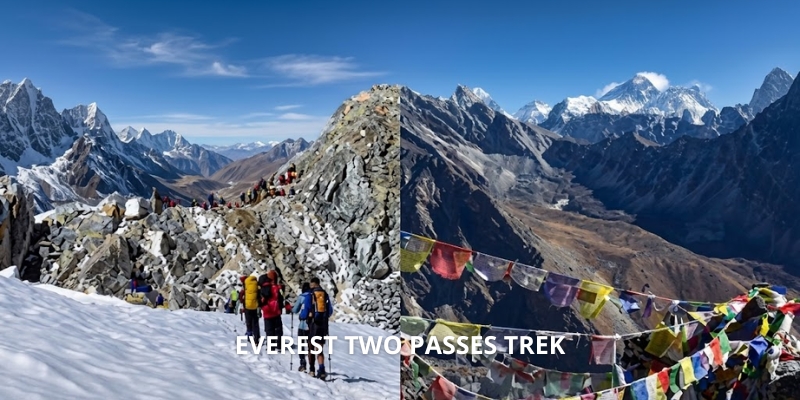
The Everest Two Passes Trek is an incredible 15-day circuit that showcases the pristine beauty of the world’s tallest peaks while offering a true adventure challenge. Focusing on Cho La Pass (5,420 M) and Renjo La Pass (5,360 M), this route is a less crowded alternative to the Three Passes trek. You start on the Everest Base Camp trail to Thukla, then explore the hidden turquoise Gokyo Lakes and the massive Ngozumpa Glacier, where you can witness four of the world’s six highest mountains: Everest, Lhotse, Makalu, and Cho Oyu.
The trek also offers a close look at the rare wildlife and spiritual heritage of Sagarmatha National Park. Along protected forests, you may spot elusive species like Snow Leopards, Musk Deer, and Lophophorus. Similarly, ancient monasteries in Tengboche and Thame offer authentic Sherpa culture and hospitality. Staying in local lodges across the remote Gokyo Valley and crossing high-alpine passes creates the perfect mix of physical challenge and cultural discovery. All in all, this trek delivers the grandest views of the Everest region in a peaceful, unforgettable way.
Everest Two Passes Trek Highlights
- Cross two high passes, Cho La Pass (5,420 M) and Renjo La Pass (5,360 M), for an exciting Himalayan adventure.
- Trek the high-altitude Chhukung valley below Lhotse, framed by Island Peak and Ama Dablam.
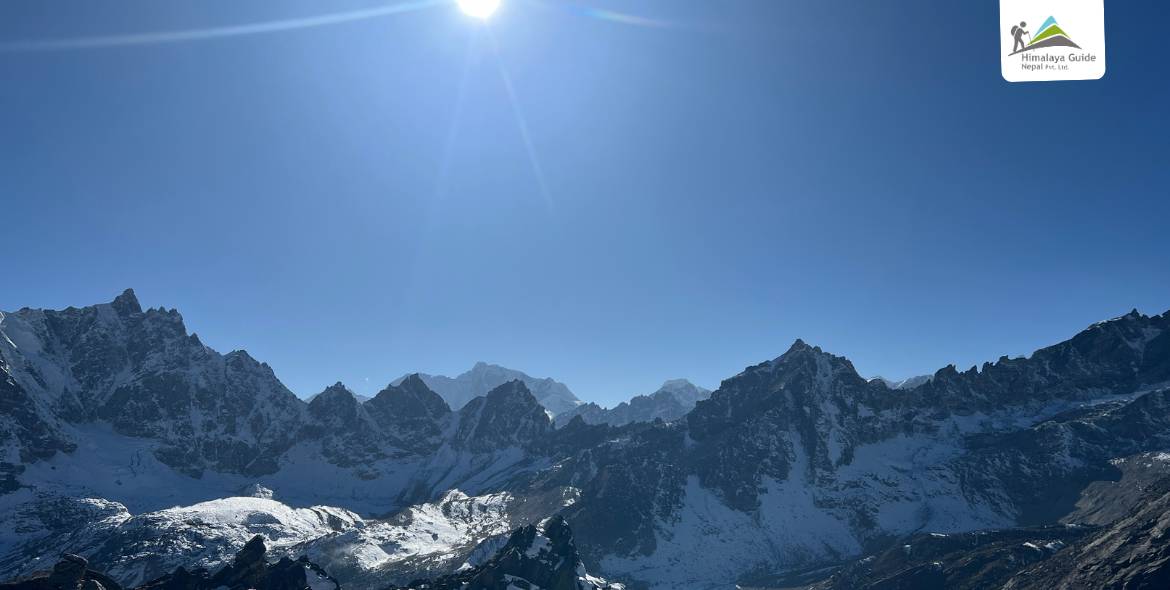
- Summit Gokyo Ri (5,357 M) to enjoy sunrise and 360° views of Everest, Lhotse, Makalu, and Cho Oyu.
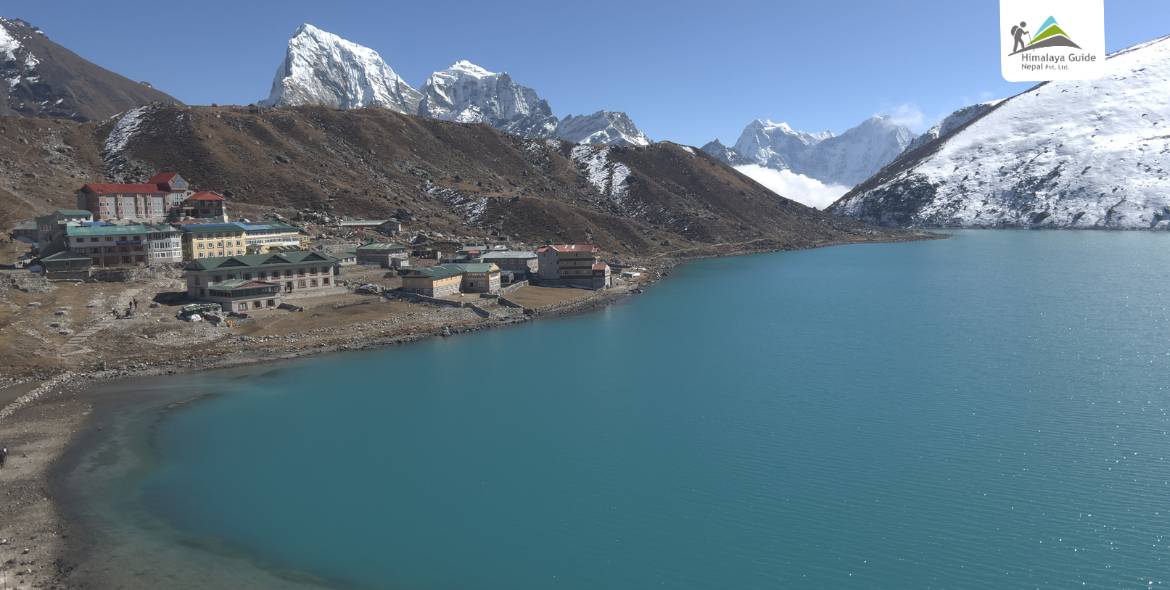
- Witness the turquoise Gokyo Lakes, a group of six high-altitude glacial lakes in the Gokyo Valley.
- Walk across the huge Ngozumpa Glacier, the longest glacier in the Himalayas, on the way to Gokyo Ri.
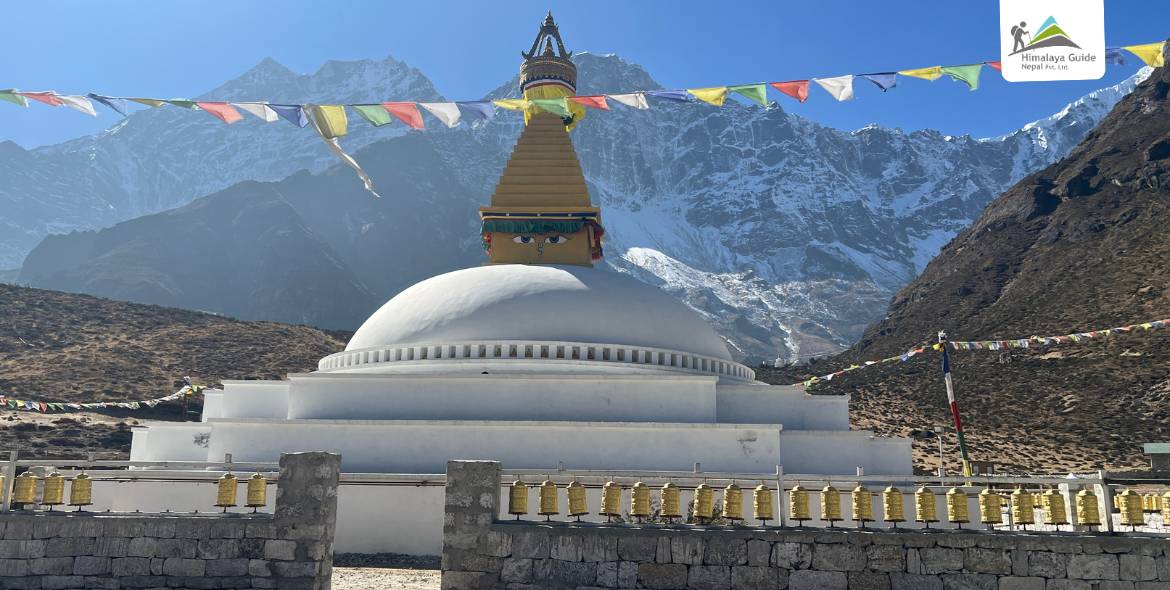
- Explore Tengboche Monastery and the traditional mountain villages of Thame and Khumjung.
- Spot rare wildlife in Sagarmatha National Park, like Snow Leopards, Musk Deer, and colorful Lophophorus.
- Experience Sherpa culture while staying in local lodges and explore the liveliness of Namche Bazaar.
Everest Two Passes Trek Outline Itinerary
| Route | End Elevation | Elevation Gain/Loss | Duration | Distance |
|---|---|---|---|---|
| Day 01 Arrival in Kathmandu | 1,350 M | |||
| Day 02 Flight to Lukla & Trek to Phakding | 2,640 M | - 210 M | 3 - 4 Hours | 7.5 KM |
| Day 03 Trek from Phakding to Namche Bazaar | 3,440 M | + 800 M | 7 - 8 Hours | 9.4 KM |
| Day 04 Acclimatization Day in Namche Bazaar | 3,440 M | + 440 M / - 440 M | 5 Hours | 5 KM |
| Day 05 Trek from Namche Bazaar to Tengboche | 3,860 M | + 420 M | 5 - 6 Hours | 9.6 KM |
| Day 06 Trek from Tengboche to Dingboche | 4,410 M | + 550 M | 5 - 6 Hours | 10.5 KM |
| Day 07 Acclimatization Day in Dingboche | 4,410 M | + 320 M / - 320 M | 4 Hours | 6 KM |
| Day 08 Trek from Dingboche to Dzongla | 4,830 M | + 420 M | 5 - 6 Hours | 5.4 KM |
| Day 09 Trek to Dragnag via Cho La Pass | 4,700 M | + 590 M / - 630 M | 7 - 8 Hours | 9.4 KM |
| Day 10 Trek from Dragnag to Gokyo | 4,790 M | + 0 M | 3 - 4 Hours | 4.5 KM |
| Day 11 Hike to Gokyo Ri & Trek to Lumde via Renjo La | 4,380 M | + 645 M / - 1,055 M | 8 - 9 Hours | 11.5 KM |
| Day 12 Trek from Lumde to Thame | 3,800 M | - 580 M | 5 - 6 Hours | 10.5 KM |
| Day 13 Trek from Thame to Monjo | 2,835 M | - 965 M | 5 - 6 Hours | 13 KM |
| Day 14 Trek from Monjo to Lukla | 2,840 M | + 5 M | 4 - 5 Hours | 13 KM |
| Day 15 Flight to Manthali/KTM & Drive to Kathmandu | 1,350 M | - 1,490 M | 5 Hours |
Everest Two Passes Trek Detailed Itinerary`
Arrival in Kathmandu, Nepal
Highest Altitude
1,350 M
Place
Kathmandu
Accommodation
Hotel
Upon arrival at Kathmandu International Airport, a friendly representative from Himalaya Guide Nepal meets you, assists with your luggage, and provides a private transfer to your hotel. After settling and resting, you can explore the lively streets of Thamel, where local shops draw your attention. Visit local SIM card centers, ATMs, money exchange counters, trekking gear, and souvenir shops while enjoying the sights, sounds, and flavors of the city. This walk helps you stretch your legs, grab a light snack or coffee, and start absorbing the unique energy of Kathmandu.
Later, you meet with the trekking team for a full briefing. They will check your equipment, help finalize your high-altitude permits, and explain the 15-day trek in detail, including daily routes, safety tips, and acclimatization advice. You can ask any questions or raise any concerns freely, we’ll be glad to help. After that, enjoy a steaming plate of the nation’s favourite, Dal Bhat or Mo: Mo, then pack and get a good night’s rest for the Two Passes adventure ahead.
Flight from Kathmandu to Lukla and Trek to Phakding
Trek Distance
7.5 KM
Trek Duration
03 - 04 Hours
Drive Distance
132 KM (If from Kathmandu to Manthali)
Drive Duration
04 - 05 Hours
Flight Hours
35 Minutes
Highest Altitude
2,640 M
Place
Phadking
Meals
Breakfast, Lunch, Dinner
Accommodation
Lodge, Guest House
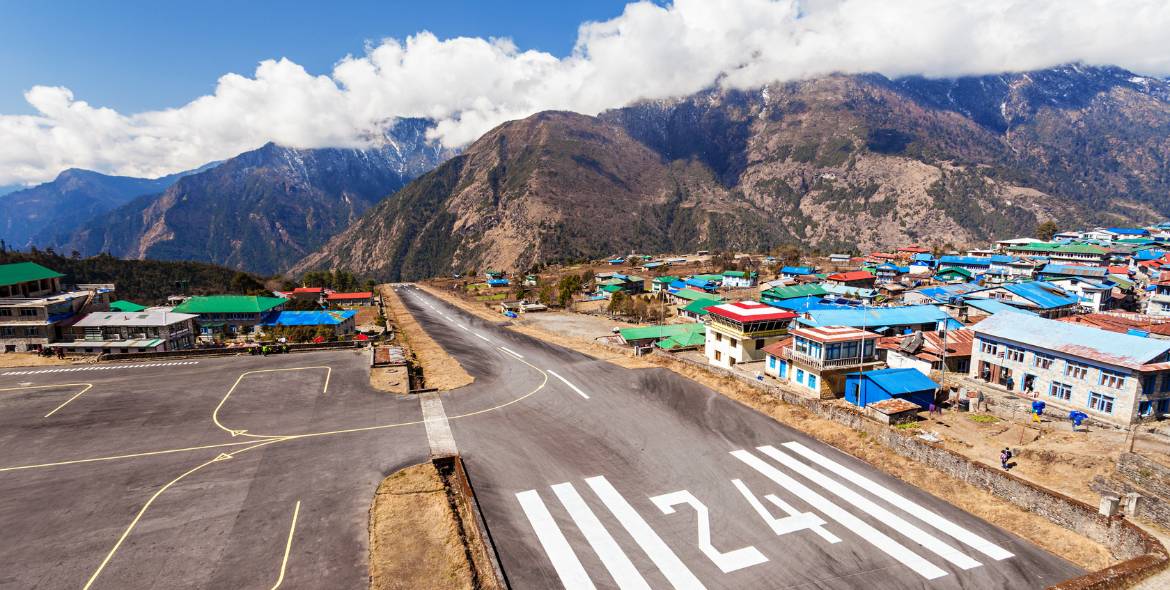
Our staff pick you up early in the morning after breakfast and transfer you to the airport for a scenic, thrilling 35-minute flight to Lukla (2,840 M). Depending on the season, your flight may depart from Kathmandu or Manthali for the smoothest start to your Everest Two High Passes trek. Once you land at the famous Tenzing-Hillary Airport and meet our local porters at Lukla, you head north toward Chablung to begin our 15-day journey.
Along the trail, you catch your first glimpse of Kusum Kangru (6,367 M), one of the region’s most impressive trekking peaks, just past the bridge along the Dudh Koshi River. Then the path winds through hills as you pass by ancient painted mani stones and prayer wheels. After that, you climb gently above the Tharo Koshi toward the village of Ghat (2,590 M), from where you trek towards Phakding (2,610 M), your stop for the day. This first day introduces you to the Khumbu region softly.
Trek from Phakding to Namche Bazaar
Trek Distance
9.4 KM
Trek Duration
07 - 08 Hours
Highest Altitude
3,440 M
Place
Namche Bazaar
Meals
Breakfast, Lunch, Dinner
Accommodation
Lodge, Guest House
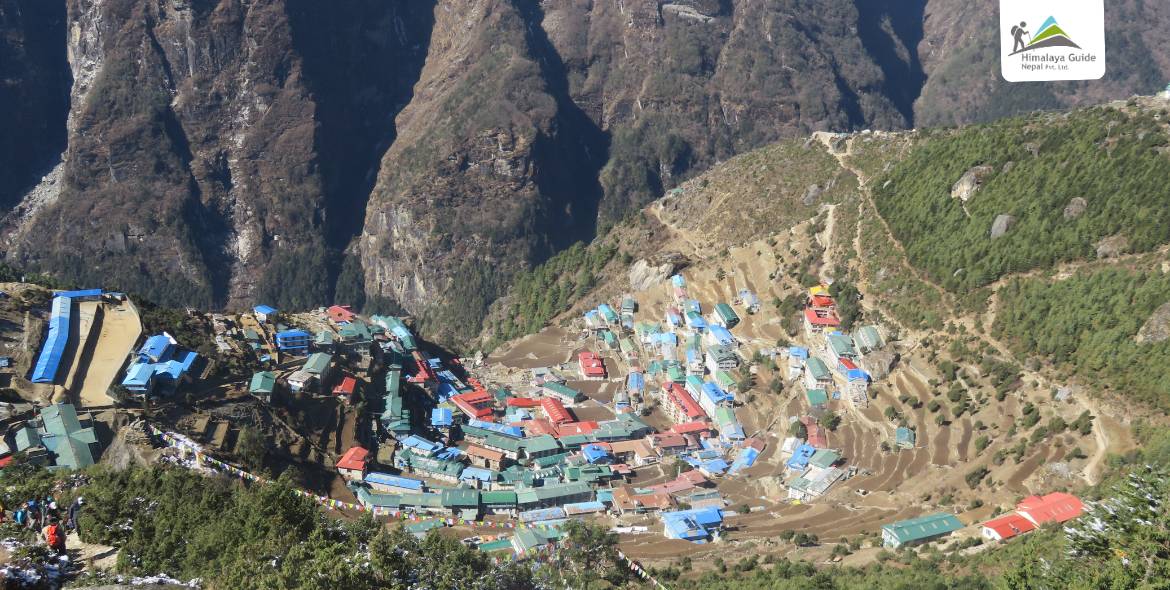
From Phakding, you continue on the west side of the Dudh Koshi River and follow the main Everest Base Camp trail into the lower Khumbu valley. The path gradually climbs above a stony ridge toward Benkar, where the air feels fresh and fragrant as it winds through lush forests of magnolia, giant fir, and rhododendrons. After crossing the Kyashar Khola, you arrive at the village of Monjo, marking your entry into Sagarmatha National Park, a UNESCO World Heritage site. Here, officials check your permits first and allow you to enter.
Continuing onward, you pass through Jorsalle and soon cross the iconic Hillary Suspension Bridge, draped in fluttering prayer flags high above the confluence of the Dudh Koshi and Bhote Koshi rivers. From here, the trail gets steeper as you walk through pine forests, and the path winds up in switchbacks, giving you more and more views of the surrounding mountains. Halfway up, you stop at a viewpoint to catch your first breathtaking glimpse of Mount Everest, peeking above the Lhotse-Nuptse ridge. Eventually, the trail finally opens into Namche Bazaar (3,440 M), the bustling Sherpa capital surrounded by the towering giants of the Khumbu region, where you rest for the night.
Acclimatization Day in Namche Bazaar
Trek Distance
5 KM
Trek Duration
05 Hours
Highest Altitude
3,880 M
Place
Namche Bazaar
Meals
Breakfast, Lunch, Dinner
Accommodation
Lodge, Guest House
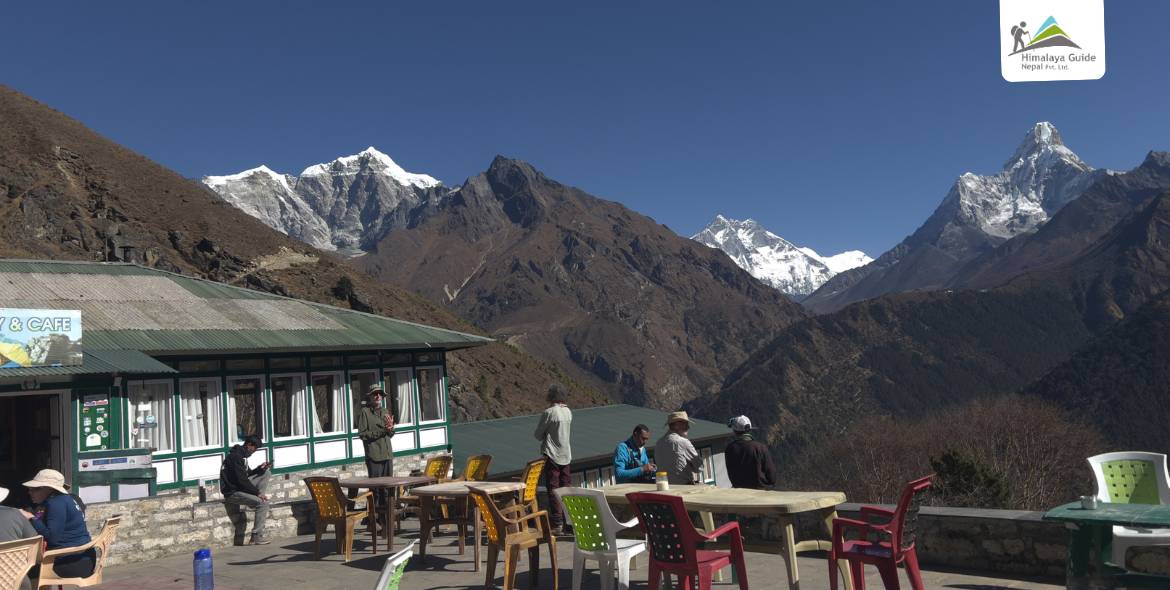
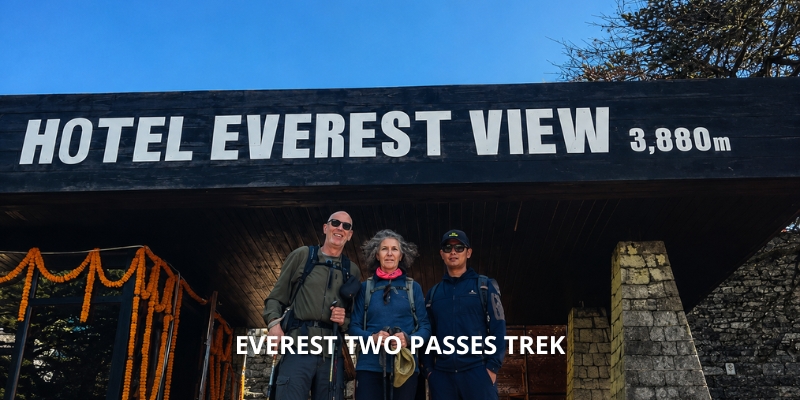
Since you’re now at 3,440 meters in Namche Bazaar, it’s crucial to acclimate before moving forward. For that, you take a scenic hike to higher altitude villages like Khunde and Khumjung. It starts with a steady climb to the Syangboche Airstrip (3,790 M), where you get your first broad view of Ama Dablam and Thamserku. The trail continues to the Everest View Hotel (3,880 M), the highest hotel in the world, where you can enjoy a cup of tea while admiring Mount Everest, Lhotse, and Nuptse.
From there, the path winds gently toward Khunde. Here, you pass ancient stone chortens and mani walls, then head east into Khumjung, the largest village in the Khumbu. This village, set beneath the sacred Mount Khumbila (5,761 M), hosts the Khumjung Monastery, which holds the legendary “Yeti Scalp”. You can also visit the Hillary School established by Sir Edmund Hillary. After a local lunch, you descend along winding switchbacks to Chhorkung (3,540 M), a beautiful viewpoint on the ridge directly above Namche. From here, it is a short, easy walk back down to Namche Bazaar for a well-earned night’s rest. This way, you see every angle of the Khumbu’s famous Sherpa villages during the circular loop day hike.
Trek from Namche Bazaar to Tengboche
Trek Distance
9.6 KM
Trek Duration
05 - 06 Hours
Highest Altitude
3,860 M
Place
Tengboche
Meals
Breakfast, Lunch, Dinner
Accommodation
Lodge, Guest House
Today, you trek from Namche Bazaar to Tengboche, following side valleys along the well-known Everest Highway trail. The route has a few gentle ups and downs as you pass the cozy tea shops of Kenjoma. Near a cluster of ancient mani stones, the trail from Khumjung merges with the main path, giving you clear, breathtaking views of Ama Dablam and Everest. Enjoying the views, you continue past Sanasa, a small junction, and descend through rhododendron forests to reach the riverside village of Phunki Thanga (3,250 M) for a well-earned lunch.
After lunch, you cross the Dudh Koshi River and climb the hillside through pine and fir forests, where the path winds around sacred mani stones. This eventually leads to the saddle where the iconic Tengboche Monastery (3,860 M) sits. As the spiritual center of the Khumbu, the monastery offers a chance to join the evening prayer ceremony. Here, you can witness and experience the deep Buddhist traditions of the Sherpa people before settling in for the night.
Trek from Tengboche to Dingboche
Trek Distance
10.5 KM
Trek Duration
05 - 06 Hours
Highest Altitude
4,410 M
Place
Dingboche
Meals
Breakfast, Lunch, Dinner
Accommodation
Lodge, Guest House
Leaving Tengboche, the day’s trek starts with a gentle descent through a lush forest of birch, conifers, and rhododendrons to reach Deboche (3,820 M). You cross the Imja Khola on a high suspension bridge, then climb past carved mani stones to the historic village of Pangboche (3,930 M). Here, Ama Dablam dominates the skyline, offering stunning close-up views. Continuing on, you cross the tree line and enter a rugged alpine zone, where only hardy shrubs and grasses survive.
After some hours of walking, you pass small settlements like Shomare and cross the Lobuche Khola. The valley opens to reveal the south face of Lhotse and the pyramid of Island Peak. You follow trails through stone-walled fields, built by locals to protect crops from fierce winds, until you reach the summer settlement of Dingboche (4,410 M). This village serves as your high-altitude base for two nights, a perfect gateway to explore the Everest and Island Peak regions.
Acclimatization Day in Dingboche
Trek Distance
6 KM
Highest Altitude
4,730 M
Place
Dingboche
Meals
Breakfast, Lunch, Dinner
Accommodation
Lodge, Guest House
Today is an important acclimatization day in Dingboche to help your body adjust to the thinner air. You hike east into the Chhukung Valley toward the settlement of Chhukung (4,730 M). This trail takes you along the Imja Khola and gives close-up views of Lhotse’s massive south face and Island Peak’s sharp pyramid. As you approach the village, the valley grows narrower, framed by dramatic ridges of Ama Dablam and Amphu Lapcha.
At Chhukung, the vast glaciers stretch like frozen rivers below jagged peaks. Here, you not only get to enjoy the views but also get a natural altitude workout that boosts red blood cell production. You descend back to Dingboche for a hearty lunch in the gentler air, letting your muscles recover. Later in the afternoon, you can take a quiet walk to the nearby bakery or simply watch the sunset. This day quietly builds strength and focus for tomorrow’s climb over Thukla Pass and the Everest Memorials tomorrow.
Trek from Dingboche to Dzongla via Thukla
Trek Distance
5.4 KM
Trek Duration
05 - 06 Hours
Highest Altitude
4,830 M
Place
Dzongla
Meals
Breakfast, Lunch, Dinner
Accommodation
Lodge, Guest House
After an acclimatization day in Dingboche, you now leave the Imja Valley and make your way toward Thukla (4,620 M). The day’s trek begins with a steady climb across the high-altitude grasslands, where the trail opens up to sweeping views of Taboche and Cholatse peaks. After a while, you reach the steep terminal moraine of the Khumbu Glacier. You can take a short rest here before continuing up to Thukla Pass (4,830 M), where the Everest Memorials honor climbers and Sherpas who lost their lives on the world’s highest peaks.
From the pass, the Everest Two Pass trek route bends west. It winds around Cholatse and along remote high ridges. Along the way to Dzongla (4,830 M), you witness a bird’s-eye view of the frozen Cholaste Lake below. Dzongla is a quiet settlement located in a grassy basin beneath the towering north face of Mount Cholatse. After arrival, you can spend the remainder of the day resting, hydrating, and absorbing the serene alpine surroundings in preparation for the early morning crossing of the icy Cho La Pass, the first high pass on your Everest Two Passes trek journey.
Trek from Dzongla to Dragnag via Cho La Pass
Trek Distance
9.4 KM
Trek Duration
07 - 08 Hours
Highest Altitude
5,420 M
Place
Dragnag
Meals
Breakfast, Lunch, Dinner
Accommodation
Lodge, Guest House
Today, you tackle the legendary Cho La Pass (5,420 M). For that, you leave Dzongla before dawn, around 4:00 or 5:00 AM. It starts off with a steep climb on a rocky trail into a hidden world of ice and snow beneath the towering cliffs of Cholatse and Lobuche. After a steady ascent, you reach the Cho La Glacier moraine, surrounded by ice walls on all sides. You cross this huge field of blue ice using microspikes for grip. After that, you make a final climb from the icy basin up a steep, rocky trail to the summit of Cho La Pass.
After a 1.5-hour climb from the Cho La glacier moraine, you finally reach the summit, where fluttering prayer flags and an amazing 360-degree Himalayan view reward your effort. At the top, you can rest for a while and take in the views. Soon after, you descend through steep, rocky slopes into the remote Ngozumpa or Gokyo Valley. The last part of the trail crosses the Ngozumpa Glacier, the longest glacier in the Himalayas. It is marked by loose rocks and hidden ice patches. You end the day at the quiet village of Dragnag (4,700 M), hidden behind the mountains. It is a great place to rest after an intense, high-altitude day crossing the pass.
Trek from Dragnag to Gokyo
Trek Distance
4.5 KM
Trek Duration
03 - 04 Hours
Highest Altitude
4,790 M
Place
Gokyo
Meals
Breakfast, Lunch, Dinner
Accommodation
Lodge, Guest House
Leaving Dragnag, you step onto the massive Ngozumpa Glacier. The trail twists and turns across grey boulders, loose scree, and hidden turquoise ice pools. Here, stone cairns mark the safest route. You can see jagged peaks on both sides, creating a dramatic, almost surreal landscape. Similarly, you can hear the occasional crack of shifting ice echoing through the valley, reminding you of the glacier’s raw power as you carefully make your way toward the western side of the valley.
As the moraine ends, the scenery shifts to vibrant colors with the first glimpses of the Gokyo Lakes. You first pass the small, emerald-green First Lake (Longponga Tsho) and the larger Second Lake (Taujung Tsho), where the water reflects the towering Himalayan ridges. Finally, you arrive at the shores of the Third Lake (Dudh Pokhari), where the village of Gokyo (4,790 M) sits mirrored in the still, turquoise water. Because this is a shorter trekking day of only 2 to 3 hours, you have the entire afternoon to rest by the lakeside or hike further up the valley to explore the fourth and fifth lakes before the big climb tomorrow.
rek from Gokyo to Lumde via Renjo La Pass
Trek Distance
11.5 KM
Trek Duration
08 - 09 Hours
Highest Altitude
5,360 M
Place
Lumde
Meals
Breakfast, Lunch, Dinner
Accommodation
Lodge, Guest House
Today is a long and tough day that begins before sunrise with an optional climb to Gokyo Ri (5,357 M). The trail to the top is steep, with zigzags over a rocky, grassy path, but it requires no technical climbing. It takes about a 2-3-hour hike to complete. Once at the top, you witness one of the best sunrise views of the four of the world’s six tallest 8,000-meter peaks: Everest, Lhotse, Makalu, and Cho Oyu. Then, you descend back to the Gokyo village for a quick breakfast.
After that, the trail continues toward Renjo La Pass (5,360 M), the second and final high pass on the Everest Two Passes Trek. The path climbs along the northern shore of Gokyo Tsho before turning steep and rocky. You can view the Ngozumpa Glacier growing behind you as you climb. Finally, at the top, prayer flags flutter as you take in stunning views of the same 8,000-meter peaks and turquoise Gokyo lakes from different angles. You then descend along stone stairs past Angladumba Tsho and alpine pastures into the peaceful Bhote Koshi Valley. The day’s trek ends in the quiet village of Lumde (4,370 M), where you rest and celebrate completing the final high pass.
Trek from Lumde to Thame
Trek Distance
10.5 KM
Trek Duration
05 - 06 Hours
Highest Altitude
3,800 M
Place
Thame
Meals
Breakfast, Lunch, Dinner
Accommodation
Lodge, Guest House
After crossing both passes, today’s trek is gentle. It includes a scenic descent through the valley on an ancient salt trade route linking Nepal with Tibet. The trail follows the Bhote Koshi river downstream, twisting past high-altitude grazing lands and small seasonal settlements like Marulung, Tarnga, Thame Teng, etc, where yaks and sheep graze peacefully. The path is mostly downhill. As you trek down, you can see the visible shift in the scenery as the icy, rugged peaks gradually give way to softer, rolling hills, forests, and lush vegetation. The air also feels warmer and more breathable.
As you trek to Thame (3,800 M), one of the Khumbu’s most culturally significant villages, you can explore the 14th-century Thame Monastery perched high on a cliff. Being one of the oldest monasteries in the region, it offers insight into traditional Sherpa spirituality. Besides that, you can also get stunning views of the village below. After visiting the gompa and admiring its intricate wall paintings, you return to your lodge to rest, reflect on your high-altitude journey, and enjoy a peaceful evening in this historic Sherpa settlement.
Trek from Thame to Monjo
Trek Distance
13 KM
Trek Duration
05 - 06 Hours
Highest Altitude
3,440 M
Place
Manjo
Meals
Breakfast, Lunch, Dinner
Accommodation
Lodge, Guest House
After crossing both passes, today’s trek is gentle. It includes a scenic descent through the valley on an ancient salt trade route linking Nepal with Tibet. The trail follows the Bhote Koshi river downstream, twisting past high-altitude grazing lands and small seasonal settlements like Marulung, Tarnga, Thame Teng, etc, where yaks and sheep graze peacefully. The path is mostly downhill. As you trek down, you can see the visible shift in the scenery as the icy, rugged peaks gradually give way to softer, rolling hills, forests, and lush vegetation. The air also feels warmer and more breathable.
As you trek to Thame (3,800 M), one of the Khumbu’s most culturally significant villages, you can explore the 14th-century Thame Monastery perched high on a cliff. Being one of the oldest monasteries in the region, it offers insight into traditional Sherpa spirituality. Besides that, you can also get stunning views of the village below. After visiting the gompa and admiring its intricate wall paintings, you return to your lodge to rest, reflect on your high-altitude journey, and enjoy a peaceful evening in this historic Sherpa settlement.
Trek from Monjo to Lukla
Trek Distance
13 KM
Trek Duration
04 - 05 Hours
Highest Altitude
2,840 M
Place
Lukla
Meals
Breakfast, Lunch, Dinner
Accommodation
Lodge, Guest House
This is the last day of trekking on your Everest Two Pass Trek itinerary. Today’s trek includes a descent as you follow the Dudh Koshi River downstream and cross a few high suspension bridges over its turquoise glacial waters. You pass through familiar villages like Phakding and Ghat, where green fields and blooming flowers contrast with the rugged high-altitude passes you recently crossed. Walking through the Sherpa farmlands, you can fully enjoy the gentle pace and scenic surroundings.
The final stretch climbs gradually from Chublung to the busy town of Lukla. Arriving at Tenzing-Hillary Airport marks the end of your trekking journey. In the evening, you celebrate with your trekking team and porter. You can share stories and reflect on the Cho La and Renjo La passes and the unforgettable Everest Two Passes adventure you shared together.
Flight from Lukla to Manthali and Drive to Kathmandu
Drive Distance
132 KM
Drive Duration
04 - 05 Hours
Flight Hours
45 Minutes
Highest Altitude
1,350 M
Place
Kathmandu
Meals
Breakfast
Accommodation
Hotel
Your final morning in the mountains starts with an early flight from Lukla to Kathmandu. During the flight, you can still get one last view of the towering peaks from above. Sometimes, you may need to land at Manthali Airport due to high traffic and unpredictable mountain weather. If you arrive in Manthali, our team provides a private vehicle for a scenic 4-5 hour drive back to Kathmandu. The overland route follows riverside roads, terraced farms, and small villages like Khurkot and Nepalthok, offering one last glimpse of Nepal’s beautiful countryside.
Once you arrive in Kathmandu, you are transferred to your hotel for a hot shower and some well-earned rest. The afternoon is free to relax, explore the city, or visit sites like Kathmandu Durbar Square, Swoyambhunath, and Boudhanath, as you want. In the evening, we host a farewell dinner at a traditional restaurant. a perfect moment to share photos, swap stories with your guides, and celebrate the unforgettable achievement of crossing the Cho La and Renjo La passes.
Inclusion/Exclusion in Everest Two Passes Trek
Cost Includes
- International airport pick – up and drop – off service
- Two – night accommodation in Kathmandu with a BB plan.
- From the hotel to the airport by taxi.
- Kathmandu to Lukla by flight.
- Lukla is back in Kathmandu by flight.
- Both ways, airport taxes.
- Three meals daily (Breakfast, Lunch, and Dinner along the trek).
- Lodge accommodation is normal on the way.
- An experienced guide (including his salary, equipment, both ways airfare, insurance, lodging, and food)
- Equipment: Down Jacket, Sleeping Bag.
- Legal documents (Sagarmatha National Park permit, Local government fee, and TIMS card).
- All government taxes.
- Trekking and city map.
- First aid medical box.
- Some fresh and dry fruits.
- A token of love from a company.
- Farewell lunch or dinner at a suitable time
Cost Excludes
- Extra night accommodation in Kathmandu.
- Travel insurance.
- Porter
- Hard and soft table drinks, such as Coke, Mineral Water, and beer.
- Personal expenses (laundry, telephone, extra helper, battery charge for the shower, and boiled water).
- Tips are expected.
Everest Two Passes Trek Route Map
The Everest Two Passes Trek Map is an important guide for trekkers. It shows the trail, key high-altitude stops, and major elevation changes in the Khumbu region. The trek follows the Dudh Koshi River valley, climbs into the Sherpa area of Namche Bazaar, and splits to reach the beautiful Gokyo Lakes and the high Chhukung Valley. You can also see landmarks, rest spots, and lodges on the map.
The journey starts with a thrilling flight to Lukla. After that, by a gradual ascent through lower Khumbu villages and across high suspension bridges, before arriving at Namche. From there, the trail leads through the spiritual hub of Tengboche and the wide Imja Valley for acclimatization.
Kathmandu → Lukla → Phakding → Monjo → Namche Bazaar → Tengboche → Pangboche → Dingboche → Chhukung Valley → Thukla → Dzongla
After Dzongla, the first major challenge follows. The icy Cho La Pass opens into the stunning Gokyo Valley, which is home to the longest glacier in the Himalayas and emerald-blue lakes. From Gokyo, the trek continues over the second high pass, Renjo La, with sweeping views of Everest, before descending the remote Bhote Koshi Valley along an ancient salt trade route back toward Thame and eventually Lukla.
Dzongla → Cho La Pass (5,420 M) → Dragnag → Gokyo Lakes → Gokyo Ri (5,357 M) → Renjo La Pass (5,360 M) → Lumde → Thame → Namche Bazaar → Phakding → Lukla → Kathmandu
Prefer a more personal journey? Our private packages offer flexible dates, custom itineraries, and dedicated support—perfect for those seeking a tailored travel experience.
Everest Two Passes Trek Image Gallery
Everest Two Passes Trek Vs Everest Three Passes Trek
The Everest Two Passes Trek is a simpler version of the famous Everest Three Passes Trek. It’s perfect for trekkers who want an amazing loop but don’t want to include the difficult crossing of Kongma La pass. Unlike the Three Passes trek, which is the ultimate challenge and goes to Everest Base Camp, the Two Passes trek focuses on the beautiful Gokyo Lakes and the high Cho La and Renjo La passes. It’s easier, but it still offers stunning Himalayan views.
| Feature | Everest Two Passes Trek | Everest Three Passes Trek |
|---|---|---|
| Route | Cho La, Renjo La, Gokyo, | Kongma, Cho, Renjo, Gokyo, EBC |
| Duration | Takes about 15 to 17 days | Takes about 18 to 21 days |
| Crowds | Not as busy as Base Camp | Very few people on this trail |
| Culture | Sherpa life in high villages | Full look at remote mountain life |
| Ideal For | Fit walkers with a shorter break | Seasoned trekkers with high altitude trekking experience |
| Photography | Brilliant shots of the blue lake water and Everest | Views of every giant peak, including Everest |
| Unique Feature | Focuses on the beautiful Gokyo region | Crosses the very high Kongma La and takes you to EBC & Kala Patthar |
How to prepare for the Everest Two Passes Trek?
While preparing for the Everest Two Passes Trek, focus primarily on physical and mental preparation. You also need to choose the right gear, understand altitude safety, and plan your daily expenses. Here are the key things you should prepare before the trek:
Physical Preparation
While you don’t need to be a mountaineer or have prior high-altitude trekking experience, this trek is challenging. Therefore, you need a decent level of fitness and stamina to withstand the long trekking days. You can start training 8-12 weeks before the trip. Do cardio exercises like jogging, swimming, or cycling 3-4 times a week. You can also climb stairs or go hiking with a 5-8 kg backpack, which is honestly one of the best ways to prepare. This helps build the stamina needed to cross Cho La and Renjo La passes.
Gear and Footwear
Buy good trekking boots if you don’t have any. It is the most important gear. Wear them during practice hikes before coming to Kathmandu so they feel comfortable and do not cause blisters. Porters will carry your main bag (up to 12.5 kg), but you still need to carry a daypack with water, snacks, a camera, and extra clothes. Bring a layered clothing system: a light base layer, a warm fleece jacket, and a heavy down jacket for very cold nights in places like Dzongla and Gokyo.
Altitude and Health
High altitude is one of the biggest challenges. You can consult your doctor about Diamox (Acetazolamide) before the trek. Try to drink 3-4 liters of water each day on the trek to stay hydrated and help prevent Acute Mountain Sickness (AMS). You also need to get travel insurance that covers helicopter evacuation up to 6,000 meters. Our guides are trained in first aid, but your own preparation is very important.
Money and Practical Tips
We, at Himalaya Guide Nepal provides meals and accommodation, but you should still carry Nepali Rupees (NPR) for personal expenses. Plan about USD 15- USD 25 per day for hot showers, charging batteries, Wi-Fi, or snacks. Also, book your return international flight with at least two extra days after the trek. Flights from Lukla can be delayed due to mountain weather, and these extra days help you avoid missing your flight home.