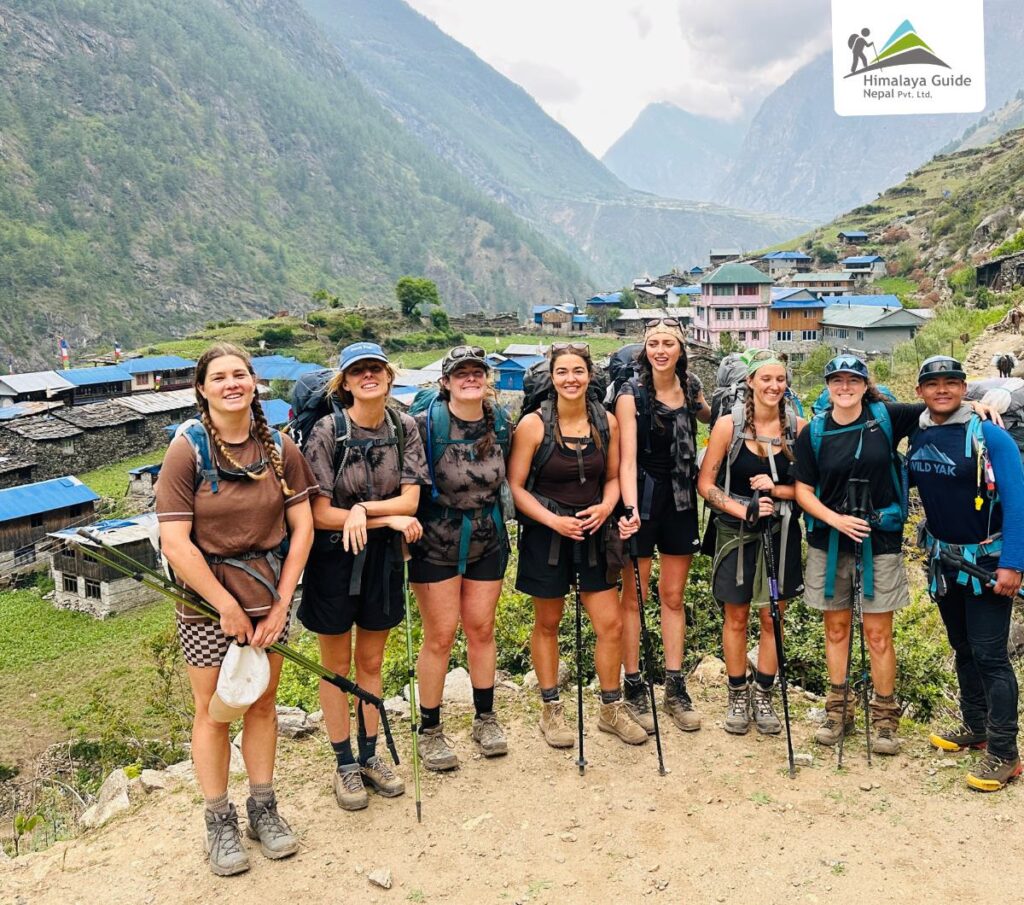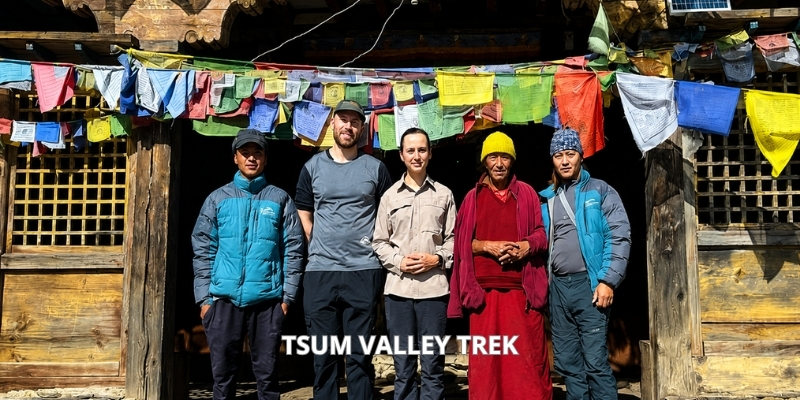
Tsum Valley Trek provides incredibly distant and traditional trekking. There is no authority to kill animals since the region has been designated a non-violent conservation area. Tsum Valley in Nepal is a must-see, with strong, amiable, and welcoming people who practice Buddhism.
Also, according to Buddhism’s ban on hunting. It is forbidden to interact with wildlife. Tsum is a translation of the Tibetan word “Tsombo.”
We can also agree that this amazing location has preserved its own culture. The Tsum Valley is a valley located between 2,000 and 3,500 meters above sea level. It is in the Gorkha region of western Nepal (6,600 to 11,500 ft).
The Manaslu Conservation Area Permit, founded in 1998, has control over the valley. There are 33 communities in the valley, and there are 529 homes and 1,810 people overall.
The Tsum Valley Trek passes through the vast and uncharted area of the “Tsumbas.” It is mostly inhabited by the Gurung ethnic group.
It ascends to the Budi Gandaki River and Manaslu route. The Tsum Valley Trek region has a lengthy Buddhist heritage. Because is popular that, Milarepa, a Buddhist sage. He meditated in a cave amid the Tsum mountains.
Therefore, among the various festivals celebrated in the area are Lhosar, Dhacyhang, Saka Dawa, and Fanning. Also, it has a lot of monasteries, stupas, chortens, and Mani (Prayer) walls. The longest is nearly 250 meters long. From the Philim, do the 1905-meter hike to Lhokpa on the right. The Tsum Valley Trek difficulty guide will help you prepare well for the journey.