Discover the Real Himalayas with Trusted Local Guides & Porters for 2026/2027.
Ruby Valley Camping Trek
Country
Nepal
Difficulty
Moderate Plus
Best Season
Spring (Mar - May) & Autumn (Sep - Nov)
Accommodation
Tented Camp
Region
Ruby Valley Ganesh Himal Trekking
Start / End Point
Kathmandu - Kathmandu
Max. Altitude
Ganesh Himal Base Camp ( 4,500 M )
Group Size
2 - 10
Meals Included
Breakfast, Lunch, Dinner
Acclimatization
Included (at Chalish Village)
Permits
TIMS Card (Trekkers’ Information Management System) + Langtang National Park Entry Permit
Recommended For
Expert Level Trekkers
Duration
18 Days
Activity
Nepal Trekking
Activity Per Day
4 - 6 Hours Trekking
Transportation
Public bus and jeep
Distance
Ruby Valley Camping Trek Overview
The Ruby Valley Camping Trek is one of the most unique adventures in the heart of the Ganesh Himal region. It offers a completely different trekking experience from the commercialized trekking destinations in Nepal. The trek takes you through pristine landscapes of the Langtang National Park and remote valleys where Tibetan-Nepali culture thrives. Moreover, camping in the raw wilderness and falling asleep under the Himalayan sky is truly a one-of-a-kind trekking experience.
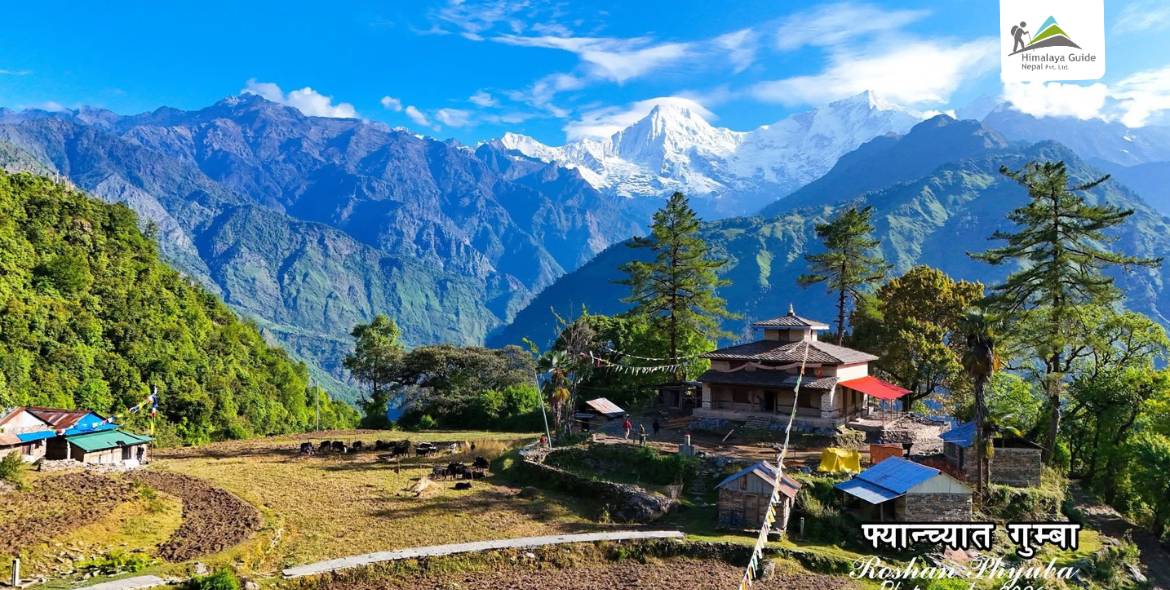
The trek starts from Syabru Bensi and follows a winding trail through lush green forests, alpine meadows, rivers, deep gorges, and waterfalls. In spring, the lower Ruby Valley Camping Trek trail comes alive with blooming rhododendron forests. Similarly, you will traverse glacial landscapes while observing the diverse flora and fauna of the region. You will also cross the mountain passes of Pangsang La Pass (3,842 M) and Mangne Pass (2,936 M). It takes you to the Ruby Valley, named after the abundant rubies and other precious stones found in the region. The name also has a symbolic connection to Ganesh Himal, the elephant-headed God of Good Fortune.
Throughout the trek, you will come across several viewpoints from which you can observe spectacular snow-capped mountain views, glaciers, and unique Himalayan landscapes. The viewpoints of this region speak to your eye to the north of the famous Himalayan range. It is known as Mount Ganesh Himal and its family peaks. The mountain is clearly visible from Kathmandu Valley. But the Ganesh I (7,429 M), Ganesh II (7,118 M), Ganesh III (7,043 M), and Ganesh IV (7,038 M) stand out like a crystal, forming the skyline of the Great Himalayan Chain. This great Himalayan massif lies between the popular trekking regions of Manaslu on the west and Langtang on the east. You can also see Mount Manaslu (8,163 M), the eighth-highest mountain in the world.
The Ruby Valley Camping Trek route takes you away from the crowds of the teahouse trail. You will traverse massive rock formations, glaciers, and crystal-clear streams that feel like you are traveling in a different world. Those who want a raw Himalayan adventure that goes beyond conventional trekking, the Ruby Valley Camping Trek is a perfect destination. The trek combines both high-altitude exploration and cultural immersion, untouched by mass tourism. Whether you are a seasoned trekker or a first-timer, the trek is an unforgettable and extraordinary experience!
Why You'll Love the Ruby Valley Camping Trek
- Explore the remote and less crowded trekking route to Ruby Valley.
- Trek on the quiet trail through dense forests of rhododendrons, oaks, and pines to alpine meadows of the Ganesh Himal region.
- Traverse glacial rivers, small streams, and waterfalls, including the holy alpine lake, Parvati Kunda.
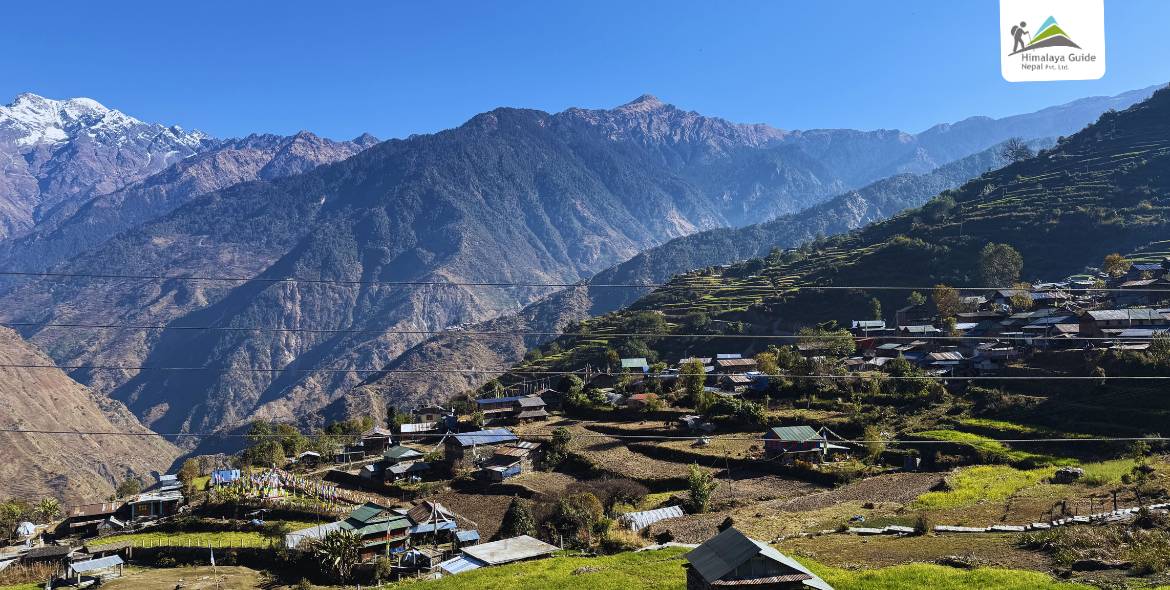
- Pass by beautiful, traditional Tamang villages with terraced fields and get a closer look at their vibrant culture and customs.
- Cross the high mountain pass of Pangsang La Pass (3,842 M) and Mangne Pass (2,936 M).
- Witness spectacular, panoramic mountain views of Mount Manaslu (8,163 M), Ganesh Himal range, and Langtang Himal range from Ganesh Himal Base Camp (4,500 M).
- Relax your tired muscles in the natural hot spring of Tatopani.
- Camp amidst the pristine Himalayan wilderness and take time to stargaze in the serene silence.
Ruby Valley Camping Trek Outline Itinerary
| Route | End Elevation | Elevation Gain/Loss | Duration | Distance |
|---|---|---|---|---|
| Day 01 Arrival in Kathmandu | 1,400 M | |||
| Day 02 Drive from Kathmandu to Syabrubesi | 1,460 M | + 60M | 7 - 8 Hours Driving | 120 KM |
| Day 03 Trek from Syabru Bensi to Chawatar to Gatlang | 2,230 M | + 780 M | 5 - 6 Hours Walking | 10 - 11 KM |
| Day 04 Trek from Gatlang to Parvati Kund to Yurikharka to Somdang | 3,270 M | + 1,032 M | 6 - 7 Hours Walking | 12 - 13 KM |
| Day 05 Trek from Somdang to Pangsang La Pass to Tipling | 2,087 M | + 572 M - 1,755 M | 6 - 7 Hours Walking | 13 - 14 KM |
| Day 06 Trek from Tipling to Sakpar to Chalish Village | 1,875 M | + 313 M - 525 M | 5 - 6 Hours Walking | 10 - 11 KM |
| Day 07 Rest Day/ Fishing Program | 1,875 M | |||
| Day 08 Trek from Chalish to Hindung (Gomba Danda) | 2,400 M | + 525 M | 5 - 6 Hours Walking | 9 - 10 KM |
| Day 09 Trek from Hindung Danda to Thulo Dunga | 3,337 M | + 937 M | 5 - 6 Hours Walking | 8 - 9 KM |
| Day 10 Trek from Thulo Dunga to Base Camp/ Nojet Kharka | 4,200 M | + 863 M | 4 - 5 Hours Walking | 6 - 7 KM |
| Day 11 Exploration Day/ Viewpoint | 4,200 M | + 300 M - 300 M | 3 - 4 Hours Walking | 4 - 5 KM |
| Day 12 Return trek from Base Camp to Hindung/ Gomba Danda | 2,400 M | - 1,800 M | 6 - 7 Hours Walking | 12 - 13 KM |
| Day 13 Trek from Hindung to Tatopani (Hot Spring) to Tir Gaon to Richyat | 2,000 M | + 500 M - 900 M | 6 - 7 Hours Walking | 12 - 13 KM |
| Day 14 Trek from Richyat to Kapour Gaon to Lapchyet to Lapa to Khading | 2,020 M | + 800 M - 780 M | 6 - 7 Hours Walking | 13 - 14 KM |
| Day 15 Trek from Khading Gaon to Mangne Goath | 2,950 M | + 930 M | 5 - 6 Hours Walking | 9 - 10 KM |
| Day 16 Trek from Mangne Goath to Lapu Danda | 2,000 M | - 950 M | 5 - 6 Hours Walking | 10 - 11 KM |
| Day 17 Trek from Lapu Danda to Dada Gaon | 1,900 M | - 100 M | 4 - 5 Hours Walking | 8 - 9 KM |
| Day 18 Trek from Dada Gaon to Khahare Bazaar & drive to Kathmandu | 1,400 M | - 500 M | 5 - 6 Hours Driving | 140 KM |
18 Days Ruby Valley Camping Trek Itinerary
Arrival in Kathmandu Nepal
Highest Altitude
1,400 M
Meals
Not included
Accommodation
Hotel
Today is your arrival day in Kathmandu. Upon your arrival, you must pass through immigration and obtain your on-arrival visa. Our representative will be waiting for you at the arrival terminal. They will greet you warmly before assisting you with your transfer to your hotel.
After checking in, you can unpack and relax. You will have time to refresh, and in the evening, there will be a short briefing session. Similarly, you will meet with your trek guide and porter. They will help you in inspecting your camping equipment and clothing. If you have any queries about the upcoming camping trek, feel free to ask. With the spare time, you can walk around the city or the hotel area. You will stay overnight in Kathmandu.
Kathmandu to Sybrubesi
Drive Distance
120 KM
Drive Duration
7 - 8 Hours
Highest Altitude
1,460 M
Meals
Breakfast, Lunch, Dinner
Accommodation
Lodge
You will leave the bustling city of Kathmandu and start your Ruby Valley Camping Trek. Early in the morning, you will get on a vehicle and begin driving along the green hills, terrace fields, and rivers. The vehicle will follow the Trishuli River Valley on the Prithvi Highway at the beginning. Along the way, you will pass by small villages, forests, and rice fields. Similarly, you will pass by small market towns, bustling with locals trading. After passing through villages and markets like Bidur and Trishuli Bazaar, the road becomes narrower and off-road.
You will pass through Nuwakot and enter the final stretch to the Langtang and Ruby Valley region. The rugged mountain road is bumpy and winding, with some steep ascents. The vehicle will cross multiple river tributaries over narrow bridges. Then, the road goes through dense rhododendron and bamboo forests. As you get closer to Syabru Bensi, Ganesh Himal peaks start to appear in the distance.
Likewise, you will come across small Tamang settlements with stone houses and prayer flags. Following the road, it will take you to Syabru Bensi, the trailhead for the Ruby Valley Camping Trek. It is a small town at the meeting point of the Langtang and Ruby Valley Trekking trails. You will spend the night in Syabru Bensi, a small Tamang village near the Bhote Koshi River.
Trek from Syabru Bensi to Chawatar to Gatlang
Trek Distance
10 - 11 KM
Trek Duration
5 -6 Hours
Highest Altitude
2,238 M
Meals
Breakfast, Lunch, Dinner
Accommodation
Tented Camp
After resting overnight at Syabru Bensi, you will start your first full Ruby Valley Camping Trekking day. You will leave the village and start with a gradual uphill trek. The trekking trail takes you through dense forests of rhododendron, oak, and pine. It is a peaceful trek with trails that mostly consist of dirt paths and stone-paved sections. You will also cross small streams over wooden bridges. There are also a few short but steep sections with loose stones. t also becomes increasingly off-beat with narrow trails and occasionally muddy paths.
Similarly, the trail takes you through traditional Tamang settlements and terrace farms like Chawatar village. You can see the stone houses, prayer flags, mani walls, and small Buddhist shrines. It offers a glimpse of the rich culture of the region. From Chawatar, you will trek through mixed forests and open ridges. The trail shifts between dirt paths and stone-paved sections. Although there is not much elevation gain, the rough terrain and small ridges make the trail feel longer. You will also come across hidden viewpoints along ridges that offer a gorgeous panorama of the Ganesh Himal range. Following the path, you will reach Gatlang, a beautiful Tamang settlement. You will stay at a lodge in the village for the night.
Trek from Gatlang to Parvati Kund to Yurikharka to Somdang
Trek Distance
12 - 13 KM
Trek Duration
6 - 7 Hours
Highest Altitude
3,270 M
Meals
Breakfast, Lunch, Dinner
Accommodation
Tented Camp
Day 4 starts with a beautiful view of the Ganesh Himal range. You will have a hearty breakfast at Gatlang and resume your Ruby Valley Camping Trek. First, you will trek to the sacred alpine lake, Parvati Kund. The Ruby Valley Trekking trail gently ascends from Gatlang. It passes through small houses with prayer flags and mani walls. Similarly, it takes you through forests of rhododendron and pine. Trek under the cool shades of the trees, you will ascend on forest trails and stone staircases. You will follow the trail to the serene Parvati Lake, which has a deep connection to Hindu mythology. Colorful prayer flags surround the lake, and its beautiful water reflects the surrounding landscape.
The atmosphere around the Parvati lake feels calm and meditative. Take a time to bask in the spiritual energy before resuming the trek. From here, the Ruby Valley Camping Trek trail becomes narrower and more remote. You will start to ascend steadily with some flat sections. As you ascend to a higher altitude, the forest becomes thinner and changes into open grazing land. It takes you to Yurikharka, a seasonal settlement used by the herders. You may see yaks and sheep grazing in the pasture with temporary huts made of wood and stone.
The trail from Yurikhara to Somdang is the most challenging part of today’s trek. It is a long and continuous journey. The terrain also becomes rockier, drier, and more exposed. You will follow the trail to Somdang, where you will stay at the lodge. The area is known for historical zinc and other mineral mining. Somdang is a wide, open valley that offers spectacular views of the Ganesh Himal range. You will stay here for the night.
Trek from Somdang to Pangsang La Pass to Tipling
Trek Distance
13 - 14 KM
Trek Duration
6 - 7 Hours
Highest Altitude
3,842 M
Meals
Breakfast, Lunch, Dinner
Accommodation
Tented Camp
A thrilling and rewarding day awaits you today as you will cross the high mountain pass of Pangsang La Pass. You will start with a steady uphill climb. The pass lies in the southwest of Somdang. The Ruby Valley Camping Trek trail is rocky and exposed to high wind. As the landscape is barren, you will see very little vegetation. It gets very windy as you approach the pass. Similarly, the terrain becomes exposed alpine ridges, and you will trek on a narrow dirt track to reach the top of the Pangsang La Pass. The high altitude and thin air make the uphill ascent demanding. However, once you reach the top, your efforts will be rewarded.
The summit of the pass is adorned with colorful prayer flags. From here, you can get panoramic views of the Ganesh Himal range, Langtang Himal, and even distant Manaslu peaks on clear days. Because of the wide-open and unobstructed views of the Himalayas, the pass is also often called a “natural viewpoint balcony.” You will have time to enjoy the views and take photographs before the descent. The downhill trail begins immediately. It is long, steep, rocky, and exposed. It can put strain on your knees, so navigation with trekking poles is highly recommended. As you descend from the pass, the rocky, exposed section gradually gives way to grassy slopes. You will start trekking on stone steps, passing through terrace farms and small villages.
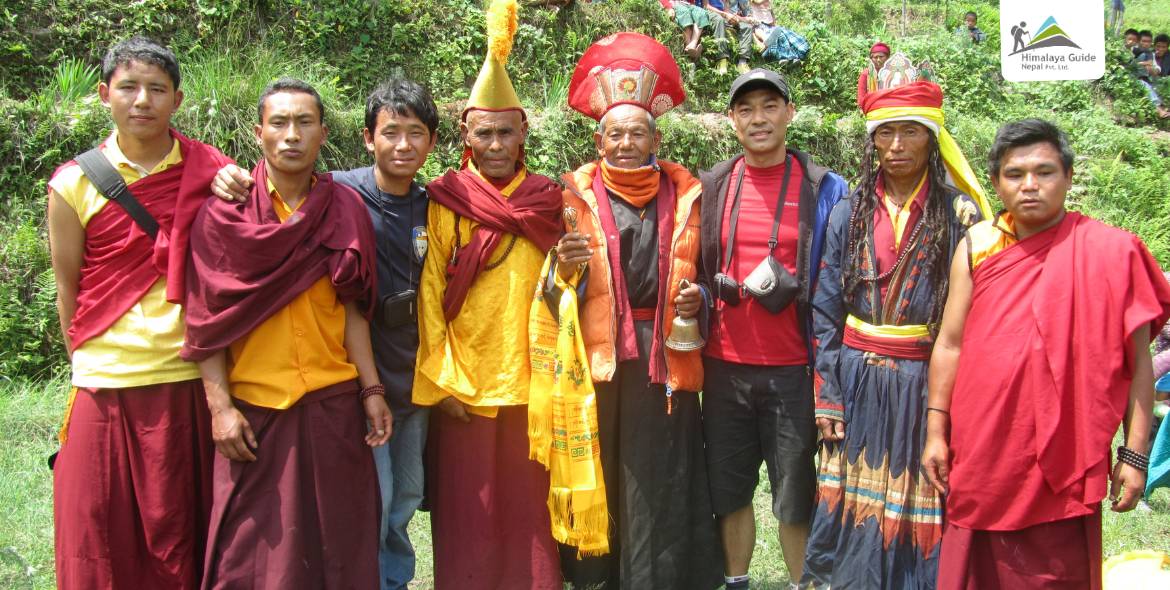
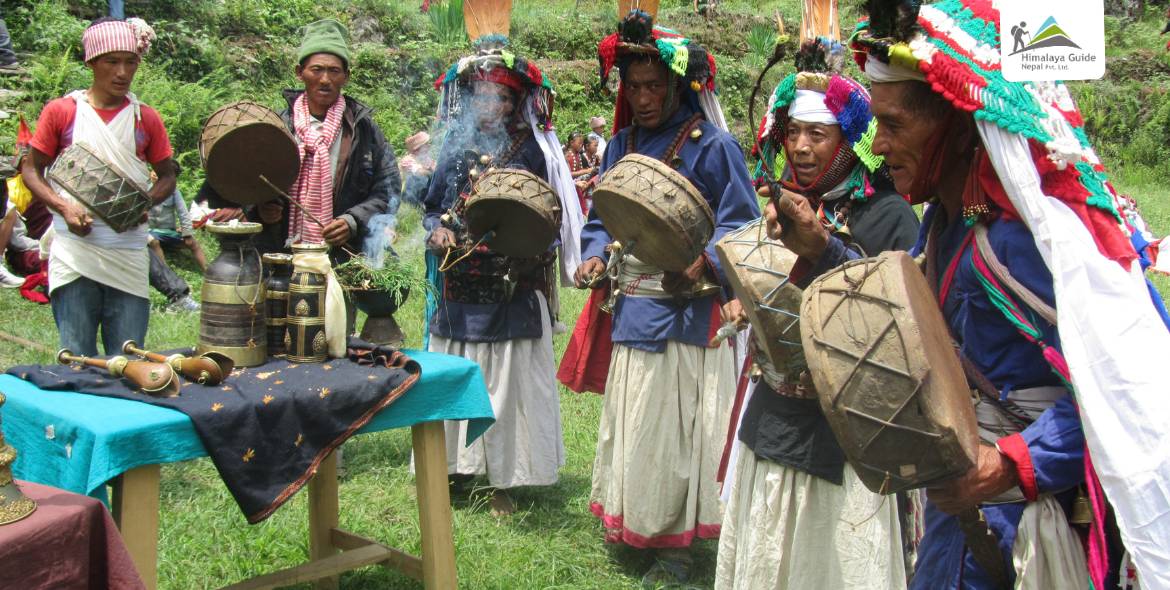
There are two Buddhist Gompas, a Catholic church, and prayer flags on the Chorten along the way. The trek becomes slightly easier as you get closer to the Tipling village. It is a beautiful Tamang settlement, surrounded by green hills and terrace farms. Likewise, the climate becomes warmer. You will stay overnight at a lodge in Tipling. There is a large waterfall near the village, which you can explore in the evening. The local Tamang community hosts a cultural program when visitors and trekkers arrive in the village. These programs include Shaman Dance, Horse Dance, Mane Dance, Mendo Maya, Paru Dance, and Lama (monk) Dance, all of which are quite popular.
Trek from Tipling to Sakpar to Chalish Village
Trek Distance
10 - 11 KM
Trek Duration
5 - 6 Hours
Highest Altitude
2,400 M
Meals
Breakfast, Lunch, Dinner
Accommodation
Tented Camp
Today is a culturally rich and scenic day of trekking on this Ruby Valley Camping Trek itinerary. After breakfast at Tipling, you will head down to Kami Gaun. You will cross the Adha Khola on a new box bridge and climb up to the Sakpar danda, then Chalish Village, crossing through fertile fields and Nepali flat. The terrain consists of dirt trails, stone staircases, and narrow ridges. Similarly, you will pass by small chortens and mani stones along the way. These provide a good opportunity to witness the deep influence of Tibetan Buddhism in the region. You will make a steady uphill climb to Sakpar village. From here, the trail gradually descends toward Chalish. It takes you through open hillsides, pastures, and forests. Occasionally, you will cross small streams over wooden bridges.
Gurungs, Ghales, and Kamis primarily inhabit Chalish. There used to be Newar people, but they migrated to Kathmandu city. The hospitable people of this area have unique customs and traditional cultural dances, including the Ghatu Dance, a welcoming dance. Similarly, there is Dohori, which features call-and-response between male and female participants and is a courtship ritual complemented by folk music. Some dances depend on the time of year and take place during festivals, including the Maruni Dance during Dasai and Tihar, and the Hai Nelo Dance during Tihar. The Ghatu (Ghasiri Dance) is usually performed during Chandi Purnima in the Nepali month of Chaitra.
Gurung men traditionally wear Vangra, a woven, embroidered cotton cloth tied at the ends that serves as a pouch for carrying goods. Sri Tinkanya Devi Mandir lies above Chalish. Local women tie bits of cloth or leave a bangle representing a wish to be fulfilled near a small pool of water, surrounded by Barmase, or periwinkle, flowers.
Rest Day/ Fishing Program
Highest Altitude
2,400 M
Meals
Breakfast, Lunch, Dinner
Accommodation
Tented Camp
On Day 7, you will take a rest day at Chalish Village. After breakfast, you can hike to Serutng village, the home to an age-old monastery and an old palace, or you can head to the fresh running water of the Anku River for fishing.
Shertung is inhabited mainly by Tamang. The name Shertung means “place of gold”. According to a myth, two brothers in search of gold were led here by a dream, and thus the settlement was born. The Tamang people have their own rich culture to share with visitors, such as the Jhankri (shaman) dance and the Ghode (horse) dance.
Fishing in the Anku River is a unique experience. It is not a commercial fishing activity but a rich cultural experience. You will fish with simple rods or handlines, with the help of guides who know the river locally. Depending on the season, you may hook some Himalayan freshwater fish. You will spend the night in Chalish Village.
Trek from Chalish to Hindung/Gomba Danda
Trek Distance
9 - 10 KM
Trek Duration
5 - 6 Hours
Highest Altitude
2,400 M
Meals
Breakfast, Lunch, Dinner
Accommodation
Tented Camp
After a rest day at Chalish Village, you will continue your Ruby Valley Camping Trek. The trail descends to the Ankhu River, and you will cross an old suspension bridge. You will trek past fertile farmland, small forests, and green hills to reach Khar village. The trail becomes demanding from here. You will trek up a steep, gradual trail to Tikkas Danda, the best place for panoramic views. It is also the best place to take a brief rest, making it the “rest is best” stop.
After the Tikkas Danda trail passes through the Kalbrang jungle. You will continue trekking in the shade of the trees until you reach Mertaje Danda. The Mertaje Danda is an open ridge area and offers a feel of raw wilderness. From here, you will continue trekking to Pasang Mane, the gateway of Ganesh Himal Base Camp. Then, the trail gradually leads you to Hindung or Gomba Danda. Hindung is a pretty big village mainly inhabited by Tamang. The locals here grow potatoes, millet, barley, maize, beans, and harvest crystal, rubies, and Yarsagumbas, as well as a variety of herbs. Tonight you will rest in Hindung in the tented camp.
Trek from Hindung/Gomba Danda to Thulo Dunga
Trek Distance
8 - 9 KM
Trek Duration
5 - 6 Hours
Highest Altitude
3,337 M
Meals
Breakfast, Lunch, Dinner
Accommodation
Tented Camp
On this day, you will trek deeper into the Ruby Valley. The trekking trail gradually ascends from Hindung. As you exit, you will leave behind the last houses and cultivated farms. From here onwards, you will rarely find terraces. You will trek into pure wild terrain and untouched nature. The trail takes you through forests of rhododendron, bamboo, and conifers. These forests are the nesting places of various bird and wildlife species, such as musk deer, Jharal (Himalayan goral), wild boar, Himalayan monal (pheasant), etc.
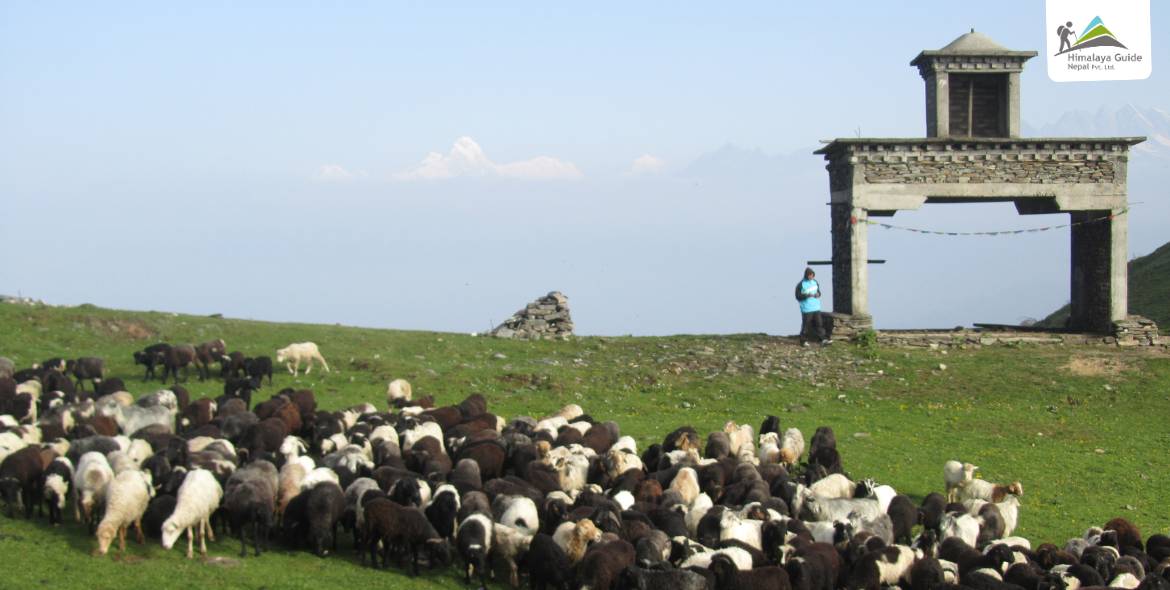
It is a continuous uphill trek with steep sections and narrow dirt paths. After you exceed the altitude of 3,000 m, the forest area opens into mixed grassland and ridges. The terrain also becomes rocky and exposed. For the final stretch, you will make a steady climb along open terrain. The trail becomes less defined and changes into a natural ridge route. Following the path, you will reach Thulo Dunga (Black Rock). Thulo Dunga sits on an open alpine meadow or ridge, and it is mainly grassland. Green hills surround the area, and you can see snow-peaks at a distance. Except during winter, local people bring their domestic cattle, especially sheep, for grazing. You will spend the night at the tented camp, enjoying the quiet and peaceful atmosphere of the high-altitude campsite.
Trek from Thulo Dunga to Base Camp/ Nojet Kharka
Trek Distance
6 - 7 KM
Trek Duration
4 -5 Hours
Highest Altitude
4,200 M
Meals
Breakfast, Lunch, Dinner
Accommodation
Tented Camp
You will leave Thulo Dhunga after breakfast at your campsite and begin a steady climb. It goes through forests of rhododendron, bamboo, and junipers. You walk along the Ruby Valley Camping Trekking trail covered with forests for a few hours. Then, the landscape gradually turns alpine, becoming thinner and more scattered. The trail opens into alpine grasslands and rocky slopes. It is a gradual ascent, but there are occasional flat sections. The remote location and the vast landscape offer a true high-altitude trekking experience.
The trek route takes you to the sacred twin lakes, Kalo Seto Kunda. The Kalo Lake is covered with dark or black stones, while the Seto Lake is covered with white shining stones. These two lakes are of holy significance. Locals believe that those who behave disrespectfully here will be punished by nature, like storms and rain. The locals and shepherds also share stories of a “golden bull” swimming in the lake. The visit to the lake is an opportunity to connect with the spiritual atmosphere of the Himalayas. From the lake, you will continue trekking and reach a wide and open alpine meadow known as Nojegt Kharka or the Ganesh Himal Base Camp. You can see an incredible panoramic view of the snow-capped mountains and high ridges. Tonight you will stay in a tented camp at the base camp.
Exploration Day/ Viewpoint
Highest Altitude
4,200 M
Meals
Breakfast, Lunch, Dinner
Accommodation
Tented Camp
Today is an exploration day at the Ganesh Himal Base Camp. You will have an excursion to the northwest of Dobra Danda, a spectacular viewpoint. The trail to the viewpoint is rugged and uneven. You will trek through the alpine grasslands and ridges. The high altitude and lack of oxygen levels make the climb physically and mentally demanding. However, the sense of tranquility and crisp mountain air relaxes you.
From this viewpoint, you can enjoy the majestic views of Ganesh Himal, Paldor Himal, and many others. Similarly, you can witness the Holy Lake Kalo/Seto Kunda (Black and White Lake). For the best views, it is highly recommended that you trek early in the morning when the light is crisp and visibility is clear. The morning weather is also the most stable. You may also catch sightings of high-altitude wildlife and birds. After enjoying the view, you will descend to Nojet Kharka, where you will spend the night at the campsite.
Return from Base Camp to Hindung/ Gomba Danda
Trek Distance
12 - 13 KM
Trek Duration
6 - 7 Hours
Highest Altitude
4,200 M
Meals
Breakfast, Lunch, Dinner
Accommodation
Tented Camp
On Day 12, you will begin your Ruby Valley Camping Trek descent. You will retrace your steps to Hindung or Gompa Danda. You will trek through wide alpine grasslands and kopen meadows. Similarly, you can enjoy the panoramic and uninterrupted views of the surrounding peaks.
As you continue descending, the landscape changes from alpine meadows to forests of rhododendrons and pine. You will continue descending until you reach Hindung. Once again, villages with terrace farms become visible. You will spend the night at the tented camp.
Trek from Hindung/ Gomba Danda to Tatopani (Hot Spring) to Tir Gaon to Richyat
Trek Distance
12 - 13 KM
Trek Duration
6 - 7 Hours
Highest Altitude
2,400 M
Meals
Breakfast, Lunch, Dinner
Accommodation
Tented Camp
After breakfast at Hindung campsite, you will continue with your descent. The Ruby Valley Camping Trek trail passes through narrow grazing lands and forests of rhododendron and pines. The trail follows the Tatopani Khola, a river formed by melted glacier water from Ganesh Himal. After two hours of trekking from Hindung, you will reach Tatopani, which translates to “Hot Spring.” Tatopani is a natural hot spring that locals believe has healing properties. Its mineral-rich and naturally warm water is said to be rejuvenating. There are three pools, where you can dip and relax your tired muscles. It is also the best spot for lunch.
You will cross the Tatopani Khola suspension bridge to exit the Tatopani village. Then, you will start trekking on the right bank of the river, following stone steps built by KAADORE Agriculture Association and the British Gurkhas of Nepal. By trekking up these steps, you will reach the Gurung and Tamang settlement of Tir Gaon. You will continue walking for an hour and reach another Gurung Village, Rechyat. You will camp overnight in the tent near the village.
Trek from Richyat to Kapour Gaon to Lapchyet to Lapa to Khading Gaon
Trek Distance
13 - 14 KM
Trek Duration
6 - 7 Hours
Highest Altitude
2,600 M
Meals
Breakfast, Lunch, Dinner
Accommodation
Tented Camp
You will have breakfast at your campsite in Richyat. The trekking trail ascends through pine and rhododendron forests. You will trek on a forest trail with occasional rocky paths. Along the way, you will pass by a stone-paved village of Kapour Gaon. It is a small but traditional village with stone houses and wooden balconies. The village also offers stunning views of the Ganesh Himal range and nearby ridges. From here, the trail ascends steeply through dense rhododendron forest. As you trek through the forest, you may even catch a glimpse of alpine birds. The trail will take you to a beautiful Gurung village of Lapchyet.
You will begin a long descent through forest ridges from Lapchyet. The terrain consists of narrow dirt paths with steep forest slopes. As you descend to a lower elevation, you can enjoy sweeping views of the lush valley below. Then, you will cross the Lapa Khola on a box bridge. The trail ascends to the large Tamang settlement of Lapa Gaon, with over 400 houses, where you will have lunch.
After lunch, you will gently ascend through mixed forest and open pasture. After an hour, you will arrive at the largest Gurung settlement in the area, Khading Gaon. The locals will welcome you with smiling faces and Namaste. They also host local cultural programs such as Ghatu, Maruni, and Lok Geet. You will spend the night in a tent camp at Khading Gaon.
Trek from Khading Gaon to Mangne Goath
Trek Distance
9 - 10 KM
Trek Duration
5 - 6 Hours
Highest Altitude
2,950 M
Meals
Breakfast, Lunch, Dinner
Accommodation
Tented Camp
On this day, you will make a steady ascent from Khading Gaon to Mangne Goath. You will also cross the Mangne Pass. The Ruby Valley Camping Trek route steeply ascends westward. The narrow path will take you through blue pine forests and large rhododendron groves. Occasionally, you will also cross small streams. There are also steep stone sections on the way. Similarly, you will also pass by crystal and ruby harvest areas. Enjoy the views of the surrounding hills and observe the local flora and fauna.
Compared to the Pangsang La Pass, the Mangne Pass is at a relatively lower altitude. Hence, the uphill climb is also less demanding. You will ascend to the pass and continue trekking along the ridge. As you will be gaining altitude, the green forest once again becomes sparser. It changes to alpine meadows. Trekking on the winding route, you will ascend to an open ridge pasture, Mangne Goathe. The terrain is exposed to the wind and offers spectacular views of Ganesh Himal ridges and peaks. Tonight, you will camp overnight at the high-altitude pasture.
Trek from Mangne Goath to Lapu Danda
Trek Distance
10 - 11 KM
Trek Duration
5 - 6 Hours
Highest Altitude
2,950 M
Meals
Breakfast, Lunch, Dinner
Accommodation
Tented Camp
Day 16 begins with a gentle ascent from Mangne Goathe to Myangal Bhanjyang in Gorkha district. Again crossing Dunchet Khola through lush forest and descending into a valley with excellent panoramic views, including Mt. Manaslu, soaring in the western horizon. Then, you will begin your descent through lush forests. Pass through the scenic villages of Dhonchet, Kartunje, and Manbhu. Trekking through these villages, you can witness the Tamang and Brahmin cultures.
From here, you will re-enter the Dhading District. You will continue trekking through small villages like Kartunhe and Manbhu with lush terrace farms. Following the trail, you will reach Lapu Danda. The Lapu Danda is a viewpoint and offers spectacular views of the snow-capped Himalchuli, Shringi Himal, and a section of the Ganesh Himal Range. You will camp near the viewpoint among the terrace farms. You can enjoy the stunning views of the surrounding mountains and terrace farms.
Trek from Lapu Danda to Dada Gaon
Trek Distance
8 - 9 KM
Trek Duration
4 - 5 Hours
Highest Altitude
2,000 M
Meals
Breakfast, Lunch, Dinner
Accommodation
Tented Camp
Enjoy a breakfast with a view of the campsite of Lapu Danda. Then, you will trek on narrow dirt paths and cross a few small ridges. Along the way, you can enjoy the gorgeous views of the surrounding hills and distant peaks. The trail ascent through fertile fields of Baseri leads to Danda Gaon, with excellent views of Mt. Manaslu, Shringi Himal, Himachuli, and the Ganesh Himal range. Similarly, you can see the lush fields that reflect the local Himalayan lifestyle.
From Danda Gaon, the trail descends to the glorious twin waterfalls of Ganga Jamuna. These waterfalls are an iconic and popular attraction of the region. It attracts trekkers and locals, especially during the Thulo Ekadashi Festival in November or December. The waterfall is an excellent spot to relax and take stunning photographs. It also offers an opportunity for cultural interaction. You will camp overnight at Danda Gaon. Enjoy the tranquil atmosphere and scenic surroundings.
Drive from Dada Gaon to Kathmandu
Trek Distance
10 km
Trek Duration
3 - 4 Hours
Drive Distance
140 KM
Drive Duration
5 - 6 Hours
Highest Altitude
1,900 M
Meals
Breakfast, Lunch, Dinner
Accommodation
Hotel
Today is the final day of the Ruby Valley Camping Trek. You will first start with the gentle descent through rural countryside. The trail passes Chisapani, a beautiful Brahmin village with lush terrace farmland. You will continue descending to Khahare Bazaar from where you will take a vehicle back to Kathmandu.
The vehicle drives you through rolling green hills and rivers. It follows the narrow rural mountain road, passing by Syabru Bensi. You can get one last view of the Ganesh Himal ridges from a distance. Driving through the winding road, you will pass through Dunche and descend along the Trishuli River valley. You will drive on the same scenic road and highway that you took at the start of the journey. Thus, you will pass by the familiar villages, terrace farms, gorges, and hillsides. Upon reaching Kathmandu, the Ruby Valley Camping Trek concludes. Thank you for choosing Himalaya Guide Nepal for your adventure to the Himalayas!
Inclusion/Exclusion in Ruby Valley Camping Trek
Includes
- International airport picks up and drops off service.
- 2 Nights standard hotel in Kathmandu (before trek).
- Bus ticket to Syabru Bensi local bus.
- Local bus from Dhading to Kathmandu.
- Drop to Hotel in Kathmandu.
- Three meals a day (Breakfast, Lunch, and Dinner along the trek).
- Accommodation on Tent along the way.
- An Experience Guide, Sherpa’s, Cook, and Helpers ( Their salary, equipment, insurance, lodging, and food)
- Equipment: Down Jacket, Sleeping Bags, Rain Coat (after trek return).
- All Legal documents as required.
- Some fresh and dry fruits.
- Farewell lunch and dinner.
Excludes
- Extra night accommodation in Kathmandu.
- Travel insurance.
- Cold drinks such as Coke, Mineral Water, Beer, etc.
- Personal expenses (laundry, bar bill, telephone, extra helper, battery charge, shower, and boiled water).
- Some donation to the cultural group.
- Tips for the guide and all staff.
Ruby Valley Camping Trek Map
The trek map is a guide for trekkers that outlines the trek route, villages, major landmarks, and camping sites. It helps you navigate the trail safely and understand the trekking route, distance, and elevation gain. Understanding these facts helps you plan your trek itinerary more efficiently and make the most of the trek.
As per the Ruby Valley Camping Trek Map, the journey begins with a drive from Kathmandu to Syabrubesi. From Syabru Bensi, you will follow the off-the-beaten trail deep into the Ruby Valley. The trekking trail follows the following route:
Kathmandu → Syabru Besi → Chawatar → Gatlang → Parvati Kund → Yurikharka → Somdang → Pangsang La Pass → Tipling → Sakpar → Chalish Village → Hindung → Thulo Dunga → Base Camp/ Nojekt Kharka → Viewpoint → Base Camp
After reaching the base camp, you will start your descent trek. The downhill trail follows the following route:
Base Camp → Hindung → Tatopani → Tir Gaon → Richyat → Kapour Gaon → Lapchyet → Lapa → Khading Gaon → Mangne Goath → Lapu Danda → Dada Gaon → Kathmandu
Departure Dates for You
18 Days
Trip Days
21 May, 2026
Start Thursday
7 Jun, 2026
End Sunday
10
Group Size
USD 2,960
Price
Booking Open
Status
18 Days
Trip Days
28 May, 2026
Start Thursday
14 Jun, 2026
End Sunday
10
Group Size
USD 2,960
Price
Booking Open
Status
Prefer a more personal journey? Our private packages offer flexible dates, custom itineraries, and dedicated support—perfect for those seeking a tailored travel experience.
Image Gallery
Where Is Ruby Valley Located?
The Ruby Valley is located between the Langtang region to the east and the Manaslu region to the west in central Nepal. It is a remote valley hidden within the Dhading and Rasuwa districts, north of Kathmandu. Similarly, it lies in the foothills and valleys surrounding the Ganesh Himal range. It stretches along the lower slopes of the Ganesh Himal range. The valley lies along the Ganesh Himal corridor, which borders Tibet to the north.
From Kathmandu, the Ruby Valley lies 80 to 120 km northwest. Although the distance is short, it takes longer to reach the valley because of the rugged, winding road and limited infrastructure. Trekkers must first drive from Kathmandu to Syabru Besi or to other trailheads such as Dunche, Arughat, or Soti Khola. From the trailhead, one has to trek for multiple days to reach the Ruby Valley. The remote location of the area is exactly what has helped to preserve the pristine nature and authenticity of the valley.
The name of the valley comes from the natural ruby deposits found in the area. However, there is a limitation to commercial mining in the region. The region gained recognition for the semi-precious gemstones, but its strategic location also placed it along the ancient trade route. The trade route has historical significance and once connected Nepal with Tibet. Similarly, the Ruby Valley is home to sacred lakes like Parvati Kund, hidden waterfalls, and traditional Tamang and Gurung people.
Ruby Valley is truly a unique destination for trekking in Nepal. It’s the raw Himalayan wilderness, unspoiled nature, and low tourism that make it an ideal choice for a peaceful, authentic trek. Whether trekkers are seeking solitude, off-the-beaten-path adventure, or cultural immersion, the Ruby Valley Camping Trek is a perfect Himalayan journey.
Difficulty of the Ruby Valley Camping Trek
The Ruby Valley Camping Trek is a moderate-to-challenging adventure, and its difficulty is largely due to its remote location, rugged terrain, and limited infrastructure. Compared to other popular trekking destinations like the Everest or Annapurna regions, this trek route requires a higher level of self-sufficiency and endurance. The constantly changing terrain and isolated location make the trek a physically and mentally demanding adventure.
During the Ruby Valley Camping Trek, you will face constant ups and downs. Unlike the classic trails of Everest or Annapurna, which ascend gradually, the Ruby Valley Trek route features steep uphill climbs and descents. Additionally, the trails are narrow, uneven, and rugged. The terrain is mixed, so you will have to trek on forest paths, stone staircases, and, occasionally, on landslide-prone sections. The varied trails and terrain, paired with long hours of trekking, make it physically demanding even at lower altitudes.
Weather also plays an important role in making the Ruby Valley Trek a safer and more comfortable adventure. Trekkers, especially beginners, must choose the right season for trekking. Spring and autumn are the best times when the trails are most stable, and the temperature is moderate. It is also important to understand that, regardless of the season, Himalayan weather is unpredictable. Most experienced trekkers start their day early to avoid afternoon high winds and sudden weather changes.
The maximum elevation of the Ruby Valley Camping Trek is 4,500 m at Ganesh Himal Base Camp. While it is lower than on other high-altitude treks, there is still a risk of altitude sickness. Some trekkers may experience mild symptoms of altitude sickness, which can progress into severe forms. Thus, the elevation should not be underestimated, and acclimatization is crucial.
Another difficulty of the Ruby Valley Trek is the lack of infrastructure and comfortable teahouses along the route. As a result, trekkers have to hire a support crew, tents, food supplies, and logistics for the journey. It makes the journey immersive, but the lack of facilities adds physical and mental challenges. Trekkers must understand and prepare for the challenges, as this helps make the trek both safe and comfortable.
Camping Trek Experience in Ruby Valley
The villages in the Ruby Valley areas are scattered, and infrastructure is limited. As a result, there are no comfortable teahouses along the route. Hence, camping is the most practical way to explore the region. Trekkers have to hire full support teams and camping tents. The camping trek experience may feel uncomfortable, but it is actually a unique opportunity to connect with the untouched nature and beauty of the Himalayas.
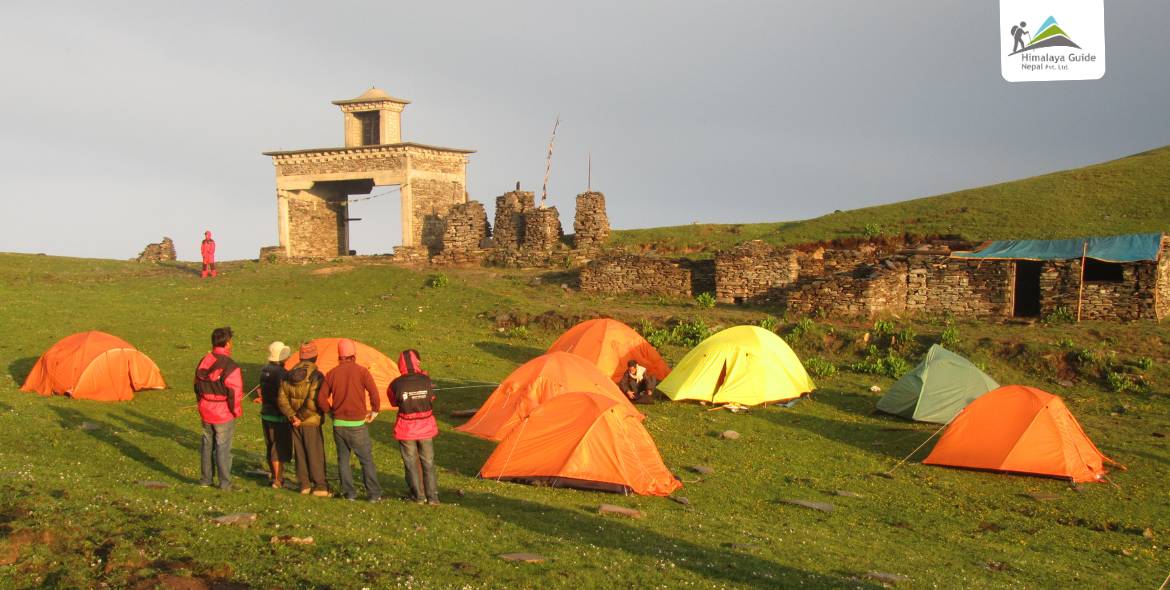
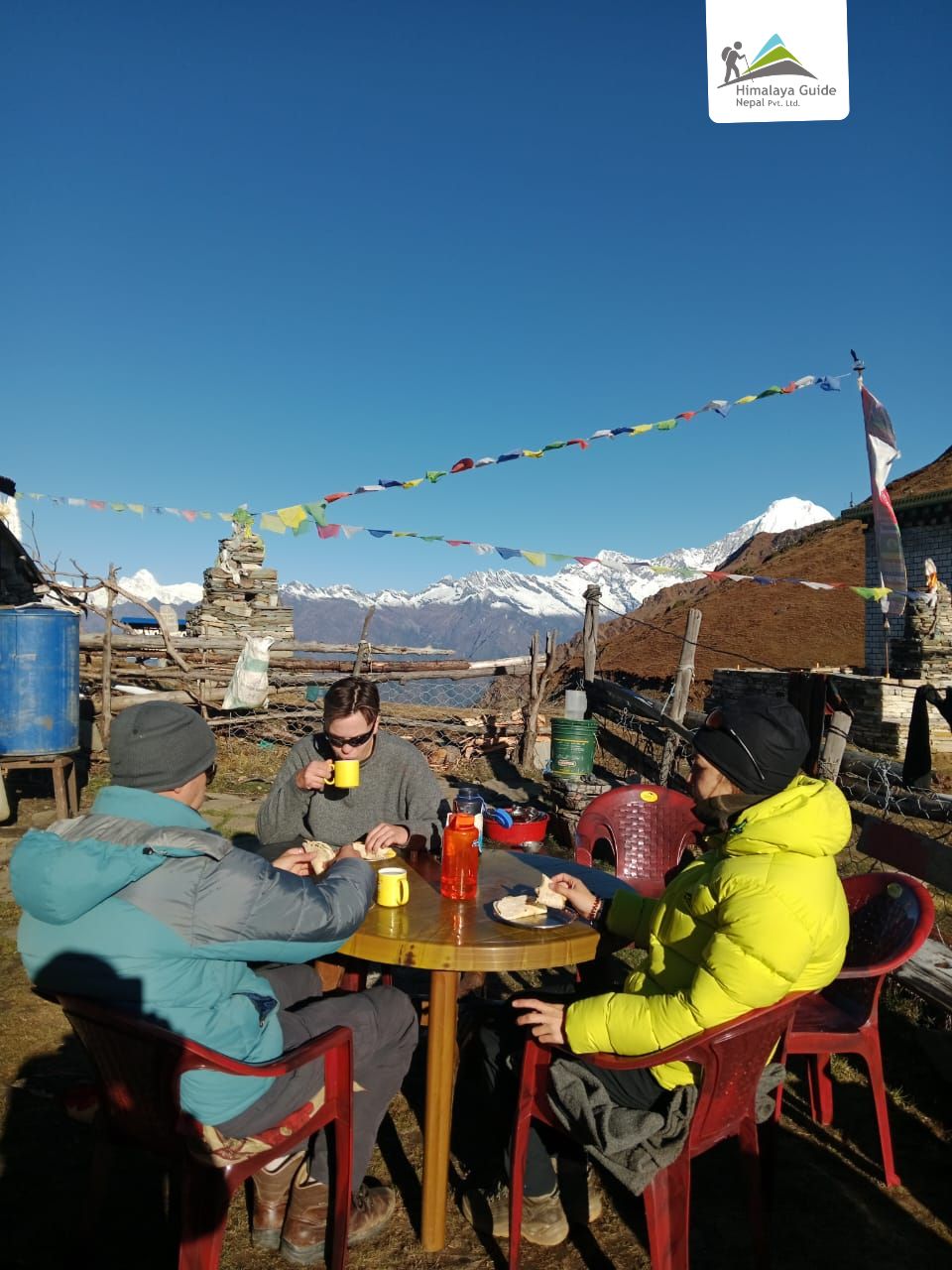
While exploring the pristine and less-explored Himalayan corridors, you will stay overnight in tents in meadows, open fields, near traditional villages, or camping sites. The support team will set up your camp and handle all the logistics (guides, porters, cooks, etc.). Each day, the cooks will prepare the food freshly, even at high altitude. Camping out in the wilderness and complete isolation gives a sense of expedition. Additionally, you can enjoy quiet nights and mesmerizing stargazing as the sky is extremely clear with minimal light pollution.
Early in the morning, you will wake up with a view of snow-capped peaks and fresh mountain air. You will then trek through the remote ridges and valleys. In the afternoon, you will arrive at your campsite. After your crew sets up the campsite, you will have hot meals in the dining tent. As the camping areas are usually near the villages, locals may sometimes visit your campsite out of curiosity. Most Tamang and Gurung communities reside in the region. Similarly, you can see the traditional farming, herding, and daily routines. It allows a deeper interaction with the locals that feels more authentic than teahouse trekking.
Staying in camps means that there will be no internet or Wi-Fi. Satellite phones are the only way to communicate. While this might seem like an inconvenience, limited connectivity offers a full digital detox. The tranquil atmosphere and slow pace of Ruby Valley Camping Trek allow you to reconnect with nature. Bask in the peaceful rhythms of the Himalayas and forget your hectic daily life. The trek is for experienced trekkers seeking a non-commercial, off-the-beaten-path adventure. It is for trekkers who prefer nature and solitude over comfort and luxury.
Comparing the Ruby Valley Camping Trek With the Upper Mustang Teahouse Trek
The Ruby Valley Camping Trek takes you deep into the remote Ruby Valley in the Ganesh Himal region, while the Upper Mustang Teahouse Trek takes you to the Annapurna region. Aside from the region, the trekking experience is also completely different. Here is a comparison between the two so that you can get a clearer picture:
| Features | Ruby Valley Camping Trek | Upper Mustang Teahouse Trek |
| Region | Ganesh Himal region | Annapurna region (Upper Mustang) |
| Maximum altitude | 4,500 M (Ganesh Himal Base Camp) | 4,230 M (Chogo La/ Marang La) |
| Duration | 18 Days | 16 Days |
| Total distance | 140-150 KM | 120 KM |
| Difficulty | Moderate to challenging | Moderate |
| Altitude sickness risk | Moderate | Moderate |
| Crowd level | Very low | Low to Moderate |
| Accessibility | Drive from Kathmandu to Syabrubesi | Drive from Kathmandu to Pokhara and fly to Jomsom |
| Best views | Spectacular views of Mount Makalu, Kanchenjunga, glaciers, lush forests, and alpine meadows | Trans-Himalayan desert-like landscapes, Annapurna & Nilgiri ranges, Lo Manthang, and sky caves |
FAQs for Ruby Valley Camping Trek
Is Ruby Valley Camping Trek safe?
When is the best time for the Ruby Valley Camping Trek?
Do I need prior trekking experience for the Ruby Valley Camping Trek?
Is there a risk of altitude sickness during the Ruby Valley Camping Trek?
What permits are necessary for the Ruby Valley Camping Trek?
Travellers Reviews