

Most trekkers think the only way to reach the Annapurna Sanctuary (4,130m) is a grueling 13-day commitment. But what if you could stand at the same place in half that time? Turns out you can.
There is a shorter itinerary to reach Annapurna Base Camp within five days of trekking. While the standard trek takes 10 to 12 days through the Ghorepani and Poon Hill ridges, the short Annapurna Base Camp trek drives you straight to the Samrung trailhead. Now, you might be thinking the shorter router is easy and a better option because of jeep access, but you’re wrong. You have to trek for 7 to 9 hours daily over steep stone steps to reach the destination.
The longer itinerary is rather easier on the body and offers richer scenery. It has a gradual altitude gain and gives you enough time to actually experience Gurung villages. Thus, it is better suited to first-timers. On the other hand, the compressed one demands real fitness and prior trekking experience, making it only suitable for seasoned trekkers.
Same destination. Different demands. Same trail and iconic views. Completely different experiences. This Annapurna Base Camp trek vs. Short ABC trek guide will help you compare the two and choose the trek that suits you best.
What Extra Destinations Are Available in the Annapurna Base Camp Trek
The Annapurna Base Camp trek and the Short Annapurna Base Camp trek share the same core trail to the Annapurna amphitheater and Annapurna Base Camp (ABC). Both trekking routes pass through Sinuwa, Bamboo, Dovan, Deurali, and Machhapuchhre Base Camp (MBC). And they both finish at the natural hot springs of Jhinu Danda, which is a perfect spot to relax before heading back to Pokhara. Thus, both treks require the same two permits: the Annapurna Conservation Area Permit (ACAP) and the Trekkers’ Information Management System (TIMS).
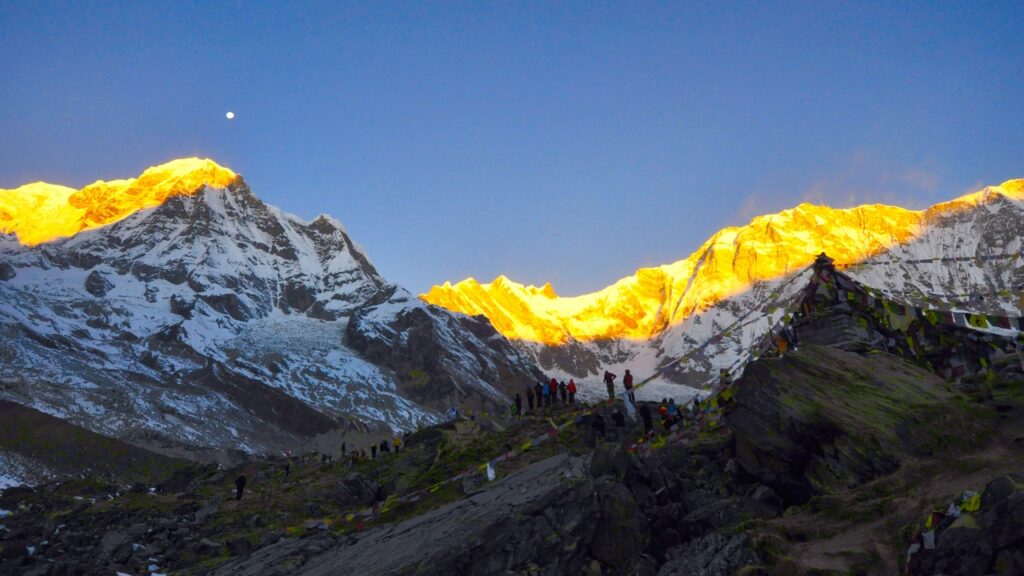
The difference is in the starting section and pace. The standard trek is a circuit-style trek. It circles the entire Annapurna. letting you explore villages and enjoy scenic detours. Meanwhile, the short version goes straight to the heart of the Annapurna Sanctuary or Base Camp, skipping these areas and moving faster. Some of the iconic destinations you only get to see on the longer route are:
Ghorepani & Poon Hill
The most significant extra destination on the standard ABC Trek is the detour to Ghorepani (2,850m). From here, a pre-dawn hike takes you to the most famous viewpoints in the Annapurna region, Poon Hill (3,210m) at dawn. It offers 360-degree panoramic views of the Annapurna massif and Dhaulagiri. Trekkers often argue that the sunrise views from Poon Hill during the Ghandruk Poon Hill Trek are actually more photogenic than the ones at ABC because you see the mountains from a distance rather than standing directly under them.


Tadapani and Ancient Rhododendron Forests
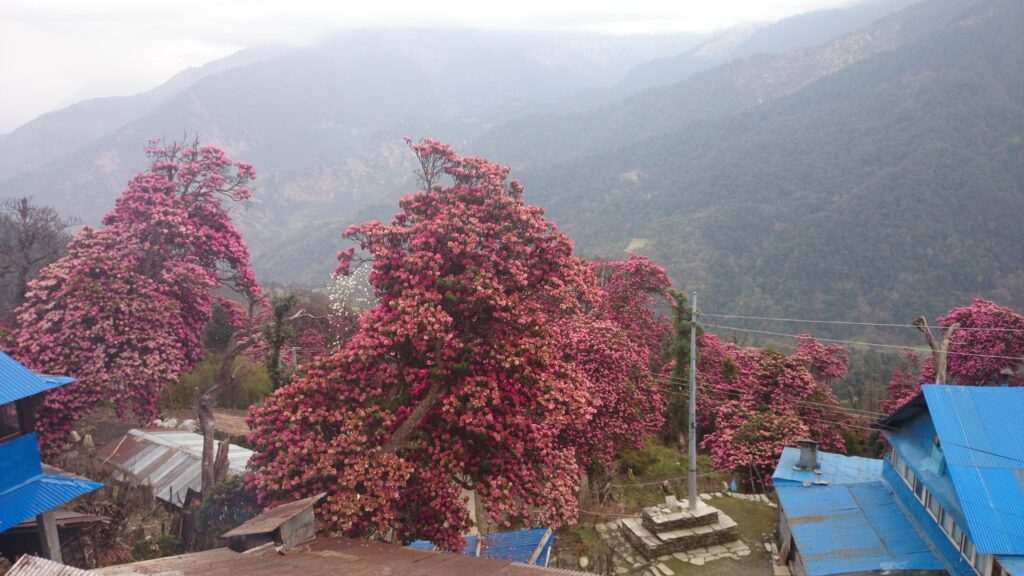
After the sunrise at Poon Hill, the longer route winds through the ancient forests to Tadapani (2,600m). This village provides some of the most intimate, close-up views of peaks like Annapurna South and the iconic Fishtail peak (Machhapuchhre). In spring (March-May), the trails fill with blooming rhododendrons, offering a mystical woodland experience. It is a great place for photography and wildlife spotting.
The Traditional Villages of Ulleri & Tikhedunga
Another highlight of the standard trail is the legendary (and challenging) climb from Tikhedhunga to Ulleri. It features 3,200 to 3,381 steep, rugged stone steps. These ancient stones wind relentlessly up the mountainside, earning fame as brutal or leg-killers for the constant pressure they put on knees. The Short ABC trek skips this entire ordeal, taking a jeep further into the valley to Samrung and bypassing not only the steps but also the hillside farms and traditional Magar homes of Ulleri.
Gurjung
Unlike the Short ABC trek, which sticks to the main river corridor, the standard route often winds through Gurjung (2,041m). It is a picturesque Gurung village perched on the hillside. It gives a much more authentic, off-the-beaten-path feel compared to the busy tea houses of Chhomrong. Here, you witness the true rhythm of Himalayan life, where locals tend terraced millet and potato fields for a living.
The most fascinating and humbling sight comes between 8:00 and 9:00 AM. During this time, the trails are filled with local children heading to the Gurjung Secondary School. You can see a tiny student carrying a backpack on the same rugged terrain that makes you pant for breath.
Key Difference Between Annapurna Base Camp Trek & Short Annapurna Base Camp Trek
Your choice of the Annapurna Base Camp (ABC) route really comes down to your timeframe and what you want to see. Both treks reach the iconic 4,130-meter sanctuary, but they take very different paths to get there.
The standard ABC Trek is a full circuit. It is the traditional option, including a detour to Poon Hill for sweeping views of the Dhaulagiri and Annapurna Massifs. Being longer, it offers better altitude adaptation, making it safer and more scenic for beginners or anyone wanting to soak in the rhododendron forests.
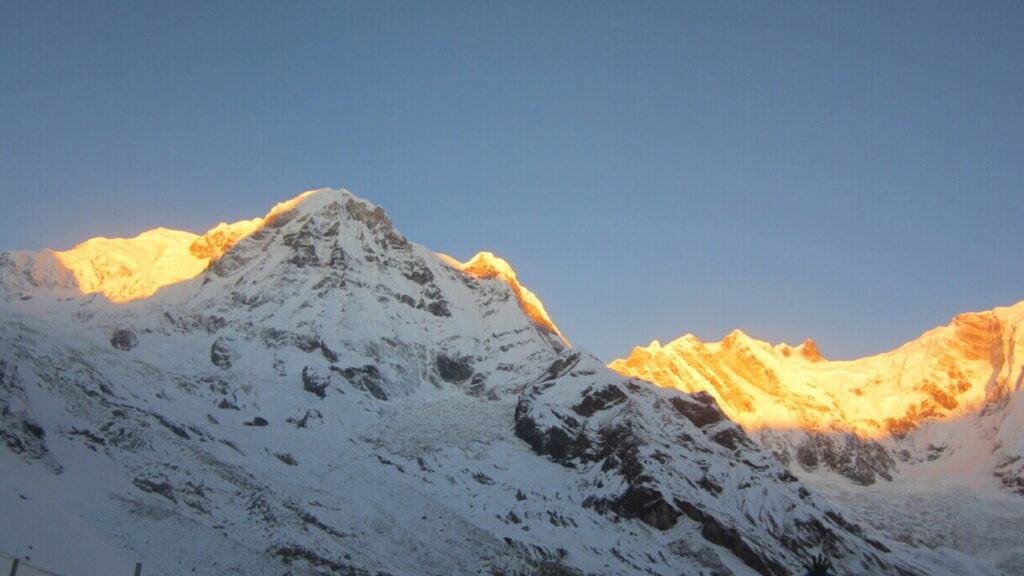
In contrast, the Short ABC Trek is built for efficiency. Using a jeep to skip the lower foothills, the trek begins deep in the valley at Samrung, bypassing the initial 3,300 steps at Ulleri while still tackling the steep stone stairs at Chhomrong. It’s a fast-paced, high-stamina journey, ideal for experienced hikers on a tight schedule.
| Feature | Standard ABC Trek (Poon Hill Route) | Short ABC Trek (Direct Route) |
|---|---|---|
| Ideal For | Beginners, photographers, and those wanting a complete experience. | Experienced hikers or those with tight schedules (e.g., 1 week). |
| Duration | 13 Days: A steady-paced journey through the range. | 8 Days: A fast-paced mission to the base camp. |
| Mountain Views | Poon Hill (3,210m): 360° sunrise over the Annapurna and Dhaulagiri Massifs. | No Poon Hill: Views are restricted to the internal Annapurna Sanctuary. |
| Terrain Variety | Maximum: Mix of rhododendron forests, farm terraces, and alpine rock. | Focused: Primarily follows the river valley up into the high mountains. |
| Starting Point | Ulleri/Tikhedunga: Begins with the classic stone staircase ascent. | Samrung: Uses a Jeep to bypass the first two days of walking. |
| Steep Ascent | Significant: Includes the 3,300+ stone steps of Ulleri on Day 4. | Reduced: Skips Ulleri, but still requires the steep Chhomrong stone stairs. |
| Altitude Adaptation | Gradual: Extra days at 2,800m help the body adjust to the elevation. | Rapid: Faster ascent; requires higher resilience to thin air. |
| Difficulty | Moderate: Longer duration, but offers more recovery periods. | Challenging: Requires high daily stamina to maintain the pace. |
| Estimated Cost | Higher (USD 670-USD 590): Covers more lodge nights and meals. | Lower (USD 565-USD 410): Reduces spending on accommodation and food. |
| Best Time to Trek | Spring (Mar-Apr): Offers massive blooming rhododendron forests. | Autumn/Winter: Best for efficient, clear-sky runs with less trail traffic. |
How To Choose Between the Annapurna Base Camp & the Short Annapurna Base Camp Trek
Deciding between these two treks isn’t about which one is better, it’s about matching the trail to your recovery rate and your schedule. One is a high-altitude marathon that rewards your patience with culture, village life, and scenic detours. The other is a vertical sprint, demanding peak stamina in exchange for efficiency.
Choose the standard ABC trek if:
- You have 12-14 days in Nepal
- You’re trekking at high altitude for the first time and want a safer, gradual pace
- You don’t want to miss the Poon Hill sunrise
- You want to experience village life, not just tick off a mountain
- You need time and light for photography
- You prefer shorter walking days so you arrive fresh each evening
Choose the Short ABC trek if:
- You are short on time, with 7-9 days available
- You’ve trekked at altitude before and know how your body responds
- You care more about reaching Base Camp than the journey itself
- You’re comfortable with 7-8 hour trekking days on steep terrain
- You want to save time and money; fewer days means lower cost
- You have travel insurance sorted. An emergency evacuation from the Annapurna region in Nepal can cost USD 2,000 or more.
- You plan to return to Nepal and save Poon Hill for another trip
Final Thoughts: Annapurna Base Camp Trek vs Short Annapurna Base Camp Trek
Both treks are truly special. Both take you to the same magical place, the Annapurna Base Camp at 4,130m. But the experience of getting there is very different. The Standard ABC Trek gives you more time, more culture, more views, and a gentler climb. The Short ABC Trek is faster, cheaper, and still gets you to the heart of the entire Annapurna region, but it demands more from your body.
Ask yourself: are you after a full Himalayan story, soaking in every detail, or a high-impact mountain journey that gets you straight to Base Camp?
If you’re still not sure which trek to choose, chat with us. We’ll be more than happy to help you plan your perfect trek in the Annapurna region.


