

What do you picture when you hear “trekking in Nepal”? Thin mattresses, shared bathrooms, dal bhat on repeat, maybe questionable sanitation. That reputation didn’t come out of nowhere, but it is well and truly outdated at present. In 2026, luxury treks in Nepal have quietly evolved into one of the most refined adventure experiences out there.
The trails are the same. The Himalayas are the same. What’s changed is everything around them, including who can visit, how long it takes, and how comfortably you experience them. Luxury treks now range from multi-day lodge-to-lodge journeys to short, high-impact itineraries, with private guides to manage your pace and built-in acclimatization, keeping things safe and steady throughout the journey.
Similarly, before and even after the independent trekking ban in April 2023, trekking in Nepal without a licensed guide was easy to get away with. That’s no longer the case. From 2026, every foreign trekker must strictly travel with a licensed guide from a registered agency. If you don’t want to join a group, then solo guided trekking (just you and the guide) is completely legal. And, honestly, it is the best way to experience these routes anyway.
Let’s explore the three best luxury treks in Nepal for 2026.
Luxury Everest Base Camp Helicopter Tour with Landing
Want to visit Everest Base Camp, but not sold on the idea of trekking for days to get there? The long walks, basic lodges, and physical grind aren’t for everyone. With that in mind, we designed the Luxury Everest Base Camp Helicopter Tour with Landing. You take a private or shared heli flight from Kathmandu over Namche Bazaar and the Tengboche ridge.
The helicopter then hovers aboveEverest Base Camp at 5,364 M. From up there, you can see the rows of expedition tents, prayer flags fluttering in the wind, the Khumbu Glacier sprawling below, and the Icefall rising beyond it. If you look closely, you also spot people: climbers, guides, and trekkers moving slowly through the camp, some resting, some gearing up for the push ahead.
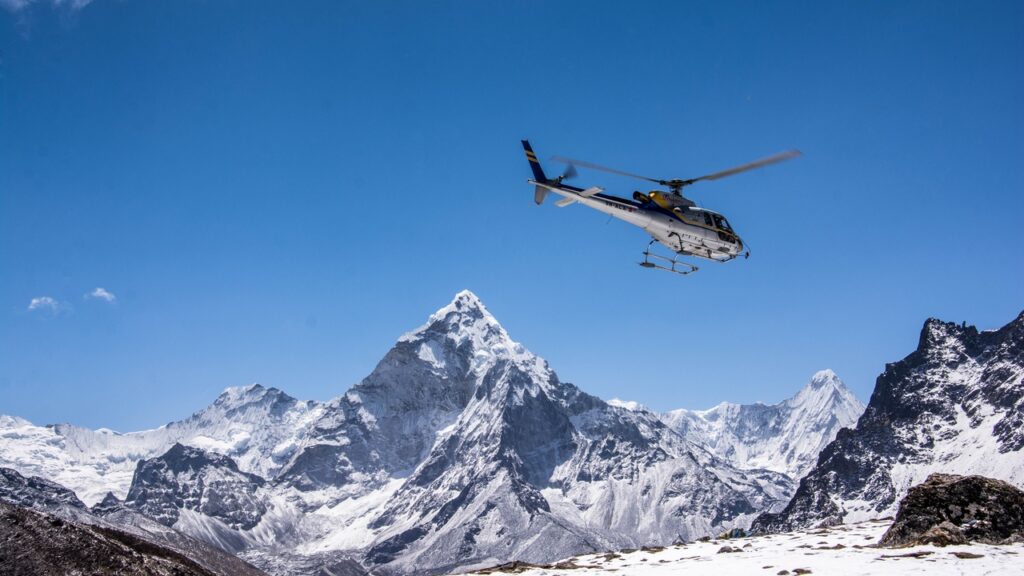
After 20 minutes of aerial views of EBC, the heli lands at Kala Patthar at 5,644 M, which is higher than EBC. As the rotors slow and the engine cuts out, comes a moment you’ve been waiting for. You step out. The silence, wind, ice, and the full face of Everest greet you. The few minutes (generally 5 to 15) you spend here are the whole point of the entire journey.
On your way back, you fly toHotel Everest View and stop for breakfast. Fun fact: It is a Guinness World Record holder for the world’s highest-placed hotel. Here, you can enjoy food with a view of Mount Everest right outside the window. Overall, the full trip runs 5-6 hours.
Things to know before you book:
- Cost range: USD 1400 per person,USD 1160 (for group of 5+)
- Permits required: Sagarmatha National Park and Khumbu Municipality
- Landing requires a private booking: Kala Patthar is restricted to private tours, with a max of 2 passengers. Group tours get a flyover only.
- Three landing points, one flyover: Lukla twice (refueling), Kala Patthar (5-15 min), Hotel Everest View (breakfast). EBC is aerial views only.
- Depart between 6:00-9:00 AM: Weather turns unreliable after midday.
- Recommended seasons: Spring (March-May) or autumn (September-November). Avoid monsoon months, no matter how cheap it gets.
- Mild altitude symptoms expected: Headache or dizziness, which pass quickly on the way down.
Luxury Everest Base Camp Trek
If you refuse to do the EBC trek any other way and want comfort, we also offer the Everest Base Camp Luxury Trek. It follows the same classic route through Lukla and Namche Bazaar to the Everest Base Camp at 5,364 M. The only difference is in the experience of every step of that journey.
That experience starts with where you sleep. Instead of local Sherpa teahouses with thin walls and shared bathrooms, you stay at the Mountain Lodges of Nepal throughout the trek. They are available at almost all places, Phakding, Namche Bazaar, Deboche, Dingboche, Lobuche, and Pheriche, except for Gorakshep. You get heateden-suite rooms with hot showers, electric blankets, Wi-Fi, and multi-course meals every night with local and international options.
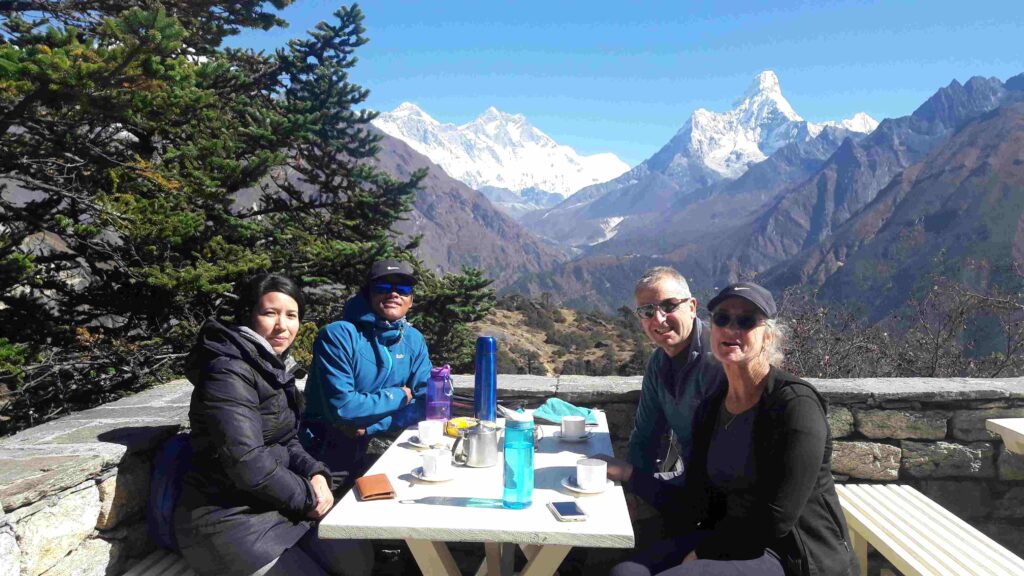
You also get two acclimatization days at Namche and Dingboche. At Namche Bazaar, you can visit the Tengboche Monastery, local markets, and a yak cheese factory. Similarly, at Dingboche, cultural village walks and guided ridge hikes with close-up views of Lhotse and Ama Dablam make it a memorable part of the trip. You trek freely the whole way since porters carry your bag up to 9 kg. Additionally, we also offer a reserve day in Kathmandu at the end to give you space to explore the city or decompress before flying home.


Things to know before you book:
- Cost range: USD 3,050-3,365 per person, based on group size. Full breakdown of group discounts.
- Accommodation: Mountain Lodges of Nepal at Phakding, Namche, Deboche, Dingboche, Lobuche, and Pheriche. Accommodation at Gorakshep (the final stop before EBC) is simple due to its extreme altitude, remote location, and harsh environmental conditions.
- Best seasons: Spring for rhododendron blooms on the lower trails, and autumn for sharp mountain views up high.
- Book 3-5 months ahead for spring: Luxury lodges in the Everest region fill fast.
Luxury Manaslu Trek
If your idea of luxury includes not sharing the trail with 200 other trekkers, the Luxury Manaslu Trek is the best option. It takes you through one of the most restricted and least-visited circuits in Nepal, the Manaslu Circuit, circling around the world’s eighth-highest peak. Only in 2025 did the Manaslu region record a historic high of 14,980 visitors (Source: The Kathmandu Post). This one requirement has kept the trail genuinely off the tourist map. While others queue for Everest permits, why don’t you visit somewhere most of them will never go?
It is a 16-day journey along the Budi Gandaki River through remote Gurung and Tibetan villages. You get full-board meals, and accomodations include luxury hotels. Example: Hotel Nirvana / Hotel Everest (Machha Khola), Majestic Manaslu Cottages & Cafe (Lho), Mount Manaslu Hotel & Lodge (Samagaun), Hotel Punker Mountain & Restaurant (Bhimtang), Gateway Himalaya Resort (Besisahar). As you trek on, you can witness ancient mani walls carved with prayer inscriptions and monasteries clinging to cliffsides along the trail. And you know what? You’ll meet locals more than trekkers on this trail. This kind of quietness is very rare while trekking in Nepal now.
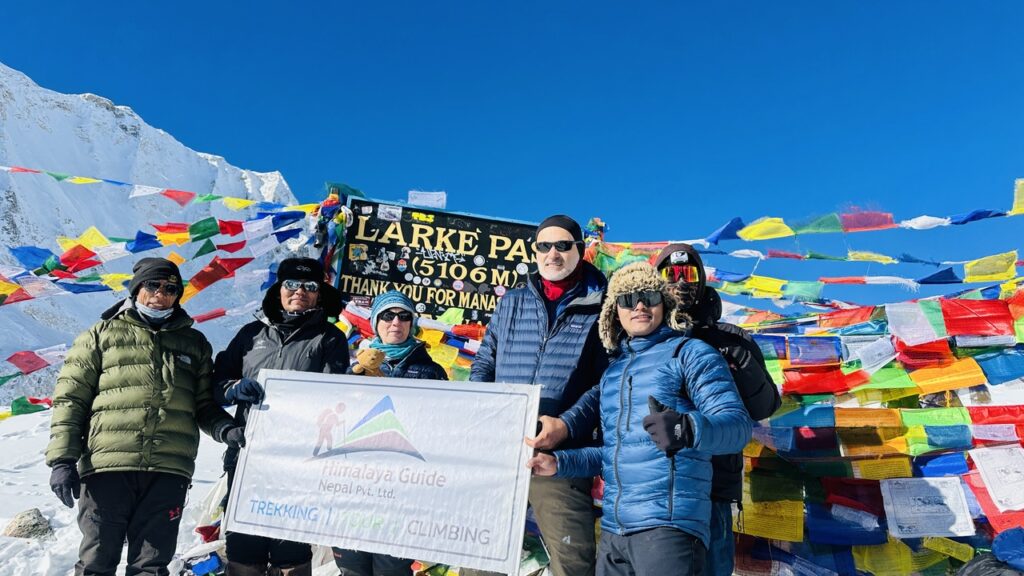
The trek package also includes a rest day in Samagaun, from where you can visit Manaslu Base Camp or the quiet Pyungen Monastery. More importantly, the highlight is crossing Larkya La Pass at 5,160 M. From the top, you can witness Manaslu (8,163 M), Himlung, and Cheo Himal open up in a wide, unobstructed panorama. This view is unique and only for trekkers who step outside their comfort zone. Thus, the Manaslu Luxury Trek proves that remoteness doesn’t always compromise your comfort.
Things to know before you book:
- Restricted area permit: USD 100 per person/week in peak season (Sept-Nov and Mar-May), USD 75/week off-season (Dec-Feb and Jun-Aug).
- Two other permits: the Manaslu Conservation Area Permit (MCAP), which costs USD 30, and the Annapurna Conservation Area Permit (ACAP), which costs approximately USD 25 for foreign nationals (NPR 3,000).
- Accomodations: It is comfortable throughout, with quality lodges at key stops. However, at the highest points, Samdo and Dharamsala, rooms are rather simple.
- Solo guided trekking is now permitted: As of 22 March 2026, single travelers can obtain a Restricted Area Permit individually. A licensed guide remains mandatory.
- Recommended seasons: Spring and autumn (Sept-Nov) for the most stable weather.
- Book 3-5 months ahead: Luxury lodges on the Manaslu circuit are limited and fill fast, especially for the autumn season.
- TIMS card no longer required: replaced by the mandatory licensed guide system as of 2026.
How Are Luxury Treks Different From Standard Treks?
Everyone compares luxury vs standard trekking as if it’s just about comfort. It’s not. It’s about how much effort you’re willing to put in each day, how well you recover, and how smooth your daily logistics are. In Nepal, standard treks offer a raw, authentic trekking experience with Himalayan culture, while luxury lodge treks remove the hassle with better sleep, gourmet meals, and seamless transport.
Here’s a table difference for a side-by-side breakdown of luxury and standard treks:
| Feature | Standard Trek | Luxury Trek |
|---|---|---|
| Sleeping Room | Basic unheated rooms with plywood walls; twin beds with thin foam pads. | Insulated rooms with heaters, electric blankets, and premium mattresses. |
| Bathrooms | Shared communal toilets (often squats); located down a cold hallway or outside. | Private en-suite bathrooms with Western-style flush toilets in every room. |
| Hot Showers | Extra fee (USD 3-8) for solar or gas showers; often lukewarm or unavailable at high altitudes. | Included in the price: reliable 24/7 hot water with high-pressure glass-enclosed showers. |
| Dining & Food | Shared menu (dal bhat, noodles, porridge); communal dining halls heated by a single central stove. | Multi-course gourmet menus (steaks, pasta, fresh salads); private heated dining areas and espresso. |
| Support Staff | One guide per group (up to 1:10 ratio); one porter shared between two trekkers. | Private lead guide for your party; 1:1 personal porter ratio for every trekker. |
| Transportation | Domestic fixed-wing flights (EBC) or bumpy 8-10 hour public/shared jeep rides (Manaslu/Annapurna). | Helicopter transfers or private luxury 4×4 vehicles for all ground travel to and from the trail. |
| Power & Wi-Fi | Extra daily fees (USD 2-10) for Wi-Fi and device charging; sockets only available in the common room. | Unlimited high-speed Wi-Fi and multiple in-room charging ports included at no extra cost. |
| Safety & Gear | Basic first-aid kit; you must bring or rent your own sleeping bag and down jacket. | Daily oxygen saturation (oximeter) checks; emergency oxygen, satellite phones, and premium gear provided. |
Daily Cost Comparison
- Standard Trek: Approximately USD 70-150 per day, plus USD 25-50/day for additional expenses such as water, showers, charging, and Wi-Fi.
- Luxury Trek: Approximately USD 200-600+ per day, almost entirely all-inclusive, with daily out-of-pocket costs often under USD 10.
The difference isn’t just comfort. It’s how well you actually enjoy the mountains you came all this way to see. Ready to start your trekking adventure in Nepal? Contact us and share your thoughts, and we’ll take care of everything else.


