

“Most people go to Everest Base Camp just to stand at the base of Mount Everest. But trekkers who know the real secret go to Gokyo Ri to see four of the world’s biggest mountains all at once” is a sentiment often shared by seasoned trekkers and local experts. This trek route is quieter and more remote, offering a real sense of adventure in the Everest region and passing a chain of six bright turquoise lakes. These lakes, formed by nearby glaciers, sparkle against the snow-covered peaks and create mesmerizing views that linger long after the trek.
Because the trail is less crowded and more remote, planning can feel a bit more complex. That’s why we have designed the Gokyo Ri trek guide. It covers what each day on the trek feels like, how challenging it is, and what kind of budget you should expect. By the end, you’ll have a clear idea of how to prepare for this rewarding, off-the-beaten-path journey.
Each Itinerary Day Experience During the Everest Gokyo Ri Trek
The best way to prepare for a trek is knowing what each day feels like before you get there. No, we’re not talking about the walking hours or altitude numbers. We are talking about the moments that a 12-day Gokyo Ri Trek package itinerary fails to capture, but stay with you.
Day 1: Landing in the chaos of Kathmandu. The capital hits you with warm air, honking horns, and narrow streets packed with gear shops in Thamel, where you can grab what you need.
Day 2: Thrills both above and below. The flight to Lukla gets your heart racing, and the excitement doesn’t end there. Towering pine forests, fluttering prayer flags, and the rushing Dudh Koshi River carry that thrill all the way to Phakding.
Day 3: The big climb to Namche. Steep, continuous, and high-suspension bridges make your stomach drop. Then, Everest finally appears through the trees, and suddenly your aching legs don’t matter anymore.
Day 4: Acclimatization hike from Namche. You hike up to Syangboche Airstrip & Hotel Everest View at 3,880 M to witness Everest, Ama Dablam, and Lhotse face to face. After that, you go back down to Namche for bakery coffee and the last ATM facility you will see for a week.
Day 5: The reroute towards Gokyo Valley. The trail splits from the Base Camp route towards Dole. You can feel the silence immediately. Here, it is just you, the mountains, and the occasional yaks and their herders.
Day 6: Into the thin air of Machhermo. The short walk from Dole takes you deeper into the wide valley, into a high-altitude region. You’ll find yourself stopping more often, not because the trail is hard, but because your lungs need it.
Day 7: The turquoise reveal at Gokyo. First, you pass the first lake (Longponga) and the second lake (Taboche Tsho) on the way to the Gokyo village. Then, the third lake, Dudh Pokhari, appears, with a shade of blue that doesn’t look real, and the massive wall of Cho Oyu towering right behind it.
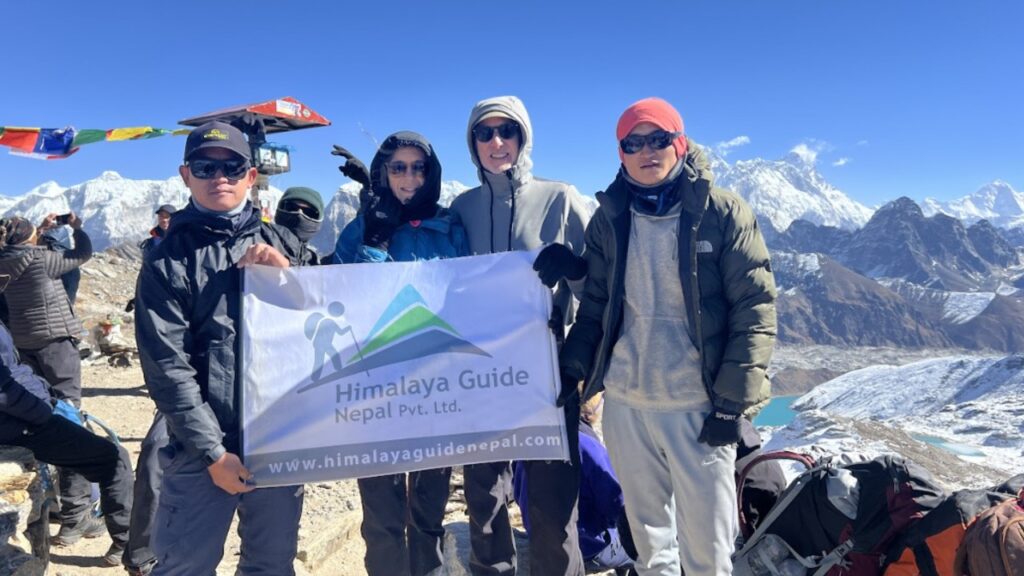
Day 8: The sunrise hike to Gokyo Ri summit. You start at 4 AM with a headlamp, climbing a steep, rocky path. It takes about 3 hours to reach the top. Once you do, Everest, Lhotse, Makalu, and Cho Oyu are visible all at once, and the turquoise Gokyo Lakes glow below. Here, you can hear your own heartbeat and pants.
Day 9: The easy descent to Lungden. After a series of climbs, the downhill finally lets you breathe easier. The river flows beside you, and you see greenery again, which becomes oddly satisfying.
Day 10: Back to the buzz of Namche. You rejoin the main trail near Namche. After days of peaceful trails and villages, the busy Namche feels like a different world.
Day 11: The final push to Lukla. Descending to Lukla is a long journey. Your knees feel every meter, but the thicker, warmer air at a lower altitude reminds you that the trip has successfully finished.
Day 12: One last look. A 30-minute flight back brings you back to Kathmandu. If you happen to get a left window seat, pick it for a final view of the peaks from above.
In this way, you get a journey that covers 12 days of incredible landscapes with moments in between, like the quiet pauses, the first glimpse of a turquoise lake, and the sunrise that makes you stop mid-step.
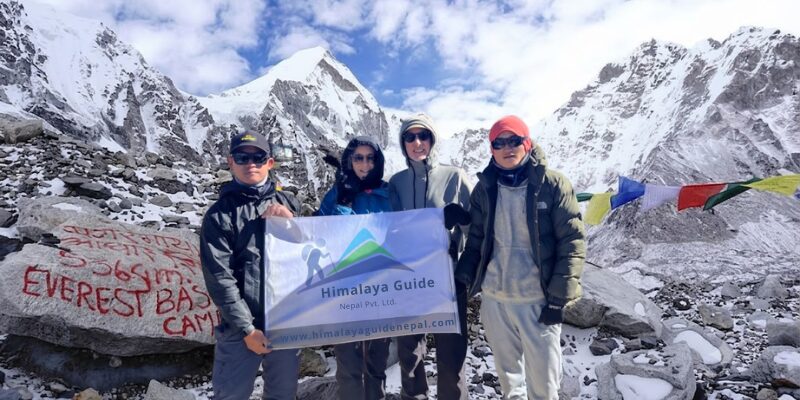
The Everest Base Camp trek is one of the most popular treks in Nepal. The trek is more frequently visited than other popular treks, such as the Annapurna Base Camp Trek or the Langtang Valley Trek, which are also well-known among trekkers worldwide. The trek is on the bucket list for many trekkers to reach the base of the world’s highest peak, Mount Everest. Everest Base Camp trek begins with a Kathmandu to Lukla flight & provides a challenging Himalayan & Sherpa village experience costing you $955. The paths twist and turn through beautiful Sherpa villages, high rhododendron forests, and alongside the Dudh Koshi River, offering glimpses of the local culture and the strong presence of the local people.

As the altitude gradually increases from Lukla, you will pass through Namche, Tengboche, and Dingboche. During this trek, trekkers need to acclimatize to the conditions of the Khumbu region. During these treks, trekkers will enjoy stunning views of mountains such as Everest, Ama Dablam, Nuptse, Lhotse, and Cho Oyu. The final section of your walk takes you to Gorak Shep, the last place before you reach Everest Base Camp, at an altitude of 5,364 meters. From Gorak Shep, you will walk to the highest point of the trek, at 5,644 metres, Kala Patthar. This is a rewarding trek, one that provides an immense sense of accomplishment and offers wonderful views of Mount Everest and the Khumbu Icefall up close, which will stay with you forever.
Everest Base Camp Trek CostThe Everest Base Camp Trek cost ranges from USD 1,055 to USD 1,510 per person for a standard package. The cost of the trek to EBC varies based on various factors like group size, trek duration, accommodation, transportation, services included, and customization of the trip. Also, the standard trek package covers most of the expenses required for the trek, including meals and accommodation, permits, guide service, domestic flight ticket, overland transportation, and necessary government taxes.
Everest Base Camp Trek Cost Breakdown:
| Category | Description | Estimated Cost (USD) | Factors Influencing Cost |
|---|---|---|---|
| Permits | Fees are required to trek in the Everest region. | $50 – $60 |
|
| Transportation | Costs to reach the trek starting point (usually Lukla) and return to Kathmandu. | $360 – $460 |
|
| Accommodation | Cost of staying in tea houses/lodges along the trekking route and hotels in Kathmandu. | $150 – $500+ |
|
| Food & Drinks | Expenses for meals (breakfast, lunch, dinner) and beverages during the trek. | $250 – $500+ |
|
| Guides | Fees for hiring a licensed trekking guide. | $500 – $1000+ |
|
| Trekking Gear | Costs for essential trekking equipment. | $100 – $500+ (if renting) / $300 – $2000+ (if buying) |
|
| Visa | Nepal entry visa fees. | $30 – $125 |
|
| Travel Insurance | Mandatory insurance that covers medical emergencies, high-altitude sickness, and emergency evacuation (including helicopter rescue). | $100 – $300+ | Cost depends on the duration of the trek and the coverage provided by the insurance policy. Ensure it specifically covers trekking at altitudes up to 6,000 meters. |
| Miscellaneous | Personal expenses such as hot showers, Wi-Fi, charging electronic devices, snacks, souvenirs, and tips for guides and porters. | $100 – $300+ |
|
Everest Gokyo Ri Trek Cost Breakdown & Budget Planning
A standard Gokyo Ri or Gokyo Lake trek costs USD 1,545 per person. This usually covers your guide, porter, and teahouse stays. Costs are higher in the Gokyo Valley than on the main EBC trail because everything from eggs to toilet paper is carried up by yaks or porters. We also offer group discounts for trekkers traveling together, making it easier and more affordable to share the adventure with friends or family.
| No. of Persons | Price per Person |
|---|---|
| 1 – 1 | USD 1,545 |
| 2 – 4 | USD 1,325 |
| 5 – 5 | USD 1,245 |
| 8 – 10 | USD 1,195 |
| 11+ | USD 1,050 |
Key expenses
- Permits: Khumbu Pasang Lhamu Rural Municipality permit and Sagarmatha National Park entry permit, approx. USD 50 total. (Not included in the package)
- Flights: Round-trip from Kathmandu or Ramechhap to Lukla, USD 360 to USD 420. (Not included in the package)
- Daily Expense (Meals): USD 30-50 per day. (Included in package)
- Teahouse Extras: Wi-Fi, battery charging, and hot showers, approx. USD 3 to USD 7 per service. (Not included in the package)
- Insurance: Must cover helicopter evacuation up to 6,000 M, cost varies. (Not included in the package)
For an overall cost breakdown, see our Gokyo Ri Trek Cost guide.
How To Successfully Complete the Everest Gokyo Ri Trek in 2026/27?
The Gokyo trek is widely rated moderate to challenging, mostly because of the high altitude, long daily walks of 5-7 hours, and the remote location of the valley. Above 4,000 M, altitude sickness or AMS becomes a serious concern as oxygen levels start to drop. By the time you reach the Gokyo Ri summit at 5,357 M, they’re roughly 50%. Thus, you need to pace yourself and strictly follow the “climb high, sleep low” strategy.
Additionally, this trek crosses the shifting Ngozumpa Glacier, the longest in the Himalayas. You have to walk on loose rocks and moving ice, which requires careful steps and focus, unlike the more developed Everest Base Camp trek route. Similarly, resources are limited once you leave Namche Bazaar. Meals are mostly high-carb staples, like Dal Bhat, and hot showers and electricity are rarely available. More importantly, medical help relies on helicopter evacuations, which can be delayed by mountain weather.
Before the trek:
- Start cardio training at least 8 weeks ahead, running, stair climbs with a loaded pack, and one long hike (10-15 KM) per week.
- Plan your trek for late March-May or October-November for the clearest skies and most stable weather. Avoid monsoon (June-August) and winter (December-February) unless experienced with extreme cold.
- Keep at least one buffer day before your flight back, as Lukla flights are frequently delayed.
- Book teahouses in advance if trekking between October and November, the busiest season.
- Bring at least 2 to 4 passport-size photos for permits, local SIM cards, and a visa on arrival.
- Pack a sleeping bag rated to -15 °C. Nights in Gokyo are colder than at similar altitudes on the EBC trail.
- Carry a power bank (10,000+ mAh), water purification tablets, and a headlamp with spare batteries.
- Download offline maps in Kathmandu, so you’re never lost when the bars drop to zero.
During the trek:
- Drink 3-4 liters of water daily above 3,000 M and avoid alcohol.
- Do not skip the rest day in Namche. Your body needs it, even if you feel fine.
- Keep daily altitude gain under 600 M between Dole, Machhermo, and Gokyo.
- Descend immediately if you experience a constant headache, confusion, or breathlessness at rest.
- Start the Gokyo Ri summit hike by 4 AM so you can descend by late morning to avoid afternoon winds.
- Sleep alongside your phone, camera batteries, and power bank to protect them from draining.
- At 5,000 M, the sun is incredibly harsh. Use Category 4 sunglasses (extra dark) to prevent snow blindness on the glacier and apply SPF 50+ every two hours, even if it feels cold.
4 Questions You Should Ask Before Trekking To Gokyo Ri
Is the Gokyo Ri trek harder than the Everest Base Camp?
Can beginners trek to Gokyo Ri?
Is Gokyo Ri or Kala Patthar the better viewpoint?
Is there phone service on the trail?


