
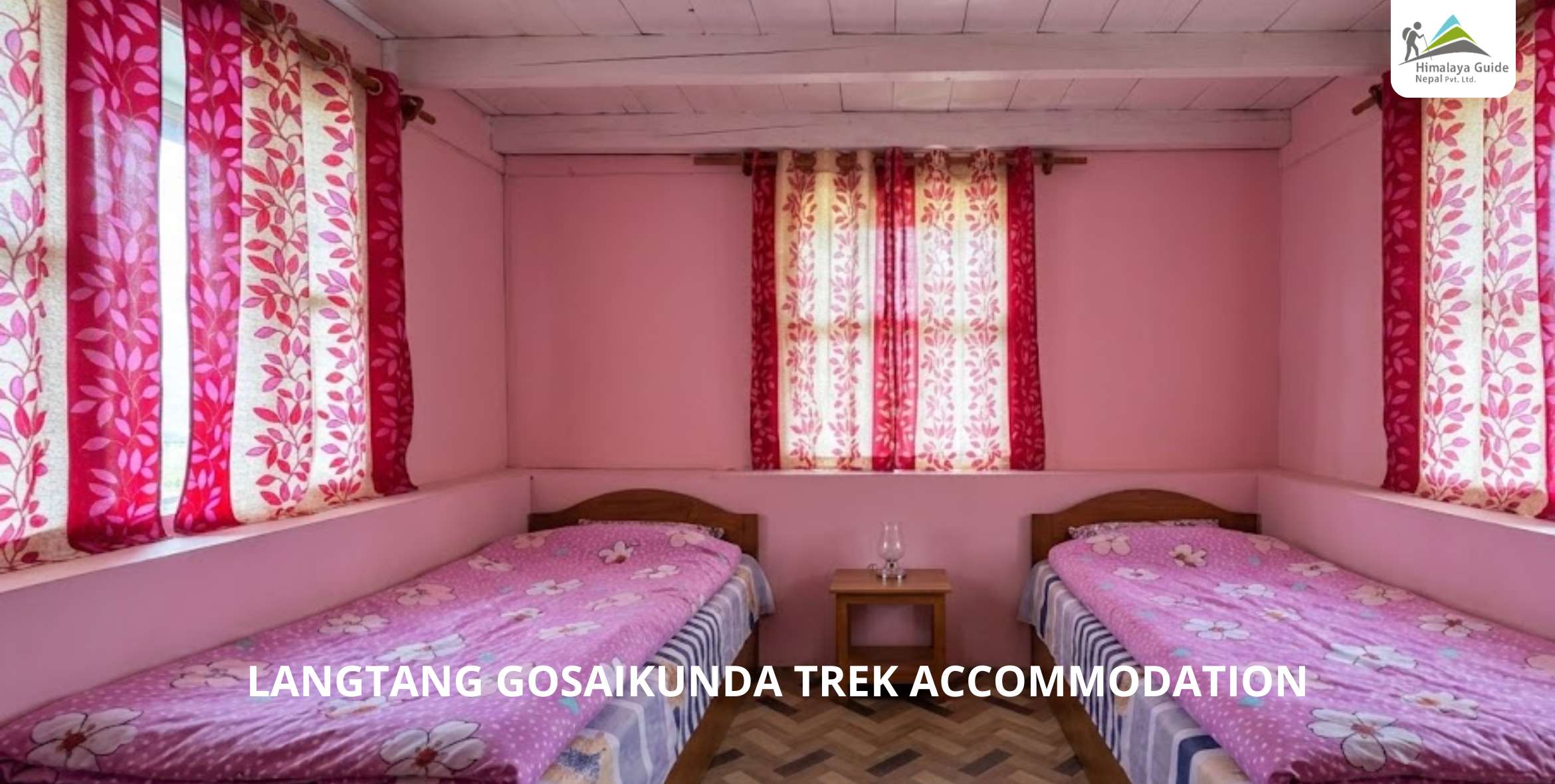
On the Langtang Gosaikunda Trek, you sleep in teahouses and family lodges the whole way. Rooms are simple. Twin beds, a foam mattress, thick blankets, shared bathrooms. Lower stops like Lama Hotel are comfy. The higher you go, the more basic it gets. On a guided trip, your accommodation is booked and paid inside the package.
Accommodation on the Langtang Gosaikunda Trek is not a hotel booking. It is a string of small mountain teahouses, run by local families, spaced a few hours apart along the trail. Some are cosy. Some are cold and bare. Knowing which is which before you go changes the whole trip.
What Accommodation is really like during Gosaikunda Trek
What you get is a teahouse during Langtang Gosaikunda Trek. A teahouse is a small guest house with a few bedrooms and one shared dining hall. The family lives there, cooks your food, and hands you a room key. That is the whole system. It has run this way during the Langtang treks for decades.
You will hear three words used for the same idea. Teahouse. Lodge. Guest house. They mostly mean the same thing here. A “lodge” might be a touch bigger or newer. A few of the busier ones call themselves hotels. Do not read too much into the names.
The one rule that never changes is this. Facilities drop as you climb. Down low you might find an attached bathroom and a hot shower. Up high you get a squat toilet outside and a bucket of warm water if you are lucky.
Gosaikunda Trek Accommodation by Place
The Gosaikunda trek splits into two clear parts. The first half runs up the Langtang Valley to Kyanjin Gompa. This side has the most teahouses and the best facilities. You will not struggle for a bed here.
Syabrubesi (1,420 m) Accomodation
Your first night is the road-head town of Syabrubesi. This is the start of the trek from Kathmandu to Syabrubesi, and it is the most comfortable stop of the whole trip. Proper lodges. Attached bathrooms. Hot showers that actually run hot. There is an ATM here too, which matters, because it is the last one you will see for a week.
Lama Hotel (2,470 m) Accomodation
Do not let the name fool you. Lama Hotel is not one hotel. It is a small forest settlement of six to eight family teahouses, tucked beside the Langtang River. Stone and wood, tin roofs, wood fires in the evening.
Rooms are twin beds with thick blankets. Bathrooms are shared, mostly squat toilets, some western. A hot bucket shower runs about NPR 200 to 300. Charging costs extra because the power comes from solar and a small local hydro line that runs thin. It is a lovely place to land after a long first day of walking.
Langtang Village (3,430 m) Accomodation
The old village was buried by an avalanche in the 2015 earthquake. What stands today was rebuilt by the survivors, brick by brick. You can read that full story here, and honestly, you should before you stay the night.
The new teahouses are basic but solid. Places like Hotel Red Panda and Tashi Delek Guest House offer clean twin rooms, home cooking, and a warm dining hall. Staying here is not just a bed. It is a small act of support for people who lost everything and started again.
Kyanjin Gompa (3,870 m) Accomodation
Kyanjin is the top of the Langtang half and your acclimatization base. The lodges here are built from painted concrete, which looks odd against the peaks but holds the cold better than wood. This is the busiest stop on the valley side, so rooms fill fast in peak season.
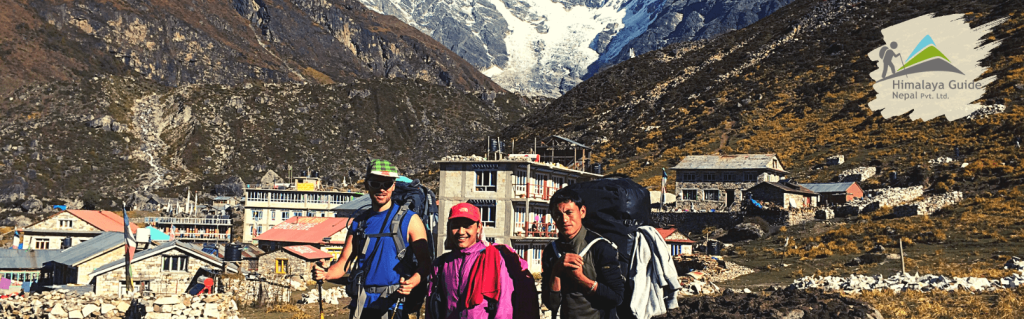
Facilities are decent for the altitude. Twin rooms, shared bathrooms, a few with hot showers on solar. There is a cheese factory and a monastery to fill your rest day. And the view of Langtang Lirung from the door is the kind of thing you remember for years.
Gosaikunda Trek Accomodation
Here is where the trek gets serious. After Kyanjin, you drop back down to Lama Hotel, then branch off toward the sacred lake. This half has fewer teahouses, thinner walls, and colder nights. The Langtang Gosaikunda Trek difficulty steps up too. Plan your sleep here with more care.
Thulo Syabru (2,230 m)
Once you leave the main valley, Thulo Syabru is your first night on the Gosaikunda trail. It is a hillside village of wooden houses with big views out to Ganesh Himal. A few lodges here have attached bathrooms, which is a small luxury you will miss soon after. Eat well. Sleep well. The climb starts tomorrow.
Sing Gompa / Chandanbari (3,330 m)
Sing Gompa, also called Chandanbari, is a monastery settlement with around ten to twelve teahouses. It sits at a three-way junction, so it stays busy. Hotel Yak and Nak and Sing Gompa Lodge are the names trekkers tend to remember, mostly for the food.
There is a cheese factory here too, run since the 1950s. Rooms are simple wooden twins with heavy blankets. This is a smart place to spend an extra night if the altitude is nagging at you. Your body will thank you before the lake.
Lauribina (3,910 m)
Lauribina is barely a settlement. Two or three teahouses on a flat shoulder of the mountain, staring straight at a wall of peaks. That is it. The sunset from your lodge door here is one of the best on the whole route.
Do not expect much inside. Cold rooms, shared squat toilet, a stove in the dining hall you will not want to leave. Many trekkers push straight through to the lake. But a night here helps you acclimatise, and it nearly kills off the risk of altitude sickness before the pass.
Gosaikunda Lake (4,380 m)
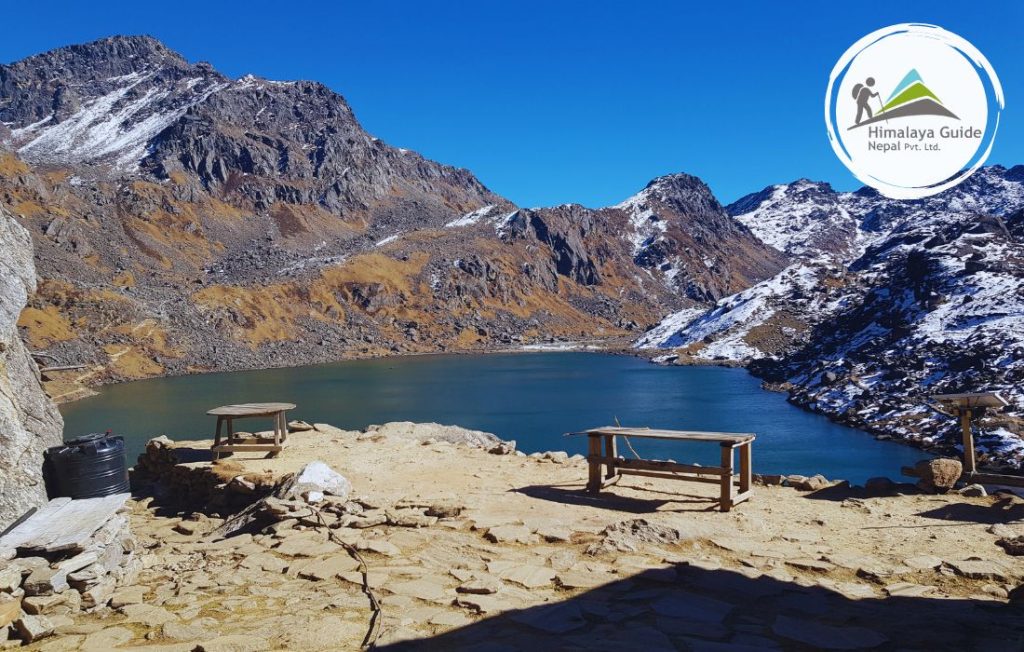
This is the big one. The highest place you sleep on the trek, right on the shore of the holy lake. A handful of stone teahouses, no more. The blankets are thick, but the walls are thin stone, and the night drops below minus eight in late season.
This is the one stop where a good sleeping bag is not optional. Bring one rated to at least minus ten. On a guided trip we provide it, so you are not carrying gear you will use for two nights only. You wake here to still water and total silence. Cold, yes. But few trekkers ever see it.
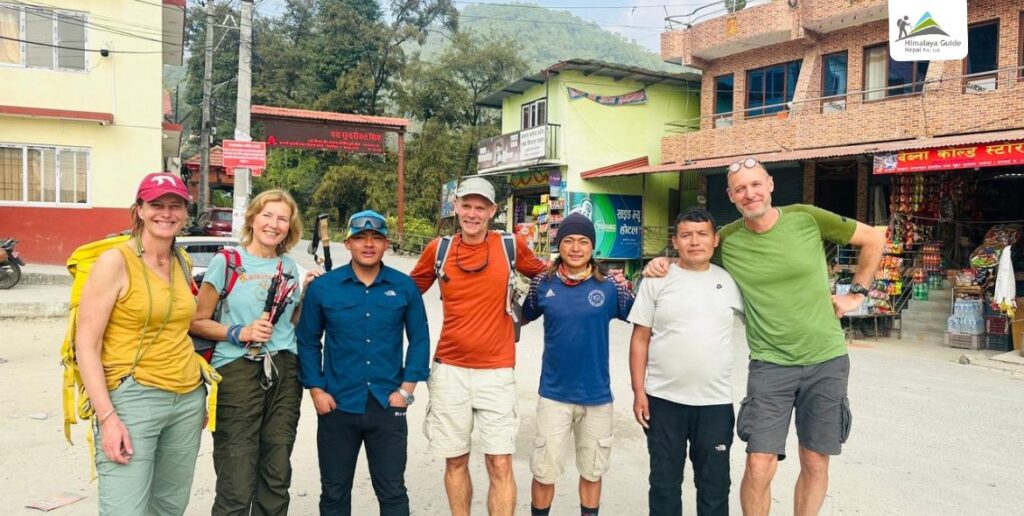
After the lake you cross Lauribina La at 4,610 metres and drop into the Helambu side. If you exit via Sundarijal, you will need one extra permit for Shivapuri National Park. Your guide sorts the permit for the Langtang Gosaikunda Trek. So, don’t worry. You just walk.
Teahouse Rooms, Toilets and Showers
Let us go inside a typical room so nothing surprises you.
The room itself
Picture two single beds. A foam mattress on each, a bedsheet, a pillow, and one or two thick mink blankets. Sometimes a small table. That is the whole room.
Rooms are not heated. Ever. The dining hall has the only stove in the building, so all the evening life happens there. Your room is purely for sleeping. This is why the sleeping bag matters more the higher you climb. Down low, the blankets are enough. Above Sing Gompa, you will want your own bag inside them.
Single rooms exist at low stops. Up high, forget it. There are too few teahouses and too many trekkers. Even paying double will not always find you a room alone at Gosaikunda.
Toilets and hot showers
Bathrooms are shared almost everywhere. Lower down, you might get a western-style toilet. Higher up it is a squat toilet, often in a separate hut outside. Carry your own toilet paper. Teahouses run out, and nobody will have spare at the lake.
Hot showers work like this. Down at Lama Hotel or Thulo Syabru, a real hot shower runs NPR 200 to 800, heated by gas or solar. Higher up, a “hot shower” often means a bucket of warm water and a mug. That is not a downgrade to complain about. It is just what fuel at 4,000 metres costs to carry. A quick wash and you are warm again.
Wi-Fi, Charging and Phone signal
Can you stay online up there? Partly.
Wi-Fi is sold by the day at many teahouses, roughly NPR 100 to 200. It is slow. It cuts out. And above Sing Gompa it mostly stops working. For phone signal, Ncell works up to Lama Hotel. Above that, Nepal Telecom and the local Sky Network do better. A cheap local SIM from Kathmandu is worth it.
Charging your phone or camera costs NPR 200 to 500 per device, per charge. The power is solar and micro-hydro, so it runs out on cloudy days. Bring a power bank. Better yet, treat the high days as an offline stretch. Two days without a screen at a sacred lake is not a hardship. It is the point.
Food and the dining hall at night
Your accommodation and your dinner come from the same family, in the same building. And the dining hall is the heart of it all.
It is the one heated room, warmed by a wood or dung stove in the middle. This is where you eat, dry your socks, and swap trail stories with other trekkers. The menu is simple and filling. Dal bhat is the staple, and it comes with free refills, which is exactly what tired legs need. You will also find momo, thukpa noodle soup, fried Tibetan bread, and fresh yak cheese from the local factories.
Meals cost more as you go higher, because every sack of rice is carried up on someone’s back. Expect USD 5 to 15 per meal, or around USD 20 to 30 a day for three meals. On a guided package, all of that is already covered. Full breakdown sits on our Langtang Gosaikunda trek guide if you want the numbers.
What Accommodation Costs on Gosaikunda Trek
So what does a bed actually cost? It depends on the stop, the season, and whether you go guided or solo.
Here is the rough picture for independent trekkers, in a normal season.
| Stop | Altitude | Room type | Typical room cost |
|---|---|---|---|
| Syabrubesi | 1,420 m | Private, attached bath | NPR 1,000 to 3,000 |
| Lama Hotel | 2,470 m | Twin, shared bath | NPR 500 to 1,500 |
| Langtang Village | 3,430 m | Twin, shared bath | NPR 800 to 1,500 |
| Kyanjin Gompa | 3,870 m | Twin, shared bath | NPR 1,000 to 2,000 |
| Sing Gompa | 3,330 m | Twin, shared bath | NPR 800 to 1,500 |
| Gosaikunda | 4,380 m | Twin, shared bath | NPR 1,000 to 2,500 |
Room prices look cheap on paper, roughly USD 5 to 15 a night. But the extras add up fast. Hot showers, Wi-Fi, charging, and drinks can quietly double your daily spend. Solo trekkers usually land around USD 20 to 35 a day once everything is counted.
On our guided trips, every night is booked and paid inside the package, from Syabrubesi to the last stop. So you never haggle for a room in the dark, and you never arrive to a full lodge. That single worry, gone.


Booking your rooms and the season problem
Teahouses run first-come, first-served. Show up, ask, get a bed. That works fine in quiet months.
But in peak season it breaks down. October trek to Langtang Gosaikunda, November, and the spring during March to May, pack the trail. Kyanjin Gompa and Gosaikunda fill fastest, because they have the fewest rooms and the biggest crowds. Add the Dashain and Tihar festival weeks in autumn and it gets tight. Arrive late in the day and you may be sleeping in the dining hall. Or walking on in the dark to the next village.
Then there is August. During Janai Purnima, thousands of Hindu and Buddhist pilgrims climb to bathe in the lake. Every lakeside teahouse is jammed. Beautiful to witness, brutal to book.
Winter, from December to February, flips the problem. Fewer crowds, but some higher lodges shut for the season and menus shrink. If you want the quiet without the closures, the shoulder days work best.
While you book the package with us, our company has tied up with the hotels there. For the October and November Langtang Gosaikunda trek, we call the teahouses ahead and hold your rooms before the rush arrives.
FAQ about Langtang Gosaikunda Trek Accommodation
Is accommodation included in the Langtang Gosainkunda Trek package?
Do I need a sleeping bag for the teahouses?
Is there Wi-Fi at Gosainkunda Lake?
Can I get a private room or an attached bathroom?
How much is a hot shower on the trek?
Final Say for Langtang Gosaikunda Trek Accommodation
Accommodation on the Langtang Gosaikunda Trek is honest, not fancy. Warm teahouses low down, bare stone rooms up high, and a family cooking your dinner at every single stop. Once you know what each night holds, the mystery drops away, and the trek opens up.
You do not have to figure it out alone. Our guides have booked these rooms in every season, through festival crowds and winter closures alike, so you walk in knowing there is a bed and a hot meal waiting. Ready to plan it properly? Talk to our team and we will sort your Langtang Gosaikunda accommodation from your first night to your last.

