The Gen Z movement, Nepal stabilized, and life returned to normal. All safe for your Travel in Nepal 2025.

Detailed Guide to Rupina La Pass Trekking in Nepal

In Nepal’s Manaslu region’s remote frontiers, Rupina La Pass preserves its untouched state to welcome those interested in unique, off-the-beaten-track trekking endeavors. Rupina La Pass trekking positions itself as a challenging, high-altitude route at 4,720 meters above sea level to provide Himalayan peak vistas and unique wilderness encounters. Journeys through Rupina La offer outstanding mountain views, as well as unique cultural experiences, for visitors who prefer to avoid popular tourist areas during their adventure.

The challenging Rupina La Pass tempts all those seeking a thrilling adventure. It is more than a trek, but also a life-changing journey with an extraordinary experience. Here is your detailed guide to this formidable pass nestled into the Manaslu region of Gorkha District!

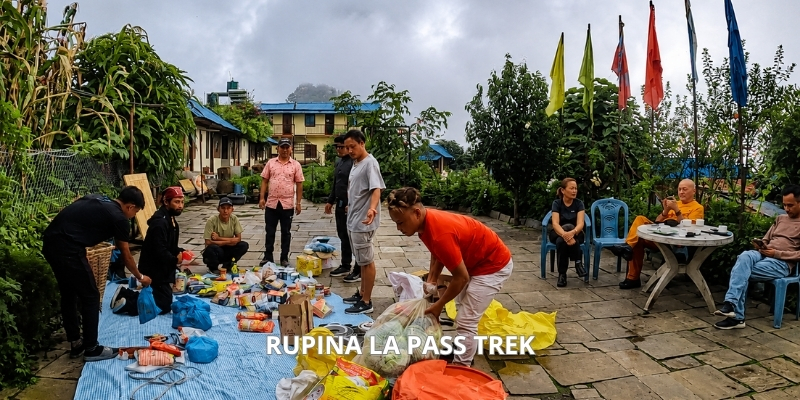
Are you looking for the Rupina La Pass trek? Then you can check the following package.

View Detail: Rupina La Pass Trek
Rupina La Camping Trek

20 Days

US$2500
Rupina La Pass Trek
5.0 (1 Review)

4,720m

How many treks are there that are both remote and culturally and historically significant, provide camping as an accommodation, take you through thrilling passes, and satisfy your trekking hunger? The answer is a few. And in that list lies the Rupina La Pass Trek. It takes you to the ancient Gorkha district, the birthplace of modern Nepal. Further, it takes you to the Tsum Valley, whose Tibetan culture enriches your journey as you walk and culturally immerse yourself in this trek. Then there is camping that allows you to sleep beneath the Van Gogh-esque starry sky.

Rupina La Pass Trek lies in the Gorkha District and starts from the Barpak Village. Throughout the trek, you will pass through the Manaslu Conservation Area. Later, you will enter the Tsum Valley and explore the region. This remote and difficult trek covers around 160 km and takes about 20 days to complete, with an average of 5 to 7 hours of daily walking. The natural beauty of mountains like Baudha Himal, Himal Chuli, and Ganesh Himal ranges on the Rupina La Trek adds to the experience. So, if you are seeking a silent trail with camping as an option, this is the trek for you.

Join this trip

A Remote and Underrated Trekking Destination

Region: Gorkha District, Manaslu region

Trek Duration: 17 to 22 days

Maximum Altitude: 4,720 meters

Trek Difficulty: Strenuous

Cost: $1800 to $3500 per person

The Rupina La Pass trek serves as an alternative to the popular trekking routes in Nepal, including Everest Base Camp and the Annapurna Circuit. Compared to them, the trek is not commercialized and remains relatively unexplored. It is a true hidden gem of the country. Travelers seeking remote adventures can find the ideal destination on this route. It’s off-the-beaten trail takes you through secluded settlements while crossing dense forests, pristine rivers, and alpine pastures. The trek offers magnificent views of towering mountains like Mount Manaslu, Baudha Himal, Himalchuli, Ganesh Himal, Shringi Himal, and many other surrounding peaks.

Rupina La Pass lies in the northwestern part of the country in the Gorkha district. It is situated within the Manaslu region at an elevation of 4,720 meters. Its isolated trail is full of steep up and downhill sections. The high altitude, demanding route, and remoteness make Rupina La Pass a strenuous venture. However, the difficulty is precisely what makes the trek to the pass an exciting and adventurous experience.

What distinguishes this trek is the opportunity to experience the traditional Gurung and Tibetan cultures as it leads through quaint, remote settlements that preserve their historic customs. The trek to Rupina La Pass is truly an underrated and hidden gem that more trek enthusiasts should be aware of.

Trekking Route and Highlights

Starting point: Gorkha

The starting point of the thrilling adventure to the Rupina La Pass is Barpak, a beautiful village in Gorkha. It sits at an altitude of 1,915 meters. The Gurung and Ghale ethnic communities mostly reside in Barpak. Thus, you will get your first immersive cultural experience here. Likewise, you can enjoy gorgeous panoramic views of the Ganesh Himal range. A roadway connects the capital city with Barpak, but you have to drive on a bumpy and off-road. It takes 6 to 7 hours to drive to the village, covering a distance of 130 km. 

It is a scenic drive that takes you past beautiful Nepalese countryside. You will be treated with gorgeous views of lush hills, vibrant bazaars, and small villages. Similarly, you will also drive alongside the Trishuli and Daraundi Rivers. The drive gives a glimpse of the beautiful Nepalese rural side and the diverse landscapes. Hence, it is one of the highlights of the Rupina La Pass Trek.

Major stops and landscapes

One of the highlights of trekking to Rupina La Pass is witnessing the diverse landscapes of the Manasu region. It goes from a low altitude of 1,915 meters to a maximum altitude of 4,720 meters. As you gradually make your way uphill, you will move from lush subtropical forests to alpine meadows, glacial valleys, and moraines. The diverse landscapes and scenery will take your breath away. 

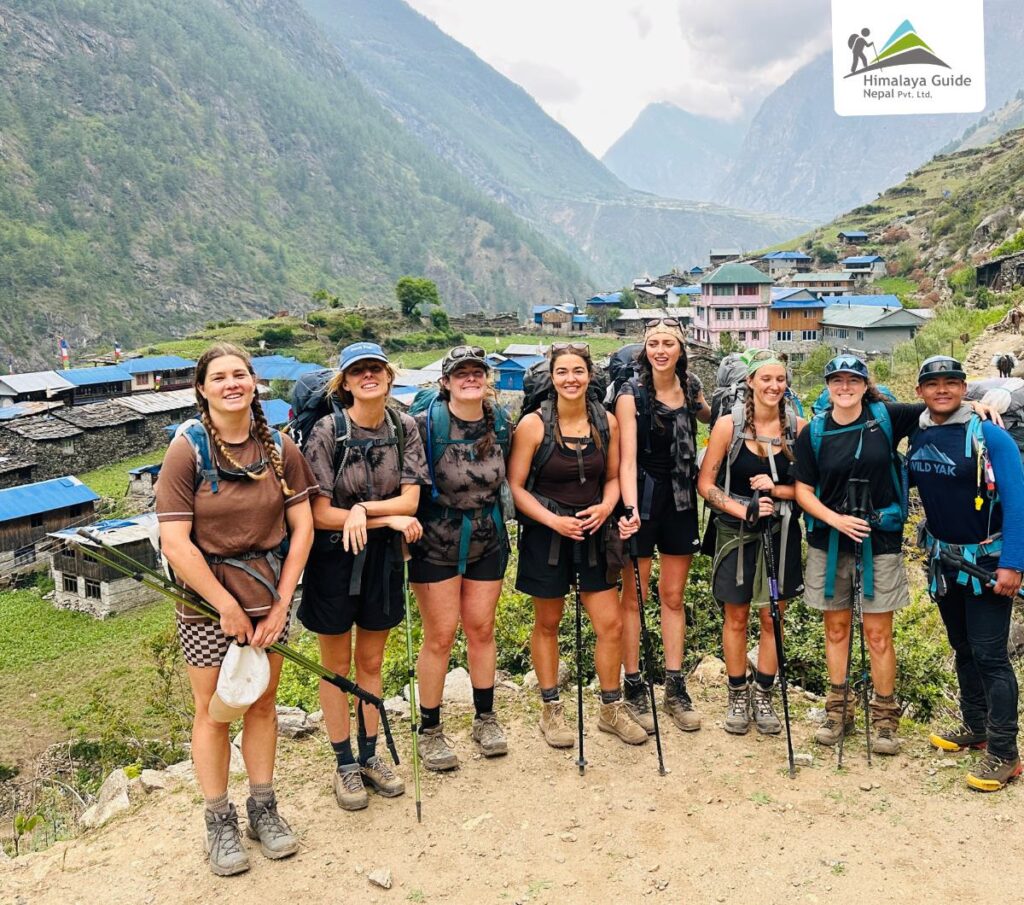
 Photo of Rupina la Pass trekking group

Likewise, you will pass by charming Gurung and Magar villages, picturesque terrace farms, rivers, gorges, lakes, and waterfalls. The major stops along the route of the Rupina La Pass include Barpak (1,915 meters), Gai Kharka (approx. 2,900 meters), Mircha Kharka (3,400 meters), Jorang (3,420 meters), Lho Village (3,180 meters), Sama Gaun (3,500 meters),  Nyak (2,340), and more.

Views of Manaslu and Other Peaks

The panoramic mountain views from the Rupina La Pass are breathtakingly enchanting. For mountain lovers and photographers, it is an incredible opportunity to witness some of the major Himalayan peaks and take striking photos. One of the most notable mountains that you can witness during the trek and from the top of the pass is Mount Manasu (8,163 meters), the eighth-highest mountain in the world.

Similarly, you can also witness other spectacular snow-capped mountains, such as Himalchuli (7,893 meters), the Ganesh Himal range (6,986 meters to 7,422 meters), Shringi Himal (7,187 meters), and Bauddha Himal (6,672 meters), among others. Rupina La Pass is the best viewpoint, but there are also other incredible viewpoints, such as Barpak, Gai Kharka, Rupina La Base Camp, and Jong Kharka.

Hikers will experience magnificent vistas during their descent until they reach the Budhi Gandaki River valley which later combines with the well-known Manaslu Circuit trek.

Best Time to Visit Rupina La Pass: A Seasonal Guide

Nepal’s Manaslu region contains Rupina La Pass which provides adventurous hikers with the chance to explore remote areas and discover spectacular views of the Himalayas while visiting hidden villages. Trekking Rupina La Pass demands the selection of an ideal season because of its height at 4,720m as well as its demanding trails.

Travelers should plan their journey to Rupina La Pass between the spring months of March through May or the autumn timeframe of September to November for the most favorable conditions of stable temperatures, clear visibility, and well-maintained trails.

Spring (March – May)

The months of March to May fall during springtime, and it is one of the best seasons for trekking to the Rupina La Pass. It can be slightly colder in early spring, and there can be some snow at the high passes. However, the weather gradually becomes warmer, and the snow begins to melt. The flora and fauna are also the most active at this time. The lower region trails are lush and green, and the rhododendron forests are in full bloom. Spring offers one of the most favorable weather conditions, with moderate temperatures. The sky is clear, so the visibility is extremely clear. The spring temperature at Rupina La Pass is as follows:

  • Daytime temperature: -2°C to 5°C (28°F to 41°F)
  • Nighttime temperature: -10°C to -15°C (14°F to 5°F)

Autumn (September – November)

The autumn season falls from September to November. It is the peak trekking season, with the best weather and climatic conditions. The temperature is neither too hot nor too cold. There can be slight rainfall in early September, but it typically clears up soon after. Autumn has one of the best visibility rates among all other seasons. The air is crisp, and you can enjoy crystal-clear views of the surrounding snow-capped vistas and the vibrant landscapes. As the autumn season advances, the temperature gradually begins to drop. The autumn temperature at Rupina La Pass is as follows:

  • Daytime temperature: 0°C to 6°C (32°F to 43°F)
  • Nighttime temperature: -8°C to -15°C (17°F to 5°F)

Why Avoid Monsoon And Winter?

The monsoon and summer seasons, from June to August, begin at the same time in Nepal. It means there is heavy rainfall in the lower and hilly regions. The trail gets wet and slippery due to the torrential rain. Additionally, there is a risk of floods, landslides, and mudslides. It can block roadways, and flights can get delayed or cancelled due to bad weather. The heavy raincloud creates poor visibility, so the views are obstructed. It is also hot and humid in summer. Therefore, it is best to avoid trekking to Rupina La Pass during the summer.

Winter, from December to February, on the other hand, is too cold to trek to Rupina La Pass. It begins to snow in higher elevations, and as the season progresses, the snow accumulates. It covers the trail, making it icy and slippery. Rupina La Pass is also buried by snow in winter. Navigating the trail becomes difficult, and trekkers must use mountaineering gear to pass through. The temperature also drops below freezing point, which increases the risk of frostbite and hypothermia. So, it is best to avoid winter for trekking to the pass.

Difficulties of Trekking to Rupina La Pass

Trekking to Rupina La Pass is a challenging trek located within Nepal’s Manaslu region, revealing itself as an exciting but tricky expedition. The trek features unbelievably beautiful vistas, taking trekkers to isolated mountain paths where they can experience the local culture at elevations reaching 4,720 meters.

The path presents demanding obstacles that need both detailed preparation and persistent determination from visitors. The main factors that make trekking to Rupina La Pass difficult are as follows:

High Altitude and Risk of Altitude Sickness

Struggling with the high altitude stands as the major difficulty that awaits climbers during the Rupina La Pass trek. Climbing above 4,000 meters causes the atmosphere to decrease while putting individuals at greater risk for altitude sickness. Trekking in Rupina La Pass causes symptoms including headaches, dizziness, nausea, and shortness of breath, primarily when people ascend too quickly without enough time to acclimatize.

The solution involves proceeding slowly through the trek while stopping for acclimatization steps and maintaining constant hydration. A rapid descent to a lower altitude is necessary when symptoms significantly deteriorate.

Remote and Less Developed Trail

Highly sought-after trekking itineraries, Everest Base Camp and Annapurna Circuit, are not similar to the rare and unfamiliar Rupina La trek. Fewer remote settlements throughout the trek create difficulties in finding appropriate accommodation, food, or emergency medical aid. The trail lacks proper signage, which raises the chances of getting disoriented in the absence of a local guide.

The key to successful mountain climbing lies in acquiring an experienced guide and porter, and packing essential supplies together with creating a detailed planning schedule.

Remote hamlets of Rupina - Manaslu region

Harsh Weather Conditions

Climate conditions in Nepal’s high-elevation places operate beyond normal weather forecast expectations. The trekking terrain becomes challenging because sudden temperature changes combine with wind intensity and snow accumulation, primarily in the winter season. The best trekking seasons do not eliminate problems caused by chilly evenings and unpredictable weather changes.

The weather forecast should become your first step before trekking, so you can pack insulated clothing together with gloves and a sleeping bag suited for extreme cold weather.

Steep And Technical Terrain

Rupina La Pass climb leads travelers through steep rocky terrain, which features noticeable snow accumulation. It makes the ascent exceptionally challenging. The descent after Rupina La proves difficult because it combines rough debris with slippery ice surfaces. Hikers must anticipate days with prolonged physical efforts as they hike through the trail.

Before attempting this climb, all trekking enthusiasts should use collapsible support sticks and select sturdy trekking boots that have reliable traction. Additionally, they should begin their training period in advance to develop essential stamina and muscle strength.

Lack of Teahouses and Basic Facilities

Rupina La Pass has no established teahouses or lodges since it operates as a less commercial trekking destination. Pursuing passes in remote areas requires either delivering your camping household items or hiring assistance from a support team. The route provides limited access to acceptable food resources and drinkable water supplies.

Whenever you travel independently, bring reliable water purification equipment together with sufficient food supplies and all needed camping tools.

River Crossings and Landslide-Prone Areas

The paths turn dangerous during monsoons as they experience landslides in addition to flooded rivers. Several sections require crossing rivers in periods besides the monsoon, but these crossings become hazardous when no bridges or safe stepping stones are available.

The best time to trek in the Nepalese mountains is spring and autumn, and follow directions from an experienced guide who understands safe trekking areas.

Long Trekking Days and Physical Endurance

Moving to Rupina La Pass demands a commitment of 6-8 hours of continual walking each day throughout the trek. The repetitive climb-down pattern will exhaust any trekker, so proper physical conditioning must be achieved beforehand.

Training your body in basic exercises and practicing hiking and strength development before the trek allows better preparation for physical hurdles.

Solo Traveling to Rupina La Pass:

Rupina La Pass lies within Nepal’s Manaslu region as a powerful trekking destination that showcases seclusion and majestic scenery, together with raw nature. Adventure seekers who prefer being alone can appreciate Rupina La Pass, but must expect a challenge along with their thrilling experience.

Rupina La Pass presents significant challenges to lone explorers since it exists above high altitudes and lacks defined trails along with teahouses, but it becomes attainable after proper planning for a journey you will only experience once.

Why Trek Solo to Rupina La Pass?

It is possible to take a solo trek to Rupina La Pass, but some areas, such as the Tsum Valley, may require trekkers to be accompanied by a guide. Those who enjoy trekking alone and at their own pace can choose to trek solo. There are a few reasons why it is a great idea to take a solo trek to Rupina La Pass, which are as follows:

Peaceful and more personal experience

Solo trekking to Rupina La Pass is a chance to immerse oneself in complete solitude while being surrounded by raw and pristine nature. Since it is an underrated trek destination, there are very few trekkers on the off-beat trail to the pass. Hence, you will have a wonderful opportunity to soak in the quiet atmosphere and pristine nature. Some even find the peaceful experience spiritually healing. They have time to reflect on their life and find mental clarity.

Thus, the adventure feels more personal and aids in self-growth. Navigating the challenges, such as strenuous terrain, unpredictable weather, and high altitude, to reach the top of the pass gives a strong confidence boost. For those seeking spirituality, self-discovery, and a peaceful experience, a solo trek to Rupina La Pass is recommended. 

Freedom and flexibility

One of the significant benefits of taking a solo Rupina La Pass Trek is that it provides trekkers with full freedom and flexibility to customize their itinerary. You can enjoy the journey at your own pace, make stops at your convenience, and have full control as per your preferences and requirements. 

Unlike in a group itinerary, you have the flexibility to customize your itinerary. There is no pressure, and you will have more time to admire the beauty of the trail and the panoramic mountain views. Solo trekking is also perfect for spontaneous travelers. You can change your plans and follow your instinct as you please. Moreover, you do not have to share resources with others. 

Real Adventure 

Trekking solo offers a sense of real adventure. Compared to the commercialized treks, the off-the-beaten trails are less crowded and quieter. You are unlikely to meet many trekkers, even during the on-season. The pristine nature and landscapes are left largely untouched and unexplored. Moreover, the rough terrain takes you through lush forests, alpine meadows, glacial valleys, waterfalls, rivers, and streams. 

As you pass through the diverse landscapes and tackle the challenges, you will get a sense of real adventure. There is very limited connectivity along the Rupina La Pass trails. The lack of internet and phone signal may make you feel isolated, but it also offers an opportunity to take a digital detox. The experience is unlike anything else and provides a raw Himalayan trekking experience.

Budget-friendly

It might come as a surprise, but trekking solo is often more budget-friendly. You can cut several costs that you don’t feel are necessary. While trekking solo, you do not have to pay for a guide or porter. Similarly, you can camp out instead of staying in the teahouses. Camping out means you have to cook your own food, but it’s a more cost-effective option. Solo trekkers can also save on transportation costs. They can travel like locals or share transportation for a more budget-friendly option.

Challenges of Solo Trekking to Rupina La Pass

Rupina la pass in manaslu region

Although it is alluring about doing a solo trek by those who love solitutude, this trek is not without its challenges and difficulties that unfortunately cannot be overlooked. You need to consider the following challenges of solo trekking before joining it:

  • Unmarked Trails & Risk of Getting Lost The Rupina La trek, although not incredibly well-marked, has poor routes that can increase the risk of getting lost, particularly in bad weather conditions.
  • Poor Accommodation and Food Options There are barely any teahouses or lodges dotting this trail, so solo trekkers and groups alike will have to depend on camping.
  • Physical & High Altitude Demands – 4,720m, where altitude sickness is a real threat and there is no immediate help if you fall ill.
  • Weather Conditions – The weather can be unpredictable as it can turn rainy in no time and bring strong winds, causing a bad trail to kick up quite fast.
  • Crossing rivers without a bridge – Some of the section requires crossing the river without a bridge, and the landslide-prone areas can pose a risk.

Essential Tips for Solo Travelers in Rupina La Pass

Preparation is key if you are inclined to trek guide solo to Rupina Pass. And here are the things to take care of to make the journey safe and successful.

  • Thorough Research & Route Planning: Get detailed maps, study the trail beforehand, and download offline GPS apps. If you can, speak to local guides or trekkers who have already done the route for firsthand advice.
  • Have Proper Camping Equipment & Gear: Accommodations are sparse, and you’ll require a top-quality tent, warm sleeping bag (-10°C to -20°C), stove, and food for the trek.
  • Check the Best Time to Trek: The best time to travel for more desirable weather conditions and safer trails is in spring (March to May) or autumn (September to November). Do not attempt monsoon or winter treks due to landslides and extreme cold.
  • Get the Necessary Permits: Rupina La is in the Manaslu region, so you will also need a Manaslu Conservation Area Permit (MCAP) as well as a Restricted Area Permit (RAP). Special arrangements via a trekking agency are necessary since solo permits are not issued.
  • Ideally, you have a Local Guide or Porter to hire: If you find it easier to travel alone, the hire of a guide for navigation and safety is of great value here in this remote area. Porters can also carry gear and thus make the trip less physically exhausting.
  • Prepare for Emergencies: Always let someone know where you are going and leave a satellite phone with a responsible person in case of emergency. Make sure you have a complete first aid kit.
  • Bring Enough Food and Water Purification Methods: Given that food options are restricted, bring energy-dense foods. Be sure to carry a reliable water filter or purification tablets to prevent drinking contaminated water.
  • Know Altitude Sickness Symptoms & Acclimatize: Trek slowly with adequate time to acclimatize and break up your trek. Descend as soon as you see symptoms of altitude sickness.

Is Solo Trekking To Rupina La Pass Worth It?

Absolutely! Solo trekking to Rupina La Pass is a highly rewarding adventure that is well worth taking solo. The trek takes you through a secluded Himalayan wilderness, surrounded by nature in a remote valley. The off-beat and challenging trails are not for the faint of heart. Moreover, the high altitude and rapidly changing weather make the journey more physically and mentally demanding. 

However, these challenges are precisely what make the trek worth taking. The Rupina La Pass Trek offers a unique trekking experience, and the sense of accomplishment that you get upon completing the journey is indescribable. However, the venture is extremely challenging and recommended only for seasoned hikers prepared to navigate the wilderness. 

We don’t recommend Rupina La for those new to high-altitude solo trekking unless they have experience on well-marked trails, where guides ensure safety while allowing for the solitude of solo travel. Although it requires meticulous preparation both physically and mentally, the experience is worth the effort.

Essential Preparations for the Rupina La

The Rupina La is remote and still developing so preparation is vital. Usually, trekkers should be physically fit and be experienced in high-altitude trekking. It requires a well-structured itinerary, adequate acclimatization, and proper gear including cold-weather clothing.

The trail is less marked and navigation can be difficult hiring a guide or joining a trekking agency is highly recommended.

Physical Fitness & Training

It requires meticulous preparation to train yourself for the Rupina La Pass Trek. The steep and remote trails, with their arduous uphill and downhill climbs, will challenge your physical fitness and endurance levels. It is crucial to understand the challenges presented by the trek so that you can prepare adequately for it. To best prepare yourself, start training and exercising a few months before your trek.

Some of the best exercises recommended for the trek include cardiovascular, strength-building, and endurance-building exercises. Jogging, running, cycling, stair climbing, and swimming are especially beneficial for building your cardio. You can also undertake exercises like squats, lunges, deadlifts, planks, and step-ups. Similarly, you can also simulate the trekking conditions by hiking with a weighted backpack. You can start with simple exercises and then gradually increase the intensity. Also, train on varied terrain to further stimulate the trekking conditions to Rupina La Pass. 

Gear & Equipment

Clothing & Footwear

  • Moisture-wicking thermal top and bottoms
  • Down jacket or insulated/ fleece jacket
  • Long-sleeved, lightweight t-shirts and shirts
  • Lightweight trekking pants
  • Warm trousers
  • Hiking shorts
  • Sun hat or warm hat
  • Scarves or buffs
  • Lighweight or  warm gloves
  • Moisture-wicking undergarments
  • Comfortable trekking boots with good ankle support
  • Camp shoes or sandals
  • Moisture-wicking trekking socks
  • Warm socks
  • Gaiters

Gear

  • Adjustable trekking pole
  • Backpack (40 to 50 liters)
  • Daypack (20 to 30 liters)
  • Raincover
  • 4-season sleeping bag (rated to at least -15°C)
  • Sleeping bag liner
  • Thermal water bottle
  • Portable water filter or water purification tablets
  • Power bank
  • Adapter and charger

Supplies & Others

  • Toiletries (biodegradable soap, toothpaste, toothbrush, wet wipes, sanitizer, toilet paper, quick-dry towel, etc.)
  • Camera or binoculars
  • Snacks (such as chocolate, energy bars, and nuts)
  • Book or journal
  • First aid and personal medication

Permits And Regulations

Trekkers will require a Manaslu Conservation Area Entry Permit (MCAP) to trek to Rupina La Pass. However, depending on the route, you may have to access the restricted area. It will require a Restricted Area Permit (RAP). You can obtain the permit from a registered trek agency in Kathmandu. While trekking through these preserved areas, it is important to follow the local rules and regulations. Similarly, be respectful of cultural heritage. 

The costs of MCAP are:

  • SAARC Nationals: NPR 1000 per person
  • Non-SAARC Nationals: NPR 3000 per person
  • Children under age 10: Free entry

The costs of RAP are:

  • September to November: USD 100 per person for the first week, and USD 15 per day after the first week.
  • August to December: USD 75 for the first week, and USD 10 per day after the first week.

Hiring Guides And Porters

There are several benefits of hiring a guide and a porter for trekking to Rupina La Pass. A licensed and experienced guide helps to make the trek safe and more convenient. It is easier to navigate the off-beat and lesser-developed trails to the pass. The guides also have expertise in the local region and its culture. They provide knowledge and a more immersive experience. Similarly, they act as a communication bridge between trekkers and locals. Moreover, guides are also professionals trained to provide first aid in emergencies. 

Porters also play a crucial role in making the journey more comfortable. They carry your heavy backpack and relieve you of your physical burden. Trekking on challenging terrains and steep trails with luggage can easily cause physical exertion. There is also the risk of injuries and accidents. Thus, porters provide vital support during the trek. They also help make the journey safer, allowing you to enjoy the trek without any burden.

Therefore, it is highly recommended to hire a licensed guide and a porter for trekking to Rupina La Pass. You can hire them through a registered trek agency like Himalayan Guide Nepal. While hiring a guide, make sure they are licensed under the Nepal Tourism Board (NTB). Additionally, inquire about their experience and verify their references. Although tipping your guide and porter is not mandatory in Nepal, it is a highly appreciated gesture.

Conclusion

Rupina La Pass trek is a wonderful option for people who want to discover an off-the-beaten-path trek in Nepal. Raw beauty, rich cultural heritage, and steep uphill terrain make it an unforgettable trekking experience. The trek is a great option for those who want to experience Nepal beyond its famous hiking trails, as it offers solitude, adventure, and stunning Himalayan vistas.

We hope you find our detailed guide to Rupina La Pass Trekking in Nepal useful. If you’re interested in joining this incredible journey, please don’t hesitate to contact us. Here at Himalayan Guide Nepal, we will help you make your dream trek a reality!

Man Raj Gurung

Man Raj Gurung

Man Raj Gurung was born in Lamjung. Because he is aware of the culture, religion flora fauna, And people of Kathmandu and out of Kathmandu Valley. Gurung has been working for many years in the tourism sector. He was working very hard as a trekking guide, climbing guide, and now a tour guide. Gurung is a young energetic guy with a smiley face. So, he has completed Trekking and Tour Guide training from the Ministry of Culture, Tourism, and Civil Aviation Government of Nepal. He is a well-known tour guide because of working with him for a long time. And all the guests are very happy and very nice feedback from him.

Share:

Latest from our Blog

Read More

Ready to Start
Your Adventure?

Join thousands of happy travelers who
Choose Himalayan Guide Nepal Pvt.Ltd..

Plan Your Trip