
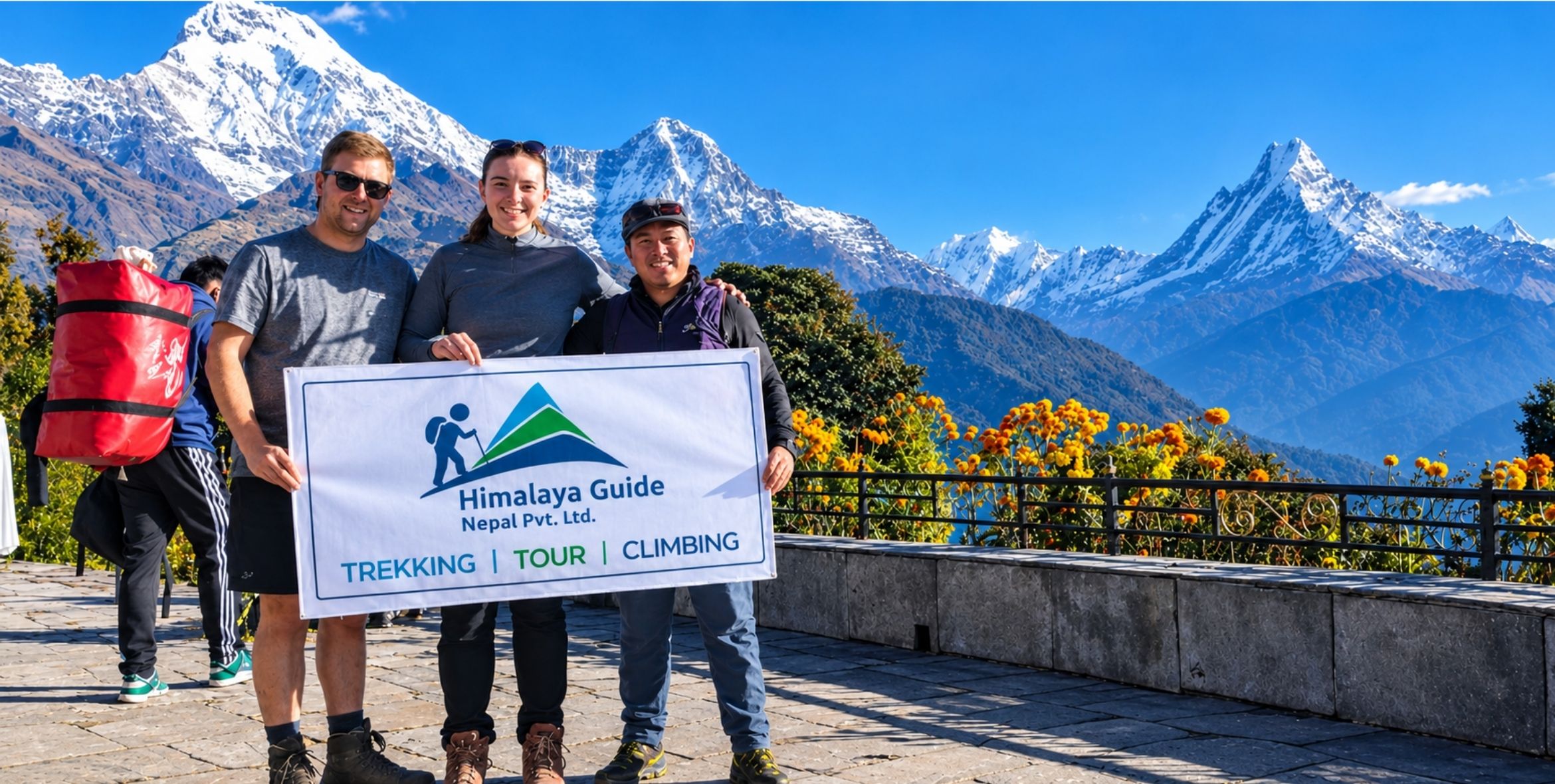
Chhomrong is a major Gurung settlement and one of the most beautiful locations in Nepal’s Annapurna region. At an elevation of 2,170 meters above sea level, the village serves as a gateway to Annapurna Base Camp and the last developed settlement before heading to higher-altitude locations. The name of the village, Chhomrong, is derived from the Gurung language, which means “place of many birds” or “flat place on a mountain.”
Although Chhomrong lies on the way to Annapurna Base Camp and serves as an overnight stop point, the village is much more than that. It spreads across the hillside where the landscape and character of the trek start to change. The village offers direct views of Mount Annapurna South, Hiunchuli, and Machhapuchhre, adding to Chhomrong’s overall beauty.
From Chhomrong onward, the landscape changes noticeably. Around the village, you still get a view of mountain settlements, terraced fields, shops, cafes, and views of surrounding hills. Beyond the village, the trail descends toward Chhomrong Khola, then climbs toward Sinuwa and enters dense forest. This makes Chhomrong a natural transition point between the inhabited middle hills and the more enclosed mountain environment of the Annapurna Sanctuary.
One of Chhomrong’s most unique and memorable features is its stone staircase. The trek from the village takes you via a long descent on stone steps. The stairs can also feel different depending on the direction of travel. On the way into the Sanctuary, the descent can be challenging on the knees. On the return, the same staircase becomes a long uphill climb when your legs are already tired.
Where is Chhomrong Village?
Chhomrong lies within the Annapurna Conservation Area in Nepal’s Kaski District, in the Annapurna region. It lies in the Modi Khola Valley on a ridgeline above the Modi River. You can reach Chhomrong via several routes, including from Jhinu Danda, Ghandruk, and other Annapurna Trekking Trail. Its location makes it an important stop on the Annapurna Base Camp and Annapurna Sanctuary routes.

Chhomrong lies at an elevation of 2,170 m/ 7,120 ft. However, the exact elevation varies because it sits across a steep hillside rather than on a single flat point. Geographically, the village lies on the southern side of the Annapurna massif. The village overlooks the Modi Khola gorge, the river valley that leads north towards the Annapurna Sanctuary.
Likewise, Chhomrong is close to Pokhara in a straight-line geographic sense, but no road connects them directly. Reaching there involves a combination of road travel and trekking. A common route from Pokhara involves driving toward the trekking trailhead and then trekking through places such as Tikhedhunga, Ulleri, Ghorepani, Tadapani, and Chhomrong. But there are other approaches as well; whichever you take depends on your travel itinerary.
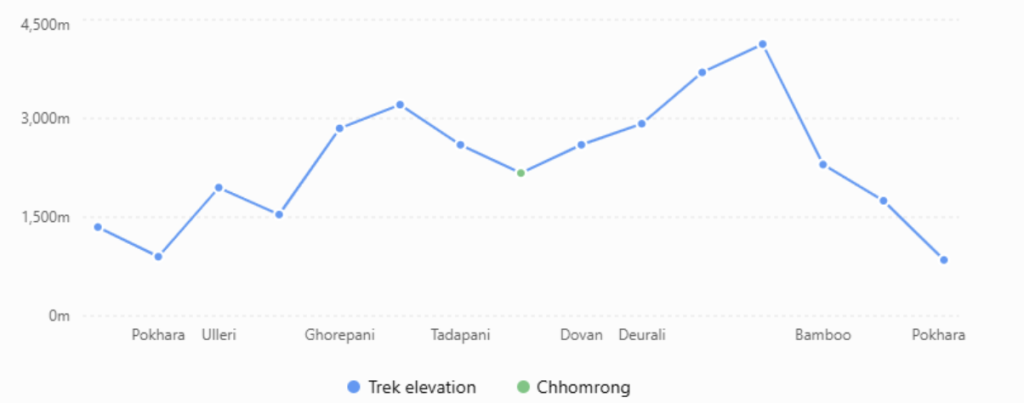
Chhomrong Village Elevation & Altitude Chart
Chhomrong Village sits at approximately 2,170 meters (7,120 feet) above sea level and is one of the major villages on the Annapurna Base Camp (ABC) route. The trek starts at an elevation of 1,950 meters, then descends through 1,540 meters, and again ascend to 2,850 meters, 3,210 meters, and 2,600 meters before getting to 2,170 meters at Chhomrong. But the elevation change depends on the itinerary you choose.
Chhomrong Village Elevation at a Glance:
| Route / Location | Elevation |
|---|---|
| Kathmandu | 1,350 m |
| Pokhara | 850 m |
| Ulleri | 1,950 m |
| Tikhedhunga | 1,540 m |
| Ghorepani | 2,850 m |
| Poon Hill | 3,210 m |
| Tadapani | 2,600 m |
| Chhomrong | 2,170 m |
| Dovan | 2,600 m |
| Deurali via Himalaya | 2,920 m |
| Machhapuchhre Base Camp | 3,700 m |
| Annapurna Base Camp | 4,130 m |
| Bamboo | 2,300 m |
| Jhinu Danda via Upper Chhomrong | 1,750 m |
| Siwai | 1,530 m |
| Pokhara | 850 m |
Chhomrong Altitude Chart:
Is Chhomrong Village Difficult to Reach?
Chhomrong (2,170 m) village lies within the Annapurna Conservation Area in Nepal’s Kaski District on the southern side of the Annapurna massif. Chhomrong Village is moderately difficult to reach but not technically challenging. What makes reaching the village physically challenging is the steep staircases and elevation changes. The difficulty also depends on the route you take.
One of the most common way to get to Chhomrong is via Jhinu Danda and Ghandruk. From Jhinu Danda, it is a steep uphill walk of about 1-2 hours to Chhomrong. The pathway involves stone steps and an elevation gain of about 400-500 meters. But the short duration feels harder once you start trekking.
Similarly, if you reach Chhomrong from Tadapani after the Poon Hill hike, the route is physically challenging, though non-technical. The walk covers 10 km and takes 5-6 hours, depending on walking pace and trek conditions. The trek’s difficulty comes from the constant elevation changes. As you leave Tadapani, the route descends through dense rhododendron forest, then crosses streams and a suspension bridge near Kimrong Khola, then begins the long climb towards Chhomrong.
This route differs from others to Chhomrong because it loses altitude early on, then gains elevation. The final walk to Chhomrong is the most challenging because it involves walking on stone steps.
Moreover, reaching Chhomrong is especially challenging because there is no direct road access to the village, and the journey combines road travel and trekking. So, reaching the village takes several hours of trekking, which can be physically challenging for those not used to hiking.
Major Highlights of Chhomrong Village
Authentic Gurung Village and Culture
Chhomrong is one of the largest traditional Gurung settlements in the Annapurna region. The strong presence of Gurung culture makes the village a notable cultural highlight of the trek. Gurung community inhabits the region, allowing trekkers to see their traditional mountain lifestyle and way of living.
Mountain Views
Chhomrong Village lies directly opposite the southern face of the Annapurna massif. So, another highlight of the village is its closer, clearer views of peaks like Annapurna South, Hiunchuli, and Machhapuchhre. The mountain looks especially stunning in the morning, when sunlight hits the peak and turns it a brilliant golden color.
Gateway to the Annapurna Sanctuary
Chhomrong is more than just a scenic mountain village; it is a key stop on the Annapurna Base Camp Trek and one of the last major settlements before the trail enters the Annapurna Sanctuary. Its location makes it a natural transition point between the Gurung community and the high Himalayan landscape ahead.
ACAP Checkpoint
Another highlight of the Chhomrong Village is the Annapurna Conservation Area (ACAP). The village houses an official ACAP permit checkpoint where entries into the sanctuary are formally recorded. It also shows that you’re traveling through a protected Himalayan landscape where tourism is managed to help conserve the region’s ecosystem.
Unique Houses
One thing that makes Chhomrong visually different from an ordinary trekking village is its traditional Gurung-style houses. The homes are built with locally available stone and finished with slate roofs. Likewise, wooden balconies and doors add unique character to the buildings. The houses fit naturally into the steep hillside, with narrow stone-paved paths and stairways that connect the village to different parts of the region. Although many buildings have been modernized, these traditional houses remain a major highlight.
Best Time to Visit Chhomrong Village
The best time to visit Chhomrong Village is during spring and autumn, when clear mountain views, pleasant temperatures, and favorable walking conditions surround the village. However, each season gives Chhomrong a slightly different character.
Spring: Best for Flowers and Village Scenery
From March to May, Chhomrong becomes colorful as rhododendrons bloom across the surrounding hills. The stone-paved paths, terraced fields, traditional houses, and green hills create a beautiful village setting. Clear mornings also provide impressive views of Annapurna South and Machhapuchhre (Fishtail).
Autumn: Best for Clear Mountain Views
September to November is ideal for experiencing Chhomrong’s mountain setting. After the monsoon, the air becomes clearer, making the surrounding peaks easier to see from the village. October and November are especially good for enjoying the village’s open viewpoints and walking through its narrow stone-paved trails.
Winter: Best for a Quieter Village Experience
From December to February, Chhomrong becomes quieter, with fewer visitors compared with the peak autumn and spring seasons. The mornings and evenings are cold, but clear winter days can offer excellent mountain views.
Monsoon: Greenest but Wet
June to August brings frequent rain, but the surrounding hills become greener. The village looks especially green, though wet, slippery trails can make reaching Chhomrong less comfortable.
Food & Accommodation in Chhomrong Village
Chhomrong has good food and accommodation options. It is one of the better-developed settlements along the ABC route, with a good selection of teahouses, restaurants, bakeries, and lodges. Facilities become more basic as the trail continues toward the higher-altitude sections.
Food in Chhomrong Village
Food in Chhomrong Village has varied options and more than you might expect from the Himalayan area. The village teahouses serve food, with Dal Bhat as a staple. Yet, you can also find momos, thukpa, Tibetan bread, chow mein, pancakes, pasta, and pizza. What makes the village’s food interesting is that some lodges have developed their own specialties. Chhomrong Cottage, for example, is known among trekkers for freshly baked chocolate cake and banana pancakes, making it a popular place to stop for something sweet after a long day of trekking.
Other bakeries and coffee shops are also available in the Chhomrong Village. Shops like Smriti German Bakery and coffee shops give trekkers an alternative to the standard teahouse meal. Because Chhomrong is a large settlement on the ABC trek, its food choices are broader than those at other locations along the route.
Accommodation in Chhomrong Village
As one of the larger settlements along the route, Chhomrong offers a range of accommodation options spread across the upper and lower parts of the village. Lodging options range from small, family-run guesthouses to lodges with attached restaurants and private rooms. Where you stay in Chhomrong matters: Upper Village lodges offer better views of the mountain peaks. But if you’re heading to Annapurna Base Camp, the lower valley can be more convenient.

