Want to trek in Nepal when it is at its finest, with clear skies, fresh green landscape, and dry trek routes? Trek in the autumn season. During this time, the mountains look crystal-clear, the weather is stable, the hills are green after the monsoon, and the whole atmosphere looks as pretty as it does in photos. From September to November, autumn is one of the best times to explore Nepal’s mountain beauty.
Autumn is also the time of Dashain and Tihar, two of Nepal’s biggest festivals. So, trekkers can enjoy not only beautiful landscapes but also experience Nepal’s culture, traditions, and celebrations. The season brings the best of both worlds: amazing landscapes, unique festivals, and cultural immersion. As a result, autumn is the time of joy everywhere.
However, autumn is also the busiest trekking season as it is the peak trek season in Nepal. So, well-known treks like Everest Base Camp and Short Annapurna Base Campare crowded, teahouses are packed, and pathways are also crowded. That’s why this page has selected some treks that offer a once-in-a-lifetime experience while handling the peak season well:
The Manaslu Circuit Trek is a two-week-long adventure in Nepal’s Himalayas that goes around the eighth-highest mountain peak in the world, Mount Manaslu. Opened to trekkers in 1992, the route is less crowded than the other well-known Everest and Annapurna treks. Still, the Manaslu trek is gaining popularity yearly for its raw beauty, peaceful trails, and personal experience with the Himalayas.
The journey to the Manaslu Circuit is a moderate-to-strenuous trek that starts with a drive to Machhakhola and ends in Besisahar, taking in the exciting Larkya La Pass (5,106 m) also called Larke Bhanjyang . Although the trek doesn’t involve any technical climbing skills, it does require a good fitness level, and having previous trekking experience is helpful. This is because the trek takes you through varied terrain, long trekking days, challenging passes, and continuous elevation gain.
The trek to the Manaslu Circuit is stunning because it takes place within Manaslu Conservation Area, a protected mountain region with 11 distinct forest types ranging from lowland sal and pine forests to high alpine meadows and glaciers. Likewise, the protected area is home to 33 species of mammals and shelters over 110 bird species and 2000 species of flowering plants. Besides, it’s home to about 9,000 residents, primarily of Gurung, Tamang, Tsumba, and Nubri-Tibetan ethnic groups. Thus, the trek lets you experience Buddhist culture and its traditions throughout the adventure.
One unique aspect of the Manaslu treks is that it borders Tibet. Therefore, trekking in this region requires a restricted area permit, along with the MCAP (Manaslu Conservation Area Permit), ACAP (Annapurna Conservation Area Permit), and Chumnubri Rural Municipality Entry Permit. Also, trekking in the region requires you to be accompanied by a licensed guide through a registered trekking agency.
The best trekking time for the Manaslu Circuit is March-May (spring) and September-November (autumn), when skies are clear, and Larkya La is most reliably open and safe to cross. The major highlights of the trek involve walking along the Budhi Gandaki River gorge while enjoying views of Mount Manaslu, Ganesh Himal, Himlung Himal, and Annapurna II. Manaslu Circuit trek is a 14-day moderate trek starting with a drive to Machha Khola, highlighting Larkya La Pass (5,106 m) at just $746.
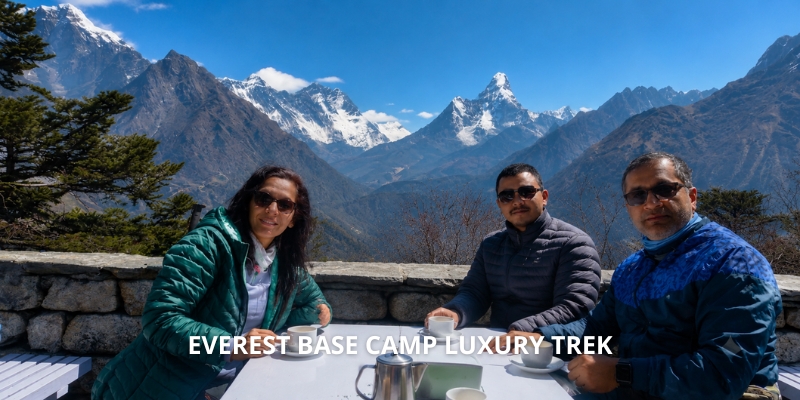
Teahouses along the Everest Base Camp can be quite rustic, right? That’s exactly why we have also designed a luxurious escape in the Himalayas with our Everest Base Camp Luxury Trek. While authentic five-star lodges aren’t possible on the trail, we take you to the finest boutique lodges, each with private rooms, heated floors, hot showers, and cozy lounges. Plus, we offer personalized services from dedicated guides, porters, and chauffeured transfers. You’ll start each morning with a gourmet breakfast and unwind each evening by the fire, all without sacrificing the authentic mountain atmosphere.
Over two unforgettable weeks, you’ll follow the classic EBC path through Sagarmatha National Park with hassle-free charter flights to and from Lukla, gourmet-packed lunches for your daily hikes, and enriching cultural visits with Sherpa families. Before and after your trek, enjoy five-star hotel stays in Kathmandu to round out your journey. From sunrise on Kala Patthar to serene monastery visits, this trek blends rugged adventure with an elevated level of service and comfort.
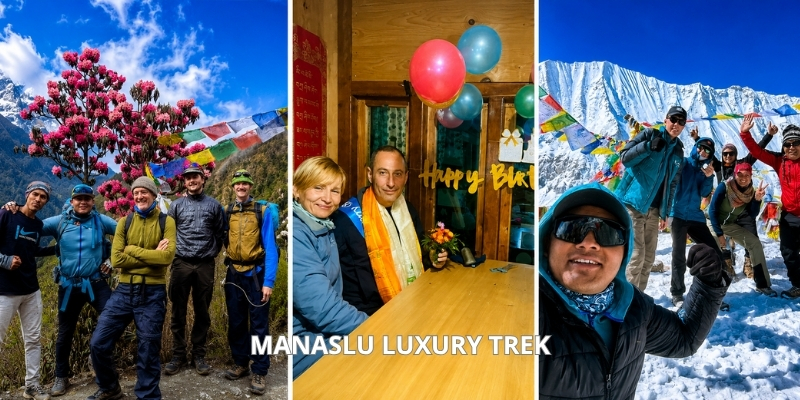
Not every Himalayan trek asks you to choose between comfort and raw adventure; the Manaslu Luxury Trek brings both into the same journey. Set beneath the world’s eighth-highest peak, Mt. Manaslu (8,163 M), this trek offers a trip through the heart of the Manaslu region, where remote valleys and centuries-old monasteries remain untouched. You experience the wild landscape without the usual rough edges, as comfortable lodges, private 4WD transportation, and hot showers provide the comfort to stay energized.
The journey unfolds through dense forests and past emerald glacial lakes, where the connection to local culture remains real and unfiltered. You are guided with thoughtful planning and quality meals to keep your pace steady as you move deeper into the region. This curated approach ensures nothing feels rushed or staged and allows full immersion in the mountain rhythm while still enjoying modern comforts, including private rooms in Namrung and Lho, a rare feature on such remote trails.
The defining moment arrives at Larkya Pass (5,160 M), where wide Himalayan views meet the reality of high-altitude exposure. But with enhanced safety protocols and oxygen support in place, the challenge remains real while risks stay professionally managed. Thus, this is a carefully designed luxury trekking experience where comfort supports the journey without replacing it, leaving the Himalayas exactly as they should be: powerful, remote, and unforgettable.
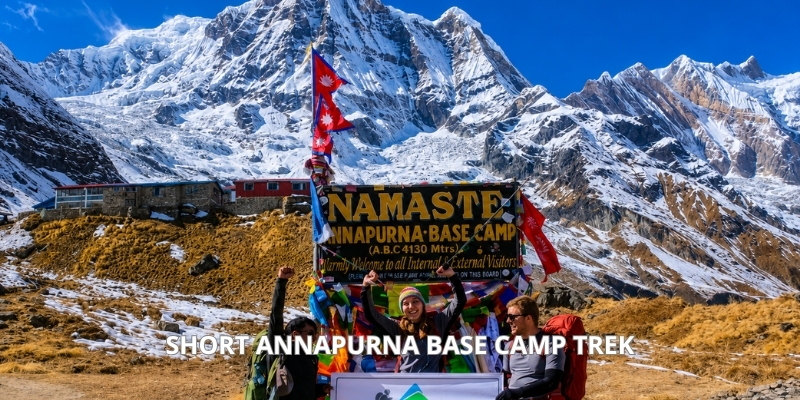
The Short Annapurna Base Camp Trek offers a streamlined 8-day version of the classic ABC journey, designed for trekkers who want to visit Annapurna Sanctuary without a long-term commitment. The faster pace is manageable for experienced hikers, but beginners should be ready for a physically demanding adventure. Even with fewer days, the trek still delivers the full Himalayan atmosphere, rugged trails, dramatic scenery, and an authentic mountain feel.
The main difference in this shorter itinerary is that it skips the Ghorepani-Poon Hill section. Aside from that, nothing essential is left out. You still get sweeping views of Annapurna I, II, and III, Machhapuchhre, Hiunchuli, and the surrounding peaks. Condensing the journey only makes it more adventurous and rewarding. So, if you want to complete the Annapurna Base Camp Trek in less time without sacrificing the core experience, this is an ideal option.
Ruby Valley Trek is a unique trek in Nepal for travelers, mainly because it is a less touristy region. It lies in the north-central countryside region of Nepal, the Ruby Valley, surrounded by the more famous Langtang National Park in the east and the Manaslu Conservation Area in the west. It is also called the Ganesh Himal region, as you trek along the foothills of the spiritual Ganesh Himal range, including the majestic Ganesh I (7,422 m), Ganesh II (7,118 m), and Ganesh IV (7,104 m).
There are several routes for the Ruby Valley Trek, but the most scenic and popular trail is the one that leads through the villages of Somdang and Tipling. You’ll first take a drive to Syabrubesi, the gateway to the Langtang Region. Then, you’ll walk through dense pine forests, and you’ll have chances to spot species of plants and wildlife of the Langtang National Park. The highest point of the trek is the Pangsang La Pass (3,842 m), which offers views of Ganesh Himal along with Langtang and Manaslu ranges. You might also see distant views of the Annapurna range on clear days.
You’ll stay among the Tamang and Gurung communities in their homestays, where you can also enjoy local dishes and learn about their authentic local culture and lifestyle. You can witness and join a cultural Fishing program, hike to the natural hot springs, and many other local activities with local inhabitants. It only takes 9 days, so if you have time, you can continue to the Manaslu Trek or the Langtang Valley Trek after crossing Pangsang La Pass.
Island Peak with Everest Three Passes Trek – 20 Days
5.0 (3 Reviews)
6,189m
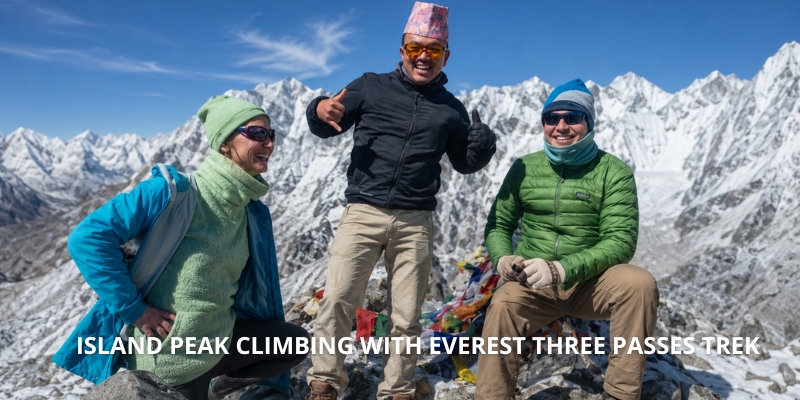
For adventurers dreaming about the ultimate Himalayan trip, the Island Peak with the Everest Three Passes Trek is a perfect venture. The trek combines high-altitude trekking with mountaineering. During the journey, you will cross three of the high mountain passes of Nepal: Renjo La Pass (5,446 m/17,520 ft), Cho La Pass (5,420 m/17,782 ft), and Kongma La Pass (5,535 m/18,159 ft), and summit the popular trekking peak, Island Peak (6,189 m).
The challenging Island Peak with Everest Three Passes Trek takes you to the heart of the Everest region. It takes you through dense rhododendron forests, alpine meadows, barren mountain paths, glaciers, and moraines. The journey also offers some of the finest views of mountains over 8,000 m and other iconic peaks, such as the Ama Dablam, Pumori, Cholatse, Khumbutse, Khalanga, Nuptse, and Lhotse. Similarly, you will pass by famous Sherpa settlements like Phakding, Monjo, Namche Bazaar, Tengboche, Dingboche, Chhukung, and more. En route, you will pass by numerous prayer wheels, flags, Buddhist monasteries, monuments, mani walls, and chortens.
The journey provides you with an opportunity to observe and immerse yourself in the distinctive customs and cultures of the Sherpa people. It also provides deeper insight into the unique Himalayan lifestyle. The trail enters Sagarmatha National Park from Monjo. It is the habitat of unique and rare wildlife like Musk deer, Himalayan tahr, blue sheep, blood pheasant, crimson-horned pheasant, yak, and more. If you are lucky, you may catch their sightings in their natural habitat, though the chances of seeing them are rare.
Rising above the Lhotse Glacier, Island Peak is a stunning mountain in the Chhukung Valley. Ascending the peak is challenging but extremely rewarding. As you stand on top of the peak’s summit, you have unparalleled views and a sense of achievement that will leave you awestruck. Conquering the three high passes is also an incredible feat in itself. The challenges, mesmerizing views, and rich cultural interactions make the Island Peak with Everest Three Passes Trek a unique and extraordinary venture.
At Himalaya Guide Nepal, we offer the finest rates and services for the Everest Three High Passes Trek, including the Island Peak climbing package. Our itinerary is created to fit our client’s requirements and preferences. Likewise, our staff of knowledgeable, experienced Sherpa Trekking Guides and Porters will assist you with every step of the journey. They will guide you, take care of your general needs, and make your trip unforgettable.
View Trip Detail
Reasons Why Autumn Is Nepal’s Most Popular Trekking Season
Ask anyone why autumn is Nepal’s most popular trekking season, and they’ll answer “because of the clear sky and stable weather”. True, but that’s only a surface-level answer, and the season offers much more than that. The pathways, local services, food, rivers, safety, festivals, and overall natural scenery play a crucial role in making autumn Nepal’s best trekking season.
Fresh Routes
Autumn arrives after the monsoon ends, washing away dust and loose rocks. After the heavy rain, locals also repair and maintain trekking trails. As a result, the season lets trekkers enjoy cleaner and better-maintained pathways, the best version of the route all year.
Time of Everything Ready
During the monsoon, most guides, porters, and teahouse owners pause operations and take on other jobs. When autumn starts, they return to the trekking routes. Teahouses also restock necessary items and supplies to serve trekkers. Thus, hikers get good services in the season, even when it is crowded.
Fresh Food
Autumn is Nepal’s harvest time in most parts. So, teahouses use fresh local vegetables, grains, and other food items instead of relying on supplies stored months earlier. This means trekkers get fresh food and more choices during their trek in Nepal.
Rivers and Streams Are Safe to Cross
Unlike the monsoon, rivers are calmer and beautiful. Likewise, the unpredictable water levels from July to August also decrease. On routes such as Manaslu and Langtang, trekkers can safely cross suspension bridges over flowing waterfalls.
Reliable Helicopter and Rescue Access
Helicopter rescue and evacuation depend on visibility and wind conditions, both of which are excellent in autumn. Therefore, autumn’s stable weather conditions make rescue easier, faster, and more reliable than in any other season.
Experience Dashain and Tihar
Autumn coincides with Nepal’s major festivals, Dashain and Tihar. Beyond the obvious cultural experience of the Himalayas, autumn trekking offers a unique glimpse of Nepal’s cultural charm in the lower regions. Also, trekking during this time lets you see local celebrations, experience Nepalese culture more closely, and get involved.
Golden Autumn Scenery
In autumn, Nepal’s landscape shifts from green to gold as birch, pine, and oak forests glow in amber, rust, and yellow. During October, forests and terraced hillsides turn to gold, red, and copper. The sunlight is also stunning, with mountain views being especially beautiful.
Clear Mountain Views
Another major reason why autumn is the best trekking season in Nepal is the clear mountain views. As the monsoon washes dust and pollution from the air, the sky clears. This means you can enjoy mountain views along trekking routes and at viewpoints. For photographers and mountain lovers, no other season can match autumn’s charm.
Stable and Dry Weather
Autumn has some of the most stable weather, though it still changes often. Rain is less frequent during the season, especially as it shifts toward October and November. Stable weather makes trekking more comfortable, along with comfortable temperatures. Lower areas are warm enough for comfortable walking, while higher areas can be cooler but are more suitable for trekking than the extreme cold of winter. You can also enjoy a day’s walk without dealing with summer heat or freezing winter temperatures.
Autumn Trek Vs Other Season Treks In Nepal
Autumn isn’t called the “best trekking season in Nepal” for no reason. Once you compare the autumn season with the other three seasons, you’ll get to know why the season got the title and why not the others. But “best season” doesn’t mean it has no drawbacks, and “not best” doesn’t mean it has only cons. Each season has unique characteristics; autumn wins for reliability and visibility.
Factor
Autumn
Winter
Spring
Summer/Monsoon
Sky and Visibility
Outstanding,clear blue skies and sharp mountain views
Generally clear, but snow and cold can affect higher trails
Very good though haze can affect later in spring
Cloudy with limited visibility
Weather
Stable, dry, and comfortable
Cold, especially at higher elevations
Moderate and stable, especially in the mountains
Wet, humid, and unpredictable
Mountain Views
Exceptional
Excellent
Excellent
Obstructed by clouds
Rainfall
Very Low
Very low
Low
High
Route Condition
Dry and comfortable
Snow and ice cover the high-altitude trails
Dry and good
Wet, muddy, slippery, and sometimes affected by landslides
Temperature
Comfortable daytime temperatures and cool mornings/nights
Cold to extremely cold at higher elevations
Pleasant during the day and cool at night
Warm and humid at lower elevations
Landscape
Dense and freshly washed after monsoon, with golden autumn shades
Snow-covered landscapes and amazing mountain scenery
Rhododendrons in bloom, colorful forests and greenery
Autumn Treks in Nepal offer clear skies, green landscapes, dry, busy trek route & is the time of Dashain and Tihar, two of Nepal’s biggest festivals.
What People Ask About Autumn Treks In Nepal
What’s a quieter alternative to Everest Base Camp or Annapurna Circuit in autumn?
Manaslu Circuit, Kanchenjunga Base Camp, Mardi Himal, and Nar Phu Valley are some quieter alternatives to the Everest Base Camp and Annapurna Circuit Treks in autumn.
Is autumn a good season for beginners?
Yes, autumn is a good season for beginners to start their Himalayan journey. Stable weather conditions, dry trails, moderate temperatures, reliable helicopter and rescue access, and changing natural colors make it ideal for first-time trekkers.
Is rainfall a concern during autumn treks in Nepal?
No, rainfall is not a concern during autumn treks in Nepal because the season comes after the monsoon ends, so there is very little chance of rain during that time. Still, if you plan to trek in early September, expect occasional, brief showers or damp lower-altitude paths. But if you trek in October or November, there’s no risk of rainfall.
Is the Trekking Trail in Nepal During Autumn Too Crowded?
Yes, trekking trails in Nepal during autumn can be crowded, especially popular routes like Everest Base Camp and Annapurna Base Camp. Meanwhile, remote treks like Manaslu, Tsum Valley, and Kanchenjunga still see fewer trekkers than popular routes.
Is autumn more expensive than other seasons?
Yes, autumn is more expensive than winter and the monsoon season due to high demand for domestic flights, guides, and hotel rooms. High demand can increase prices by 10% to 20% compared to the off-season.
Will Dashain or Tihar Festival affect my Autumn Trek?
No, Dashain or Tihar won’t affect your autumn trek; instead, it adds cultural charm. The festival lets you enjoy traditional music, giant bamboo swings (linge ping), and festive lights, adding to the trek’s overall beauty.
This site uses cookies to optimize your user experience. By using this site, you are consenting to our use of these cookies. Check out our Privacy Policy.
Chat with our travel expert
Please fill out the form below to initiate a chat on WhatsApp and resolve your queries quickly.