Kapuche Lake Trek Facts

Country

Nepal

Difficulty

Easy

Trek Duration

3

Best Season

Apr - June / Sept - Nov

Accommodation

Lodge/Teahouse

Region

Annapurna Treks

Start / End Point

Kathmandu / Kathmandu

Max. Altitude

2,546 m

Group Size

1 - 15

Meals Included

Breakfast, Lunch, Dinner

Permits

ACAP & TIMS

Recommended For

Beginners

Duration

6 Days

Activity

Offbeat Treks In Nepal

Nature Of Trek

Lodge to Lodge trekking

Activity Per Day

4-6 hrs

Transportation

Bus, Jeep

Region Guide Annapurna Region Guide & Checklist

You'll find everything you need to know before trekking in the annapurna region. Permits, Gear list, Packing Tips, all.

Download Free Guide

Kapuche Lake Trek Overview

The Kapuche Lake Trek is a short yet beautiful journey in the Annapurna region, off the crowded trekking routes. It leads to Nepal’s lowest-altitude glacier lake, making it an ideal option for beginners planning a hike in the Himalayas. The trek to Kapuche Lake takes 6 days and starts and ends in Pokhara. Even on a short trip, the adventure takes you through varied landscapes, including forests, riverbanks, mountain views, and terraced farmland.

Kapuche Lake is located inside the Gurung Village of Sikles at an elevation of 2,546 m. The word Kapuche is combined with “Ka”, meaning snow or ice, “Pu” means melting, breaking down, or sliding down, and “Che” means a flat land, plain, or settling area. Together, Kapuche means “snow that melts and slides down to settle on flat land”, which forms the glacial lake.

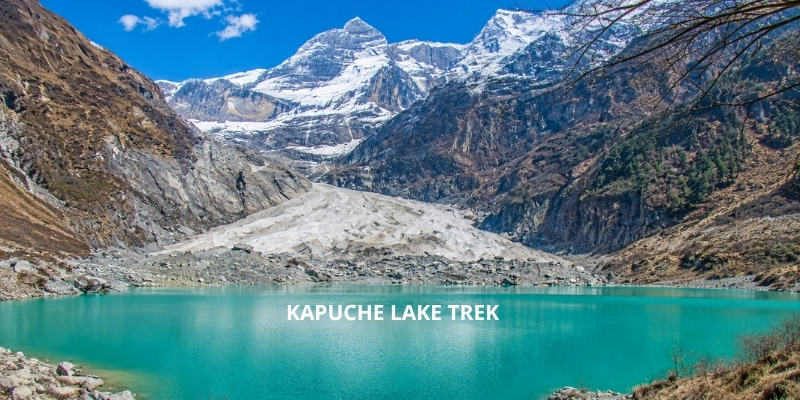
The highlight of the Kapuche Lake Trek is reaching Kapuche Glacier Lake. Glacial meltwater feeds the lake, giving it a milky turquoise appearance, and it is surrounded by the Annapurna and Lamjung ranges. The contrast between the lake’s beauty and the surrounding mountains makes the destination especially worthwhile for nature lovers and photography enthusiasts. Beyond the lake’s natural beauty, the trek takes you to Sikle village, known for Gurung traditions, local hospitality, and rural mountain life. A visit to the village gives extra cultural depth to the adventure.

The Kapuche Lake Trek is considered an easy-to-moderate journey in Nepal’s Annapurna region. It suits beginners and trekkers looking for a short Himalayan adventure. The trek doesn’t reach high elevations or involve terrain as challenging as the Everest Base Camp Trek. Still, it does involve several hours of walking, with uphill and downhill sections through forests and mountain areas. So, it’s best to prepare a little before starting the trek.

Kapuche Lake Trek Highlights

  • Visit Kapuche Glacier Lake at 2,546 m, a beautiful turquoise-blue glacial lake in the Annapurna region.
  • Enjoy mountain views on the journey, including Mt. Annapurna II, Lamjung Himal, Annapurna IV, Machhapuchhre, and Dhaulagiri ranges.
  • Explore Sikles, a traditional Gurung village with its stone-built houses, terraced hillsides, local traditions, and welcoming hospitality.
  • Trek through Madi Valley, a less-travelled section in the northeast of Pokhara.
  • Walk through rhododendron and bamboo forests and the natural diversity of the Annapurna region on the way to Hugu Goth.
  • Experience the peaceful surroundings of Hugu Goth, a small mountain settlement, before the final walk to Kapuche Lake.
  • Pass through waterfalls, streams, and suspension bridges along the route, which adds variety to your journey.
  • Capture unique glacial landscapes and Himalayan scenery, especially during sunrise and sunset.

Quick Itinerary for Kapuche Lake Trek

Route End Elevation Duration Distance
Day 01 Kathmandu to Pokhara (drive) 822 m 8–9 hrs 200 km
Day 02 Pokhara to Sikles (drive) 1,980 m 3–4 hrs 36–42 km
Day 03 Sikles to Hugu Goth (trek) 2,010 m 4–6 hrs 7.4–10 km
Day 04 Hugu Goth to Kapuche Lake (2,546 m) and back (trek) 2,010 m 4–5 hrs 8 km
Day 05 Hugu Goth to Sikles (trek), Sikles to Pokhara (drive) 822 m 4–5 hrs trek + 3–4 hrs drive 7.4–10 km trek + 36–42 km drive
Day 06 Pokhara to Kathmandu (drive) 1,400 m 8–9 hrs 200 km
Download PDF download

Full Itinerary For 6 Days Kapuche Lake Trek

Day 01 :

Kathmandu to Pokhara

Drive Distance

200 km

Drive Duration

8-9 hrs

Place

Pokhara

You leave your hotel in Kathmandu at around 7 am. Your driver and guide pick you up from the hotel, put your bags in the car, and you head out.

First, the road takes you up to Naubise at the edge of the valley. Then it goes down the hill, so this part is a bit slow. If the sky is clear, turn around for one last look at Kathmandu. Soon you meet the Trishuli River, your driving views for a long time. You see the river below, small villages, green rice fields, and hanging bridges over the water. In autumn and summer, you might see people rafting down the river.

After a couple of hours, you stop for breakfast or tea at a roadside place near Malekhu or Kurintar. Malekhu is known for fried river fish, so try some if you like fish. Near Kurintar, you can also ride the Manakamana cable car up to a famous hilltop temple. It takes about two hours, so ask your guide before the trip if you want to add it.

Next, you reach Mugling, where two rivers meet. It is a busy town full of trucks and buses, and many people stop here for lunch. After Mugling, the road turns west and follows the Marsyangdi and Seti rivers. You pass the towns of Damauli and Dumre.

You reach Pokhara in the afternoon. As you drive into town, look north. On a clear day, you see the snowy top of Machhapuchhre (Fishtail Mountain) right above the city. Your guide takes you to your hotel near Lakeside and helps you check in.

The rest of the day is yours. Walk along Phewa Lake, sit in a lakeside cafe, or rent a small boat. In the evening, Lakeside is full of restaurants, shops, and live music. It is a good place to enjoy after a long day on the road. Overnight stay in Pokhara.

Day 02 :

Pokhara to Sikles

Drive Distance

36-42 km

Drive Duration

3–4 hrs drive

Highest Altitude

1,980 m

Place

Sikles

Meals

B+L+D

Accommodation

Teahouse or Homestay

You start the day with breakfast at your hotel in Pokhara. Around 8 am, your guide meets you in the lobby, and you get into a jeep. A jeep is the best way to get to Sikles from Pokhara, because the second half of the road is rough and bumpy.

The first part of the drive, the road is paved and easy. You leave the busy streets of Pokhara and drive towards small towns, shops, and green fields. On a clear morning, Machhapuchhre (Fishtail Mountain) will be seen on your left, and you can see it for much of the way.

Soon the paved road ends, and the dirt road begins. From here, the jeep moves slowly. The road climbs up the hillsides of the Madi River valley in long zigzags. You pass rice terraces, millet fields, and small farm villages where kids wave as you go by. Some parts are steep and narrow, so hold on tight and enjoy the bumpy ride. If you get car sick, take a tablet before you leave.

On the way, you can stop at Harihar Cave if you ask your guide. It is a quiet cave temple and a nice place to take a rest. You also stop for tea at a small roadside shop. As the jeep climbs higher, the air gets cooler, and the views open up. Look north, and you see the snow peaks of Annapurna II, Annapurna IV, and Lamjung Himal.

You reach Sikles around midday. Sikles is one of the biggest Gurung villages in the Annapurna region. The houses are made of stone with slate roofs, and they sit close together on the hillside. Many men from this village have served in the British and Indian Gurkha armies, and you may meet some retired soldiers who are happy to share their stories.

After you check in at your teahouse or homestay, have lunch and take a short rest. In the afternoon, walk around the village with your guide. Visit the old monastery, see the village school, and watch people working in their fields or weaving baskets. If you are lucky, you may see women dressed in traditional Gurung clothes and jewelry.

In the evening, sit down for a home-cooked dal bhat dinner with your host family. Life in Sikles is slow and simple, and the night is very quiet. If the sky is clear, step outside before bed. You can see more stars here than you will ever see in a city. The day’s overnight stay and dinner are at Sikles village.

Day 03 :

Sikles to Hugu Goth

Trek Distance

7.4-10 km

Trek Duration

4–6 hrs

Highest Altitude

2,010 m

Place

Hugu Goth

Meals

B+L+D

Accommodation

Teahouse or Homestay

Today is your first full day of the trek. You wake up to the sound of roosters and the smell of wood smoke in Sikles. After a warm breakfast, fill up your water bottle and pack a light day bag. Your guide checks that you have a rain jacket, warm layers, and some snacks before you set off.

You leave the village on old stone steps that wind up through the fields. Local people use this path every day, so you may pass farmers carrying grass or firewood in big baskets on their backs. Say “Namaste” as you go by. Most people will smile and greet you back. Turn around now and then for a last look at the slate roofs of Sikles below you.

Soon the fields end, and you walk into a thick forest of oak and rhododendron. In spring, from March to April, the rhododendron trees are full of red and pink flowers. The trail is shady and cool here. Here, you’ll hear birds and see monkeys in the trees. You cross small streams on stepping stones and wooden bridges, and you pass a few waterfalls along the way.

Around the middle of the day, you stop in a quiet spot for a packed lunch or a cup of tea. Take your time and rest. There are no shops or villages on this part of the trail, so your guide carries what you need.

In the afternoon, the trek follows the river that flows down from Kapuche Lake. Some trails are narrow, steep, and rocky, so walk slowly and watch your step. Use trekking poles if you have them.

You reach Hugu Goth in the late afternoon. “Goth” is the Nepali word for a herders’ shelter. Shepherds bring their sheep and buffalo up to these high meadows in the warmer months. On a clear evening, you can see Annapurna II, Lamjung Himal, and Machhapuchhre very close from the village.

The places to stay here are simple. Rooms are basic, and there is no hot shower or Wi-Fi. Some groups stay in tents. It gets cold after the sun goes down, so put on your down jacket and wear a warm hat. Go to bed early tonight. Tomorrow you hike up to Kapuche Lake, the lowest glacier lake in the world.

Day 04 :

Hugu Goth to Kapuche Lake and back

Trek Distance

8 km

Trek Duration

4–5 hrs

Highest Altitude

2,546 m

Place

Hugu Goth

Meals

B+L+D

Accommodation

Teahouse or Homestay

Today is the big day. You get up early, around 5:30 am, and have a quick breakfast and a hot cup of tea. Mornings are the best time to see the lake, because the sky is clear and the clouds roll in later in the day. You leave your big bag at Hugu Goth and carry only a small day pack with water, snacks, a warm layer, and your rain jacket.

The initial phase of the trek is easy as you walk out of the meadow. Then it gets rocky and narrow. You climb over big stones and walk along the edge of the river that comes down from the lake. In some places there is no clear path, so stay close to your guide and step where they step. Take it slow. It is only about 2 to 3 hours to the lake, so there is no need to rush.

As you climb, the forest gets thinner, and the mountains get closer. The air is cool and fresh. Then you come over a rise of rocks and see Kapuche Lake in front of you. The water is a grey-green color, and the glacier comes right down to the edge of the lake. Big pieces of ice float on the water, and sometimes a chunk breaks off the glacier and falls in with a splash. Above it all, faces of Annapurna II and Lamjung Himal are stunning.

Find a safe, flat rock and sit down. Take your photos, eat your snacks, and just enjoy the area’s calmness. Do not walk too close to the water or the glacier, as the ice can break without warning. Spend about an hour here before you start back.

The walk down follows the same trail. Going down over loose rocks is hard on the knees, so use your trekking poles and watch every step. It takes about 2 to 3 hours to get back to Hugu Goth.

You reach Hugu Goth in the early afternoon. Rest, have a late lunch, and dry your socks in the sun. In the evening, sit by the fire with your guide and the other trekkers and talk about the day. Have a hot dinner and get a good night’s sleep, because tomorrow you walk back down to Sikles.

Day 05 :

Hugu Goth to Sikles to Pokhara

Trek Distance

7.4-10 km

Trek Duration

4–5 hrs

Drive Distance

36-42 km

Drive Duration

3–4 hrs drive

Highest Altitude

2,546 m

Place

Pokhara

Meals

B+L+D

Accommodation

Hotel

This is a long day, so you start early. Wake up around 6 am and take one last look at the mountains from Hugu Goth. The morning light on Annapurna II and Lamjung Himal is stunning, so don’t miss it. After breakfast, pack your bag and say goodbye to the village.

You walk back down the same trail you came up two days ago. It feels different going the other way, and you notice things you missed before. The first part is rocky and narrow along the river, so walk slowly and use your trekking poles. Going down is easier on your lungs but harder on your knees, so take small steps.

Soon you are back in the cool, shady oak and rhododendron forest. You cross the same little streams and wooden bridges and pass the waterfalls again. Take short breaks when you need. Your guide will stop at a good spot for a snack and some water.

After about 4 to 5 hours, the forest opens up, and you see the stone houses and slate roofs of Sikles below you. You have lunch here, maybe at the same home where you stayed on the first night.

After lunch, you get into the jeep and head back to Pokhara. The first part of the road is dirt and very bumpy, just like on the way up. Take a car sickness tablet if you need one. Look out the window for one last view of the mountain peaks as the jeep takes you down the rice terraces and small villages.

Once you reach the paved road, the ride gets smooth and easy. You get to Pokhara in the late afternoon or early evening, and your guide drops you at your hotel near Lakeside. After three nights in the hills, you’ll get to the city area. In the evening, walk down to Phewa Lake and find a restaurant for dinner. Pizza, steak, cold drinks, and live music are all close by. It is a good way to celebrate the end of your Kapuche Lake trek.

Day 06 :

Pokhara to Kathmandu

Drive Distance

200 km

Drive Duration

8-9 hrs

Highest Altitude

1,400 m

Place

Kathmandu

Meals

B

Accommodation

Hotel

Today you say goodbye to Pokhara. Wake up early and have breakfast at your hotel. Your guide meets you in the lobby at around 6:30 am and drives you to the tourist bus park near Lakeside. It is only a few minutes away.

The tourist buses leave at about 7 am. Your guide helps you find your bus and puts your bag in the luggage space under the bus. Keep a small bag with you for your water, snacks, phone, and a warm layer. Your seat number is on your ticket, so just find it and get comfortable. The seats are padded, and most buses have air conditioning.

If the sky is clear as you leave, you see Machhapuchhre and the Annapurna peaks above Pokhara, and it is a nice last view of the mountains. Then the bus heads east on the Prithvi Highway, the same road you came on at the start of your trip.

The bus follows the Seti River, passes the towns of Damauli and Dumre, and then follows the Marsyangdi River down to Mugling. After Mugling, the road takes you beside the Trishuli River for a long way.

The bus stops one to two times on the way. There is a breakfast or tea stop in the morning and a lunch stop around midday at a roadside restaurant. Lunch is not included in the package price, so keep some Nepali rupees. You reach Kathmandu in the afternoon, between 2 and 3 pm, depending on traffic. The bus stops close to Thamel. Our driver meets you there and takes you to your hotel.

The rest of the day is free. Rest at the hotel, or explore Thamel for some last shopping. It is a good place to buy pashmina shawls, singing bowls, Nepali tea, and other gifts to take home.

If you would rather not spend the day on the bus, you can take a 25-minute flight from Pokhara to Kathmandu instead, for an extra cost.

Inclusion/Exclusion in Kapuche Lake Trek – 6 Days

Our Kapuche Lake Trek Package Includes

  • International airport pick-up and drop-off services.
  • Two ways to travel by deluxe tourist bus from Kathmandu to Pokhara and from Pokhara to Kathmandu.
  • 2 nights in a standard hotel with BB Plan in twin sharing in Thamel.
  • 2 nights standard hotel with BB Plan in twin sharing at Lakeside Pokhara.
  • Pokhara to Sikles by public jeep.
  • Sikles to Pokhara by Public jeep.
  • Three meals a day throughout the trek (Breakfast, Lunch and Dinner).
  • Accommodation throughout the trek.
  • An experienced guide (including his salary, equipment, insurance, transportation, lodging, and food)
  • Equipment: Down Jacket, Sleeping Bag.
  • Legal documents (ACAP permit).
  • All Gov VAT.
  • Kapuche lake trekking map.
  • Duffle bag if needed.
  • First aid medical box.
  • Some fresh and dry fruits along the trek.
  • A token of love from the company.
  • Farewell lunch or dinner at a suitable time.


Our Kapuche Lake Trek Package Excludes

  • Extra night accommodation in Kathmandu and Pokhara.
  • Travel insurance in case of emergency.
  • Porter service to be organized upon guest request.
  • Cold drinks such as Coke, Mineral Water, Beer, etc.
  • Personal expenses (laundry, telephone, extra helper, battery charge, hot shower, and boiled water).
  • Tips for guides and porters.
Private Trip Booking

Prefer a more personal journey? Our private packages offer flexible dates, custom itineraries, and dedicated support—perfect for those seeking a tailored travel experience.

Equipment Checklist for Kapuche Lake Trek – 6 Days

0/45 packed
checkroom Upper Body 0/5
accessibility_new Lower Body 0/4
steps Footwear 0/4
face Head & Hands 0/5
backpack Pack & Sleep 0/5
explore Trekking Gear 0/7
health_and_safety Health & Safety 0/6
description Documents & Money 0/5
devices Electronics 0/4
Region Guide Annapurna Region Guide & Checklist

You'll find everything you need to know before trekking in the annapurna region. Permits, Gear list, Packing Tips, all.

Download Free Guide

Major Attractions of Kapuche Lake Trek

Kapuche Glacier Lake

Kapuche Glacier Lake is one of the major highlights of the trek to Kapuche Lake without a doubt. Located at 2,546 m above sea level, the glacier lake is known as the lowest-altitude glacier lake in the world. So, the trek’s attractive point is that it lets travelers stand beside it without getting involved in a challenging journey and reaching high altitudes like Tsho Rolpa or the Gokyo Lakes. Mainly, the turquoise water, combined with surrounding peaks, attracts many travelers to visit Kapuche Lake and makes it the defining attraction of the Kapuche Lake Trek.

Sikles Village

Sikles Village is the cultural highlight and attraction of the Kapuche Lake Trek. Located on the hillside in the Madi Valley, Sikles attracts travelers by providing a glimpse of the traditional lifestyle and cultural heritage of the Gurung community in Nepal’s Annapurna region. Another attractions of the village include traditional stone houses, slate-roofed buildings, terraced fields, and surrounding Himalayan peaks. Moreover, the warm hospitality of Sikles is what many trekkers remember most.

Hugu Goth

Hugu Goth is a small mountain village, known as the base for Kapuche Lake. The walk from Sikles to Hugu Goth is one of the most beautiful sections of the trek as it takes you through oak and rhododendron forests. Also, the flowing Madi Khola, stone paths, small streams, and waterfalls along the way are major attractions of the route. Besides, the silence and peace of the Hugu Goth make it special. The village is away from roads, crowds, and noise, which attracts travelers who seek peace and want to get out of the chaos of daily life.

Himalayan Peaks

Kapuche Lake Trek is a journey to a lower elevation, but it doesn’t compromise on the mountain views. So, the mountains are another major attraction of the Kapuche Lake Trek that provide constant views of the peaks.

Annapurna II (7,937 m) is the highest peak you see on the Kapuche Lake Trek. The peak is especially stunning during sunrise when the tip of the summit glows with gold and orange color. Likewise, Annapurna IV (7,525 m) lies right next to Annapurna II, and these two appear side by side. Lamjung Himal (6,983 m) and Machhapuchhre (6,993 m) are other Himalayan peaks that make the trek to Kapuche Lake attractive.

Active Avalanches

One of the most memorable sights on the Kapuche Lake Trek is watching active avalanches from a safe distance. This lake sits at the base of steep glaciers and mountain slopes in the Annapurna and Lamjung ranges, where chunks of snow and ice may occasionally break off and fall down the mountain face. However, avalanches are unpredictable and do not happen every day. If you visit, enjoy the view from a safe distance and follow your guide’s instructions.

Food and Accommodation During Kapuche Lake Trek

Local lodges and homestays are food and accommodation points along the journey to Kapuche Lake Trek. As the route to Kapuche and Sikles has become increasingly popular recently, facilities here are basic and not as commercialized as other well-known routes like Annapurna Base Camp.

Accommodation in Sikles

Sikles is the first overnight stop on the way to Kapuche Lake, which has good lodges and homestays to spend a night and have food. Rooms here are simple with twin beds, blankets, and pillows, and shared toilet. Staying at homestay is more popular in Sikles because it provides a unique experience of staying with Gurung families, learning about their daily routine, and enjoy evenings by the kitchen fire listening to local stories.

Accommodation at Hugu Goth

Hugu Goth is another food and accommodation point during the Kapuche Lake Trek. It is also a base point and the last overnight stay point before trekking to Kapuche Lake. The village has only a few small lodges with very basic rooms that consist of simple beds and thin mattresses. Since Hugu Goth has only limited accommodation options, booking in advance is necessary, especially if you are trekking in peak seasons (spring and autumn).

Food on the Trek

Meals on the Kapuche Lake Trek are simple, fresh, and cooked at the accommodation points. Although you won’t get a variety of food options, you can choose the one that is filling and that gives you energy while trekking. The food options along the Kapuche Lake Trek include:

  • Breakfast: Tibetan bread, chapati, porridge, eggs, pancakes, and tea or coffee
  • Lunch and Dinner: Dal bhat (rice, lentil soup, vegetable curry, and pickle), noodles, fried rice, and soups
  • Local Gurung dishes: Dhido (millet or buckwheat porridge), gundruk (fermented greens), and seasonal vegetables
  • Drinks: Milk tea, black tea, ginger-lemon-honey tea, and hot water

When is the Best Time for the Kapuche Lake Trek?

The best time for the Kapuche Lake Trek is autumn (September to November) and spring (March to May). These seasons come with stable weather, clear skies, and comfortable temperatures for walking. Since Kapuche Lake lies at a lower altitude of 2,546 m, the trek is also possible in winter with proper preparation. However, the monsoon season makes the route slippery and less enjoyable, so it’s best to avoid it if you can.

Autumn (September to November)

Autumn is the most popular season for the Kapuche Lake Trek. After the monsoon rains clear the dust from the air, the Annapurna and Lamjung ranges are seen brightly. The milky turquoise water also looks its best under clear blue skies, which makes it a great time for photography.

Autumn also brings Nepal’s biggest festivals, Dashain and Tihar. During this time, you see Sikles village, Gurung families gathering, and get a chance to see local celebrations up close. Days are pleasant for walking, but mornings and nights near the lake get chilly, so wear warm clothes.

Spring (March to May)

Spring is the second-best season and a favorite for nature lovers. The forests along the route bloom with rhododendrons, Nepal’s national flower, which add red and pink colors to the green hills. Temperatures are mild, and the longer days give you more time to enjoy the lake and the village.

The mountain views are also clear in the mornings, but clouds block the view in the afternoon, especially in late May. So, it’s best to start walking early each day for the best views.

Winter (December to February)

Winter is a peaceful time for the Kapuche Lake Trek. Since the trek stays at a lower elevation compared to treks like Annapurna Base Camp, it remains achievable even in the cold months. The skies are very clear, and the mountain peaks look stunning behind the lake.

However, nights near the lake can drop below freezing, and the upper path may have snow or ice. Good trekking boots, warm clothes, and a reliable guide make a big difference during this season. Winter also brings Tamu Lhosar, the Gurung New Year, celebrated in late December, which adds a special cultural dimension to your visit to Sikles.

Monsoon (June to August)

The monsoon is the least suitable season for the Kapuche Lake Trek. Heavy rain makes the forest trail muddy and slippery, and leeches are common in the lower sections. Clouds also hide the mountain views, and landslides can affect the road between Pokhara and Sikles.

That said, the hills turn deep green, and the route is almost empty. If you trek during the monsoon, carry rain gear, leech protection, and keep an extra day in your plan in case of delays.

Region Guide Annapurna Region Guide & Checklist

You'll find everything you need to know before trekking in the annapurna region. Permits, Gear list, Packing Tips, all.

Download Free Guide

What Trekkers Ask About Kapuche Lake Trek

Chandra Bahadur Gurung Profile

Chandra Gurung

Founder & Senior Trip Manager

"I've personally consulted and guided 1,800+ travelers in choosing their ideal Himalayan route."

— Founder & Trip Organizer

Himalayan Route Matcher

Tailor your date, style, and companions for a direct recommendation.

1. Trip Type
2. Group Size
3. Travel Style
4. Travel Date
5. Duration