
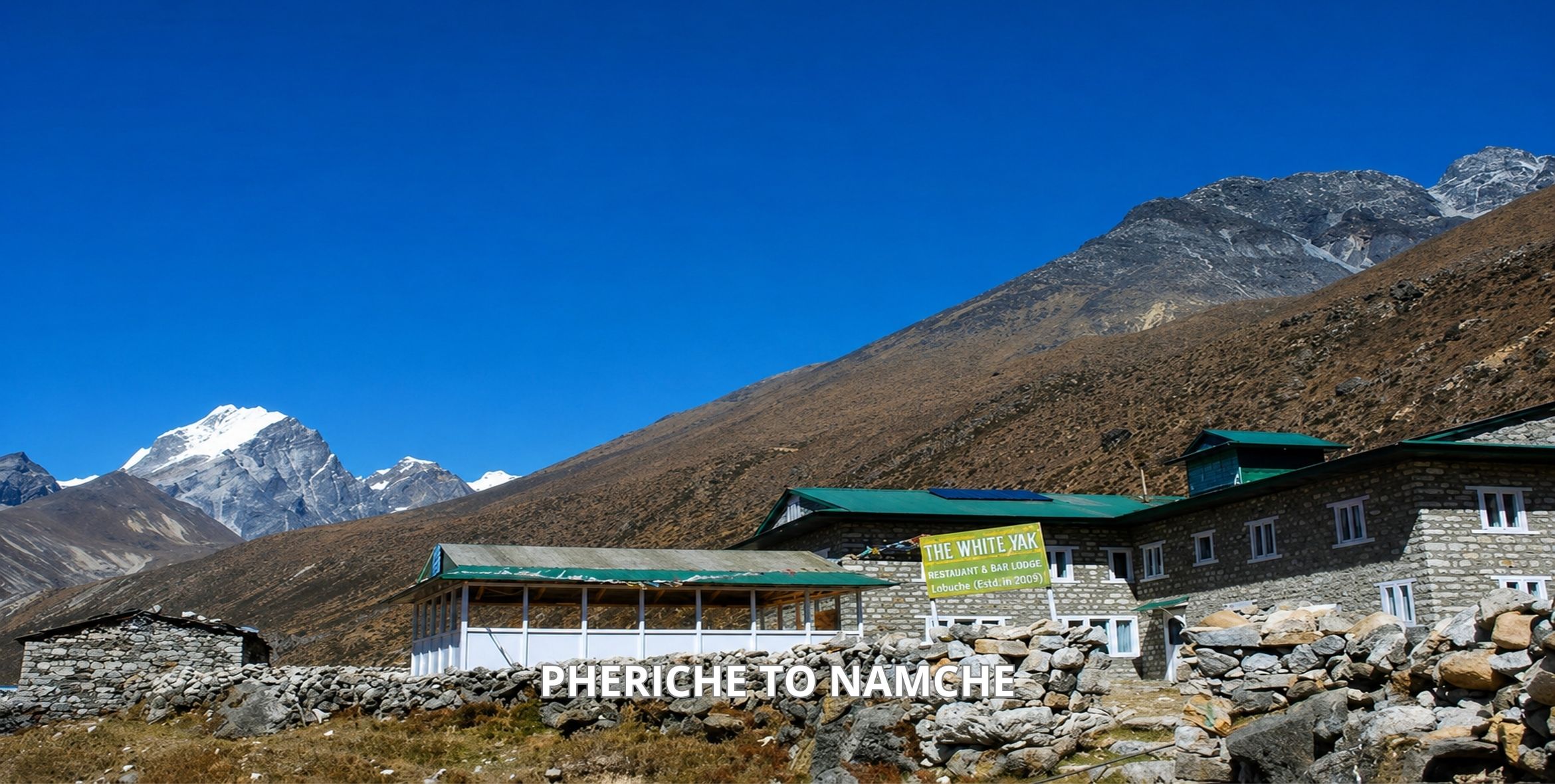
Do you know what gives satisfaction on the Everest journey? Descending from higher to lower elevation. Among the many descent days on the route, Pheriche to Namche Bazaar is often memorable because it marks the key transition to lower elevation and higher oxygen levels. On the standard Everest Base Camp (EBC) Trek, Pheriche to Namche Bazaar falls on day 11 and is one of the longer days of the trek, although the lower elevation makes it easier on the body.
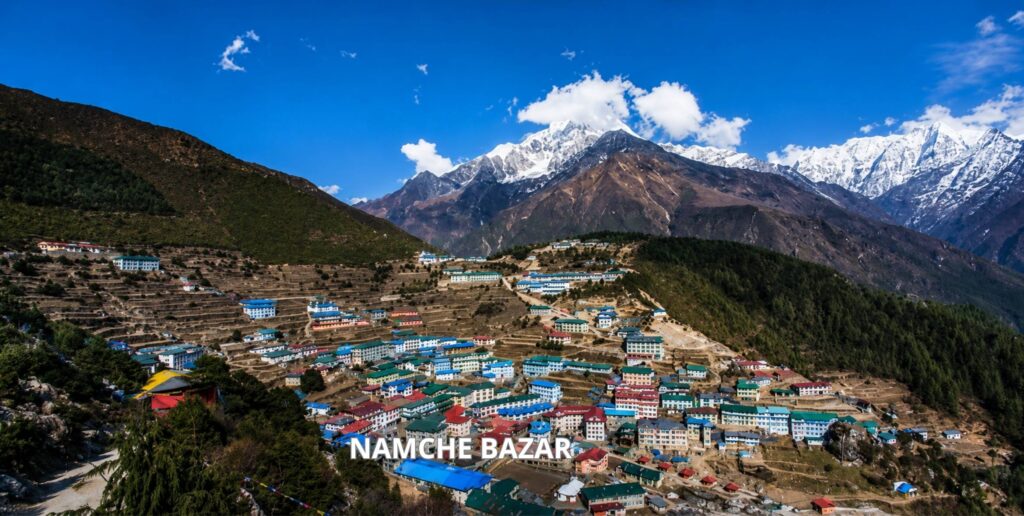
The walk down to Namche from Pheriche feels like a completely different adventure after spending days at high altitude. As you step down, your body feels good even before your mind catches on. The dry and open landscape changes into green forests, and the mountain peaks that once seemed close now appear farther away. Likewise, you start hearing yak bells, roaring rivers, and the sound of village life. So, the trek is unforgettable with a combination of nature’s majesty, traditional villages, and changing landscapes.
Pheriche to Namche Bazaar Distance
The distance from Pheriche to Namche Bazaar is 15km (9.3 miles). The trek takes around 6 to 8 hours of walking, with almost all downhill sections. Because the day covers long distances, it’s one of the longer days of the Everest trek and requires a steady pace and support from trekking poles. The trek also includes several sections, including river crossings, suspension bridges, and mountain villages.
The descent doesn’t mean the trek is without challenges; it has its own set of difficulties, just not the thinner air and lower oxygen. One of the first major climb of the trek is on the way to Tengboche. After that, you’ll again climb towards Namche Bazaar from Phunki Tenga. Also, your legs may feel tired after several days of trekking, plus the long descent and some uphill sections. Thus, it is better to walk at a slow pace instead of trying to finish too quickly.
Pheriche to Namche Bazaar Distance by Section:
| Segment | Distance |
| Pheriche → Pangboche | 4km |
| Pangboche → Tengboche | 3km |
| Tengboche → Phunki Tenga | 2.5km (steep descent) |
| Phunki Tenga → Namche Bazaar | 5.5km |
What Are The Major Location Highlights During Pheriche to Namche Bazaar Trek?
The trek from Pheriche to Namche Bazaar is not just a return journey and a downhill walk. Instead, it is a journey along the beauty of the Khumbu Valley. The walk takes you through some of the most memorable places in the valley.The views are similar to those you see on the way to Everest Base Camp. On the way up, you may have focused on reaching the destination and missed the beauty in its fullest. But on the way back, you have time to enjoy the places around you.
Pheriche
Pheriche is the village where your day’s walk begins. Located in a glacial valley, mountain peaks surround the village, giving you a final look at the high-altitude landscape before you descend into greener areas. It features an altitude sickness aid post run by the Himalayan Rescue Association. Historically, the village served as a summer settlement, and as tourism increased, it was upgraded and became one of the key stops along the Everest Base Camp trek.
Pangboche
Pangboche is a historic village between Tengboche and Dingboche, inhabited by Sherpa communities. Its narrow paths, traditional stone houses, and mountain surroundings make it a highlight on the Pheriche to Namche Bazaar Trek. The village is also known for clear views of Ama Dablam, Nuptse, Lhotse, and Thamserku.
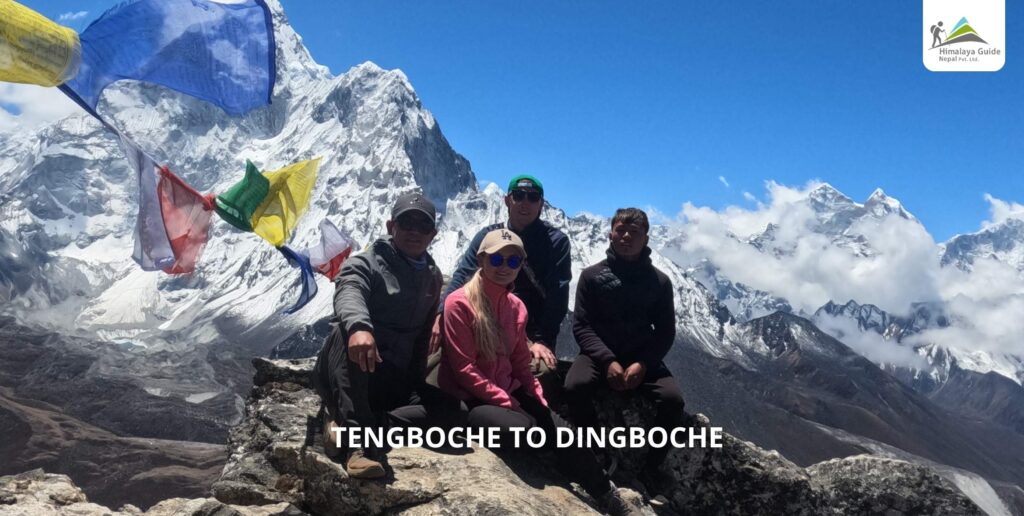
Additionally, Pangboche is known as the oldest village in the Khumbu region and is famous for its ancient Pangboche monastery, which dates back centuries and is tied to Tibetan Buddhism in the region. The village has also become famous because of old stories about mysterious yeti relics once kept at its monastery. Whether it is true or not, it has become an interesting part of the village’s history and identity.
Debuche
Debuche, also spelled as “Deboche”, is a small and peaceful village surrounded by forest, between Pangboche and Tengboche. It is also known as a spiritual haven, protected and watched over by powerful deities. Compared to other busier stops along the route, Debuche feels calm and peaceful. The village is also home to a Buddhist nunnery, giving you a chance to see another spiritual side of the Khumbu region.
Tengboche
Tengboche is one of the most famous stops on the Pheriche to Namche route. It is home to the well-known Tengboche Monastery, an important Buddhist site in the Everest region. The monastery suffered damage in the 1934 earthquake and a 1989 fire. But because of its significance as a spiritual center of the Khumbu region, the local community and outside supporters rebuilt it.
The village’s open surroundings offer stunning views of Mount Ama Dablam, Everest, Lhotse, and Nuptse. This view makes Tengboche a favorite place for trekkers to stop and enjoy the scenery on both the up and down routes of the EBC.
Phunki Tenga
After Tengboche, the trek descends towards Phunki Tenga, another highlight of the Pheriche to Namche Bazaar walk. It is a small village beside the Dudh Koshi River. At an elevation of 3,250 meters, forests, flowing rivers, and zigzagging staircases surround the village. The village’s lower elevation makes the surroundings warmer and more comfortable than higher villages.
Phunki Tenga is a rest and lunch point on the route to Namche Bazaar from Pheriche. The surrounding forest and cliffs make this location interesting for nature enthusiasts and birdwatchers.
Kyanjuma and Sanasa
Kyanjuma and Sanasa are two small villages on the way to Namche Bazaar. Forests and traditional Himalayan villages surround them, with mani walls, prayer stones, and chortens throughout.
The trail around Sanasa is also important because it connects to routes leading toward the Gokyo Valley and Renjo La. As you continue towards Namche Bazaar, the pathway becomes busier and more comfortable due to the lower altitude.
Can You Skip Namche and Go Straight to Phakding?
No, you can’t skip Namche Bazaar and go straight to Phakding in a single day. The main reason you can’t skip Namche Bazaar is that it lies on the way to Phakding from Pheriche. Also, Phakding is an additional 15-18km away from Namche Bazaar. If you choose to trek to Phakding directly from Pheriche, you must walk 30-33km in a single day, which is not possible and is physically exhausting. The practical itinerary is Pheriche → Namche Bazaar in one day, and Namche Bazaar → Phakding the next day.
Still, if you’re physically fit with a strong reason to get down quickly, Pheriche → Namche → Phakding in a single day is technically possible for an experienced trekker, although not recommended. Additionally, choosing Namche Bazaar as an overnight stay point while descending from Pheriche is the best option for your body and well-being.
Pheriche to Namche Trek Difficulty
Pheriche to Namche Bazaar Trek is a moderately difficult part of the trek return route, whether it be for a standard or Luxury EBC trek. Although it is a descent, the trail won’t keep you downhill all day. Several uphill sections and long walking hours can make you tired, especially after many days in the Himalayas. So, this part of the trek also requires good physical strength and patience.

Major factors that make the descent journey from Pheriche to Namche moderately difficult include the uphill climb toward Tengboche and Kyanjuma, especially with tired legs. Likewise, the 6 to 8 hours of walking through varied terrain, including some rocky, steep, or uneven sections along with crossing bridges, requires careful walking.
However, if you walk at a comfortable pace, take breaks, drink plenty of water, and listen to your body, the journey feels smooth and not that challenging. Instead, you can enjoy the changing scenery and complete the journey comfortably.
Elevation Profile of Pheriche to Namche Route
- Starting Point: Pheriche (4,240 m)
- Ending Point: Namche Bazaar (3,440 m)
- Total Elevation Loss: About 800 m
The trek from Pheriche to Namche Bazaar begins with a descent towards the river. Afterward, you climb again towards Pheriche Pass before continuing downhill toward the lower Pangboche area. From there, the path climbs about 200 meters to Tengboche. After Tengboche, you make a steep descent to Phunki Tenga at 3,250 meters, the lowest point of the route.
From Phunki Tenga, the direction changes and you’ll face a steep climb of around 400 meters towards Kyangjuma (3,600 meters). From Kyangjuma, the path takes you through gentle ups and downs to Namche Bazaar.
The highest point of the day is Pheriche Pass at around 4,290 meters, and the lowest point is Phunki Tenga at around 3,200 meters. Namche Bazaar lies at 3,440 meters, so the day ends at a higher location than the route’s lowest point. So, instead of a simple downhill elevation profile, it combines gains and losses and ends with a net loss.
Tips for the Descent From Pheriche to Namche Bazaar
- Don’t think it is an easy trek: When trekkers hear about a returning journey, they think it’s going to be an easy day, but don’t let the word “descent” fool you. Although the first part of the trek is easy, don’t walk fast. The walk to Pheriche Pass and climb to Tengboche are quite difficult. So walk slowly and keep your pace steady.
- Save some energy for after lunch: The section from Phunki Tenga towards Kyangjuma is the part of the route that many trekkers underestimate. But don’t repeat the same mistake because you have to climb again after Phunki Tenga.
- Use your trekking poles: The continuous descent on some sections, like from Tengboche to Dingboche, can be hard on knees. So, don’t keep your trekking poles packed away in your bag; instead, use them for extra balance and support.
- Watch your pace: After Pheriche, you’ll get into lower elevation, and your lungs may start to feel good, and your body feels extra energetic. But don’t let that energy increase your pace, as you might regret it later.
- Don’t mentally think of the day as “almost finished” at Phunki Tenga: This is one of the biggest psychological traps on the Phunki Tenga to Namche Bazaar route. Yes, Phunki Tenga is a low-altitude village, but you still need to tackle the climb towards Kyangjuma afterward.
- If your knees are hurting, shorten your step: On the steep downhill section, the smaller and more controlled your steps are, the more comfortable you’ll feel.
What Trekkers Ask About Pheriche to Namche Bazaar Trek
What is the distance from Pheriche to Namche Bazaar?
How many hours does the Pheriche to Namche Bazaar trek take?
What is the elevation loss from Pheriche to Namche Bazaar?
How difficult is the Pheriche to Namche Bazaar trek?
What is the best route from Pheriche to Namche Bazaar?
Is Pheriche to Namche the Longest Day of the Trek?


