Trekking with Peak Climbing In Nepal For 2026

Want to experience the best Himalayan adventure Nepal has to offer? We offer trekking with peak climbing in Nepal. Nepal is home to some of the world’s most renowned trekking destinations and numerous mountaineering peaks. Combining trekking with peak climbing lets adventure seekers trek through mountain villages and properly acclimatize before heading for summit climbs at higher elevations. 

Our experts carefully design these packages so you can explore remote mountain landscapes, traditional mountain culture, ancient villages, and stunning natural beauty while taking on the challenge of climbing Himalayan peaks. Trekking with peak climbing in Nepal is perfect for adventure seekers who want more than a typical trek or climb.

On these journeys, you don’t simply trek to the base of a peak; you also take on the challenge of reaching its summit. Popular trek-and-peak-climbing combinations include Island Peak with the Everest Three Passes Trek. Likewise, Chulu East Peak Climbing with the Annapurna Circuit Trek, Lobuche Peak Climbing with the Everest Base Camp Trek, and other itineraries combine classic Himalayan peaks with technical and semi-technical peak climbing.

6 Trekking With Peak Climbing In Nepal

View Detail: Mera and Island Peak Climbing
Mera and Island Peak Climbing

31 Days

Mera and Island Peak Climbing

4.9 (5 Reviews)

6,476m

Mera and Island Peak climbing is a combination of some of the best trekking peaks in the Khumbu region. Because this is beside the magnificent presence of Mt. Everest.

From the lower hills through some of the gifted natural viewpoints. We will reach the Base Camp of the peaks. And just above the snowline, prepare for an adventure of a lifetime here. Mera Peak and Island Peak showcase the different shades of the Himalayas. So, this trip leads the wandering trekkers to the Everest Base Camp and above.

The journey surfs the beautiful flora and fauna of Makalu-Barun and Sagarmatha National Park. Getting closer to the Sherpa culture and learning from the mountaineers, the stories just keep adding here. Completing the trek of Island and Mera Peaks. The feat is immeasurable, and moments are worthy of it all.

From the closed streets to the high hills of Lukla, the trek promises a thrill from the start. The first part of the trek to Mera is one of the less-traveled trails in comparison to the world-famous EBC trail.

But Mera and Island Peak Climbing are often regarded as the best ones for viewing more of Everest and its surroundings. Trekking here consists of small passes and a pristine combination of landscape views.

Way to Mera Peak North

From the base of the peak, we will make our way to Mera North (6476 M). From the top, the views are breathtaking. The hype for the Island Peak is real once you have got the taste of peak climbing in the Himalayas here. Returning to Lukla, each stop and day is a bag of surprises just waiting for you.

Kick-starting the second part of the Mera Peak and Island Peak Trek. We follow some of the best trails the Himalayas have to offer. Cruising through the Sherpa settlements and wonderful scenery, we will be at the Everest base camp. The ultimate goal is yet to come as we head towards the Island Peak.

Also known by the local name Imja Tse, this peak is an island in a sea of ice. Near Everest, each day here treats you with sublime views of Mt. Everest, Lhotse, Makalu, Cho Oyu, and other unbelievable mountains.

The climb is difficult yet fulfilling. Be at the top and live the moment forever in Imja Tse. Back to Lukla, the days and experiences unravel being memories to share and relive. With Himalaya Guide, make this fantastic journey embracing the alpine bliss of the Himalayas.

View Trip Detail
View Detail: Island Peak with Everest Three Passes Trek – 20 Days
Island Peak Climbing With everest Three Passes Trek

20 Days

US$2510

Island Peak with Everest Three Passes Trek – 20 Days

5.0 (3 Reviews)

6,189m

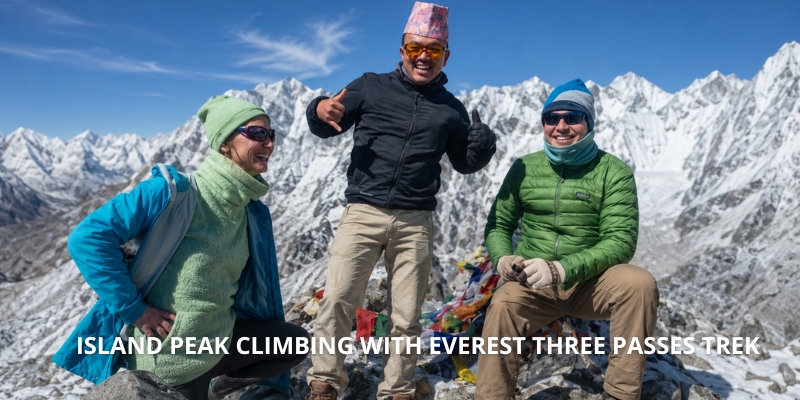
For adventurers dreaming about the ultimate Himalayan trip, the Island Peak with the Everest Three Passes Trek is a perfect venture. The trek combines high-altitude trekking with mountaineering. During the journey, you will cross three of the high mountain passes of Nepal: Renjo La Pass (5,446 m/17,520 ft), Cho La Pass (5,420 m/17,782 ft), and Kongma La Pass (5,535 m/18,159 ft), and summit the popular trekking peak, Island Peak (6,189 m).

The challenging Island Peak with Everest Three Passes Trek takes you to the heart of the Everest region. It takes you through dense rhododendron forests, alpine meadows, barren mountain paths, glaciers, and moraines. The journey also offers some of the finest views of mountains over 8,000 m and other iconic peaks, such as the Ama Dablam, Pumori, Cholatse, Khumbutse, Khalanga, Nuptse, and Lhotse. Similarly, you will pass by famous Sherpa settlements like Phakding, Monjo, Namche Bazaar, Tengboche, Dingboche, Chhukung, and more. En route, you will pass by numerous prayer wheels, flags, Buddhist monasteries, monuments, mani walls, and chortens.

The journey provides you with an opportunity to observe and immerse yourself in the distinctive customs and cultures of the Sherpa people. It also provides deeper insight into the unique Himalayan lifestyle. The trail enters Sagarmatha National Park from Monjo. It is the habitat of unique and rare wildlife like Musk deer, Himalayan tahr, blue sheep, blood pheasant, crimson-horned pheasant, yak, and more. If you are lucky, you may catch their sightings in their natural habitat, though the chances of seeing them are rare.

Rising above the Lhotse Glacier, Island Peak is a stunning mountain in the Chhukung Valley. Ascending the peak is challenging but extremely rewarding. As you stand on top of the peak’s summit, you have unparalleled views and a sense of achievement that will leave you awestruck. Conquering the three high passes is also an incredible feat in itself. The challenges, mesmerizing views, and rich cultural interactions make the Island Peak with Everest Three Passes Trek a unique and extraordinary venture.

At Himalaya Guide Nepal, we offer the finest rates and services for the Everest Three High Passes Trek, including the Island Peak climbing package. Our itinerary is created to fit our client’s requirements and preferences. Likewise, our staff of knowledgeable, experienced Sherpa Trekking Guides and Porters will assist you with every step of the journey. They will guide you, take care of your general needs, and make your trip unforgettable.

View Trip Detail
View Detail: Lobuche Peak with Everest Three Passes Trek
Lobuche Peak with Everest Three Passes Trek

21 Days

US$2600

Lobuche Peak with Everest Three Passes Trek

5.0 (3 Reviews)

6,119 m (Lobuche Peak)

Lobuche Peak with Everest Three Pass Trek is an exciting expedition that combines the strenuous ascent of Lobuche East Peak with trekking across three high mountain crossings in Nepal’s Everest Region. This journey provides a special chance to see the astonishing scenery, paths, and the exhilaration of reaching a Himalayan summit.

Lobuche Peak with the Everest Three Passes Trek is a strenuous and physically taxing adventure. It is strongly advised that you go on this trip with knowledgeable guides or a mountaineering organization. They can guarantee your safety, supply the required gear, and help you navigate the complexities of the route and the climb.

The journey to Lobuche East with the Everest Three Pass is indeed challenging but equally rewarding. The expedition takes you to the Lobuche summit, where the 360-degree panorama from mighty Mount Everest, Lhotse, Ama Dablam, and a distant view of Makalu and Cho Oyu will appeal to your eye.

Along the way, you’ll cross the three legendary high passes, including Kongma La (5,535 m), Cho La (5,420 m), and Renjo La (5,340 m). Each of the passes offers jaw-dropping views of mountain peaks, sparkling glaciers, and deep valleys. The expedition takes you through varied landscapes from rhododendron forests to peaceful glacial lakes to snow-capped peaks. Additionally, the highlights of the journey are Everest Base Camp, the black rock viewpoint of Kala Patthar, and Gokyo Lakes.

View Trip Detail
View Detail: Chulu East Climbing
Chulu East Climbing

19 Days

Chulu East Climbing

4.9 (5 Reviews)

6,484m

Chulu East Climbing is one of the best trekking peaks in the Annapurna region of the Himalayas. Because being amongst the highest peaks in Nepal. Chulu East combines the challenge and adventure of climbing in a single go. Situated in the Damodar mountain range. Chulu Peak is bounded by some more iconic names in the Himalayas. Because to the east is the Chako peak (6,687 m).

To the extent of the south-north are the Hunlung, Nar, and Phu Rivers. The Marsyangdi River and the Mesokanto La Pass decorate the southern part of the peak. From any part of your climb, you can have amazing views of the Annapurna (8,091 m), Dhaulagiri (8,167 m), and Manaslu (8,163 m) ranges. Professional mountaineers rate this peak high for anyone looking forward to entering the mountaineering world.

The two main peaks of the Chulu massif are named Chulu east and west respectively. So, the relative elevation can be faulty in some maps but climbers consider Chulu West as the highest part of both. Because the permit for this climb was issued under Chulu East we will follow a well-defined route to the summit.

Climbers can have a fantastic trekking experience in the regions of Manang and Mustang. This is a unique pearl of the Annapurna, these regions gift with centuries-old culture and tradition. This climb to Chulu Peak goes through all the must-visit sites and settlements along the way.

Chulu East Climbing is starting from the lively Besisahar, we will walk into the heart of Manang. Crossing sections of majestic beauty and welcoming locals, we will enter the lower Himalayas. But following the Annapurna circuit for a while, we will complete the climb midway through the journey.

More delights wait for us with a scenic walk to Thorung La highlighted by the amazing landscapes of Mustang. Join our experienced team from the Himalaya Guide on this journey to the top of Chulu Peak.

Highlights Of Chulu East Climbing
  • Best Peak climbing experience in the Annapurna region reaching up to 6,584 m (21,601 ft) in elevation.
  • Fantastic views of Mt. Manaslu (8,163m), Mt. Annapurna I (8,091 m), Mt. Dhaulagiri (8,167 m) Mt. Annapurna II (7,555m), and other high peaks.
  • Beautiful trail 8in Annapurna CA taking us to the base camp of Chulu Peak.
  • The nerve-wracking route to the Summit with alpine delights.
  • Gompas, monastery, Chhortens, Mani walls, and various destinations packed with bits of Tibetan
    Buddhism.
  • Gurung, Magar, Thakali, Manage, and Loba are ethnic locals with their rich culture and art.
  • Amongst the highest trekking peaks in Nepal.
  • Diverse and vast mountain wildlife and vegetation.
View Trip Detail
View Detail: Pisang Peak Climbing
Pisang Peak Climbing

16 Days

Pisang Peak Climbing

4.9 (5 Reviews)

6,091m

Pisang Peak Climbing is one of the best peaks in the Himalayas for beginners. It is located between the Annapurna and Manaslu ranges. So, this peak is iconic in Manang. So, locally the peak is also called Jong Ri.

Rising behind the village of Pisang, because this pyramidal peak is a good warm-up before climbing other higher peaks. This trek combines the warm hospitality and culture of the Manang region. So, taking a step further in the Annapurna region, the climb to the Pisang Peak (6,091 m) is a feat to remember.

Pisang Peak climbing commences in the lively village of Bhulbhule. Walking beside the Marsyangdi River and passing multiple streams. Because we will enter the heart of Manang. The view of Annapurna, Tilicho Peak, and Gangapurna welcomes climbers to Pisang. The fresh breeze and mesmerizing sunrise boost your energy to reach the High Camp. Nearing the summit, the final push is demanding and it blesses the climbers with the best views.

The journey continues even after the Pisang Climb. Replenishing with the nurture of Nature. So, we will continue towards the streets and corners of Manang. From the settlements and monasteries to the top of Pisang Peak, join this adventure with Himalaya Guide Nepal.

Highlights Of Pisang Peak Climbing
  • Best Climbing experience in the Himalayas reaching up to 6,091 m (19,984 ft) in all
  • Fantastic views of Mt. Manaslu (8,163m), Mt. Annapurna I (8,091 m), Mt. Annapurna II (7,555m), Annapurna IV (7,525m), and other high peaks.
  • Best trekking trail in the Annapurna Conservation area to reach the Base camp
  • An adventure above the alpine region with moderately difficult segments.
  • Gompas, monastery, Chhortens, Mani walls, and various destinations packed with bits of Tibetan Buddhism
  • Gurung, Magar, Thakali, Manage, and Loba are ethnic locals with their rich culture and art.
  • Amongst one of the most scenic trekking peaks in Nepal
  • Mountain wildlife and vegetation-exploring opportunity

Climbing Seasons:

  • The optimal periods for Pisang Peak expeditions are during spring (March to May) and autumn (September to November).
  • These seasons provide stable weather conditions and clear skies, enhancing the climbing experience. Notably, snow is typically present at high camp from late November through March, which may affect climbing conditions.

Permits and Regulations:

  • Climbers are required to obtain several permits, including the Pisang Peak Climbing Permit, the Annapurna Conservation Area Permit (ACAP), and a Trekkers’ Information Management System (TIMS) card.
  • Permit fees can vary based on the season; for instance, the Pisang Peak climbing permit costs USD 250 per person during the spring season.

Route Information:

The standard approach to Pisang Peak begins from Besisahar, following the Annapurna Circuit trail to Pisang village. From there, climbers ascend through alpine terrains to reach the base camp at approximately 4,380 meters and then proceed to high camp at around 5,400 meters before making the summit push.

Accommodation and Logistics:

  • During the trek, accommodation is typically in teahouses or lodges along the route. At higher elevations, especially near the base and high camps, camping is the norm.
  • It’s advisable to arrange logistics through a reputable trekking agency to ensure safety and proper acclimatization.

Physical Preparation:

  • While Pisang Peak is considered one of the easier trekking peaks, it still demands good physical fitness and basic mountaineering skills.
  • Pre-expedition training focusing on cardiovascular endurance, strength, and familiarity with climbing equipment is recommended.
View Trip Detail
View Detail: Rolwaling Tashi Lapcha Trek
Rolwaling Tashi Lapcha Trek

15 Days

US$2485

Rolwaling Tashi Lapcha Trek

4.8 (3 Reviews)

5,750m

Rolwaling Tashi Lapcha Trek is stunning in mid- Eastern Region of Himalayan Nepal.  Rolwaling Trekking is walking through Gauri Shankar Conservation Area as well as Sagarmatha National Park after crossing the Tashi Lapcha pass 5,755M. There are famous mountains Mt. Gauri Shankar 7,153M, Dorje Lakpa, and Sherpa villages.

With local culture and living style of villagers, such as Rolwaling Glacier and beautiful Tso Rolpa Lake 4,550M. Summiting Tashi Lapcha passes 5,750M then we can see Mt. Everest Region with Mt. Everest and many other peaks in the Khumbu region.

Rolwaling Valley Trek starts from Kathmandu to Singita Bazar 950M, 6-7 hours by drive then we trek to Na Village 4280M then visit Tso Rolpa Lake 4,550M then trek through Rolwaling Tashi Lapcha pass trekking 5,755M toward Namche Bazar Everest region if you have time we can go to Everest Base Camp 5,310M too if not trek descending to Lukla fly out to Kathmandu.

View Trip Detail

Popular Peaks for Trekking and Peak Climbing in Nepal

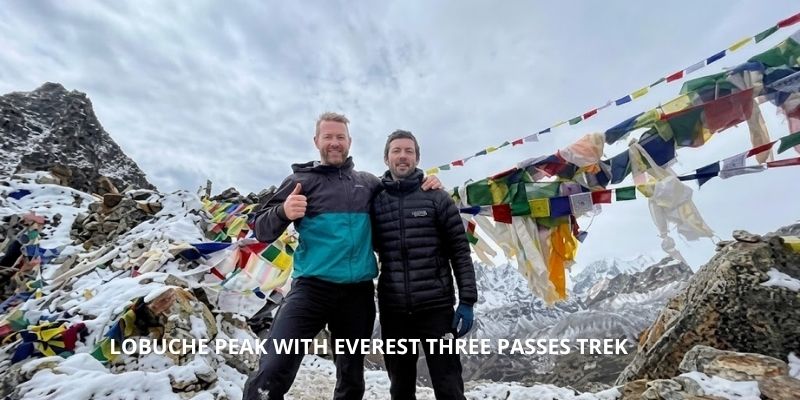
Lobuche Peak Climbing with the Everest Three Passes Trek

  • Location: Khumbu/Everest region of Nepal.
  • Peak: Lobuche East (6,119 m).
  • Lobuche Peak has two summits: Lobuche East (6,119 m) and Lobuche West (6,145 m).
  • Lobuche East is the summit climbed on this itinerary; Lobuche West is an expedition peak.
  • The climbing route includes Lobuche High Camp, glaciers, snow bridges, crevasses, loose ice, and rocky sections.
  • The trek includes Everest Base Camp (5,364 m) and Kala Patthar (5,555 m).
  • The summit provides views of Everest, Lhotse, Makalu, Cho Oyu, and other peaks of the Mahalangur range.
  • Lobuche Peak Climbing with the Everest Three Passes Trek Route: Lukla → Phakding → Namche Bazaar → Tengboche → Dingboche → Lobuche → Gorak Shep → Everest Base Camp → Kala Patthar → Lobuche → Lobuche High Camp → Lobuche East summit → Return 
  • Challenge: strenuous, semi-technical climb.
  • Best seasons: March–May and September–November.
  • Acclimatization: Namche Bazaar, Dingboche, and Lobuche High Camp
  • Duration: 17 days.
Lobuche Peak with Everest Three Passes Trek

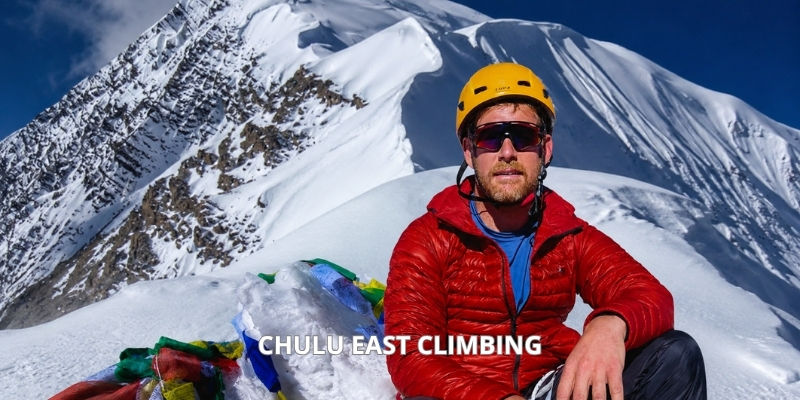
Chulu East Peak Climbing with the Annapurna Circuit Trek

  • Elevation: 6,484 m.
  • Location: Annapurna region, in the northern Annapurna massif.
  • Chulu East Peak Climbing Route: Besisahar → Chame → Upper Pisang → Ngawal → Yak Kharka → Chulu East Base Camp → Chulu East High Camp → Chulu East Summit → Base Camp → Manang → Ledar → High Camp → Thorong La Pass → Muktinath → Jomsom → Return.
  • The itinerary follows part of the Annapurna Circuit before and after the Chulu East climb.
  • The climb includes: Chulu East Base Camp at 5,145 m and High Camp at 5,600 m.
  • The summit day follows: Glacier terrain and the northeast ridge, with a steep ascent toward the summit ridge.
  • The itinerary includes an exploration/acclimatization day at Base Camp and an additional acclimatization day at High Camp.
  • From the summit, you see: Views of Annapurna I, Dhaulagiri, Manaslu, Annapurna II, and other Himalayan peaks.
  • The journey continues to Thorung La Pass (5,416 m) after the peak climb before descending toward Muktinath.
  • The route passes through the Manang and Mustang regions.
  • Cultural features: Gompas, monasteries, chortens, mani walls, and interactions with Gurung, Magar, Thakali, Manang/Manange, and Loba communities.
  • Best season: September–November and March–April.
  • Duration: 19 days.
Chulu East Climbing view

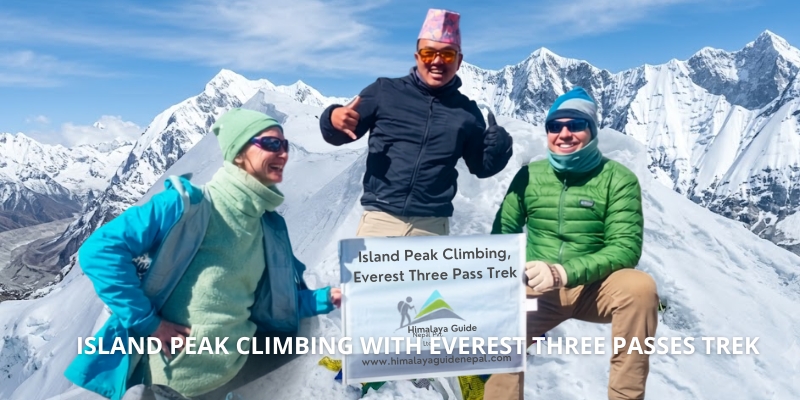
Island Peak with the Everest Three Passes Trek

  • Elevation: 6,189 m.
  • Location: Chhukung Valley in the Everest region.
  • Combines: Island Peak climbing with the Everest Three Passes Trek.
  • The route crosses Renjo La (5,446 m), Cho La (5,420 m), and Kongma La (5,535 m).
  • The climbing section involves: Glacier terrain, crevasses, and snow-covered sections.
  • Views along the journey: Everest, Lhotse, Nuptse, Cho Oyu, Ama Dablam, Cholatse, and Baruntse.
  • Best Season: March–May and September–November.
  • Island Peak with the Everest Three Passes Trek Route: Lukla → Phakding → Namche Bazaar → Tengboche → Dingboche → Chhukung → Island Peak Base Camp → Island Peak High Camp → Island Peak Summit → Kongma La Pass → Lobuche → Gorak Shep → Everest Base Camp → Kala Patthar → Dzongla → Cho La Pass → Dragnag → Gokyo → Gokyo Ri → Renjo La → Lumde → Return 
  • Duration: 19 days.
Island Peak Climbing With Everest Three Passes Trek

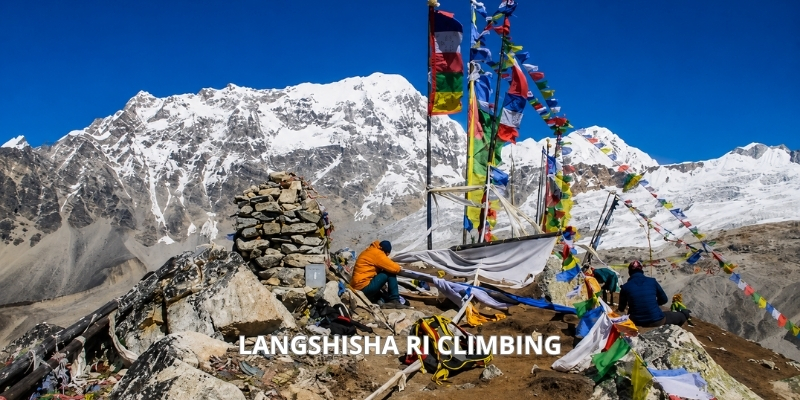
Langshisha Ri Climbing with Langtang Valley Trek 

  • Elevation: 6,427 m (21,086 ft).
  • Location: Langtang region of Nepal.
  • Kyanjin Gompa is at 3,830 m, while Langshisha Kharka is at 4,185 m.
  • The itinerary includes an acclimatization/exploration day at Kyanjin Gompa and an additional day at High Camp before the summit attempt.
  • The summit climb starts from High Camp before sunrise, followed by a descent to Base Camp after the summit attempt.
  • Langshisha Ri Climbing Route: Syabrubesi → Lama Hotel → Langtang Village → Kyanjin Gompa → Langshisha Kharka → Langshisha Ri Base Camp → High Camp → Langshisha Ri Summit → Return.
  • Summit views: Langtang Lirung, Morimoto, Ganchenpo, Urkinmang and Shishapangma in Tibet.
  • Difficulty: Strenuous plus.
  • Best Time: September–November and March–April.
  • The route combines lodge and tent accommodation, with camping used during the peak-climbing section.
  • Duration: 15 days.
Langshisha Ri Climbing

Standard Trek vs. Trek-and-Climb Journey

AspectNormal TrekTrek-and-Climb Journey
Main GoalExplore Himalayan trails, villages, landscapes, and viewpointsCombine a trekking experience with a Himalayan peak summit
RouteFollows established trekking trails between villages and campsIncludes a trekking route followed by a climb toward a peak and summit
AcclimatizationPlanned mainly around trekking altitudeMore deliberate, with additional acclimatization before the summit attempt
Physical DemandRequires endurance for several hours of walking each dayRequires trekking endurance plus greater strength and stamina for climbing
Technical SkillsUsually little or no technical climbing knowledge requiredMay involve rope techniques, crampon use, ice-axe handling, and basic mountaineering skills
EquipmentTrekking boots, backpack, poles, sleeping bag, and layered clothingTrekking gear plus climbing equipment such as crampons, harness, helmet, and ice axe
High PointA mountain pass, viewpoint, base camp, or trekking destinationA designated Himalayan summit
Time RequiredOften shorter and more straightforwardUsually includes extra days for acclimatization, climbing practice, and summit attempts
Weather ConsiderationWeather affects trail conditions and visibilityWeather can directly determine whether a summit attempt can proceed
Support TeamTrekking guide and/or porter depending on the tripTrekking guide plus climbing guide/Sherpa support and additional climbing logistics
Overall ExperienceFocuses on walking, scenery, culture, and mountain landscapesCombines the cultural and scenic experience of trekking with the challenge of climbing a Himalayan peak

What People Ask About Trekking with Peak Climbing In Nepal

Ready to Start
Your Adventure?

Join thousands of happy travelers who
Choose Himalaya Guide Nepal Pvt.Ltd.

Plan Your Trip