

The trail from Phakding to Namche Bazaar is one of the most memorable days on the Everest Base Camp trek. You wake up early in Phakding to the sound of the Dudh Koshi River and start the day’s trek with anticipation. As you walk and gain about 830 meters in elevation, you understand what the first major climb feels like. You cross high suspension bridges over glacier-fed rivers, entering Sagarmatha National Park, and experiencing Sherpa culture for the first time.
Top 3 Location Highlights of Phakding To Namche Route
As you move through this section, you pass Sherpa villages, cross several suspension bridges, and walk past mani walls and colorful prayer flags. Nonetheless, the Hillary Suspension Bridge, the Sagarmatha National Park Gate, and a viewpoint overlooking Thamserku and Mount Everest remain three main highlights.
Hillary Suspension Bridge
You reach the Hillary Suspension Bridge about halfway through the day, just after passing the quiet village of Jorsalle. Crossing it feels like a real milestone before the final climb to Namche. The bridge is named after Sir Edmund Hillary and hangs about 135 meters above the Dudh Koshi River. There is an older bridge below, but the newer one is higher and more used by trekkers and locals. As you walk across, you feel a gentle bounce under your feet, hear the roar of glacier melt far below, and see prayer flags fluttering in the wind.
At the same time, yaks and porters pass you calmly from the opposite direction. If you feel uneasy with heights, you can focus straight ahead, keep a steady pace, and remind yourself that thousands of people cross this bridge safely every season. Once you step onto the other side, the trail immediately climbs steeply, but the swaying across becomes one of the day’s most unforgettable moments for many.
Interesting Fact: The lower bridge, also known as the first suspension bridge, is now being used for bungee jumping. It plays a vital role in adding an adventurous activity in the Everest region without interfering with trekking traffic.
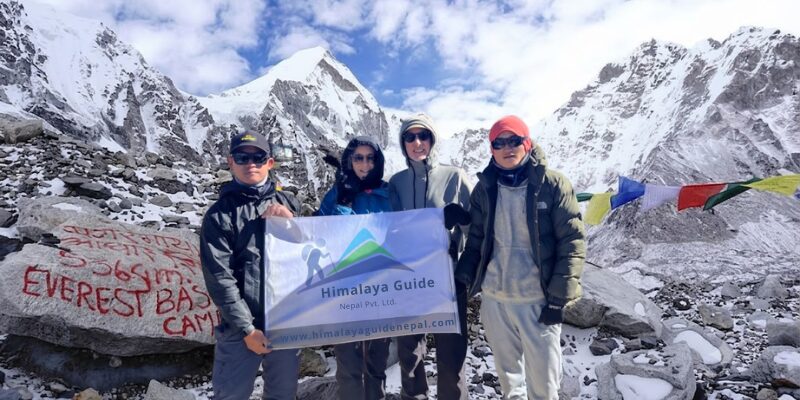
The Everest Base Camp trek is one of the most popular treks in Nepal. The trek is more frequently visited than other popular treks, such as the Annapurna Base Camp Trek or the Langtang Valley Trek, which are also well-known among trekkers worldwide. The trek is on the bucket list for many trekkers to reach the base of the world’s highest peak, Mount Everest. Everest Base Camp trek begins with a Kathmandu to Lukla flight & provides a challenging Himalayan & Sherpa village experience costing you $955. The paths twist and turn through beautiful Sherpa villages, high rhododendron forests, and alongside the Dudh Koshi River, offering glimpses of the local culture and the strong presence of the local people.

As the altitude gradually increases from Lukla, you will pass through Namche, Tengboche, and Dingboche. During this trek, trekkers need to acclimatize to the conditions of the Khumbu region. During these treks, trekkers will enjoy stunning views of mountains such as Everest, Ama Dablam, Nuptse, Lhotse, and Cho Oyu. The final section of your walk takes you to Gorak Shep, the last place before you reach Everest Base Camp, at an altitude of 5,364 meters. From Gorak Shep, you will walk to the highest point of the trek, at 5,644 metres, Kala Patthar. This is a rewarding trek, one that provides an immense sense of accomplishment and offers wonderful views of Mount Everest and the Khumbu Icefall up close, which will stay with you forever.
Everest Base Camp Trek CostThe Everest Base Camp Trek cost ranges from USD 1,055 to USD 1,510 per person for a standard package. The cost of the trek to EBC varies based on various factors like group size, trek duration, accommodation, transportation, services included, and customization of the trip. Also, the standard trek package covers most of the expenses required for the trek, including meals and accommodation, permits, guide service, domestic flight ticket, overland transportation, and necessary government taxes.
Everest Base Camp Trek Cost Breakdown:
| Category | Description | Estimated Cost (USD) | Factors Influencing Cost |
|---|---|---|---|
| Permits | Fees are required to trek in the Everest region. | $50 – $60 |
|
| Transportation | Costs to reach the trek starting point (usually Lukla) and return to Kathmandu. | $360 – $460 |
|
| Accommodation | Cost of staying in tea houses/lodges along the trekking route and hotels in Kathmandu. | $150 – $500+ |
|
| Food & Drinks | Expenses for meals (breakfast, lunch, dinner) and beverages during the trek. | $250 – $500+ |
|
| Guides | Fees for hiring a licensed trekking guide. | $500 – $1000+ |
|
| Trekking Gear | Costs for essential trekking equipment. | $100 – $500+ (if renting) / $300 – $2000+ (if buying) |
|
| Visa | Nepal entry visa fees. | $30 – $125 |
|
| Travel Insurance | Mandatory insurance that covers medical emergencies, high-altitude sickness, and emergency evacuation (including helicopter rescue). | $100 – $300+ | Cost depends on the duration of the trek and the coverage provided by the insurance policy. Ensure it specifically covers trekking at altitudes up to 6,000 meters. |
| Miscellaneous | Personal expenses such as hot showers, Wi-Fi, charging electronic devices, snacks, souvenirs, and tips for guides and porters. | $100 – $300+ |
|

Sagarmatha National Park Entrance (Monjo)
Monjo is a quiet Sherpa village with stone houses, carved mani walls, and prayer flags lining the trail. You stop here at the official Sagarmatha National Park checkpoint. You show your permits, take a short rest, and look around before continuing toward Jorsalle and Namche. The checkpoint itself feels simple, with a small gate, a modest building, and park staff checking documents.
After you pass through, the journey starts to feel different. From here on, you walk inside a UNESCO World Heritage Site that covers 1,148 square km of Himalayan wilderness. The park protects rare wildlife, high-mountain forests, and long-standing Sherpa traditions while keeping the trekking experience calm, open, and welcoming.
Everest View Point (Top Danda)
After a long climb through switchbacks and pine forest, you reach a viewpoint near Namche where you finally slow down and rest. It’s a natural place to catch your breath after the steady uphill push. You can feel your legs burn, and your breathing feels heavier in the thin air, but after you reach here, the effort quickly feels worthwhile. You get a stunning view of Thamserku and Kongde Ri, one of the first mountain views on the Everest region trek trail. You may even see distant views of Mount Everest itself if the day is clear.
This viewpoint helps break the journey into manageable sections and makes the final stretch to Namche feel achievable. Here, you feel a mix of exhaustion and excitement. Many trekkers pause here to drink water, take in the views, take photos, and share snacks with others on the trail. It shows that amazing views are only achievable with hard climbs in the Himalayas.
Phakding to Namche Bazaar Trek Distance
The trek from Phakding to Namche Bazaar covers about 8 to 11KM and usually takes 5 to 8 hours. You start at 2,610 meters and climb to 3,440 meters, gaining roughly 830 meters. The scenery keeps changing. You see riverside paths, pine forests, small Sherpa villages, and towering Himalayan peaks. Along the way, you cross suspension bridges, pass mani walls and prayer flags, and see life in villages like Benkar, Chumoa, and Jorsalle.
The trail naturally splits into three parts. The first section is gentle. You walk along the Dudh Koshi. Next comes Monjo and the park entrance, where you start to feel the altitude, and can take a short break while showing your permits. Finally, after the Hillary Suspension Bridge, the trail climbs steeply through long switchbacks and a forest path, roughly like climbing 200 flights of stairs on rocky terrain.
The last 4KM feel the hardest, with oxygen dropping from about 74% to 67% of sea-level levels. You have to move at a slow, so-called Himalayan pace, taking breaks in between to avoid altitude sickness. Tip: Start early to manage fatigue while still reaching Namche in time for lunch or afternoon tea.
Phakding to Namche Bazaar Route Difficulty
This trek is best described as moderate to tough, mainly because of the continuous uphill sections, altitude gain, and thinner air, not because the terrain is tricky. The first half is a gentle walk along the river, crossing suspension bridges and passing small villages. But after Jorsalle and the Hillary Bridge, the trail becomes a steady, challenging climb that tests both legs and lungs. Here, many trekkers find themselves moving slower than expected, breathing harder, and feeling their legs sore by mid-afternoon.
Therefore, we recommend you walk at a steady pace, take short breaks every 20-30 minutes, drink water even if you’re not thirsty, keep your daypack light, and consider trekking poles for steep sections, but not on suspension bridges. It’s a challenging day, yes, but thousands of trekkers complete it successfully every year. By the time you reach Namche, the sense of accomplishment and the views around you make every uphill step totally worth it.
Accommodation in Phakding and Namche Bazaar
Along the way, you’ll find plenty of teahouses and lodges where you can pause for a rest or a hot drink. In Phakding, well-known stays include Pine Forest, Sherpa Guide Lodge, Hotel Snowland, and Kala Patthar Lodge. These places usually offer twin-bedded rooms with basic comforts and either shared or attached bathrooms.
Then, at Namche Bazaar, you get a much wider range of accommodation. It has both simple teahouses and upscale lodges, such as Hotel Everest View. Trekkers like to stay in Hotel Khangri, Camp De Base, Hotel Namche, Panorama Lodge, and Mountain Dreams Lodge. They include twin-sharing rooms that generally cost between Rs 500 and 1,000 per night.
Most of the lodges in both villages offer a variety of food options and mountain views. They also offer Wi-Fi. Some offer it for free, while others charge around NPR 200-300 in Phakding and USD 5-10 in Namche. Similarly, charging a device is usually free, but you may have to pay NPR 100-200 in some lodges.
Trip Featuring Phakding To Namche Bazaar Route
You can’t skip the trek to Namche from Phakding on most of the Everest trek. It’s the first big climb everyone hits in the Khumbu region. No matter which route you take, you pass through this stretch before heading to Everest Base Camp, Gokyo Lakes, or one of the high passes.
Island Peak Climbing
For trekkers who have already completed high-altitude treks and are ready for their first real climb, 18-day Island Peak Climbing is the next step. The journey offers incredible views of Mount Everest, Ama Dablam, and the massive Lhotse Nuptse wall. More importantly, you get the thrill of standing on a true Himalayan summit, and solid practice for bigger climbs later.
The route follows the main Phakding to Namche Bazaar trail. You pass through the same high-altitude environment, Sherpa villages, and rich Everest-region culture before turning toward the Imja Valley. While climbing, you travel on glaciers and work with ropes and crampons. Fit trekkers with basic mountaineering skills can handle these technical challenges.
Everest Two Passes Trek
The 14-day Everest Two Passes Trek is a more adventurous journey across two high Himalayan passes, Cho La and Renjo La. It takes the classic Everest Base Camp route for the first 5 days. This lays the foundation before the trail climbs higher and explores quieter valleys.
With this itinerary, you can enjoy less-crowded sections of the trail and visit some of the popular destinations of the Everest region, the Gokyo Lakes, Gokyo Ri, Chhukung Valley, and Thame village. It is definitely tougher, but you get a more varied Everest experience that combines iconic landmarks with remote mountain scenery.
Everest Gokyo Ri Trek
If you want a shorter journey to Gokyo Ri, then we also have the 12-day Everest Gokyo Ri Trek as an option. In addition to climbing to Gokyo Ri, you can enjoy the stunning turquoise Gokyo Lakes, smaller crowds, and cross a single Renjo La pass. Like other EBC treks, it starts on the same lower trail, including the Phakding to Namche section, before turning west toward the Gokyo Valley instead of going straight to Base Camp.
Since it includes only one pass and runs over 12 days, the itinerary maintains a comfortable pace while offering big-mountain scenery and an authentic Sherpa experience.
Thinking about trekking in the Everest country? Don’t dwell. Contact us and get started.


