Koto (2,600 m)
Nestled on the right bank of the Marshyangdi River, Koto is your starting point for the Nar Phu Valley Trek, where you’ll officially kick off your adventure and sort out any permits. Before diving into the restricted zone, you’ll need to present your paperwork and get the lowdown from your liaison officer. Koto’s cozy stone-and-wood teahouses look out over terraced barley fields that hug the steep hillsides. Plus, the riverside vibe gives you the soothing sounds of flowing water and a perfect chance to stretch your legs before tackling the serious climb up to Meta.
Meta (3,560 m)
Meta marks your first real high-camp stop beyond the forest line. As the trail ascends from Koto, you’ll pass through dense pine and rhododendron groves, eventually emerging onto open slopes that offer sweeping views of Annapurna II and Gangapurna towering overhead. Warm teahouse rooms in Meta are basic but comfortable, providing hot meals and crucial rest. During afternoon breaks, you can watch sunlight shift across glacier-fed peaks, and in the clear night sky, countless stars shine above the silhouette of the Himalaya.
Phu Village (4,080 m)
Located on a high plateau, Phu Village embodies traditional Tibetan-influenced architecture and culture. Characterized by thick-stone houses with carved wooden windows, the settlement clusters around the whitewashed Tashi Lhakhang Gompa at 4,150 m. This rest day offers gentle acclimatization walks to the monastery and surrounding mani walls, where prayer flags snap in the mountain breeze. Homestay-style teahouses serve butter tea and tsampa, and friendly locals, often clad in colorful woolen garments, share stories of seasonal festivals and yak-herding traditions.
Nar Phedi (3,490 m)
Nar Phedi is the valley’s serene gateway, where high alpine meadows and scattered rock cairns replace dense forest. After descending from Phu, you’ll feel the air grow slightly warmer and the terrain open into grass-covered slopes punctuated by prayer-flagged stones. Family-run tea houses here cater to trekkers with simple noodle soups and fresh yak butter tea. Birdsong and distant glacier streams provide a restful soundtrack, making Nar Phedi an ideal midpoint for hydration and wildlife spotting before you tackle the final ascent to Nar Village.
Nar Village (4,110 m)
Perched among rocky outcrops, Nar Village ranks among Nepal’s highest permanent settlements. Its narrow lanes wind past stone lodges, community mani walls, and the Satya Gumba monastery, whose red-and-white façade stands against the backdrop of snow-capped ridges. Yak herds graze nearby, and you may glimpse Himalayan Monal or blue sheep grazing on the slopes. As dusk falls, oil lamps illuminate village courtyards, and the aroma of dal bhat cooking drifts through the air, creating a warm, communal atmosphere amid the high-altitude chill.
Kang La Pass (5,306 m)
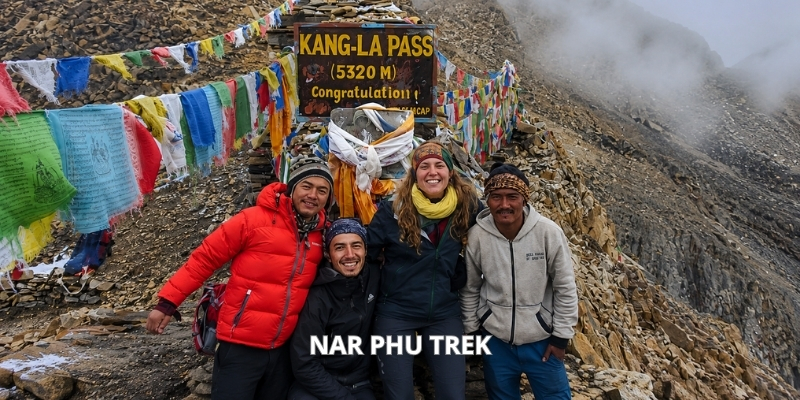
The pinnacle of the trek, Kang La Pass, demands an early start and nearly 1,200 m of steep, rocky climbing from Nar Village. At the summit, you’re rewarded with an unparalleled 360° panorama: Annapurna II’s ice seracs, Tilicho Peak’s sharp profile, and distant peaks like Himlung and Kang Garu. The pass crest often carries a layer of snow even in spring and autumn, making colorful prayer flags all the more vibrant against the stark landscape. Camaraderie among trekkers peaks here, as everyone shares in the triumph of reaching the summit.
Kang La Phedi (~5,050 m)
Just below the pass on the Ngawal side, Kang La Phedi provides a small, flat respite from the arduous ascent. Occasional local entrepreneurs set up simple tea stalls here, offering hot beverages and snacks—an unexpected luxury at this altitude. This spot also functions as a convenient high-camp campsite and a gathering point for porters and guides. From here, you’ll prepare yourself mentally and physically for the 1,400 m descent into Ngawal, watching cloud formations drift across distant peaks as you sip your tea.
Ngawal (3,660 m)
Ngawal, a picturesque Gurung village, sits on a verdant hillside overlooking the Marsyangdi River Valley. Its cluster of slate-roofed homes and centuries-old Gyaji Monastery offers cultural richness and panoramic mountain views. In the late afternoon, villagers light butter lamps at the mani wall, casting a warm glow on intricately carved stones. Teahouses serve local specialties like buckwheat pancakes and barley beer. Gentle side hikes to nearby viewpoints yield sweeping vistas of Annapurna I and II, as well as the terraced fields that define Ngawal’s agricultural heritage.
Pisang (~3,200 m)
Descending from Ngawal, the trail leads to Pisang, notable for its bamboo groves and terraced fields. The village’s tea houses provide a shaded rest spot where you can taste freshly baked flatbreads and sip milky chai. Towering cliffs frame Pisang, creating a dramatic backdrop for watching local farmers harvest potatoes and barley. Wildlife enthusiasts may spot Himalayan vultures riding thermal currents overhead or hear the metallic calls of Danfe (Himalayan Monal) echoing through the bamboo thickets lining the trail.
Dukur Pokhari (3,400 m)
Dukur Pokhari’s alpine pond offers one of the trek’s most serene settings. Encircled by jagged peaks and rust-colored moorlands, this small body of water mirrors the sky on calm mornings. The site is ideal for wildlife observation, as Tibetan foxes and snow partridges frequently visit the shore. Teahouse platforms near the pond invite trekkers to pause, take in the reflections of the surrounding peaks, and enjoy a simple lunch. The hush of this location contrasts sharply with busier villages, reinforcing the Nar Phu Valley’s remote character.
Chame (2,670 m)
As the administrative hub of the Manang District, Chame reunites trekkers with a busier, more developed valley atmosphere. Colorful prayer flags crisscross the main street, and shops offer trekking gear, snacks, and communications. Walnut and apricot trees shade teahouses, where you can sample local specialties like Khapse and Tongba. The sight of terraced maize fields sloping down to the Marsyangdi River signals your descent from the high Himalayas. Chame’s comfortable lodges and warm meals make it an inviting place to reflect on your journey before the final drive back to Kathmandu.