
If you’re planning the Annapurna Base Camp (ABC) Trek, your first question is probably, “How difficult is the ABC Trek?” or “What is the trek’s difficulty?” Let’s clear this up: the Annapurna Base Camp Trek is a moderately difficult journey in Nepal’s Himalayas. It means the trek is neither too challenging nor as easy as a typical day hike. The journey takes you up to 4,130 m and involves 5-7 hours of walking per day for 10-13 days.
What makes the Annapurna Base Camp Trek difficult is not mountaineering or technical climbing. Instead, the difficulty comes from long walking days, continuous uphill and downhill sections, stone staircases, and increasing altitude with each day’s walking. Sections around Chhomrong and the entrance to the Annapurna Sanctuary can especially feel tough.
After reaching the ultimate destination, Annapurna Base Camp, the journey descends, which can be hard on the knees and thighs even as the altitude continues to drop. So leg strength and stair tolerance matter as much as overall cardiovascular fitness. That said, you don’t need to be an athlete to complete the trek. If you can comfortably walk on consecutive days, you can manageably complete the ABC Trek.
Annapurna Base Camp Trek Difficulty Quick Facts
| Factor | What to Expect |
|---|---|
| Difficulty | Moderate |
| Highest Point | Annapurna Base Camp |
| Maximum Elevation | 4,130 m / 13,550 ft |
| Daily Walking | About 5–7 hours |
| Total Distance | 110–120 km |
| Terrain | Stone steps, forest trails, rocky paths |
| Technical Climbing | Not required |
| Main Challenge | Continuous ascent + altitude |
Which Sections of the ABC Trek Are the Most Challenging?
Annapurna Base Camp Trek is a 13-day moderately difficult journey with an elevation of 4,130 m and 6 hours walk each day in Nepal’s Himalayas. The Annapurna Base Camp Trek is moderately challenging, not because of a single section; instead, its difficulty shifts from one section to the next. The lower section is physically challenging because of steep terrain and repeated elevation changes, while the upper section is tough because of high altitude, colder conditions, and lower oxygen levels.
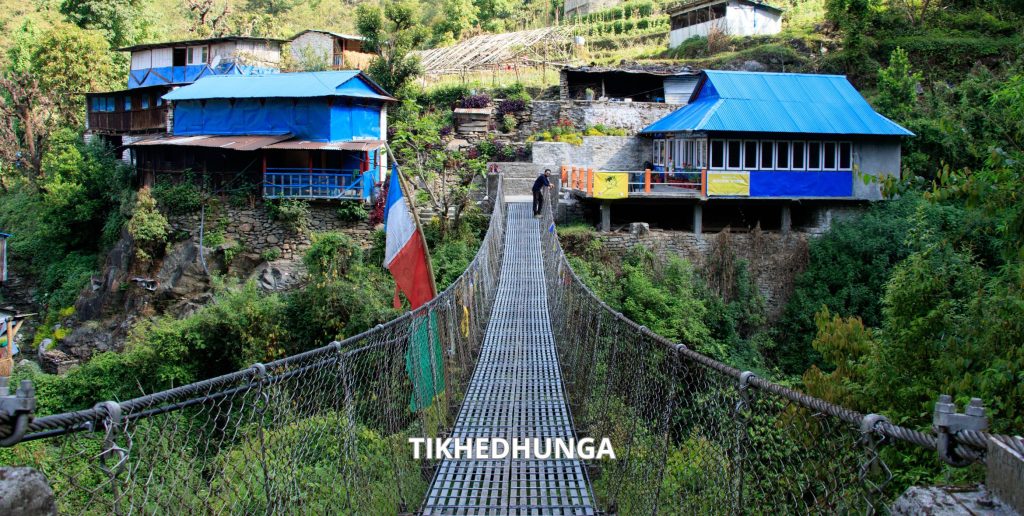
Tikhedhunga to Ulleri
Tikhedhunga to Ulleri section is one of the first challenging parts of the Annapurna Base Camp route. The route’s main challenge is over 3,000 stone steps of continuous ascent, gaining around 500 m. The climb is generally short compared with some later trekking days, but the continuous uphill walk can tire the calves, thighs, and glutes.
Walking over 3,000 steps can especially feel challenging when carrying a loaded backpack. The trek is already difficult, and a heavy backpack will make every step twice as hard. So keep a steady pace and take breaks along the route.
Chhomrong to Sinuwa
The Chhomrong to Sinuwa section is another challenge where trekkers feel the ABC Trek is more physically demanding than blogs and packages suggest. From Chhomrong, the trek takes you down to Chhomrong Khola, crosses a suspension bridge, and then climbs again toward Sinuwa. This means you first lose elevation, then gain it again shortly.
Additionally, the long staircases are the main physical challenge on this section. The steep stone staircases leading into and out of Chhomrong can be tough on your leg strength and strain your knees.
Deurali to Annapurna Base Camp
For most trekkers, the trek from Deurali to Annapurna Base Camp is the most challenging section because the altitude increases on this section. Deurali lies at an elevation of 3,230 meters, while Machhapuchhre Base Camp is around 3,700 meters, and Annapurna Base Camp reaches 4,130 meters. This section gains 900 meters of elevation, which makes the walk challenging because of the rapid change in altitude.
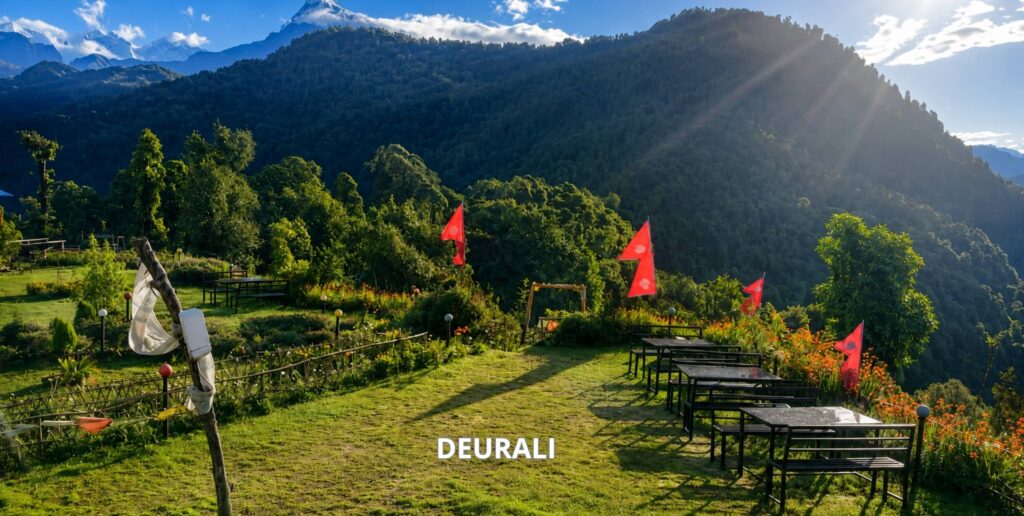
The landscape also changes on this section. From this section onwards, you enter a more open, rocky, and alpine terrain. Leaving the forested section behind. Temperature also drops in this section, especially around Machhapuchhre Base Camp and Annapurna Base Camp.
ABC to Bamboo
The journey back from Annapurna Base Camp to Bamboo may look easier on a map because you are losing altitude, but the long descent can be challenging. The downhill walk stresses different parts of your body, adding to the trek’s overall difficulty. Every step down impacts your knees, quadriceps, ankles, and feet. After days of trekking, those muscles are already exhausted, making the downhill walk feel harder than they look on the map.
Annapurna Base Camp Trek Difficulty Day by Day
The moderate difficulty of the Annapurna Base Camp trek doesn’t come from a single day’s challenge. Instead, each day has its own challenges that add up to the trek’s overall difficulty. Some days involve long uphill sections and stone staircases, while other sections feature steep descents.
| Day | Route | Approx. Walking | Difficulty | Main Difficulty |
|---|---|---|---|---|
| Day 1 | Arrival in Kathmandu | — | Easy | No trekking; mainly arrival, rest, and preparation |
| Day 2 | Kathmandu → Pokhara | — | Easy | Long road journey, but no physical trekking |
| Day 3 | Pokhara → Ulleri | Short | Moderate–Challenging | Road travel followed by a stone steps walk; beginning of elevation gain |
| Day 4 | Ulleri → Ghorepani | 5–7 hrs | Challenging | Long uphill climb and steep stone steps around Ulleri |
| Day 5 | Ghorepani → Poon Hill → Tadapani | 6–7 hrs | Moderate–Challenging | Early climb to Poon Hill followed by repeated ascents and descents |
| Day 6 | Tadapani → Chhomrong | 5–6 hrs | Moderate | Descend to Kimrung Khola, then climb again toward Chhomrong |
| Day 7 | Chhomrong → Dovan | 5–6 hrs | Moderate–Challenging | Steep descent from Chhomrong followed by a sustained climb through Sinuwa |
| Day 8 | Dovan → Deurali | 4–5 hrs | Moderate | Continuous uphill walking through Bamboo and the Himalayas |
| Day 9 | Deurali → MBC → ABC | 5–6 hrs | Challenging | Major elevation gain, colder conditions, thinner air, and rugged high-altitude terrain |
| Day 10 | ABC → Bamboo | 6–7 hrs | Challenging | Long descent of around 1,800 m, which can put considerable strain on the knees |
| Day 11 | Bamboo → Jhinu Danda | 5–6 hrs | Moderate | Continued descent with several uphill sections |
| Day 12 | Jhinu Danda → Siwai → Pokhara | 2–3 hours trekking | Easy | Short final walk followed by a drive to Pokhara |
| Day 13 | Pokhara → Kathmandu | — | Easy | Road journey with no trekking |
How Difficult is the Annapurna Base Camp Trek Compared to Other Treks?
The Annapurna Base Camp (ABC) Trek is a moderate trek. It is more physically demanding than shorter, low-altitude treks such as the Ghorepani Poon Hill Trek, but usually less demanding than high-altitude routes such as the Everest Three Passes or Manaslu Circuit Trek.
| Trek | Difficulty Compared with ABC | Main Reason |
|---|---|---|
| Ghandruk Poon Hill Trek | Easier | Shorter and lower in elevation |
| Everest Base Camp Trek | More demanding | Higher maximum altitude and longer acclimatization requirements |
| Annapurna Circuit Trek | More demanding | Higher Thorong La crossing at 5,416 m and longer route |
| Manaslu Circuit Trek | More demanding | Remote terrain, longer itinerary, and Larkya La at 5,106 m |
| Everest Three Passes Trek | Much more demanding | Three high passes above 5,000 m and strenuous high-altitude sections |
Annapurna Base Camp Trek Difficulty for Different Types of Trekkers
The Annapurna Base Camp Trek difficulty is rated moderate in general. But it can be quite easy for experienced trekkers and more challenging for those with less or no trekking experience. So the difficulty isn’t the same for everyone; it depends on previous experience, fitness, age, walking habits, and your ability to handle altitude.
| Trekker Type | Difficulty Level | Main Challenge on ABC Trek | What Helps |
|---|---|---|---|
| Beginner Trekkers | Moderate to Challenging | Long walking days, steep stone steps around Ulleri and Chhomrong, and altitude above 3,000 m | Build walking endurance and include regular uphill training |
| Experienced Trekkers | Moderate | Long ascents and descents are manageable, but the altitude at MBC (3,700 m) and ABC (4,130 m) still requires care | Maintain a steady pace and allow proper acclimatization |
| Older Trekkers | Moderate to Challenging | Repeated stone steps, downhill sections, and altitude can be harder on the knees and joints | Trek slowly, use trekking poles, and choose an itinerary with enough rest |
| Family Trekkers | Moderate | Long walking days and steep sections may be tiring for younger children, especially around Chhomrong and the upper trail | Consider children’s fitness, use a comfortable itinerary, and take regular breaks |
| Solo Trekkers | Moderate to Challenging | Physical effort is combined with route planning, changing weather, and managing altitude independently | Prepare well, carry essential supplies, monitor your condition, and check trail/weather conditions |
| Fit & Active Trekkers | Moderate | The main challenge is the combination of elevation gain, long walking hours, and the final climb to ABC | Good cardiovascular fitness and leg strength make the trek more manageable |
If you think the standard Annapurna Base Camp Trek is easy and you want more challenging experience in a short time, the ABC short trek can also be a better option for you.
Annapurna Base Camp Trek Season-Wise Difficulty
The Annapurna Base Camp Trek is possible throughout much of the year, but its difficulty changes with the weather, trail conditions, temperature, and visibility. A route that feels comfortable in the dry autumn months can become difficult in winter or during the monsoon. So no single difficulty level applies to everyone. But regardless of season, the final walk to Annapurna Base Camp at 4,130 m / 13,550 ft requires proper pacing and acclimatization. The season may change the trail conditions, but fitness, preparation, and altitude awareness remain important throughout the trek.
Spring
A Gradual Climb Through Rhododendron Forests
March to May offers a memorable combination of manageable trail conditions and changing Himalayan scenery during the Annapurna Base Camp Trek. The lower sections around Ghandruk, Chhomrong, and Sinuwa are surrounded by blooming rhododendrons, making the long stair sections feel more scenic.

As the trail enters the narrower Modi Khola valley toward Bamboo, Deurali, and Machhapuchhre Base Camp, temperatures remain noticeably cooler. Early spring can still bring snow around the higher camps, particularly after a cold spell. By April and May, snow generally becomes less of an obstacle, but warmer temperatures can make the uphill sections feel harder during the day.
The main challenge during spring is therefore the continuous ascent through thousands of stone steps and the increasing altitude toward ABC, rather than extreme weather.
Monsoon
Wet Steps and Slippery Forest Trails
June to August changes the ABC Trek most dramatically because much of the route passes through dense, moisture-rich forest. The sections between Jhinu Danda, Chhomrong, Sinuwa, and Bamboo can become particularly wet, with slippery stone steps, muddy patches, and leeches appearing along the trail.
Heavy rain can also make the Modi Khola section between Bamboo and Deurali more uncomfortable, while waterfalls and small streams along the trail may carry more water. Clouds frequently settle around the sanctuary, so the mountains may remain hidden even after reaching higher viewpoints.
The difficulty is less about the altitude alone and more about slow, careful walking on wet steps and muddy forest trails. A good rain jacket, waterproof footwear, and trekking poles can make a significant difference.
Autumn
Clearer Trails on the Way to Annapurna Sanctuary
September, October, and November is generally associated with better trekking conditions on the ABC route after the monsoon. The trails through Chhomrong, Bamboo, and Deurali usually become drier, making the long ascents and descents easier to manage.
The biggest advantage is the combination of clearer mountain views and more predictable walking conditions. As the trail leaves the forest and reaches Machhapuchhre Base Camp (3,700 m) and Annapurna Base Camp (4,130 m), the surrounding peaks become the main attraction.
September can still receive some rain, particularly at the beginning of the month. October and November are generally drier, but mornings and nights become increasingly cold at the higher camps. The physical difficulty remains significant because the route continues to gain altitude through steep sections and stone staircases.
Winter
Snow Becomes the Main ABC Challenge
December to February gives the Annapurna Base Camp Trek a completely different character. The lower sections around Ghandruk and Chhomrong can still be relatively comfortable during sunny daytime hours, but temperatures drop rapidly as the route climbs toward the sanctuary.
The higher sections from Deurali to Machhapuchhre Base Camp and ABC are where winter conditions become important. Snow and ice can cover parts of the trail, making the final approach slower and more demanding. Overnight temperatures at Annapurna Base Camp (4,130 m) can fall well below freezing.
Another challenge is the combination of cold, altitude, and shorter daylight hours. Trekkers need proper insulation, warm sleeping gear, gloves, and footwear suitable for potentially icy sections. After snowfall, trail conditions can also change quickly, so the final ascent should be approached with greater flexibility.
Annapurna Base Camp Trek Difficulty FAQ
Is Annapurna Base Camp Trek difficult?
Is ABC Trek suitable for beginners?
How many hours do you walk each day on the ABC Trek?
What is the hardest day of the Annapurna Base Camp Trek?
Is Everest Base Camp harder than Annapurna Base Camp?
Is ABC harder than Annapurna Circuit?


