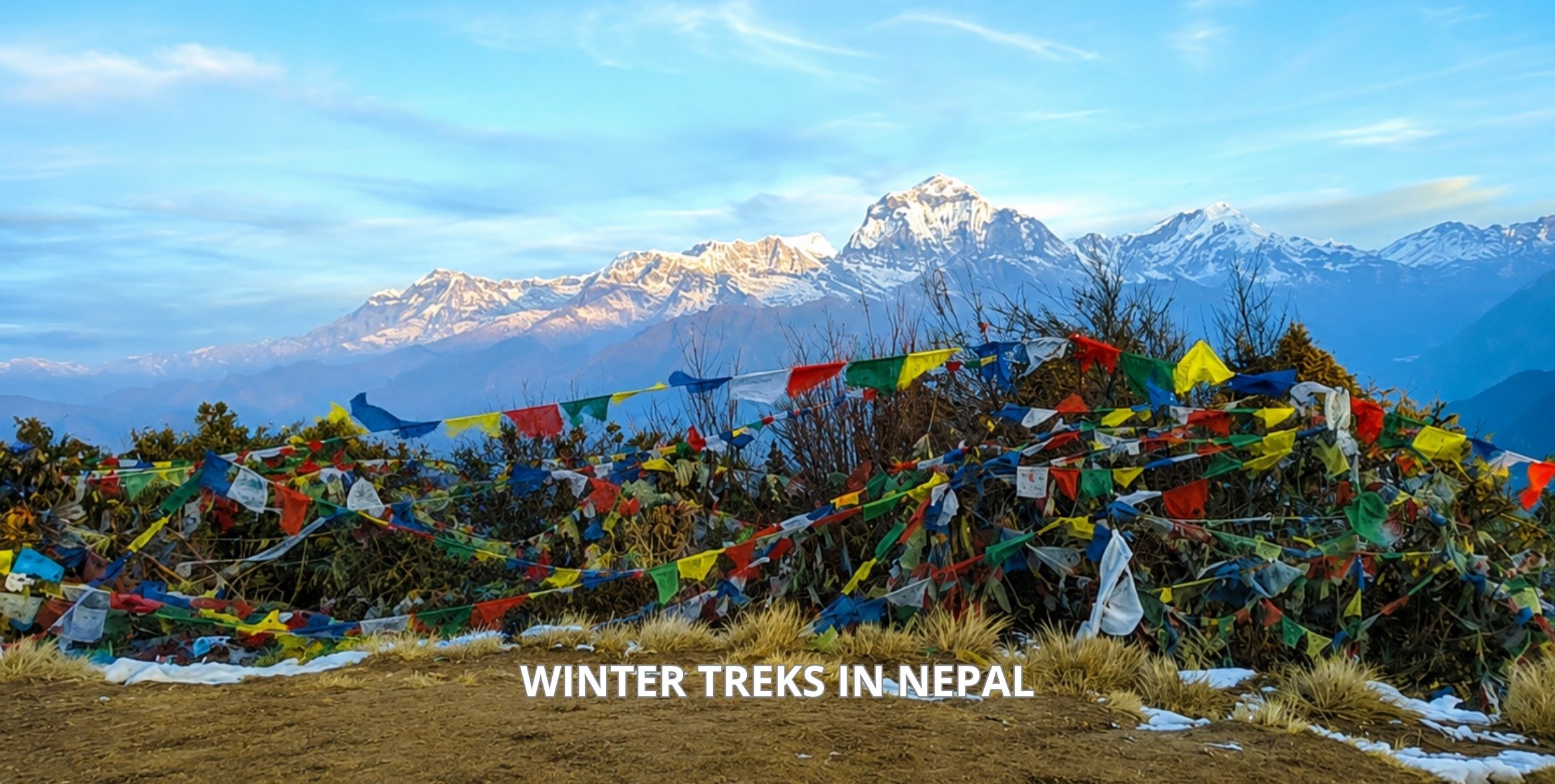
Winter (December to February) is one of Nepal’s underrated trekking seasons. Many travelers assume winter in Nepal is an off-season, based on rumors rather than facts. Let me tell you: with the right preparation, it can be one of the best times to go trekking. It is the time when the crowd leaves, and the Himalayas feel only yours. After autumn peak trekking season, the route becomes peaceful, and the entire landscape feels raw.
What makes winter trekking best is the clear skies, surreal sunrise and sunset views, and crystal-clear mountain views, which contradict ill-informed beliefs. Also, at many viewpoints, you may feel like you have the mountains all to yourself. That said, not all treks are easy or suitable for winter. Some trails are colder, some have snow all over the pathway, and some passes may be blocked. So, this page features three major treks suitable for winter trekking and offers a great experience, no less than peak trekking season.
The top three winter treks in Nepal include Ghandruk Poon Hill Trek, Mardi Himal Trek, and Langtang Valley Trek. These are not only the best winter treks but also beginner-friendly and suited to trekkers with a general fitness level.
Ghandruk Poon Hill Trek, If you take a quick search across the internet about the shortest and easiest treks in Nepal, the name Ghandruk Poon Hill Trek (also known as Ghorepani Poon Hill Trek) pops up on your screen. This trek is widely popular among the trekking communities for its shorter duration, beginner-friendly nature, and the stunning sunrise view it provides. It is located inside the Annapurna Conservation Area in the Annapurna region of Nepal. The major highlight of this trek is the early hike to Poon Hill (3,210 m) to witness the sunrise over the view of the Annapurna and Dhaulagiri mountain range.
Along the way, you will get to explore the traditional Ghandruk Village along with Tadapani, Ulleri, and others. These villages are renowned for their warm hospitality, catering to trekkers. While enjoying the mountain views, you will also be exposed to the culture of the Gurung people. The other highlight of this trek is the rhododendron forest, which blooms with vibrance during the spring season. If you are seeking the trek to begin trekking, Ghandruk Trek Poon Hill can be it. So, let’s delve deeper into this trekking guide to learn more about the trek.
The Short Annapurna Base Camp Trek offers a streamlined 8-day version of the classic ABC journey, designed for trekkers who want to visit Annapurna Sanctuary without a long-term commitment. The faster pace is manageable for experienced hikers, but beginners should be ready for a physically demanding adventure. Even with fewer days, the trek still delivers the full Himalayan atmosphere, rugged trails, dramatic scenery, and an authentic mountain feel.
The main difference in this shorter itinerary is that it skips the Ghorepani-Poon Hill section. Aside from that, nothing essential is left out. You still get sweeping views of Annapurna I, II, and III, Machhapuchhre, Hiunchuli, and the surrounding peaks. Condensing the journey only makes it more adventurous and rewarding. So, if you want to complete the Annapurna Base Camp Trek in less time without sacrificing the core experience, this is an ideal option.
The 4 days Chisapani Nagarkot Hike is a short and easy hike to see Mt. Everest and many other mountains from Chisapani and Nagarkot. It is a short hiking route near Kathmandu. It is perfect for travellers who want to enjoy mountain views, nature, and local culture without traveling far from the city. This easy hike is suitable for all age groups, including families with children or seniors. No previous trekking experience required. It is available year-round and offers a perfect escape into nature in just a few days.
You will begin the Chisapani Nagarkot hike with a short drive from Kathmandu to Sundarijal. From here, you will enter Shivapuri Nagarjun NationalPark, Nepal’s newest national park, and start your trek through lush forests and small villages. After 5–6 hours of walking, you’ll reach Chisapani, your first overnight stop. On the following day, you will trek to Nagarkot. The trail intersects with the Helambu Trek at one point, and a right turn leads to the Jhule post, a great spot for a lunch break with views of the surrounding agricultural landscape. The journey then continues through Chauki Bhanjyang and uphill to Nagarkot.
At 2,175 meters above sea level, Nagarkot offers panoramic views of Annapurna, Langtang, Ganesh Himal, Dorje Lakpa, Gauri Shankar, and even Mount Everest(its distance means it appears much smaller than the closer ranges) on clear days. For the final day, after enjoying the sunrise from Nagarkot, you have two options to return to Kathmandu: either drive back directly or take a 4 to 5 Hours trek to the ancient Changu Narayan Temple, a UNESCO World Heritage Site, before a vehicle takes you back to the city.
If the given itinerary doesn’t suit your schedule, it can be customized, and you can also upgrade your accommodations for extra comfort.
9 Days Langtang Valley Trek Itinerary At $445 Cost
5.0 (3 Reviews)
4,772 m (Kyanjin Ri)
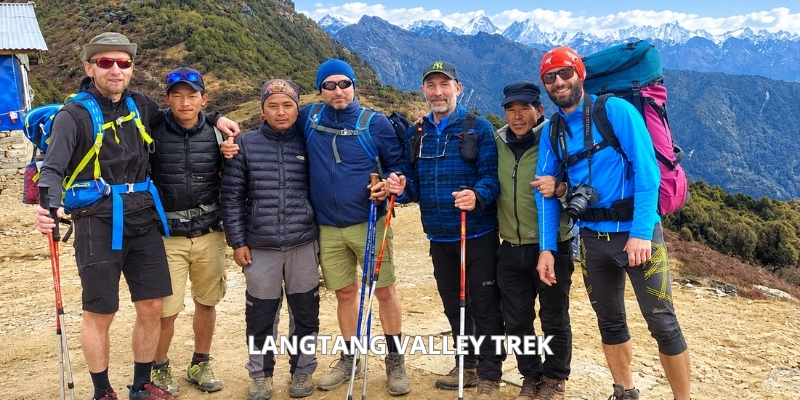
The 9 Days Langtang Valley Trek is a complete adventure that is easily accessible from the capital city of Kathmandu. Its unspoiled nature, offbeat trails, and grand mountain views make it an excellent alternative to other commercialized trekking destinations in Nepal. Moreover, its moderate difficulty and short duration make it ideal for beginners, family trekkers, and those with a tight schedule.
The Langtang Valley Trek starts at Syabru Besi. You will drive on the rough and bumpy mountain road to get there from Kathmandu. The drive offers you the first glimpse of the beautiful Nepalese countryside. From Syabru Besi, the trail winds its way through a forest of pine, juniper, rhododendron, bamboo, and alpine meadows. Similarly, you will come across fast mountain streams, craggy rock, while the snow-capped peaks keep you company.
For the majority of the Langtang Valley Trek, the trekking trail follows the Langtang River. However, after you reach Ghodatabela, the valley widens and opens up to a spectacular view of the Langtang Himal range. You will follow the scenic trail toward the Langtang Valley and Kyanjing Gompa. You will also spend the majority of your time walking in Langtang National Park. Thus, you may catch sight of wildlife and different vegetation.
The majority of the population in this region consists of ethnic Tamang groups. They still follow their culture, traditions, and farming practices passed from their ancestors. If you’ve been to Tibet before, the short and simple trek up Langtang will bring back memories of your time there or you can also refer to the Tibet Travel Tips to learn more about Tibet. It is because there is a huge Tibetan influence in the region. The deep cultural immersion during the short Langtang Trek is enriching.
Langtang Valley Trek is a moderately difficult 9-day adventure that is easily accessible from Kathmandu, making it ideal for beginner trekkers as well. This is a perfect package for those looking to escape the noisy city life into the arms of pristine nature. It is an unforgettable trip that takes the journey deep into the heart of the Langtang region. Its quiet trail, off-beat terrain, and jaw-dropping mountain views are worth taking the trek.
Nepal has been garnering rapid global attention as a top Himalayan trekking destination. There is no such trail in Nepal that trekkers have not reached. Yes, the crowd in these trails can differ depending on the popularity, but their experience is unmatched. Lately, treks like Annapurna Base Camp and Everest Base Camp have become increasingly crowded every passing day. In such a case, a trek that is not crowded and still offers the same experience is a blessing. And that blessing is the Mardi Himal Trek.
Mardi Himal Trek, despite opening in the early 2010s, has become a popular trekking destination because of its short duration and challenging trails. So, today it acts as an alternative trekking destination for ABC and other treks in the Annapurna Region. This trek takes you to a height of 4,500 meters (Mardi Himal Base Camp), which is rare for any short trek to do. Not only that, it also offers forested trails and rugged terrain to maintain the thrill of trekking. If you are here because you are seeking a solitude trekking experience, this trek is for you. Read along to know more about the Mardi Himal Base Camp Trek.
This 12-day tour in Nepal is a slow-paced, scenic ride through the country’s most iconic and underrated gems. It starts in the capital, Kathmandu, and gently flows through cultural towns, quiet hill stations, and the lakeside city of Pokhara. So, you’ll get a real feel of Nepal, its history, people, and landscapes, without being rushed. From mountain sunrises to jungle adventures and peaceful lake views, this trip is more about soaking it all in than ticking boxes. Every stop gives you time to breathe, not just snap a photo.
You’ll explore ancient cities filled with art and temples, drive through winding countryside roads, wake up to mountain views, and spend time in the wild southern jungles. Our trip has a good mix of culture, nature, and soft adventure, nothing too intense or out of place. It’s ideal if you want something meaningful without needing to hike all day or wake up at 4 a.m. every morning. However, there’s enough movement and exploration.
View Trip Detail
What to Pack for a Winter Trek in Nepal
If you prefer to see the beauty of the Himalayas in winter, including the frozen waterfalls, snowy mountains, and peaceful routes, you need to prepare well for the cold weather. One reason most trekkers complete winter treks in Nepal is that they pack the right gear and clothes to keep them warm, dry, and comfortable throughout the adventure. Here is a list of trekking gear that you should pack for your trek in Nepal during winter:
Layering Essentials
Base layers (thermal top and bottom)
Mid-layer (fleece or light down jacket)
Insulated down jacket
Waterproof and windproof jackets and pants
Trekking trousers
Headwear and Hands
Warm woolen or fleece hat
Buff or neck gaiter
Sun hat or cap
Thin inner gloves
Warm outer gloves
Footwear
Waterproof trekking boots
Thick wool trekking socks
Liner socks
Gaiters
Sleeping Gear
Four-season sleeping bag
Sleeping bag liner
Health and Safety
High SPF sunscreen and lip balm
UV-protection sunglasses or glacier glasses
Personal first-aid kit
Hand and toe warmers
Gear and Extras
Trekking poles
Headlamp with extra batteries
Power bank
Dry bags
40-50L trekking backpack with rain cover
Pros & Cons Of Winter Treks In Nepal
No doubt winter trekking in Nepal is a once-in-a-lifetime experience, but it isn’t without challenges. You’ll get amazing views of the mountains under clear skies in a peaceful environment, but at the same time, you need to be ready for cold weather and snow that can change your plans:
Pros of Winter Trekking
Clear mountain views: Winter skies are among the clearest of the four seasons Nepal faces. So, whichever destination you choose, you’ll get a beautiful and sharper sight of mountain peaks.
Fewer crowds: Since many people think winter is an off-season, many trekkers avoid trekking during this time, so crowds are smaller. This can be your opportunity to experience nature in its calmest form.
Availability of accommodation: During winter, accommodation is less busy because fewer trekkers are on the trail, so it is generally easier to find a room, and prices may be negotiable.
Best for Photography: As mentioned, winter offers the best sky views, and clear air provides great opportunities for photography.
Lower prices: Since demand for trekking is lower in winter, logistics like accommodation, meals, and guide and porter fees are negotiable.
Spot Diverse Flora and Wildlife: Because trekking in Nepal takes place within a conservation area home to diverse flora and fauna, this is the best time to spot unique wildlife. With fewer crowds, Himalayan animals come out of their habitat, giving you a chance to see them.
Cons of Winter Trekking
Cold Weather: Winter is Nepal’s coldest season, with freezing temperatures, especially at night. So, you need warm, good-quality gear.
Closed Routes: High passes like Larkya La and Thorong La are closed due to heavy snow and snowstorms in winter.
Short Days: Winter has fewer daylight hours, so you have less time to trek each day.
More things to carry: Winter requires extra warm clothes and equipment, which make your backpack heavier.
Limited Facilities: As winter is the coldest, many teahouses at higher elevation are closed. Thus, accommodation options are limited during this time.
Risks: Winter trekking carries both health and nature-related risks. Health-wise, you may get cold-related issues like colds and coughs, frostbite, and hypothermia. Nature-wise, there’s a risk of snowstorms and avalanches in areas above 4,000 meters.
Winter Treks Vs Other Season Treks In Nepal
Nepal has four seasons, and each has its own characteristics. So, how does the winter season differ from the other seasons in Nepal? Here is a comparison table.
Factors
Winter (December to February)
Spring (March to May)
Autumn (September to November)
Summer/Monsoon (June to August)
Mountain Views
Excellent, clear
Good
Excellent
Poor due to rain and cloud
Crowds
Low
High
Highest of all seasons
Lowest
Temperature
Cold and freezing
Mild and pleasant
Cool and comfortable
Warm and humid
Route Condition
Snow at high-altitude
Good and blooming rhododendron
Stable and dry
Muddy, leech-prone, landslide risk
Accommodation availability
Available and easy to book
Need pre-booking
Books out early
Available
Best For
Solitude seekers, photographers, budget trekkers
First-time trekkers wanting to experience blooming scenery
Best views, comfort, and safety
Budget travelers and rain-tolerant trekker
Can Beginners Trek in Nepal in winter?
Yes, beginners can trek in Nepal in winter, but it is not recommended. Winter trekking is difficult because of harsh temperatures, snowfall, closed high passes, and shorter days. Even an easy or moderately challenging trek can feel difficult because of the season’s challenges, especially for first-time trekkers.
However, winter trekking can be possible for beginners if you choose the right route and prepare properly. Choose shorter, lower-altitude routes with well-maintained paths, open tea houses, and a lower risk of snowfall and altitude sickness. If you’re planning your first winter trek, the following three options are worth considering:
Ghorepani Poon Hill Trek
Mardi Himal Trek
Langtang Valley Trek
FAQs about Winter Treks In Nepal
Is it actually safe to trek in Nepal during winter?
Yes, it is safe to trek in Nepal during winter, but only if you choose the right route, prepare well, and have proper winter gear. Low- or mid-altitude treks are achievable, but high-altitude treks can be challenging because of extreme cold and snow.
How cold does it get on a winter trek?
Winter temperature depends on altitude and location. In general, lower sections can be around 5°C to 15°C during the day, while high-altitude areas can drop to -10°C to -20°C at night.
Are teahouses and lodges still open in Winter?
Yes, most teahouses and lodges are open in winter, especially on popular trekking routes. Still, high-altitude lodges may be closed or have limited services, so it is best to confirm availability before starting the trek.
Are flights to Lukla or Pokhara reliable in winter?
Flights to Pokhara are reliable in winter, but flights to Lukla are much less reliable because they’re more weather-sensitive. While the Pokhara flight can last for 2-4 hours,Lukla flight delays can last for several days.
Does altitude sickness risk change in winter?
The risk of altitude sickness does not decrease by season, so it does not change in winter. Still, cold weather and physical exhaustion can trigger or worsen altitude sickness symptoms.
This site uses cookies to optimize your user experience. By using this site, you are consenting to our use of these cookies. Check out our Privacy Policy.
Chat with our travel expert
Please fill out the form below to initiate a chat on WhatsApp and resolve your queries quickly.