
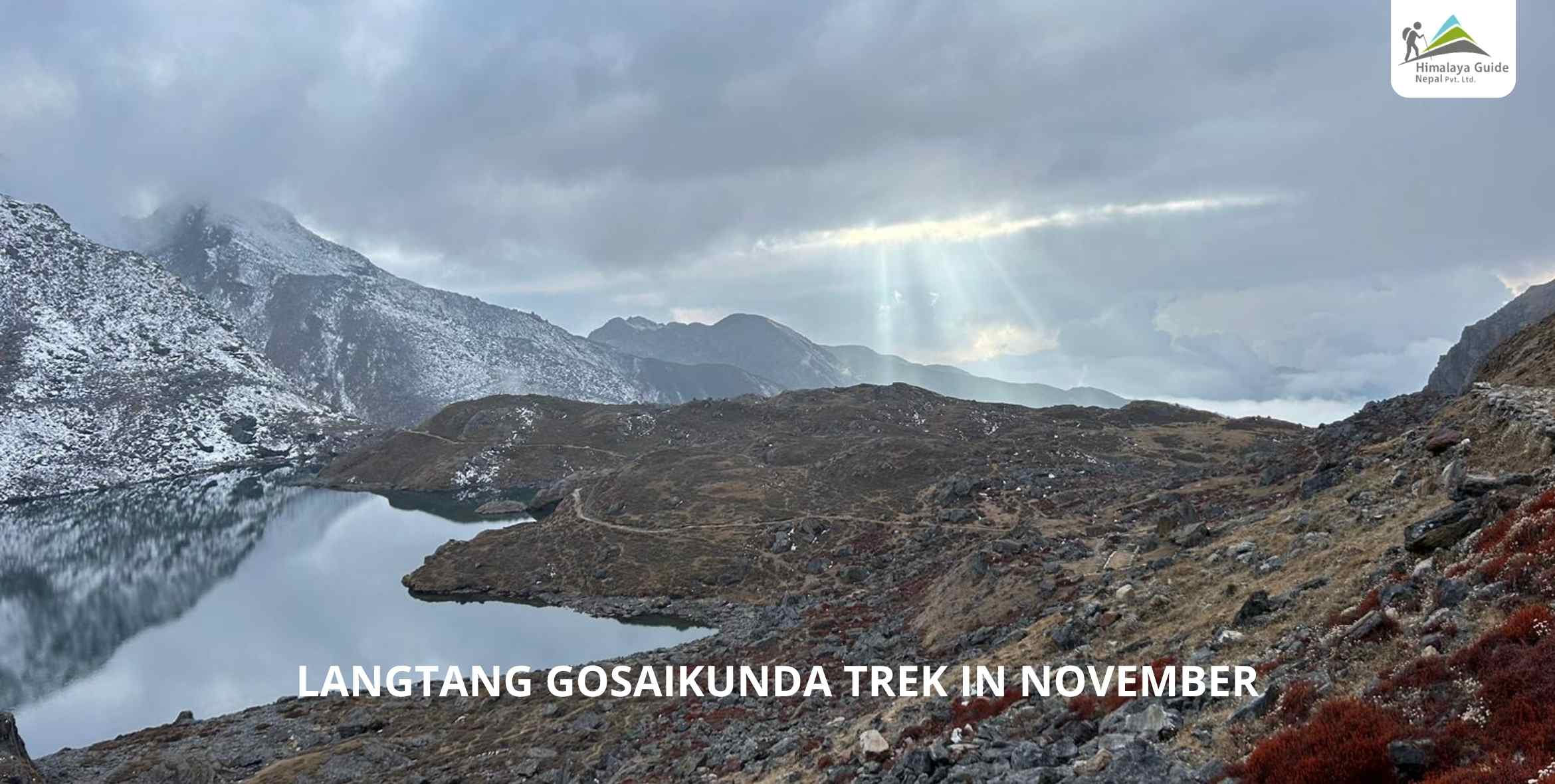
November is one of the best months to do the Langtang Gosaikunda Trek. Skies are clear, trails are dry, and the crowds thin out after October. You will get sharp mountain views, quiet teahouses, and a cold but doable pass crossing at Lauribina La. Nights are cold, especially at Gosaikunda Lake, so you need a sleeping bag rated to at least -10°C. The trek takes 13 to 14 days and starts from Syabrubesi.
Most people assume Langtang Gosainkunda in October is the month to trek and November is already too cold. That is not fully true.
The Langtang Gosaikunda Trek in November gives you something October cannot: quiet. October trails are packed. Teahouses fill up. Guides are booked weeks ahead. November clears all of that out. The mountain views stay sharp. The trails stay dry. And you share the pass with far fewer people.
By late November, snow can dust Lauribina La at 4,610 metres. It does not close the pass. But it changes the crossing. You need the right gear, the right guide, and the right timing.
Why November Works Well for Langtang Gosaikunda Trek?
The monsoon ends in September. By October, dust clears and skies open up. November keeps those clear skies. But October also brings the big festival season and the biggest trekker crowds of the year. November is different.
Trails are quieter. Teahouses have space. You do not need to rush to book your bed at Gosaikunda. The hosts have more time for you. Dal bhat arrives hot. The pace of the trek slows down in a good way.
Daytime temperatures at lower elevations like Lama Hotel and Langtang Village sit between 10 and 18°C. It is comfortable walking weather. Cold enough that you are moving fast on the uphill sections. Warm enough that you are not freezing at lunch.
Above 4,000 metres, November starts to feel serious. Gosaikunda Lake at 4,380 metres will drop below -8 degrees Celsius at night. Some mornings you wake up and the ground is white. Not snow. Frost. The air at the pass feels thin and sharp. That is the high-altitude version of November.
The lake itself is extraordinary in November. No pilgrims. No summer haze. Just still water reflecting the ridgeline. Some mornings you wake before sunrise and the surface is frozen at the edges. That is not a problem. That is the version most trekkers never see.


November vs October on the Langtang Gosaikunda Route
| Factor | October | November |
| Crowds on trail | Busy. Teahouses often full | Much quieter. Easy to find space |
| Daytime temperature (valley) | 15–22°C | 10–18°C |
| Night temperature (Gosaikunda) | -5 to -8°C | -8 to -12°C |
| Lauribina La Pass conditions | Dry. No snow. | Dry in early Nov. Light snow possible late Nov. |
| Visibility | Excellent | Excellent to very sharp |
| Teahouse availability | Book ahead essential | Walk-in usually fine |
| Festival season | Dashain and Tihar (busy villages) | Post-festival. Calmer. |
Gosaikunda Route in November
The Langtang Gosaikunda trek breaks into two clear halves. You do not need to memorise every day. But knowing what each half feels like in November helps you prepare properly.
First Half: Langtang Valley (Days 1 to 7)
You leave Syabrubesi and head north. The trail follows the Langtang Khola river through thick forest. In November the forest is amber and gold. The monsoon-green has gone. What you get instead is clear forest with long sight lines and cold morning air that smells clean.
Lama Hotel sits at 2,380 metres. Nights here in November drop to around 5 degrees. Cold but manageable with a good sleeping bag. By the time you reach Langtang Village at 3,430 metres on day three, nights are proper cold. Below zero. Layers matter from this point on.
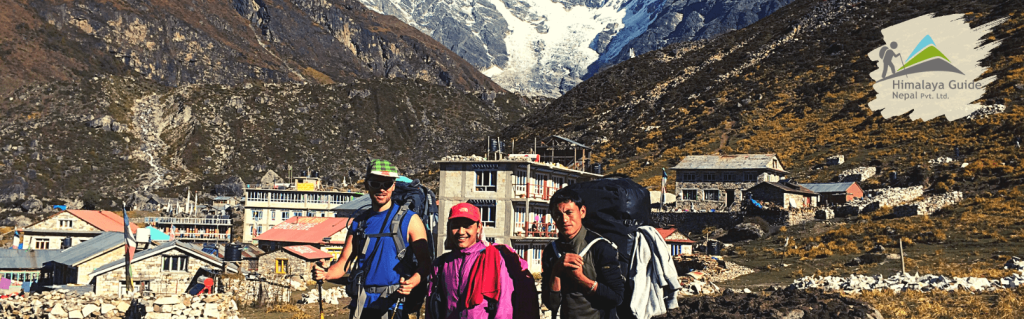
Kyanjin Gompa at 3,870 metres is the high point of the first half. The yak cheese factory has been running here since the 1950s and it is still going in November. Worth stopping in. The cheese is good. The view from Kyanjin Ri at 4,773 metres on your acclimatisation day is one of the clearest of the whole trek. November air has no haze. Langtang Lirung at 7,234 metres stands right in front of you.
Second Half: Gosaikunda (Days 8 to 13)
After Kyanjin you retrace to Lama Hotel, then take the turn toward Thulo Syabru. This is where the second half starts and the terrain changes completely.
Sing Gompa at 3,330 metres is a good checkpoint. The forest here is pine and rhododendron. In November the rhododendrons are bare but the pine stays green. Cold mornings at Sing Gompa start around -2 degrees. Warm up fast once you start climbing.
The approach to Gosaikunda Lake takes you above the treeline. Rocky trail. Open sky. The lake appears around a bend and it stops you. Not because it is beautiful in the postcard way. Because it is big and still and higher than most things around it. At 4,380 metres in November, the air is thin and the silence is total.

Our guides have walked this section hundreds of times. If you feel the altitude pushing back, they know when to slow, when to rest, and when to turn around. That call has kept every trekker we have guided safe.
Lauribina La Pass in November: Difficult Section of The Langtang Gosaikunda Trek
This is the day most people get nervous about. And honestly, they should take it seriously.
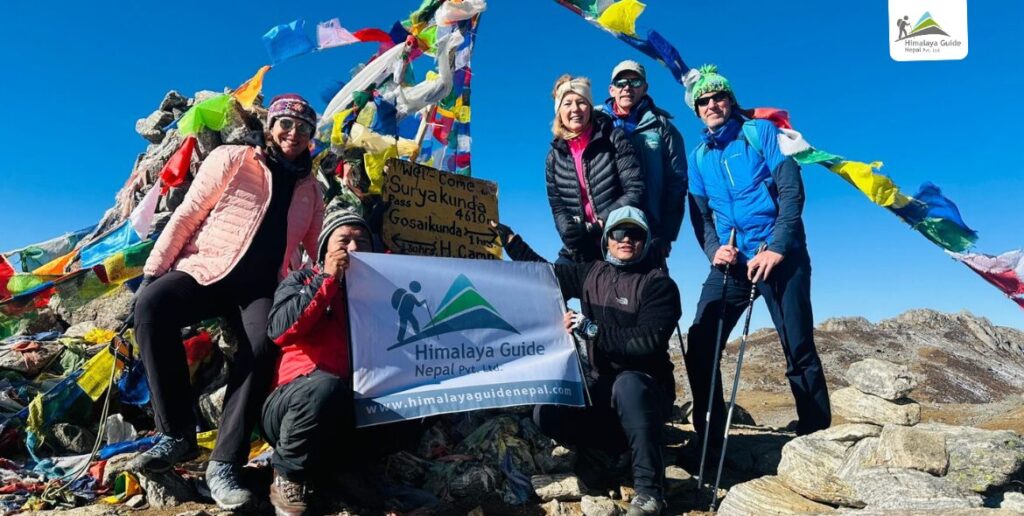
Lauribina La sits at 4,610 metres. In early November the pass is usually dry and rocky. Same as October. By mid to late November, light snow can dust the top. It does not close the pass. But it makes the descent to Ghopte more technical. Ice patches form on steep sections. Trekking poles are not optional on this day. They are required.
The crossing itself takes three to four hours from Gosaikunda. Wind hits the summit regardless of what the weather looked like at breakfast. Keep your down jacket in your own daypack, not with the porter. You will need it at the top.
From the pass you see Langtang Lirung, Ganesh Himal, Paldor Peak, Dorje Lakpa, and Manaslu on a clear day. That view is the reward for the whole week. The descent into Helambu takes you back into forest and warmth.
Langtang Gosaikunda Trek Day By Day Itinerary For November
| Day | Route | Altitude | Walk Time |
| 1 | Drive Kathmandu to Syabrubesi | 1,550 m | 6–8 hrs drive |
| 2 | Syabrubesi to Lama Hotel | 2,380 m | 5–6 hrs |
| 3 | Lama Hotel to Langtang Village | 3,430 m | 5–6 hrs |
| 4 | Langtang Village to Kyanjin Gompa | 3,870 m | 3–4 hrs |
| 5 | Acclimatisation at Kyanjin (hike Kyanjin Ri or Tserko Ri) | 4,773–5,033 m | 4–6 hrs hike |
| 6 | Kyanjin Gompa to Lama Hotel | 2,380 m | 5–6 hrs |
| 7 | Lama Hotel to Thulo Syabru | 2,210 m | 4–5 hrs |
| 8 | Thulo Syabru to Sing Gompa | 3,330 m | 4–5 hrs |
| 9 | Sing Gompa to Gosaikunda Lake | 4,380 m | 4–5 hrs |
| 10 | Gosaikunda to Ghopte via Lauribina La (4,610 m) | 3,430 m | 7–8 hrs |
| 11 | Ghopte to Kutumsang via Thadepati | 2,470 m | 5–6 hrs |
| 12 | Kutumsang to Chisapani | 2,215 m | 5–6 hrs |
| 13 | Chisapani to Sundarijal, drive to Kathmandu | 1,460 m to city | 3–4 hrs + drive |
What to Pack for November Lanagtang Gosaikunda Trek?
November packing on this route has two separate challenges. Syabrubesi in early November feels like a warm afternoon. Gosaikunda Lake at night feels like winter camping. You need gear that handles both without carrying too much.
The gap between trailhead and high camp is about 14 degrees Celsius in daytime and more than 20 degrees at night. Layers work better than one heavy piece. Here is what we tell every trekker who books with us.
- Sleeping bag: Rated to -10°C minimum. The Gosaikunda teahouses give you blankets but the walls are thin stone and the cold comes through at night. A liner adds warmth without much weight.
- Down jacket: Must be in your own daypack from day 9 onward. Not with the porter. You need it at Lauribina La summit and it will not help you if it is in a load 20 minutes behind you.
- Trekking poles: Bring them. The descent from Lauribina La to Ghopte is steep, rocky, and in late November it can have ice patches. Poles are not optional on that day.
- Microspikes or crampons: Optional in early November. Worth packing in mid to late November if you are doing this route after the 15th.
- Warm layers: Base layer plus mid-fleece plus down jacket covers the full range from valley to pass. Three pieces. Light. Enough.
Langtang Gosaikunda Trek Temperature Breakdown for November
| Location | Altitude | Daytime Temp | Night Temp |
| Syabrubesi | 1,550 m | 18–22°C | 8–12°C |
| Lama Hotel | 2,380 m | 12–18°C | 2–6°C |
| Langtang Village | 3,430 m | 8–14°C | -2 to 2°C |
| Kyanjin Gompa | 3,870 m | 5–10°C | -5 to -2°C |
| Sing Gompa | 3,330 m | 8–12°C | -2 to 2°C |
| Gosaikunda Lake | 4,380 m | 2–8°C | -10 to -8°C |
| Lauribina La Pass | 4,610 m | -2 to 5°C | N/A (day crossing) |
| Ghopte | 3,430 m | 5–10°C | -4 to 0°C |
Permits and Practical Info for November Gosiakunda Trek
Since 2025, all trekkers inside Langtang National Park must trek with a licensed guide. Checkpoints at Dhunche and Syabrubesi enforce this. Independent trekking on this route is no longer an option, and that is actually fine.
Two permits are required for Langtang Gosaikunda Trek. The Langtang National Park Entry Permit costs USD 30 for foreigners. The TIMS card costs USD 20. Both can be arranged through us before you leave Kathmandu.
Carry cash. There are no ATMs above Syabrubesi. Syabrubesi has one ATM. Take more cash than you think you need. The teahouses at Gosaikunda are cash only and they are not close to a bank.
Phone signal: You will have a signal at Langtang Village and Kyanjin Gompa. Above Sing Gompa toward the lake, signal is mostly gone. At Ghopte and Lauribina La, expect nothing.
Frequently Asked Questions About Langtang Gosaikunda Trek In November
Is November too cold for the Langtang Gosaikunda Trek?
Is there snow on Lauribina La in November?
How busy is Gosaikunda trails in November?
Can beginners do this trek in November?
Will the teahouses be open at Gosaikunda in November?
Conclusion
November does not get the credit it deserves on this route. October gets all the attention because of the festivals and the peak crowds. But if you want the Langtang Gosaikunda Trek in November, you get the same clear skies and sharp mountain views with a fraction of the people.
You’ll find Langtang Gosaikunda cold but the pass demands respect. And late November adds a layer of seriousness that October does not have. But with the right gear and the right team, it is one of the best ways to finish Nepal’s trekking season.
We have guided trekkers on this route in November for years. The ones who prepare properly almost always call it the best trip they have done. Talk to our team, get your itinerary sorted, and we will make sure you are ready for it.

