Known as the “Pearl of the Plateau” and the “Holy City”, Lhasa attracts visitors with its stunning high-altitude scenery and unique blend of Tibetan culture. Some of the must-visit places in Lhasa during the Namtso Lake Tour are:
Potala Palace
Quick Facts:
- Location: Lhasa, Tibet
- Altitude: 3,700 M
- Built: 1645 (current structure)
- Floors: 13
- Rooms: 1,000+
- Status: UNESCO World Heritage Site
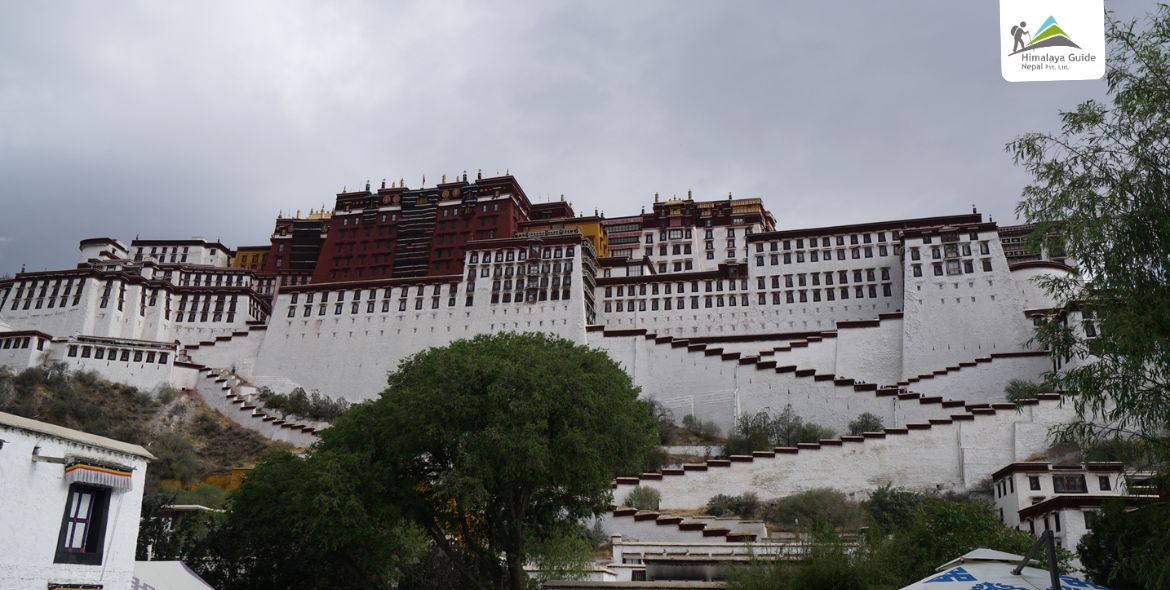
At the center of Lhasa, Tibet, the Potala Palace is the highlight of any Lhasa Tour. It is one of the region’s iconic landmarks, located on Marpo Ri (Red Mountain) at an altitude of around 3,700 M Similarly, the palace served as the winter residence of the Dalai Lamas from 1649 until 1959. Today, it serves as a museum and a UNESCO World Heritage Site.
The Potala Palace dates back to the 7th century, when the Tibetan king Songtsen Gampo built an earlier structure on the same site. The current palace was built in 1645 under the leadership of the Fifth Dalai Lama, marking its role as the political and religious center of Tibet.
Jokhang Temple
Quick Facts:
- Location: Lhasa, Tibet
- Built: Around 642 AD
- Founder: King Songtsen Gampo
- Significance: Holiest temple in Tibetan Buddhism
- Key Feature: Jowo Shakyamuni statue
- Status: UNESCO World Heritage Site
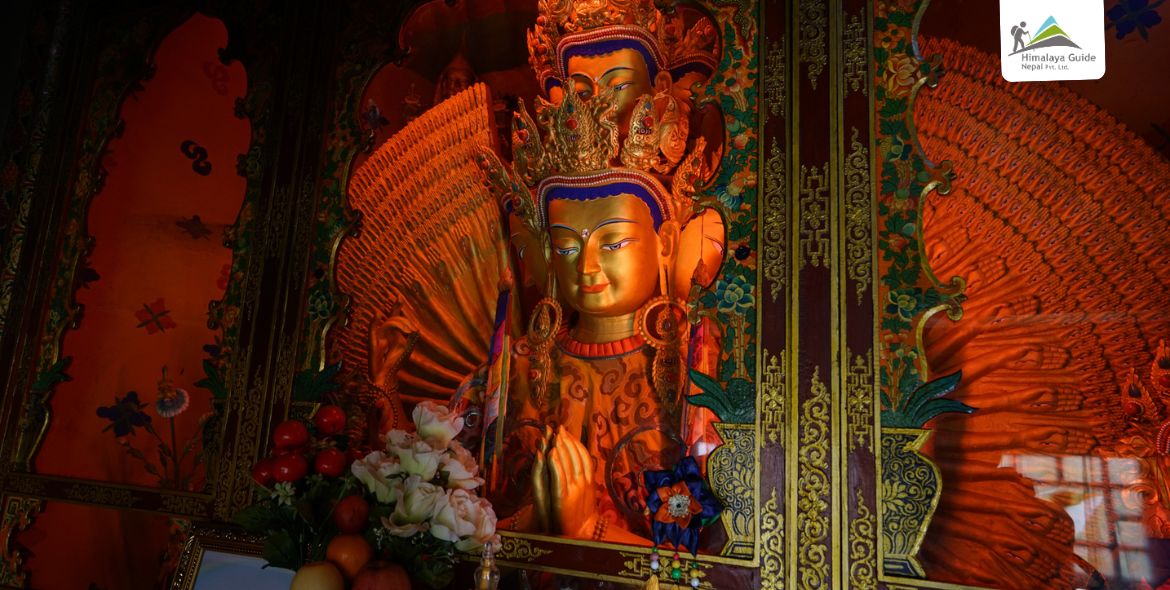
The Jokhang Temple is the most sacred and important temple in Tibetan Buddhism. The temple lies in Lhasa’s old town and was built in the 7th century. Today, the temple serves as a spiritual center of Tibet and is part of the UNESCO World Heritage Site, the “Historic Ensemble of the Potala Palace.”
Originally built to house sacred Buddhist statues brought by queens, the temple later became home to the respected Jowo Shakyamuni statue, believed to represent the Buddha at the age of twelve. Thus, it is also called the “Vajrasana of Tibet“, symbolizing its deep connection to the Buddhist tradition and its importance as a center of faith and devotion. Besides, Jokhang Temple reflects a unique blend of Tibetan, Nepalese, and Indian architectural styles.
Barkhor Street
Quick Facts:
- Location: Lhasa, Tibet
- Length: 1,000 M (circular route)
- Origin: 7th century
- Function: Pilgrimage circuit (kora) and marketplace
- Significance: Oldest street in Lhasa
Barkhor Street is the oldest and busiest street in Lhasa, surrounding the sacred Jokhang Temple. The street developed in the 7th century during the reign of King Songtsen Gampo, following the construction of Jokhang Temple. Over time, it became known as the “Holy Path” by Tibetan Buddhists and developed into one of the three main circumambulation routes (kora) of Lhasa.
Despite modernization, Barkhor Street has maintained its authentic cultural atmosphere. It also functions as a marketplace filled with shops selling Tibetan handicrafts, religious items, and local products. Still, more than just a marketplace, the street is a living cultural and spiritual corridor where religion, history, and daily life coexist.
Drepung Monastery
Quick Facts:
- Founded: 1416
- Founder: Jamyang Chojey
- School: Gelug (Tibetan Buddhism)
- Historical Capacity: Up to 10,000 monks
- Status: One of the “Great Three” monasteries
The Drepung Monastery is one of the most important monasteries in Tibetan Buddhism. The monastery lies at the foot of Mount Gephel, about 5 KM west of Lhasa. It is one of the “Great Three” Gelug monasteries of Tibet and was once the largest monastery in the world.
Drepung Monastery was founded in 1416 by Jamyang Chojey, a disciple of Je Tsongkhapa, the founder of the Gelug school of Tibetan Buddhism. Likewise, it played a key role in Tibetan governance and spiritual education, serving as a center for learning, debate, and Buddhist practice for centuries.
Sera Monastery
Quick Facts:
- Location: Lhasa, Tibet
- Founded: 1419
- Founder: Jamchen Chojey (disciple of Tsongkhapa)
- School: Gelug (Tibetan Buddhism)
- Area: 28 acres
- Key Feature: Monk debate sessions
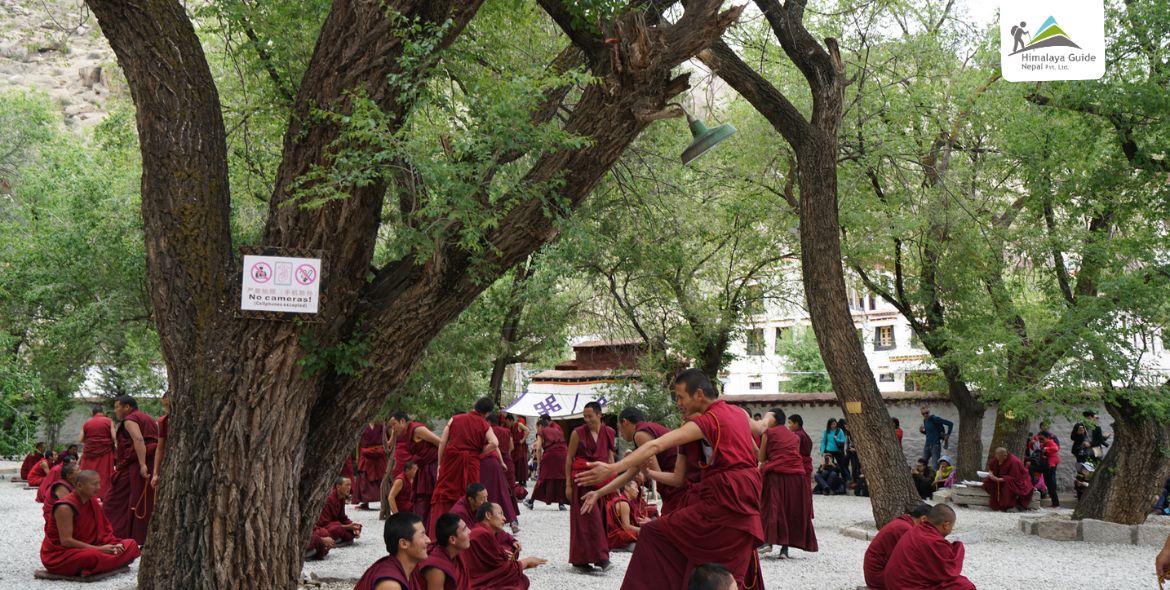
The Sera Monastery is one of the major monasteries of Tibetan Buddhism on the northern outskirts of Lhasa at the base of a hill. It is one of the “Great Three” Gelug monasteries of Tibet, alongside Drepung and Ganden, and is known for its strong tradition of Buddhist learning and debate.
Sera Monastery was founded in 1419 by Jamchen Chojey (Sakya Yeshe) and is closely linked to Tsongkhapa’s teachings and visions. The monastery has a large complex spanning 28 acres, with multiple religious and residential buildings. It includes the Great Assembly Hall (Tsokchen), three main monastic colleges (Zhacangs), dormitories (Kamcun), chapels, and courtyards, and houses valuable scriptures, statues, and murals.