
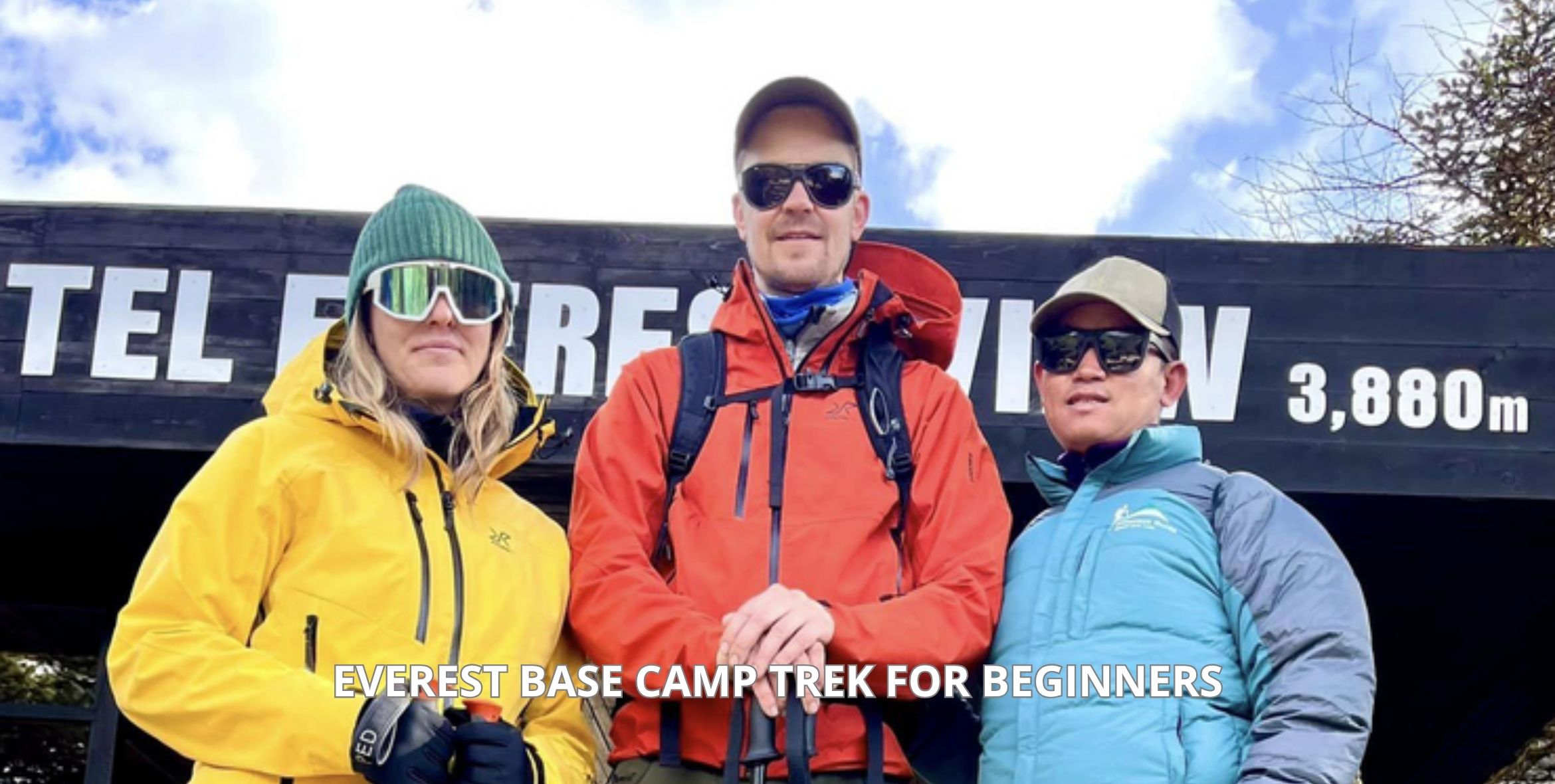
Are you planning to trek to Everest Base Camp (EBC) but a first-time trekker and wondering whether the EBC Trek is suitable for beginners? The good news is yes, you can trek to Everest Base camp even as a beginner. The trek is one of the most iconic and dream destinations for many trekkers but many stop themselves from stepping into the Khumbu valley because of the fear and question “Can I do it?” If you’re active, confident walking 5-6hrs daily, have general fitness & can adapt to high altitude, you can definitely do EBC trek even as a beginner.
The major reason why the Everest Base Camp Trek is for beginners is because it doesn’t involve any technical climbing skills. The trek isn’t about climbing Mount Everest itself, but standing at its base and enjoying the unforgettable journey. So, without the need for ropes, an oxygen cylinder, or any climbing gear, you can successfully complete the trek without being an athlete.
However, it is also true that the trek to EBC can be difficult as it is rated “moderately difficult to strenuous” adventure. At high altitudes, even a short walk can make you tired. The trekking days can be long and you may not have energy to continue. But you need to keep going and not give up. For that, you just need to prepare for about 1-2 months before the trek and understand everything you need to know before starting the adventure. So, make sure to go through the blog till the end, especially if you’re a beginner planning to trek Everest Base Camp.
How to Prepare for Everest Base Camp Trek?
If you’ve never trekked before, the term of preparing for Everest Base Camp can feel overwhelming. Don’t worry, you just need to prepare the right way and give yourself time to do it properly rather than aggressive preparation.
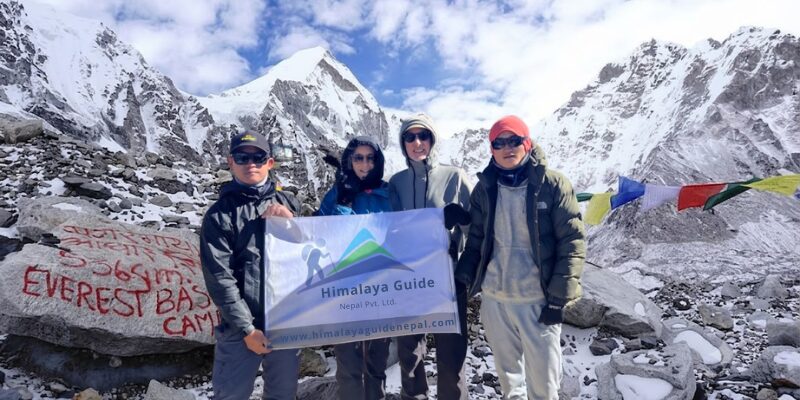
Start with Simple Fitness Training
To prepare for Everest Base Camp Trek, you don’t need to hit the gym. What you really need is stamina and the ability to walk for 5 to 7 hours daily for 10-12 days and on different landscapes. Going for short walks and hiking are some of the best ways to train simply.
If you have hills or stairs nearby, practice there. You can also walk up stairs with a loaded backpack. This is how beginners practice for their adventure. Small movements, big output. Similarly, be prepared at least 1 to 3 months before starting the trek. Even 30 to 45 minutes of walking, jogging, or cycling can be more helpful than staying idle.
Prepare Legs to be Stronger
As mentioned earlier, the EBC Trek is not an easy journey. Among various factors that add to the difficulty of the trek, the continuous uphill and downhill sections are some of them. Your legs, especially thighs and knees require continuous effort. So, make sure to prepare your legs and ensure they are stronger for such walks. Start practicing with simple exercise including squats and lunges as it makes your legs strong. You can also improve your stamina through activities like cycling, swimming, and fast walking.
Practice With Loaded Backpack
On the Everest Base Camp Trek, you will carry a backpack with water, snacks, and other important items for 10-12 days. At high elevation, even one kilogram feels heavy. So, beginners should prepare themselves well by practicing physical exercise while carrying the backpack you plan to use during the trek. This helps your shoulders, back, and body used to carrying it.
Learn About Altitude Sickness
Beginners going on Everest Base Camp Trek should understand that altitude sickness is one of the biggest challenges of the trek. Anyone, whether a beginner or an experienced trekker can face the challenges. As you go higher, the altitude increases as oxygen levels decrease, your body needs time to adjust to the change. Thus, it is important to walk slowly, take proper rest days and follow your trekking plan. Also, beginners are recommended not to ignore symptoms of altitude sickness such as headaches, dizziness, nausea, or unusual tiredness.
Get Used to Trekking Gears
As a beginner, you may need to buy new trekking gear and equipment. But, new gear is generally uncomfortable, especially trekking boots. So, don’t wait until your trek to try your new gear. Wear your trekking boots during your training walks so your feet can get used to them. Also, adjust your backpack and practice carrying it before trekking. This practice helps you feel more comfortable on the route.
Mental Preparation
The difficulty of the EBC trek doesn’t only come from physical challenges but also from mental tiredness. Beginners should be prepared especially for cold weather, long trekking days, and varied landscapes. At some point, many first time trekkers wonder why they started the journey. This is normal. But, you should stay patient and keep going. Know that the difficult section will pass and something rewarding awaits you. Staying positive and continuing forward with a positive mindset is the best way to prepare yourself mentally.
Know your Permit
Many first time trekkers don’t know that trekking to Everest Base Camp requires permits. You can’t simply arrive in Nepal and start the trek. You need two different permits to trek in Khumbu Valley including Sagarmatha National Park Permit and Khumbu Pasang Lhamu Rural Municipality Entry Permit. Getting those permits before starting the trek can save you time and confusion. If you book your trek through a trekking agency will arrange them on your behalf. If you are trekking independently, you can get them yourself in Kathmandu or even in Monjo.
Trek with Guide
Everest Base Camp trek for beginners is safe and achievable to trekkers who hire a licensed trekking guide. An experienced and licensed guide knows the pathway well and can help you direct the right path, manage your walking pace, and deal with unexpected problems. They also help you communicate with local people, understand the local Sherpa culture and traditions, and manage your logistics. That being said, beginners trekking with a guide don’t need to worry about knowing the pathway or handling every problem alone.
Choose Trekking Agency Carefully
One major secret of a beginner’s successful trek to Everest Base Camp is choosing the right trekking agency. Choose a local and licensed company as they know the specific trekking regions. Don’t choose a company only because it offers the cheapest price. Ask about the guide’s experience, training, and the company’s registration number. Similarly, before booking, ask exactly what is included in the price.
Comparing 3 Major EBC Trek Variants & How Beginner-Friendly They Are?
Many beginners think there is only one way to get to Everest Base Camp. But, in reality, there are three main routes and each of them is different from one another. Choosing the right route is important, especially for beginners. Here is comparison of the three major variants and their beginner-friendliness:
Classic Everest Base Camp Trek via Lukla
The standard trek to EBC is the most popular and known route to get to the base of Mount Everest. The trek starts with a flight from Kathmandu to Lukla. After the flight, the trek starts following Phakding and goes towards Namche Bazaar, Tengboche, Dingboche, Lobuche, Gorak Shep and eventually to Everest Base Camp. The journey takes 12-14 days in general and reaches the highest location as Kala Patthar (5,644 m) and Everest Base Camp (5,364 m). Additionally, it involves two acclimatization days: one at Namche Bazaar and another at Dingboche.
Why it suits Beginners: This is the shortest of the three Everest Trek variations. The pathway is popular and easy to follow with numerous fellow trekkers along the way. Also, it involves two acclimatization days so beginners won’t face many challenges regarding altitude sickness. It is best for beginners who have limited time and are comfortable taking mountain flights.
The downside: Flights to Lukla depend on the weather and the region’s weather changes heavily. Bad weather causes flight delays and cancellations. The flight takes you from 1,350 in Kathmandu to Lukla at 2,800 m. This quick change gives your body less time to adjust to the change in altitude.
Everest Base Camp trek by Drive
This version of Everest Base Camp Trek cuts the flight to Lukla and starts with a drive from Kathmandu to Salleri by public jeep. This variation is a good choice for beginners who want to avoid a flight to Lukla. On this route, you drive from Kathmandu to Salleri, followed by a drive to Tham Danda. From there, the trek begins at Paiye, then Phakding and follows the same route as standard trek. After completing the trek, the journey returns by flight from Lukla to Kathmandu, offering a taste of both road drive and Himalayan flight. The Everest Base Camp Trek by drive takes about 15 days round trip and is considered moderately challenging.
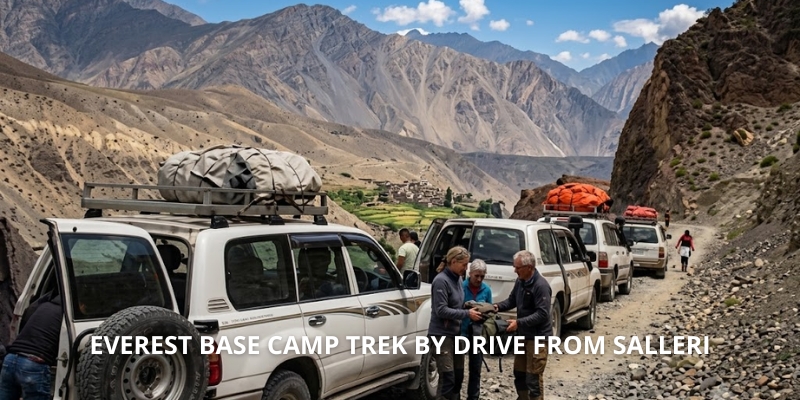
Why it suits Beginners: Many first time trekkers get panicked when the flight to Lukla gets canceled in the very beginning of the trek. So, in this trek, you don’t have to worry about the flight being cancelled. You also start your journey from an altitude of 1,350 m at Kathmandu, then reach 2,350 m at Salleri, and trekking begins at 2,780 m at Tham Danda. So, it offers a slower altitude gain than the classic route. This gives your body more time to get used to the altitude.
The downside: The road journey to Salleri is long and bumpy. It takes most of the day that can be tiring to those who are not used to it. The whole trip is also longer than the classic EBC trek, so you need more time.
Jiri to Everest Base Camp Trek
The journey from Jiri to Everest Base Camp trek is the old way of reaching the base of Mount Everest before Lukla Airport was available. Early Everest expeditions used this route, including Sir Edmund Hillary. This is the longest option for reaching EBC, taking about 18 to 20 days.
The journey starts with a drive from Kathmandu to Jiri followed by a trek to Deurali, Sete, Junbesi, Nunthala, Bupsa, Cheplung, and Monjo that connects you to the classic EBC trek route. After connecting, it is the same as the standard route and ends with a flight back to Kathmandu from Lukla.
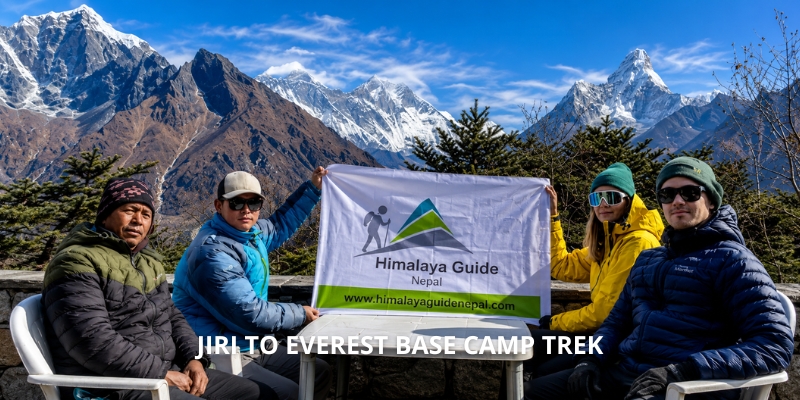
The route from Jiri to Everest Base Camp includes one extra day at Junbesi before connecting to the classic route of EBC. Beginners who have plenty of time, enjoy long walks, and want a peaceful and more traditional Everest experience can choose this version of EBC Trek.
Why it suits Beginners: Although this is the longest route, it can be easier for a beginner’s body when it comes to adjusting to altitude. You start walking from 1,940 m and slowly take you to higher locations. This slow change in elevation gives a beginner’s body enough time to adjust to higher altitude.
The Downside: You need a lot of time and energy for this trek because you will be trekking for almost three weeks. Beginners who have never been trekking find this version longer and challenging because of extended days.
Quick Information to Help You Choose Among EBC Trek Variant
- If you want the shortest and most popular route, choose the Classic EBC trek.
- If you want to avoid the Lukla flight and still want to complete the trek the same or 1-2 days later than classic, choose the EBC Trek by drive from Salleri.
- If you have enough time and want a longer and traditional route with slow elevation gain, choose the Jiri to EBC trek.
Acclimatization Tips for Beginners Planning a Trek to Everest Base Camp
If there is one single aspect that directly decides whether your EBC Trek goes smoothly or turns into a challenge, it’s how well you’re acclimatized. So, more than your fitness, walking slowly, listening to your body, and giving your body time to adjust to changing altitude matters the most to complete the trek. And all those aspects fall under acclimatization plans. So mentioned below are some of the acclimation tips, especially for beginners planning a trek to Everest Base Camp:
- Being fit does not mean you can’t get altitude sickness, even fit individuals can experience altitude sickness at high altitude and everyone’s body reacts differently. So, never assume that being strong or fit will protect you from altitude sickness.
- Know the difference between normal tiredness and altitude sickness. Feeling tired after long walking hours is normal but if you experience continuous headache, nausea, dizziness, and unusual weakness, know that something is going wrong.
- Walk slowly and don’t try to compete with other fast trekkers. Always follow the simple rule of walking slowly even when you feel comfortable.
- Drink enough water as your body can lose water faster at high altitude.
- Don’t consume alcohol, coffee, and sleeping pills at higher altitude. Alcohol makes it harder for your body to deal with lack of oxygen, coffee causes dehydration, and sleeping pills can affect your breathing while sleeping.
- Many trekkers lose their appetite at high altitude, but make sure to eat enough even when you are not hungry to get energy for a day’s trek.
- Never hide altitude related symptoms, instead, tell your guide immediately when you feel unwell.
Is Solo Trip to Everest Base Camp Suitable for Beginners?
No, a solo trip to Everest Base Camp is not suitable for beginners although it is legally possible.
If you don’t want to trek with other groups, you can trek with a guide only. But trekking completely independent in EBC isn’t recommended, especially for beginners. guides may seem like someone to walk beside you at first, but their real value is only understandable when you trek with them.
| Aspect | Independent Trek (No Guide) | Group Trek | Solo Trek with Only Guide |
| Cost | Low | Low-Moderate (split among other trekkers) | Higher (You have to pay full cost alone) |
| Pace | Fully Yours | Fixed to group’s pace | Fully flexible |
| Altitude Safety | Not guaranteed | Guide watches whole group | Guide focused entirely on you |
| Special Experience | Peacefulness and big achievement | Team work | Just you, nature, and guide by your side |
| Flexibility | Total but logistics arrangement are hard | Low because of fixed schedule | High |
| Local logistics | You handle everything from permits, room booking, and route-finding | Agency handles permits, lodging, and the entire route | Guide handles permits, recommends lodging, and guides you through route |
| Recommended to Beginners? | No | Yes | Yes |
What To Pack for an Everest Base Camp Trek As A Beginner?
| Category | Items |
| Upper Body Layers | Base layer (thermal top)Fleece or light down jacketInsulated down jacketWaterproof/windproof jacket |
| Lower Body Layers | Thermal LeggingsHiking trousersWaterproof pants |
| Footwear | Trekking shoeTrekking socks (wool)Camp shoes/sandals |
| Head & Hands | Warm beanie/hatSun hat or capBuff or neck gaiterLiner glovesSunglasses (UV/glacier-rated) |
| Sleeping Gear and Other | Sleeping bag (rated to -15°C/5°F or lower)Sleeping bag linerTrekking polesHeadlamp + spare batteries |
| Health and Safety | First-aid kitDiamox (acetazolamide)Water purification tablet/filterHand sanitizer & wet wipesPersonal medicationsSunscreen (SPF 50+) & lip balm with SPF |
| Documents and Money | Passport + photocopiesCash (NPR)Travel insurance proofPermits |
| Electronics | Power bankUniversal adapterPhone/camera |
| Miscellaneous | Duffel bagDaypack (30-40L)Snacks/energy barsEarplugsTrekking towel |
Best Time for a Beginner to Trek EBC
Spring (March to May) and autumn (September to November) are the best times for beginners to trek EBC. As a beginner, choosing the right season is even more important. Because the time you choose to trek depends whether it will be your beginning of trekking adventure or first and last one.
Autumn is the peak trekking season in Nepal and best for first-time trekkers. The weather during the season is clear and stable. You get beautiful mountain views, blue skies, and good visibility. Beginners especially love this season because there are less sudden weather changes to worry about during this time. Likewise, the pathways will be full of trekkers, helping beginners to meet and experience trekkers from different countries and learn different knowledge through them.
Spring is also the best time for EBC trek and its specialty is the blooming of rhododendron flowers along the lower parts of the trek that most trekkers adore. Weather in the season is also comfortable to trek. Yet, May can become cloudier, which reduces the mountain visibility. Alternatively, you can trek during March and April for better views.
What Trekkers Ask About Everest Base Camp Trek for Beginners
Can a complete beginner with no trekking experience do the Everest Base Camp Trek?
Do I need to be extremely fit to trek to Everest Base Camp?
Is a guide required for the Everest Base Camp Trek, or can I go alone?
How long does the Everest Base Camp Trek take for a first-timer?
What’s the biggest risk for beginners on the EBC trek, fitness or altitude?
How much should a beginner budget for the Everest Base Camp Trek?
What’s the best season for a first-time trekker to attempt EBC?
Can children or older trekkers do the Everest Base Camp Trek as beginners?
Why going on a guided EBC Trek matters for a First-Timer?


