

Kongma La Pass 5,535m (18,159ft) connects Dingboche & Chhukung, located in Imja Valley, with Lobuche, situated at the edge of Khumbu Glacier. It is the highest pass of the Everest Three Passes and one requires 7 to 8 hours to cross the pass. Kongma La Pass is a major highlight during the Everest Three Passes Trek. You should go in spring and autumn, have two acclimatization days, and have a guide with you.
| Fact | Detail |
|---|---|
| Altitude | 5,535m (18,159ft); some GPS readings show about 5,550m |
| Start | Chhukung (4,730m) or Dingboche (4,410m) |
| Finish | Lobuche (4,910m) |
| Distance | About 10 to 11 km |
| Climb to the top | About 805m from Chhukung, about 1,125m from Dingboche |
| Descent to Lobuche | About 625m, plus the Khumbu Glacier crossing |
| Walking time | 7 to 8 hours, up to 9 or 10 in snow |
| Lodges or water on the way | None between the valley and Lobuche |
| Technical gear | None in normal conditions, microspikes after snow |
| Best months | March to May, late September to November |
You’ve already seen the photos, prayer flags fluttering in the wind, a frozen lake, the peaks of Lhotse and Nuptse aligned behind a ridgeline of rock. But try to picture the whole experience. It is 5 o’clock in Dingboche; your water bottle is half-frozen, and there are over 1,000 meters of altitude to gain while in total darkness.
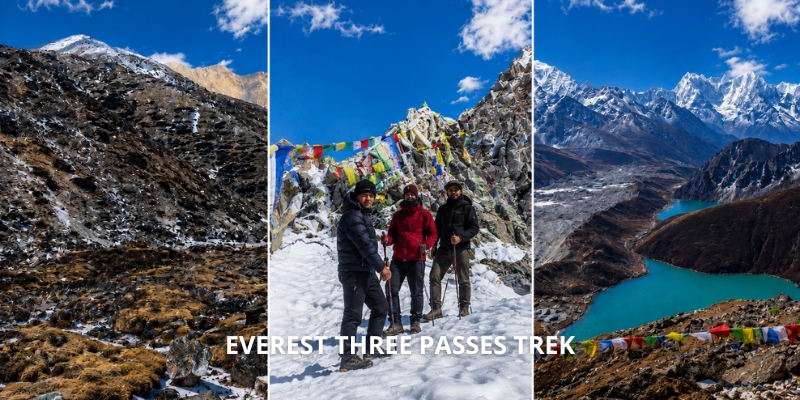
This is Kongma La. Talk to any trekker who finished their Everest Three Pass Trek or other three passes variant like Everest Three Passes with Island Peak Climbing and Three Passes with Lobuche Peak Climbing and ask about their opinion; they’ll give you a consistent reply. Cho La gets all the glory, but Kongma La is a pass that drains your strength entirely. This is the highest of the three passes, it has no tea-house on its trail, and after the peak, there’s even more left – crossing of the Khumbu Glacier.
Where Is Kongma La Pass?
Kongma La is a mountain pass situated between two valleys. The valley on the east side of the pass is called the Imja Valley, which contains the villages of Dingboche and Chhukung. The Khumbu Glacier is located on the west side, with the village of Lobuche at its very edge.
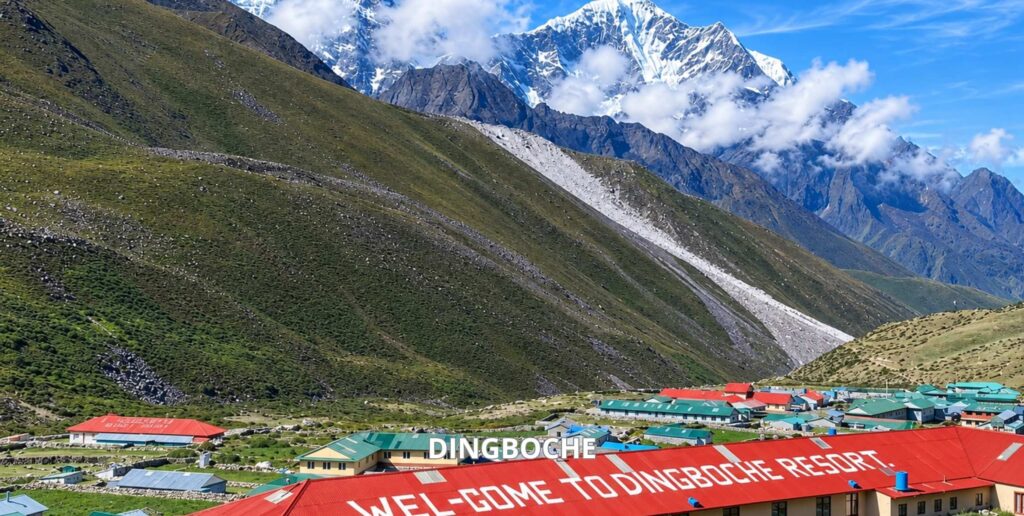
The pass itself is situated between the two mountains Pokalde (5,806m) and Kongma Tse (5,820m), both of which are climbing mountains. Thus, the pass you climb up is around 300m lower than two mountains that people climb with ropes.
The Everest Three Passes trek crosses three gaps in the mountains, and each one feels different under your boots.
| Pass | Altitude | Connects | Main challenge |
|---|---|---|---|
| Kongma La | 5,535m | Dingboche or Chhukung to Lobuche | Longest climb, then a glacier crossing |
| Cho La | 5,420m | Dzongla to Dragnag | Ice and snow near the top |
| Renjo La | 5,360m | Gokyo to Lumde | Steep stone steps, long descent |
Kongma La is 115 meters higher than Cho La. It doesn’t seem like much on paper. However, when you consider that at this altitude, each additional 100 meters is like ascending a staircase with a heavy backpack, due to the reduced amount of oxygen in the body.
Why Do Most Itineraries Cross Kongma La First?
All three versions of our Three Passes trek including classic Three pass, Three Passes trek with lobuche peak climbing go counterclockwise, so Kongma La must come first. There are logical reasons why this happens. It comes after two rest days spent in Namche and Dingboche, when your body will already be adapted to the conditions. In addition, your legs are still strong because Kongma La requires 7 to 8 hours of walking from you.
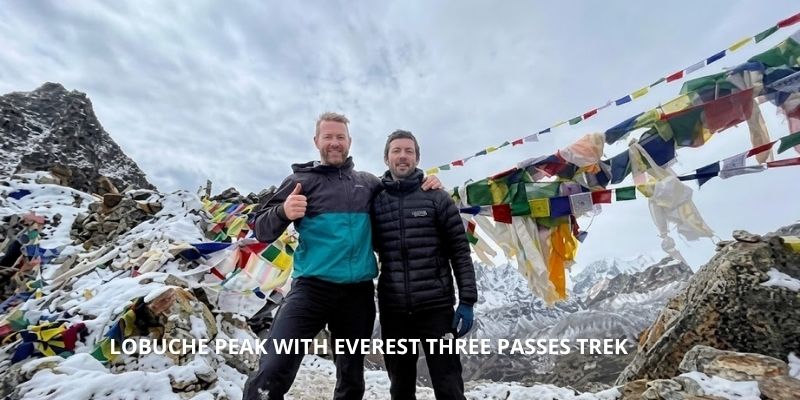
Some trekkers decide to bypass it by taking an easier path from Dingboche via Thukla to Lobuche. Such a way is also great. But you will miss the calmest and the highest part of the whole round. And let me remind you that this is exactly the part where most people remember something from their trekking experience. Also, there are fewer trekkers at Kongma La than at Cho La; hence, sometimes the summit is only for your company.
And the reward at the end of the journey is truly great. You have hot lemon tea, a dining room heated by yak dung stove, and even a bed at Lobuche.
Kongma La Pass Route Breakdown
The crossing covers about 10 to 11 km, short next to the Everest Three Passes Trek distance. The real challenge is time and altitude, because those few kilometers take 7 to 8 hours.
Starting Kongma La From Dingboche or Chhukung
The Everest Three Passes Trek, which lasts for 18 days, begins from Dingboche (4,410m). That is, it involves climbing by 1,125 meters in a single attempt. As for the Island Peak and Lobuche Peak packages, both begin from Chhukung (4,730m), thereby reducing the climbing distance to 805 meters. In case of a free day, spend it in Chhukung.
Climbing to the Top of Kongma La
You depart at around 5 or 6 am with headlamps. Past a river and a small signpost, painted arrows and cairn guide you across pastures, moraine, and scree. Approaching from the east, you will not be able to see the pass until you get close to it, hence do not count the ridges. There are no resthouses before Lobuche, thus bring along 2 or 3 liters of water and food.
Views From the Kongma La Summit
Immediately below the peak are several glacial lakes that are usually frozen in autumn and winter. After which comes a short but steep hike to reach the cairns and the prayer flags. To your east is Makalu, Lhotse and Nuptse seem close and the Khumbu glacier lies below you. The wind is very cold and windy; hence most climbers only stay between 15-20 minutes on the mountain.
Descending to the Khumbu Glacier and Lobuche
The west face is also more difficult and consists of an endless zigzag descent through loose scree, which takes up to one hour. After that, you reach a glacial area, which lacks snow or ice and where instead numerous rocks are placed. You then need about one hour, and when your tired legs slide, use your sticks. In about an hour, you are at Lobuche (4,910m) for garlic soup.
How Hard Is Kongma La Pass, and What Factors Affect Its Difficulty?
It carries the same strenuous grade as the Everest Three Passes trek difficulty as a whole, but it packs more into one day than any other stretch. In normal conditions you need no ropes and no climbing skills. What you do need is fitness, patience and good acclimatization, because three things stack up together.

Altitude
At 5,535m you are breathing roughly half the oxygen you get at home. A mild headache, slow breathing and heavy legs are normal. A pounding headache, vomiting or confusion are not normal, and they mean you turn around.
Terrain
Most of the trail is rock, scree and moraine. There are no neat stone steps like on the main Everest Base Camp trail. After fresh snow, the top section and the glacier can turn icy, so you may need microspikes.
Length
Seven to eight hours above 4,900m is a long day for anyone. And the trickiest part, the glacier, comes at the very end when your energy is lowest. That is what catches people out.
Marek Dvorak from Czechia crossed with us in 2025. He told us Kongma La on day 8 felt harder than Cho La three days later, and his guide’s advice got him through: forget the pass, just think about the next hour.
Is it right for you? If you have done a multi-day trek above 4,000m and can hike 6 to 7 hours with a daypack, you are ready. If this is your first big mountain trip, start with something lower and come back for the passes.
Acclimatization Before Kongma La
Kongma La is not a trek to be rushed. We have two acclimatization days planned prior to the passes, one in Namche (3,440m) and one in Dingboche (4,410m). During the Dingboche day, you climb Nangkartshang Peak (5,083m) or hike towards Chhukung and then return to camp. These Everest Three Passes trek acclimatization days makes sure your journey is safe and you are fully prepared for the adventure.

If you are camping in Chhukung, then there is an additional acclimatization day worth considering. Chhukung Ri (approximately 5,550m) lies directly above the village and is almost as high as the pass itself. Climbing it on the day prior to the pass, and then sleeping in Chhukung, puts your body through a proper test at pass altitude without the long day.
Why is that so important? The air at Namche contains 65 percent of the oxygen at sea level, while at Dingboche 58 percent. At the pass, the amount of oxygen reduces to around 50 percent. Your body takes days, not hours, to create additional red blood cells, and you increase your chances of getting AMS by not taking a rest day where help is not available.
The day before the trek, consume 3 to 4 liters of water, have a full meal of dal bhat, and get some sleep. Your guide will assess your condition at breakfast the next morning.
Best Time to Cross Kongma La
Best periods are spring (March to May) and autumn (late September to November). Skies are normally sunny, and the trek is dry, as the monsoon period either hasn’t come yet or has just ended.
In autumn, daytime temperatures near the pass sit around -5°C to 10°C, and nights at Lobuche can fall to -15°C. Spring feels a little warmer, and by April on the Everest Three Passes the days are long and rhododendrons bloom pink and red in the forests below Tengboche.
A winter season (December to February) is an option, but it will be cold with the possibility of a blizzard closing the pass. In such a case, the guide might decide to take you on a route through Thukla. The monsoon season (June to August) is a period of cloud, rain, and snowfall, thus compromising visibility and the walking conditions. Whichever season you opt for, the teahouse will have a burning stove at night.
Which Treks Include Kongma La Pass?
Three of our trips cross Kongma La, and the right one depends on whether you want to trek only or add a summit too.
| Package | Days | Kongma La day | Starts from | Highest point | Price per person |
|---|---|---|---|---|---|
| Everest Three Passes Trek | 18 | Day 8 | Dingboche | Kala Patthar 5,550m | USD 1,220 to 1,734 |
| Island Peak with Everest Three Passes | 20 | Day 11 | Chhukung | Island Peak 6,189m | USD 1,940 to 2,510 |
| Lobuche Peak with Everest Three Passes | 21 | Day 9 | Chhukung | Lobuche East 6,119m | USD 1,940 to 2,600 |
As the number of people in your group increases, prices decrease; hence the smaller price applies to 11 or more people while the bigger price applies to an individual trekker.
Choose the Everest Three Passes Trek when you want the traditional route that includes Everest Base Camp, Kala Patthar, and Gokyo and without any mountaineering equipment.
Choose the Island Peak Trek when you would like to conquer a 6,000m peak before doing the three passes. This is because you will first ascend Island Peak and then trek through Kongma La after having climbed 6,189m. The Lobuche Peak Trek is our most challenging trek in the Khumbu region with two nights spent at 5,420m. Only book this trek if you have been above 5,000m previously.
Do You Need Permits For Kong Ma La Pass?
All Kongma La crossings require two permits. First, the Sagarmatha National Park permit is NPR 3,000 (USD 22). The second permit is for Khumbu Pasang Lhamu Rural Municipality, which costs NPR 3,000 (USD 22). The peak package includes the climbing permit on top. All three of our packages have these permits, thus no queues for you.
Guide and Porter For Kong Ma La Pass Trek
In Nepal, the requirement that all foreigners have to trek under the guidance of a licensed guide applies. This guideline makes sense when you think about the fact that the glacier trail keeps changing, there is no hotel in Kongma La, and the weather conditions change within minutes. All three packages include a licensed guide.
A porter is not part of the 18-day trekking package. Porters are ordered as per your requirements. In the year 2024, Tobias Lang of Germany who ordered a porter through our office found his choice useful in Kongma La. Our suggestion is quite simple. Arrange for your porter early and take a daypack along on the day of the pass.
Adding Kongma La to an Everest Base Camp Trek
You don’t have to do all three passes to get across Kongma La. In a normal EBC trek, the route will take you from Dingboche to Lobuche via Thukla. Just substitute one easy day with two tougher days, namely Dingboche to Chhukung and then Chhukung across the pass to Lobuche, and you will be back to the base camp route in the same evening.
That is just one additional day in the written plan. For this you get the most peaceful valley of the Khumbu region, the highest point of your entire journey, and a story that most EBC trekkers won’t have. We can incorporate this in your private itinerary.
How to Prepare for Kongma La Pass?
Start your training 8 to 12 weeks before departure. Perform cardiovascular exercises such as running, cycling, or brisk walking 4 to 5 days per week, and strength training of the lower body and core muscles 2 to 3 days per week. In addition, perform one 6 to 8-hour long hike with 800 to 1,000 meters of ascent in a loaded backpack per week.
Why do you need so many uphill climbs? Because Kongma La is a mountain that consists of only one long climb and its difficult descent. Stairs, hills, and step-ups are exactly the exercise which will prepare your legs for that loose scree at 5,400m.
What to Carry on Kongma La Pass Day?
Your porter carries the big bag, but your daypack keeps you safe and warm for 8 hours. Pack it the night before in Dingboche or Chhukung.
- Broken-in waterproof boots with good ankle support
- Trekking poles, which save your knees on the descent
- Microspikes if there is snow, ask your guide the evening before
- Down jacket, warm gloves and a hat, even in sunshine
- 2 to 3 liters of water, plus purification tablets
- Headlamp with spare batteries for the dark start
- UV sunglasses, SPF 50 sunscreen and lip balm
- Snacks like chocolate, nuts and energy bars bought in Namche
Here’s a little tip from our guides: fill your bottles with hot water in the morning, and put one into your jacket pocket. It won’t freeze there, and you’ll feel better for having a hot drink by the lakes than you can imagine.
Also make sure you have travel insurance before you fly. It needs to cover trekking to 6,000 meters and rescue by helicopter, as most insurance policies end at 4,000 meters, and Kongma La is higher than that.
What Trekkers Ask About Kongma La Pass?
How high is Kongma La Pass?
Can I cross Kongma La without a guide?
Can beginners cross Kongma La?
Can I skip Kongma La on the Three Passes trek?
Do I need crampons for Kongma La?


